
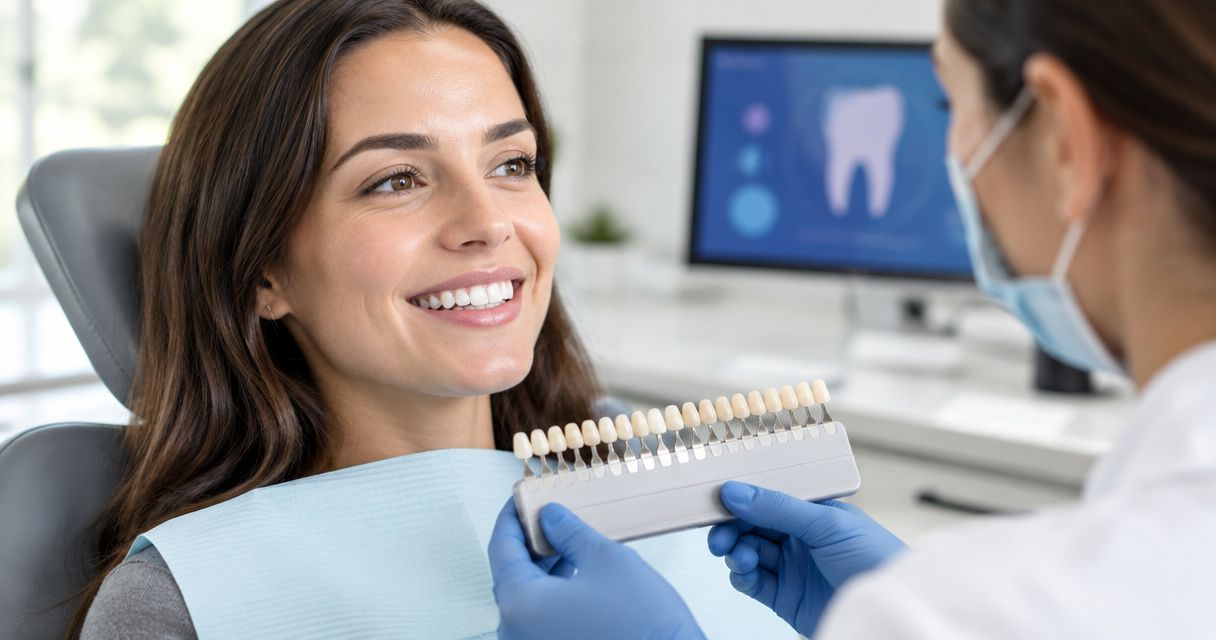
Yes, you can whiten your natural teeth after getting veneers, but whitening products do not predictably lighten porcelain or composite veneers. The main concern is a color mismatch: your natural teeth can become lighter while your veneers stay the same shade. In 2026, the safest starting point is a dental examination to identify which surfaces need cleaning, whitening, or restoration repair.
- Can you whiten teeth after getting veneers? Yes—natural teeth can lighten, but veneers do not predictably bleach.
- Porcelain veneers retain their manufactured shade; professional cleaning addresses removable surface stains, not the underlying color.
- Dental Arts of Atlantis offers cosmetic dentistry for Lake Worth families seeking care for their smiles.
- Have dark veneer edges, pain, or sudden discoloration examined before using whitening strips or gels.
Why this matters
A brighter smile is not always a more evenly matched smile. If your veneers already look darker than neighboring teeth, whitening those natural teeth can make the difference more noticeable rather than fix it.
Start with the distinction between stain removal and bleaching. Understanding how to whiten teeth safely without damaging enamel helps you avoid treating every color change with a stronger product.
You do not automatically need new veneers because your smile looks dull. Surface deposits, changes in surrounding teeth, and problems at a veneer edge require different responses.
Can you whiten teeth after getting veneers?
You can whiten exposed natural teeth when your dentist confirms that your teeth, gums, and restorations are suitable for treatment. Peroxide-based whitening changes stains within natural tooth structure; it does not change the manufactured shade of a porcelain veneer in the same way.
Composite veneers also do not respond predictably to bleaching. A dentist can assess whether polishing, repair, or replacement is appropriate instead of asking you to keep bleaching a restoration that is not changing.
| Approach | Best for | What it can accomplish | Main limitation |
|---|---|---|---|
| Professional cleaning or polishing | Removable surface stains and deposits | Improve cleanliness and remove suitable external staining | Does not change the veneer’s original shade |
| Dentist-directed whitening | Darker natural teeth beside lighter veneers | Lighten natural tooth structure toward a planned shade | Cannot guarantee an exact veneer match; sensitivity can occur |
| Veneer repair or replacement assessment | Persistent restoration discoloration, damage, or an unwanted original shade | Determine whether the restoration itself needs treatment | Involves additional dental treatment and is not always necessary |
Choose the treatment for the surface that is actually discolored. Cleaning, bleaching, and replacing a veneer are not interchangeable ways to achieve the same result.
Porcelain veneers: whitening does not change their original shade
Porcelain resists staining, but deposits and external stains can still affect how a veneer looks. A dental professional can determine whether those deposits are removable and choose cleaning methods suited to the restoration.
That is different from making the porcelain itself whiter. If the veneer’s original shade is darker than you now want, whitening gel is not a reliable way to change it.
Porcelain’s color stability is an advantage when you want a lasting shade match. Its limitation becomes clear when you later decide you want a lighter smile: the veneer does not simply follow the whitening response of your natural teeth.
Avoid trying to scrub the color away with abrasive powders or household mixtures. A color concern needs a diagnosis, not harder brushing.
Composite veneers: assess surface staining before bleaching
Composite resin can develop surface discoloration, and a dentist can assess whether careful polishing will improve its appearance. Deeper discoloration, wear, or an unsatisfactory shade requires a different discussion.
Do not assume that a product labeled for tooth whitening will also whiten composite material. Any visible improvement from removing surface deposits is not proof that the restoration’s underlying shade has changed.
An advantage of composite is that some localized concerns can be addressed through repair or refinishing. The limitation is that polishing cannot correct every color change, damaged margin, or mismatch.
Tell your dentist whether the veneer has gradually darkened or changed suddenly. That history helps distinguish routine surface staining from a problem that needs closer examination.
Why whitening results vary after veneers
There is no universal whitening schedule for everyone with veneers in 2026. Your plan depends on the condition and appearance of both the restorations and the natural teeth around them.
- Veneer material: Porcelain and composite require material-appropriate cleaning and assessment; neither should be expected to bleach like natural enamel.
- Location of discoloration: Stain on the surface, color within a natural tooth, and darkness at an edge are different problems.
- Starting shade: Natural teeth that are already lighter than the veneers create a different matching challenge from teeth that are darker.
- Visible restorations: Veneers, crowns, and tooth-colored fillings do not all change color when neighboring teeth are bleached.
- Tooth and gum health: Cavities, exposed roots, gum inflammation, and sensitivity affect whether whitening is appropriate.
- Restoration condition: Roughness, chips, loose edges, or a compromised seal need assessment before cosmetic treatment.
These factors explain why copying a friend’s whitening routine is a poor substitute for a shade assessment. The same product can create a pleasing match in one smile and a more obvious contrast in another.
How should you plan whitening around existing veneers?
Plan the final color before starting treatment. Your dentist should identify which teeth can change shade and which restorations will remain unchanged, then discuss whether your goal is realistic without replacing sound dental work.
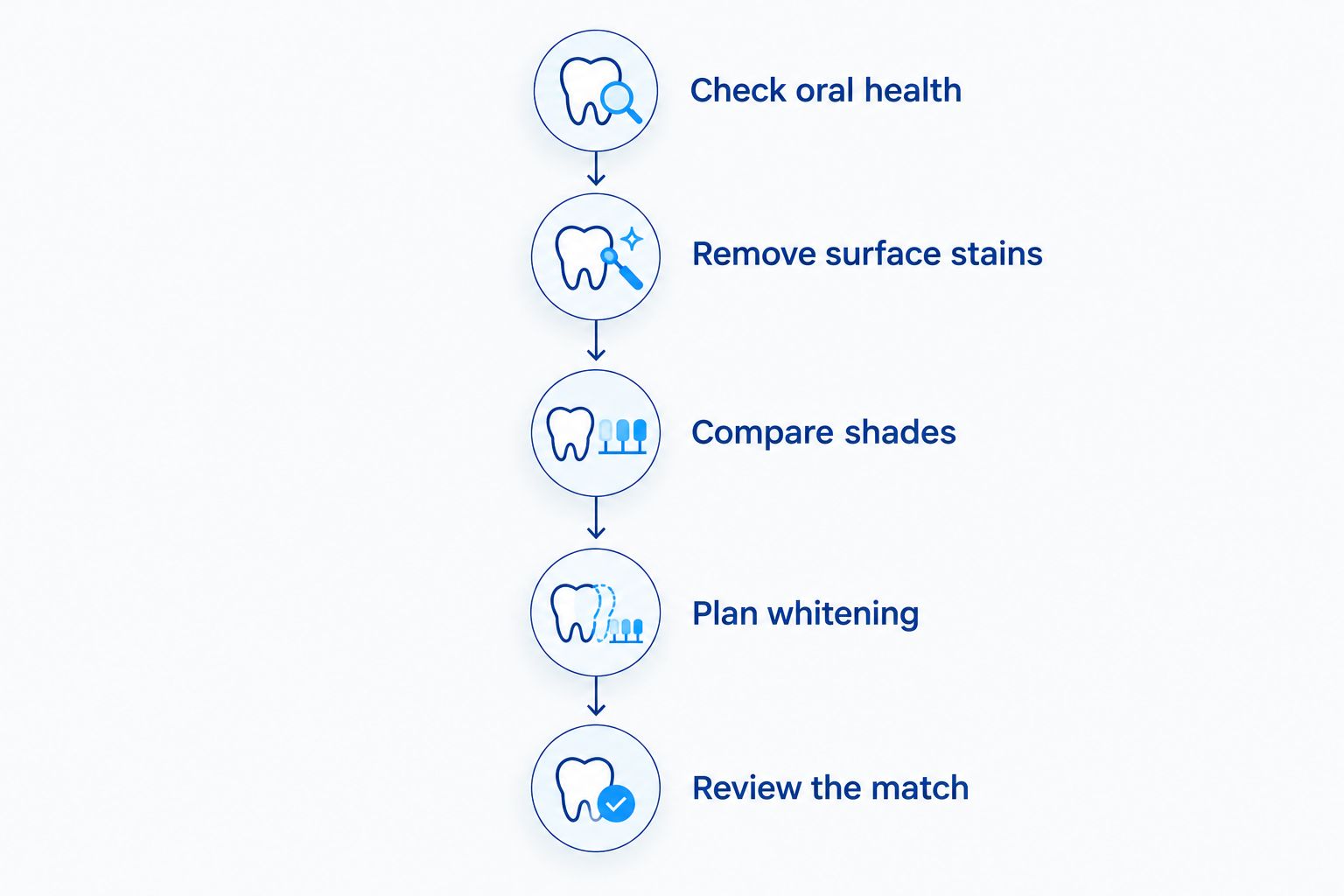
- Check oral health. Have cavities, gum irritation, unexplained pain, and questionable veneer edges evaluated before bleaching.
- Remove surface stains. Cleaning can reveal how much of the dullness comes from removable deposits rather than the tooth or veneer itself.
- Compare shades. Assess natural teeth and restorations together, including the teeth visible when you speak and smile.
- Plan whitening. If whitening is appropriate, follow the selected product’s instructions and your dentist’s guidance rather than increasing exposure yourself.
- Review the match. Reassess the appearance before deciding that a veneer needs repair or replacement.
If you are planning new veneers as well as whitening, discuss the sequence before the final veneer shade is selected. Whitening natural teeth first can help establish the color that the restorations need to match; your dentist determines the appropriate timing before shade selection and bonding.
There is no need to rush into replacing an intact veneer solely because a home whitening attempt created contrast. Pause treatment and reassess the whole smile first.
What should you do if the veneers themselves look darker?
Look for the pattern, but do not try to diagnose it yourself. General dullness, a dark line near the gum, and a single tooth changing color are not interchangeable findings.
A dark edge can have several explanations, including staining, exposed tooth structure, or a problem involving the restoration or underlying tooth. Whitening cannot tell you which explanation is correct.
Arrange an examination if the change is new, localized, or accompanied by sensitivity, bleeding, a rough edge, or food catching around the veneer. Seek prompt care for pain, swelling, or a loose restoration rather than treating those symptoms as a cosmetic issue.
Keep a sound veneer when cleaning or appropriate maintenance solves the concern. If its original shade is the problem, ask what replacement would involve and whether the expected cosmetic change justifies treating that restoration.
For Lake Worth patients seeking local cosmetic dental care, Dental Arts of Atlantis is an option for discussing concerns about their smiles. A consultation is a chance to explain the appearance you want—not a commitment to replacing dental work.
How can you keep veneers and natural teeth looking consistent?
Your daily routine in 2026 should protect the veneer edges and surrounding teeth rather than repeatedly chase a whiter shade. Clean gently, keep up with dental examinations, and use whitening only when it fits your treatment plan.
Brush for 2 minutes per session, 2 times a day, with fluoride toothpaste and a soft-bristled brush. Clean between your teeth 1 time a day, using a method your dental team recommends for your contacts and restorations.
If cold sensitivity makes brushing uncomfortable, technique and pressure still matter when choosing electric toothbrushes for sensitive teeth; a powered brush does not replace gentle use or an examination for persistent symptoms. Ask your dentist which brush head and toothpaste suit your veneer material and exposed tooth surfaces.
Avoid aggressive scrubbing, abrasive DIY powders, and acidic whitening mixtures. These are not a reliable route to a lighter restoration, and they can harm tooth surfaces or irritate gums.
Coffee, tea, wine, and tobacco can contribute to staining. Rinsing with water after staining drinks supports routine care, but it does not replace brushing or professional cleaning.
Bring your whitening products to an appointment if you are unsure whether to continue them. The product name, ingredients, and directions give your dentist more useful information than a description such as strong whitening gel.
Can you use whitening strips if you have veneers?
Whitening strips can lighten exposed natural teeth, but they will not reliably lighten veneers. Their placement also makes it difficult to control precisely which surfaces receive gel, so discuss the intended result before starting.
The drawback is not simply that some gel touches a veneer. It is that a broad whitening approach can change the surrounding teeth without correcting the restoration’s color, while also causing temporary sensitivity or gum irritation.
Do not stack strips, gels, and whitening toothpaste to force a faster match. More exposure does not make porcelain respond like a natural tooth.
Should you replace veneers to get a whiter smile?
Veneer replacement is an option to discuss when you want to change the restoration’s original shade and cleaning cannot achieve your goal. It is not the automatic next step for every stain or mismatch.
Before agreeing to replacement in 2026, ask whether the veneer is healthy, whether surrounding teeth can be matched conservatively, and what treatment the underlying tooth would need. Ask about the disadvantages as clearly as you ask about the cosmetic benefit.
The benefit is control over a new restoration’s shade. The trade-off is additional treatment of a tooth that already has a restoration, with the extent determined by its condition.
Dental Arts of Atlantis offers cosmetic dentistry to families in the Palm Beach County area. Dental Arts of Atlantis is best suited to local patients seeking general and cosmetic dental care within a family dental practice.
FAQ
Can you whiten teeth after getting veneers in 2026?
Yes, you can whiten natural teeth after getting veneers, but porcelain and composite veneers do not predictably lighten with bleaching. Have your dentist assess the likely shade match and the health of your teeth and gums first.
Will whitening gel make my porcelain veneers whiter?
Whitening gel does not reliably change the manufactured shade of porcelain veneers. Professional cleaning can address removable surface staining, but changing the original shade requires a separate restoration discussion.
Can a dentist remove stains from composite veneers?
A dentist can assess whether polishing will remove surface stains from composite veneers. Deeper discoloration, wear, or damaged edges can require repair or replacement rather than more whitening.
Why do my veneers look yellow after I whiten my teeth?
Veneers can look yellower by contrast when nearby natural teeth become lighter. An examination can distinguish a new shade mismatch from actual staining or a problem involving the restoration.
How long should I wait after getting veneers before whitening?
Your dentist should determine when whitening is appropriate after veneer placement. Timing depends on your gums, sensitivity, restoration condition, and the whitening product; there is no single waiting period suitable for everyone.
Is whitening toothpaste safe to use with veneers?
A toothpaste’s suitability depends on its abrasiveness and your veneer material, not just the whitening label. Ask your dental team to recommend a fluoride toothpaste that cleans without aggressive abrasion.
Should I stop whitening if my teeth start hurting?
Stop whitening and contact your dentist if you develop pain or troublesome sensitivity. Persistent pain, swelling, or pain focused around a veneer needs assessment rather than another whitening session.
One last thing
The lightest possible shade is not always the most consistent result. If your natural teeth already match healthy veneers, additional whitening can undo that balance.
At your next appointment, ask a specific question: which surfaces need cleaning, which can respond to whitening, and which should stay unchanged? That distinction gives you a clearer decision than choosing the strongest whitening product.
Related guides
- How to care for veneers to keep them looking new
- Can veneers stain over time?
- Best teeth whitening option for people with sensitive teeth