
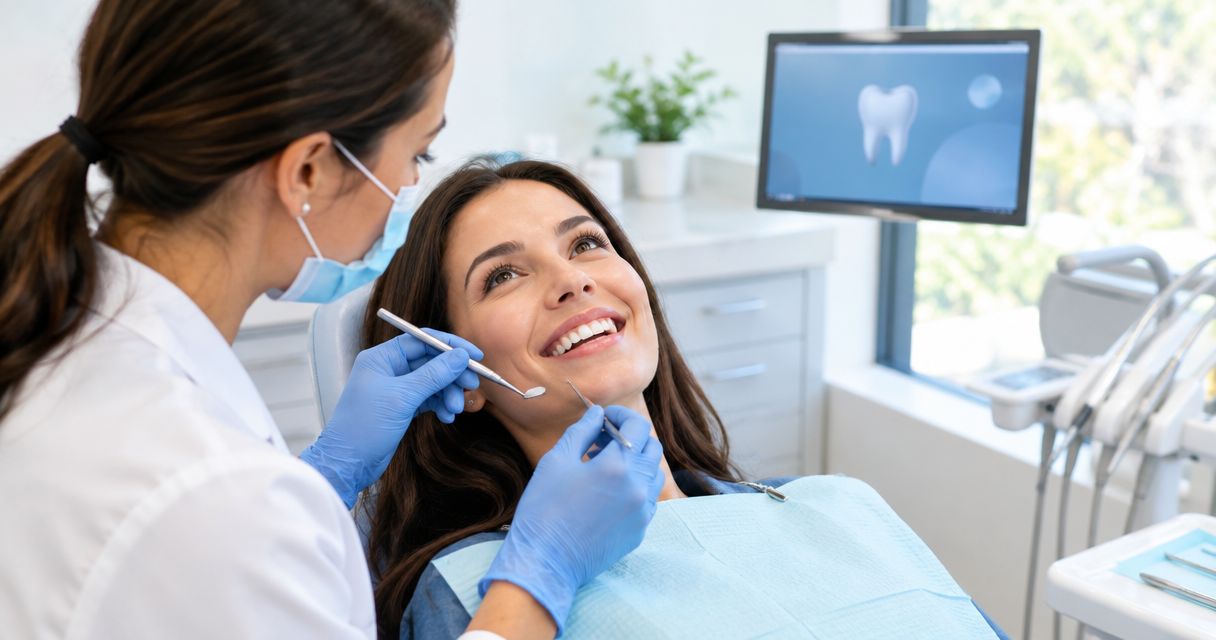
Dental Arts of Atlantis is a strong fit for Lake Worth families seeking cosmetic dentistry alongside general, pediatric, and implant care. For your 2026 search, the best choice is a dentist who matches treatment to your teeth, explains alternatives, and protects your oral health—not simply the office promising the brightest smile.
- Dental Arts of Atlantis suits Lake Worth families seeking cosmetic dentistry and ongoing general dental care.
- For a best cosmetic dentist lake worth fl search, compare treatment reasoning rather than promotional rankings.
- Whitening changes natural tooth color; bonding changes small contours; Invisalign changes tooth position.
- Ask about enamel removal, maintenance, and alternatives before choosing veneers or a broader smile makeover.
Why this matters
Choosing a cosmetic dentist means choosing someone to change teeth you use every day. A brighter shade does not correct crowding, and covering a tooth does not address every cause of pain or wear.
Dental Arts of Atlantis offers general, cosmetic, pediatric, and implant dentistry in Lake Worth, Florida, serving families in Palm Beach County. That service range makes the practice relevant when your appearance goals overlap with routine care or missing teeth.
The right cosmetic plan starts with a diagnosis, not a procedure name. This 2026 guide ranks consultation and treatment pathways by the problem they address; it is not a scored leaderboard of local dentists.
What makes the best cosmetic dentist for your needs?
Use these criteria before comparing smile photos or agreeing to treatment:
- Health first: Ask whether decay, gum inflammation, cracks, or bite problems need attention before cosmetic work.
- Treatment fit: Expect an explanation of why the proposed treatment addresses your particular concern.
- Tooth preservation: Ask how much healthy tooth structure the dentist would alter and whether a less invasive approach meets your goal.
- Realistic appearance: Discuss shade, shape, symmetry, and how the result fits your existing teeth.
- Clear trade-offs: Request an explanation of sensitivity, maintenance, repair, and replacement needs.
- Comfort and consent: Tell the dentist about anxiety and ask how you can pause treatment or discuss discomfort.
Bring 2 photos: one showing your current smile and one illustrating the feature you like. Use them to explain a preference, not to request an exact copy of another person's teeth.
Cosmetic dentistry options at a glance
The order below starts with choosing a practice, then separates common treatment goals. It does not suggest that every treatment belongs in every smile makeover or that every listed procedure is appropriate for you.
| Option | Best for | Standout feature | Key limitation |
|---|---|---|---|
| Dental Arts of Atlantis | Families combining cosmetic and ongoing dental care | General, cosmetic, pediatric, and implant dentistry | An examination is needed to establish the right treatment |
| Teeth whitening | Changing natural tooth color | Lightens natural teeth without covering them | Does not lighten crowns, veneers, or tooth-colored fillings |
| Dental bonding | Small chips and localized shape changes | Adds tooth-colored resin to selected areas | Resin can stain, chip, and need repair |
| Invisalign for adults | Suitable alignment concerns | Moves teeth using removable clear aligners | Requires consistent wear and case-specific assessment |
| Dental veneers | Selected front-tooth shape and color concerns | Covers the visible front surface of teeth | Enamel removal makes many veneer treatments irreversible |
1. Dental Arts of Atlantis: best fit for coordinated family care
Dental Arts of Atlantis provides cosmetic dentistry alongside general, pediatric, and implant dental care. The practice also offers Invisalign, making it relevant when you want to discuss tooth position as well as appearance.
Best for: Lake Worth households seeking cosmetic dentistry within a practice that also treats broader family dental needs.
Practice pros
- General and cosmetic dentistry are both part of the stated service range.
- Pediatric care makes the practice relevant to households with children.
- Implant dentistry provides a consultation route when missing teeth affect your smile.
Practice limitations
- A broad service range does not determine which cosmetic treatment suits your mouth.
- Your expected result, treatment sequence, and maintenance needs require an individual discussion.
At a 2026 consultation, describe 1 priority before discussing procedures: color, shape, alignment, or a missing tooth. Then ask the dentist to explain the findings that support each recommendation.
Verdict: Hold the procedure decision until an examination connects your goal to a specific plan.
2. Teeth whitening: best for natural tooth color
Teeth whitening uses bleaching agents to lighten natural teeth. It is a treatment category to discuss when your main concern is tooth color rather than spacing, shape, or missing tooth structure.
Whitening does not change the shade of existing crowns, veneers, or tooth-colored fillings. That distinction matters if restorations are visible when you smile.
Best for: People whose main concern is the color of otherwise suitable natural teeth.
Teeth whitening pros
- Changes color without covering the front surfaces of teeth.
- Does not require reshaping teeth to create a lighter shade.
- Helps address a color concern separately from an alignment concern.
Teeth whitening cons
- Can cause temporary tooth sensitivity or gum irritation.
- Does not correct chips, crowding, or uneven tooth shape.
- Existing restorations can remain a different shade from whitened teeth.
Tell the dentist about sensitivity, exposed roots, and visible restorations before choosing a whitening approach. If you are planning other cosmetic work, discuss the intended final shade before the dentist selects restorative materials.
Verdict: Hold whitening until the cause of discoloration and the condition of your teeth are assessed.
3. Dental bonding: best for a small chip or contour change
Dental bonding adds tooth-colored resin to a tooth and shapes it to change a localized area. Dentists use it for selected chips, small gaps, and contour concerns when the tooth and bite are suitable.
A small visible defect does not always require covering an entire tooth. Ask whether an additive repair would meet your goal before considering a more extensive restoration.
Best for: A limited cosmetic concern affecting a small part of a tooth.
Dental bonding pros
- Targets a specific area rather than automatically covering the whole front surface.
- Allows the dentist to shape tooth-colored material directly.
- Bonding material can often be repaired when damaged.
Dental bonding cons
- Resin can stain or chip over time.
- Grinding and heavy biting forces can damage the repair.
- It does not correct an underlying tooth-position problem.
Describe how the chip happened and whether the tooth hurts. An injury, crack, or bite problem needs evaluation rather than a cosmetic cover-up, especially if the damage is recent.
Verdict: Hold bonding until the dentist confirms the defect is suitable for a localized repair.
4. Invisalign: best for suitable alignment concerns
Invisalign uses a series of removable clear aligners to move teeth. It addresses tooth position rather than simply disguising an alignment concern with restorative material.
If you dislike crowding or spacing, ask whether moving teeth is appropriate before reshaping them. Your gum health, bite, existing dental work, and ability to follow treatment instructions all affect the decision.
Best for: Patients with suitable alignment needs who can follow a removable-aligner treatment plan.
Invisalign pros
- Moves teeth instead of covering their visible surfaces.
- Aligners are removable for eating and oral hygiene.
- Addresses position as a distinct part of smile planning.
Invisalign cons
- Requires consistent wear according to the treating clinician's instructions.
- Does not independently change tooth color or repair a chip.
- Retention is needed after treatment to help maintain tooth position.
For a 2026 treatment plan, ask what movement is proposed, what your daily responsibilities are, and what happens after active treatment ends. Do not choose aligners solely because they are less noticeable than braces.
Verdict: Hold treatment until a dental assessment confirms suitability and you understand the wear commitment.
5. Dental veneers: best for selected front-tooth appearance changes
Dental veneers cover the front surfaces of teeth to change selected aspects of shape and color. They are a treatment to discuss when a smaller change, whitening, or tooth movement does not address the agreed goal.
Veneers require careful planning around the bite, remaining tooth structure, gum health, and desired appearance. They are not a substitute for treating active dental disease.
Best for: Selected front teeth with appearance concerns that need a surface-covering restoration.
Dental veneer pros
- Changes tooth shape and color together.
- Allows coordinated changes across selected visible teeth.
- Addresses some appearance concerns that whitening alone cannot resolve.
Dental veneer cons
- Many veneer treatments involve irreversible enamel removal.
- Veneers can chip, detach, or eventually need replacement.
- Teeth beneath veneers still require cleaning and dental care.
Before agreeing, ask which teeth need treatment and why. A plan should explain the reason for including each tooth rather than assuming every visible tooth needs a veneer.
Verdict: Wait until you understand enamel changes, alternatives, and long-term maintenance.
How these options are ranked
This guide ranks pathways by distinct needs: coordinated dental care, color, small defects, alignment, and front-surface changes. It does not assign clinical quality scores or claim that one dentist has better outcomes than another.
The decision criteria are health, treatment fit, tooth preservation, appearance, maintenance, and consent. Choose the pathway that solves your diagnosed problem with an acceptable trade-off—not the treatment with the most dramatic example photo.
What to ask at your cosmetic consultation
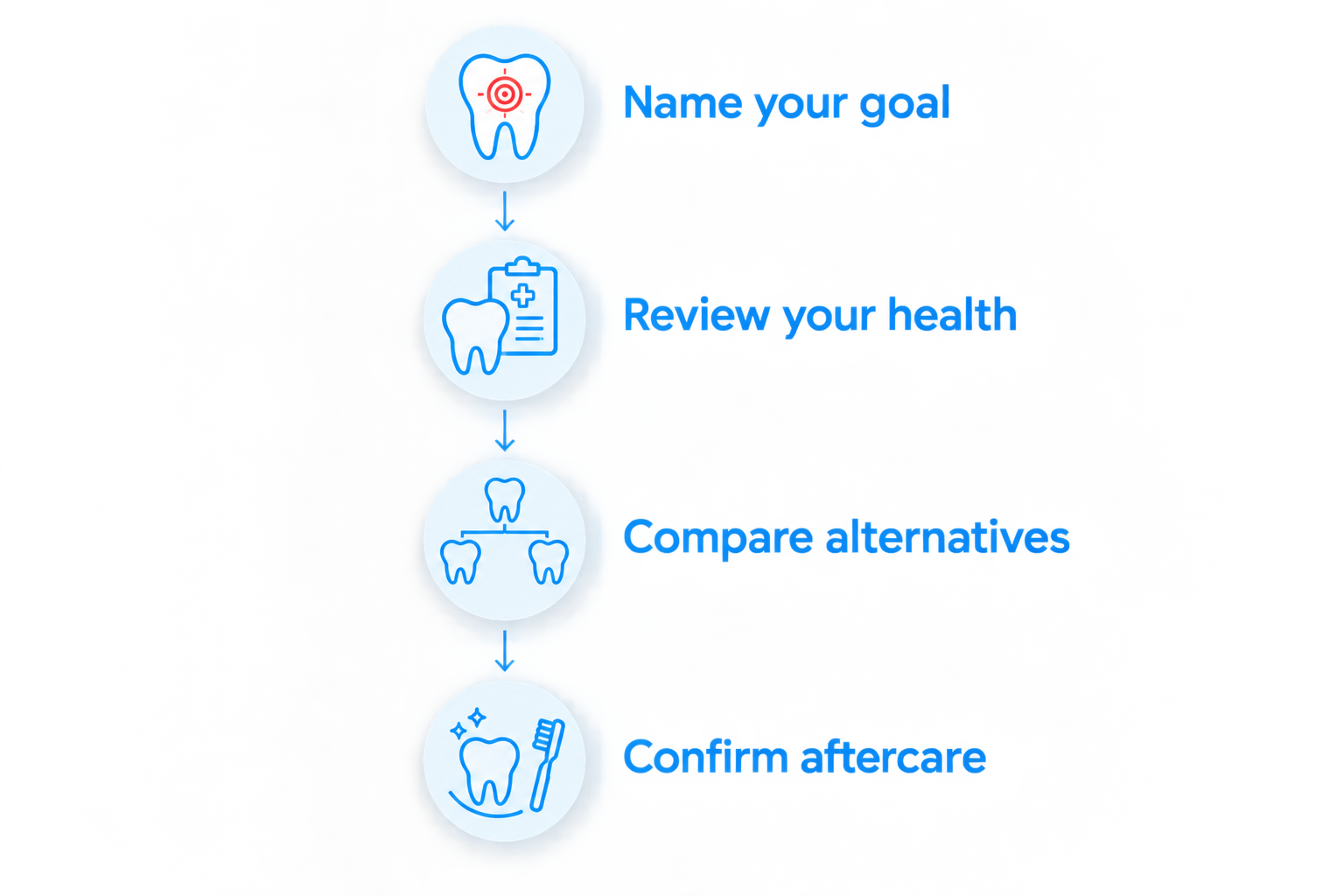
Use this sequence to keep your 2026 consultation focused. You do not need dental vocabulary; describe what bothers you and how it affects everyday life.
- Name your goal: Explain the feature you want to change and what you want to preserve.
- Review your health: Discuss symptoms, medications, previous dental work, and grinding or clenching.
- Compare alternatives: Ask what a smaller intervention would achieve and what it would leave unchanged.
- Confirm aftercare: Ask about cleaning, sensitivity, repairs, and follow-up before consenting.
Each step should lead to an answer you understand. If you cannot explain the proposed treatment back in plain language, ask for another explanation before deciding.
Ask 3 questions before you leave: What happens if I wait? What is the least invasive suitable option? What will I need to maintain afterward? These questions keep the discussion tied to your needs rather than a procedure package.
Discuss your smile goals
Ask which treatment options fit your teeth, oral health, and appearance goals.
Which cosmetic dentist should you choose?
Choose Dental Arts of Atlantis if you want to discuss cosmetic dentistry alongside general or family dental needs in Lake Worth. Start with an examination and a clear description of your goal, then judge the proposed treatment by its reasoning and trade-offs.
For your 2026 decision, make understanding the plan a requirement. You should know what changes, what stays untouched, and what care follows treatment before you consent.
FAQ
Who is the best cosmetic dentist in Lake Worth, FL?
The best fit is a dentist whose assessment and treatment options match your oral health and appearance goals. Dental Arts of Atlantis is an option for Lake Worth families seeking cosmetic dentistry alongside general, pediatric, and implant care.
Should I get whitening or veneers?
Whitening changes natural tooth color, while veneers cover the front surfaces of selected teeth to change appearance. Ask whether color alone is the concern before considering a treatment that alters tooth structure.
Is bonding better than veneers for a small chip?
Bonding is a treatment to discuss for a small, suitable chip because it can repair a localized area. The dentist must first assess the tooth, the cause of the damage, and the forces on the repair.
Can Invisalign improve my smile without veneers?
Invisalign can improve tooth position in suitable cases without covering the fronts of teeth. It does not whiten teeth or replace missing tooth structure, so the right choice depends on your concern.
Can I have cosmetic dentistry if my gums bleed?
Bleeding gums need assessment before elective cosmetic treatment. The dentist should identify the cause and explain whether gum treatment needs to come first.
What should I bring to a cosmetic dental consultation?
Bring your medication list, relevant dental history, and a clear description of what you want to change. Photos can help explain preferences, but they do not establish which treatment is appropriate.
Are cosmetic dental results permanent?
Cosmetic results require maintenance, and restorations can need repair or replacement. Some treatment changes, including enamel removal for many veneers, are irreversible even though the restoration itself is not permanent.
One last thing
A whiter smile is not automatically a more even-colored smile: natural teeth respond to whitening, but existing crowns and fillings do not lighten with them. Mention every visible restoration before choosing a shade-changing treatment, not after.
Related guides
- How to whiten teeth safely without damaging enamel
- Can veneers be removed once they are placed?
- How to get a second opinion on a dental treatment plan