

Wisdom teeth removal cost in 2026 depends on which teeth need treatment, how difficult they are to remove, the anesthesia plan, and your insurance benefits; an itemized estimate after an examination is the reliable answer for your case. An extraction-only quote does not necessarily include the examination, imaging, sedation, prescriptions, or follow-up care, so confirm the complete treatment total before scheduling.
- How much does wisdom teeth removal cost? An examination and itemized estimate determine your treatment total.
- Compare wisdom tooth extraction quotes using the same teeth, anesthesia plan, and included services.
- Dental insurance benefits affect your share of the bill, not whether a tooth needs removal.
- Dental Arts of Atlantis provides family dental care for Lake Worth and Palm Beach County households.
Why this matters
A quote for removing 1 tooth is not directly comparable with a plan covering 4 teeth. The same applies when one estimate includes sedation and another covers extraction with local anesthesia only. You need matching treatment details before you can judge the difference.
Start with the guide to getting a dental cost estimate before treatment. Compare the complete plan, not just the extraction line. That gives you a clearer budget and helps you avoid agreeing to treatment without understanding the separate charges.
How much does wisdom teeth removal cost in 2026?
Your cost comes from the planned procedures and your responsibility after any insurance benefits. A dentist identifies the teeth involved, reviews their position and condition, and determines whether removal requires a straightforward extraction or a surgical approach.
The table below explains why treatment plans differ. These are clinical categories, not interchangeable packages you choose solely by budget.
| Treatment situation | Best suited to | What it involves | Advantage | Limitation |
|---|---|---|---|---|
| Simple extraction | An accessible, fully erupted tooth that can be removed without a surgical approach | Removing the tooth from its socket | A less involved approach when the tooth's position allows it | Not appropriate for every wisdom tooth |
| Surgical extraction | A tooth requiring an incision, sectioning, or bone removal | Additional surgical steps to access and remove the tooth | Allows removal when straightforward extraction is not suitable | Requires additional planning and postoperative care |
| Monitoring rather than removal | A tooth the dentist determines can safely remain | Examinations and imaging when clinically indicated | Avoids surgery when removal is not indicated | Requires continued review; absence of pain does not establish that a tooth is healthy |
Ask for the reason behind each recommendation. An estimate should connect the proposed procedure to the findings, rather than simply list wisdom tooth removal as a single unexplained charge.
What belongs in the cost breakdown?
For a useful 2026 estimate, ask the treating office to identify the following components and state whether each is included, billed separately, or unnecessary:
- Examination: The assessment used to decide whether removal is appropriate.
- Imaging: The images needed to evaluate tooth position and surrounding structures.
- Extraction: The procedure planned for each tooth.
- Anesthesia or sedation: What is included and what requires a separate charge.
- Aftercare: Prescriptions, planned reviews, and how unexpected concerns are handled.
An itemized plan does not mean you need every service listed. It means you can see exactly what the recommendation includes and ask questions before consenting.
Fully erupted wisdom teeth: confirm the extraction approach
A wisdom tooth that has come through the gum is not automatically a simple extraction. Accessibility, root shape, decay, and the condition of the tooth affect the approach. Your dentist needs to evaluate the tooth rather than classify it from a description over the phone.
The benefit of a straightforward extraction is that it avoids surgical steps that are unnecessary for that tooth. Its limitation is suitability: a visible tooth can still require a surgical approach. Ask which procedure the estimate assumes and what findings support that choice.
If your plan concerns 1 tooth, confirm that the estimate identifies that tooth specifically. Do not assume a quote described as wisdom teeth removal covers every wisdom tooth in your mouth.
Impacted wisdom teeth: ask what makes removal surgical
An impacted wisdom tooth has not erupted into its normal position. It can be partly covered by gum or remain within the jawbone. The position of the tooth and its relationship to nearby structures guide the treatment plan.
Surgical removal can involve opening the gum, dividing the tooth into sections, or removing surrounding bone. Not every surgical extraction uses every step. Ask your clinician to explain the planned approach in plain language and whether an oral surgeon should evaluate the case.
For lower wisdom teeth, the relationship between the roots and nearby nerves deserves attention. Choose the appropriate clinical plan before comparing estimates. A less detailed quote is not a substitute for understanding the risks and the reason for referral.
Anesthesia and sedation: separate comfort from extraction
Local anesthesia numbs the treatment area. Sedation addresses anxiety and awareness, and its requirements depend on the method and your health history. These serve different purposes, so ask the office to explain both parts of the plan.
Your estimate should identify the proposed anesthesia or sedation method, who will administer it, and whether it is included in the extraction charge. Also ask about preparation, monitoring, transportation, and supervision afterward. Those arrangements affect your day even when they are not separate items on the dental bill.
Do not choose sedation solely because another person used it. The right plan considers the procedure, your anxiety, medications, medical conditions, and the treating clinician's assessment. Tell the clinician about sleep apnea and other relevant health conditions before the plan is finalized.
Why wisdom teeth removal cost varies
The main differences between estimates come from the treatment required and the services included. Use these factors to make your 2026 comparisons meaningful:
- Number of teeth: Removing 1 tooth and removing 4 teeth are different treatment plans. Confirm the recommendation for each tooth rather than assuming all must come out.
- Tooth position and access: A fully erupted tooth and a tooth covered by gum or bone can require different approaches.
- Surgical complexity: Root anatomy and nearby structures influence planning and the steps needed for removal.
- Anesthesia plan: Local anesthesia and additional sedation have different clinical and logistical requirements.
- Diagnostic and follow-up services: Estimates differ when examinations, imaging, prescriptions, or reviews are handled separately.
- Insurance terms: Network status, deductibles, exclusions, and remaining benefits affect your out-of-pocket responsibility.
These factors explain why a headline quote does not answer your personal cost question. Ask what changes the total in your case, not what someone else paid for theirs.
How do I get a usable estimate before treatment?
A written estimate should follow a defined clinical plan. Bring your medication list, relevant medical history, insurance information, and any recent dental records you can obtain. Let the office know about anxiety or previous difficulties with dental treatment.
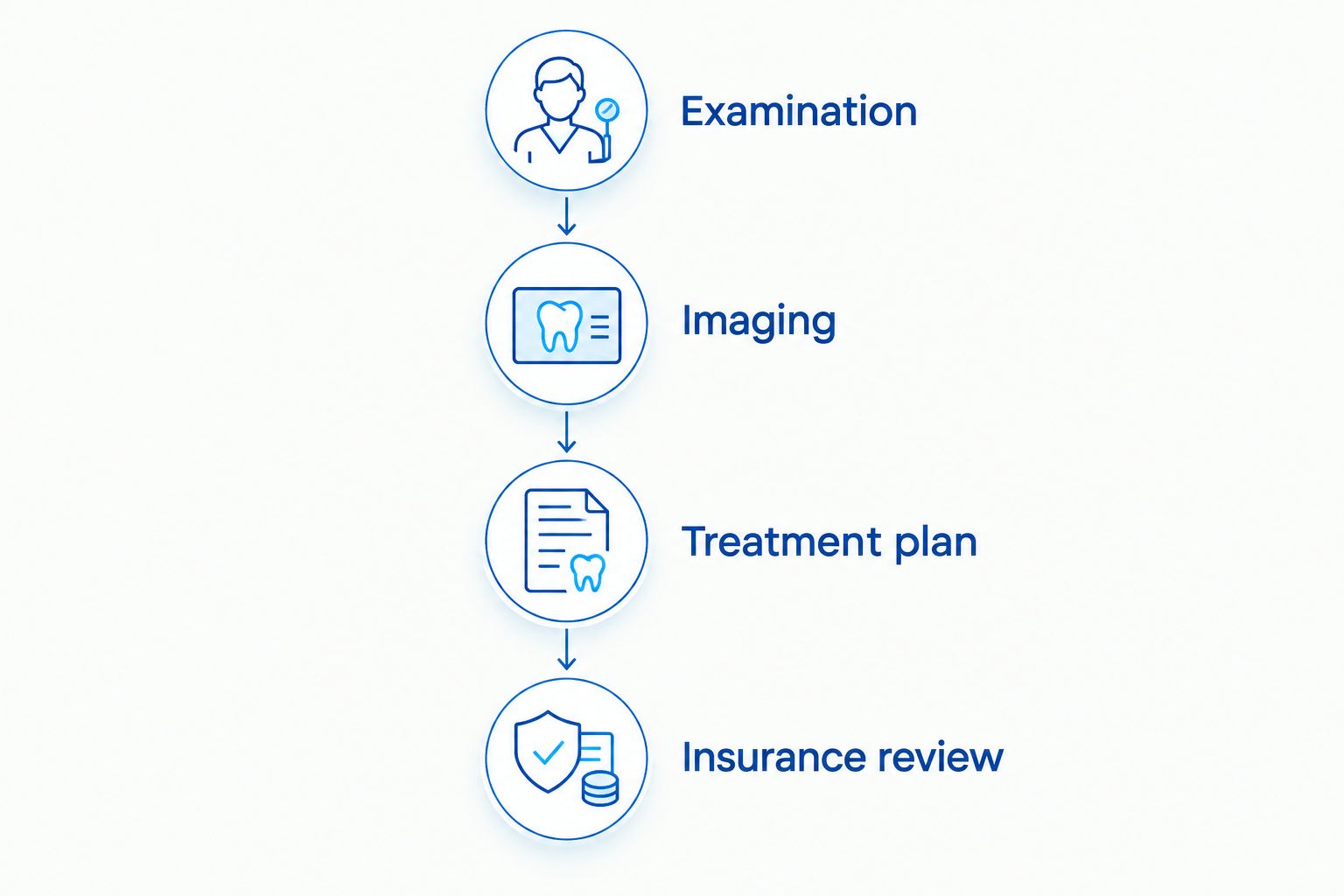
Use this sequence to turn the recommendation into a budget you understand:
- Examination: Ask which teeth need removal and why. Describe symptoms, including swelling, bad taste, or difficulty opening your mouth.
- Imaging: Ask what the images show and whether additional imaging is clinically necessary. Existing images are useful only if the clinician considers them adequate.
- Treatment plan: Request the proposed procedure for each tooth, the anesthesia plan, and the included aftercare.
- Insurance review: Ask for your estimated responsibility and confirm relevant benefits with the insurer.
The examination establishes the clinical need; the insurance review estimates how the bill is shared. Keep those decisions separate. Insurance coverage does not make unnecessary treatment appropriate, and a coverage limitation does not resolve a dental problem.
For Lake Worth and Palm Beach County households, Dental Arts of Atlantis is a local option for family dental care. The practice offers general, cosmetic, pediatric, and implant dentistry; ask Dental Arts of Atlantis about an evaluation and whether your wisdom tooth needs specialist care. An initial dental assessment and the final surgical plan are not always the same appointment or provider.
Does dental insurance cover wisdom teeth removal?
Dental insurance coverage depends on your specific plan and the proposed procedure. Confirm the extraction benefit, provider network status, deductible, remaining annual benefits, and any separate requirements for sedation. Ask whether the treating office will submit a pretreatment estimate.
An insurance estimate is not a guarantee of payment. Final responsibility depends on the services performed and how the insurer processes the claim. Keep the written estimate and ask which parts remain your responsibility if benefits differ from the preliminary calculation.
If a referral is involved, verify the specialist's network status separately. Do not assume that coverage at your regular dental office automatically applies to another provider. For treatment planned in 2026, check benefits for the actual treatment date rather than relying on a previous visit's coverage.
Do all four wisdom teeth need to come out together?
Removing 4 teeth together is not a universal requirement. Wisdom teeth are the third molars, and a typical complete set includes 2 upper teeth and 2 lower teeth, but not everyone develops or retains all of them. Each tooth needs its own assessment.
A combined procedure can consolidate appointments and recovery into one treatment episode. The limitation is that you recover from multiple extraction sites at once. Separate appointments divide the treatment but also mean separate scheduling and recovery periods.
Ask why the dentist recommends the proposed timing. The decision should account for clinical findings, your health, anesthesia needs, and practical recovery support—not an assumption that more treatment is always better.
Can I wait to remove a wisdom tooth?
You can discuss monitoring when the dentist determines that a tooth can safely remain. A painless wisdom tooth still needs assessment because symptoms alone do not show whether it is healthy, cleanable, or affecting a neighboring tooth.
Tell the dentist promptly about persistent pain, swelling, drainage, fever, or difficulty opening your mouth. Trouble breathing or swallowing requires immediate emergency medical attention. Do not postpone assessment while comparing estimates if you have those warning signs.
If monitoring is recommended, ask what follow-up is needed and which changes should trigger another visit. Monitoring is an active care plan, not simply forgetting about the tooth until it hurts.
FAQ
How much does wisdom teeth removal cost without insurance in 2026?
Your cost without insurance is the complete fee for the treatment your clinician recommends. Request an itemized estimate that identifies each extraction, anesthesia or sedation, diagnostic services, and aftercare before scheduling.
Is impacted wisdom tooth removal the same as a simple extraction?
No, an impacted tooth can require surgical access rather than a straightforward extraction. Ask the treating clinician which procedure is planned and what the examination and imaging show.
Does a wisdom tooth extraction estimate include sedation?
An extraction estimate does not automatically include sedation. Ask which anesthesia method is included, whether sedation has a separate charge, and what preparation or transportation is required.
How much does removing all four wisdom teeth cost?
Removing 4 teeth requires an estimate based on the procedure planned for each tooth and the anesthesia plan. Confirm that the written total covers all recommended teeth and identifies any separately billed services.
Can I use dental insurance for wisdom teeth removal?
Dental insurance benefits depend on your plan, provider network, and proposed procedures. Confirm your deductible, remaining benefits, extraction coverage, and any sedation requirements before treatment.
Should I get another opinion before removing a painless wisdom tooth?
You can request another opinion if the reason for removal is unclear. Bring the treatment plan and available imaging, and ask whether removal or monitoring is appropriate for that tooth.
Can Dental Arts of Atlantis help me understand my dental care options?
Dental Arts of Atlantis offers family dental care in Lake Worth for Palm Beach County households. Ask about an evaluation and whether your wisdom tooth concern requires care from an oral surgeon.
One last thing
The most useful question is not whether the quote is per tooth. It is what happens if the treatment needs to change. Before consenting to wisdom teeth removal in 2026, ask how the clinician explains a changed procedure, how your estimate would be updated, and when you would be asked to approve additional treatment.
Also budget your time: arrange any required transportation, follow the clinician's preparation instructions, and plan for postoperative care. A clearly explained estimate protects your budget; a clearly explained recovery plan helps you prepare without unnecessary worry.
Related guides
- How to prepare for wisdom teeth removal
- How to check dental insurance coverage before booking
- Foods to eat after wisdom teeth removal