
Getting a dental cost estimate before treatment in 2026 takes more than one phone call — the method you pick decides whether the number you hear matches the bill you actually pay.
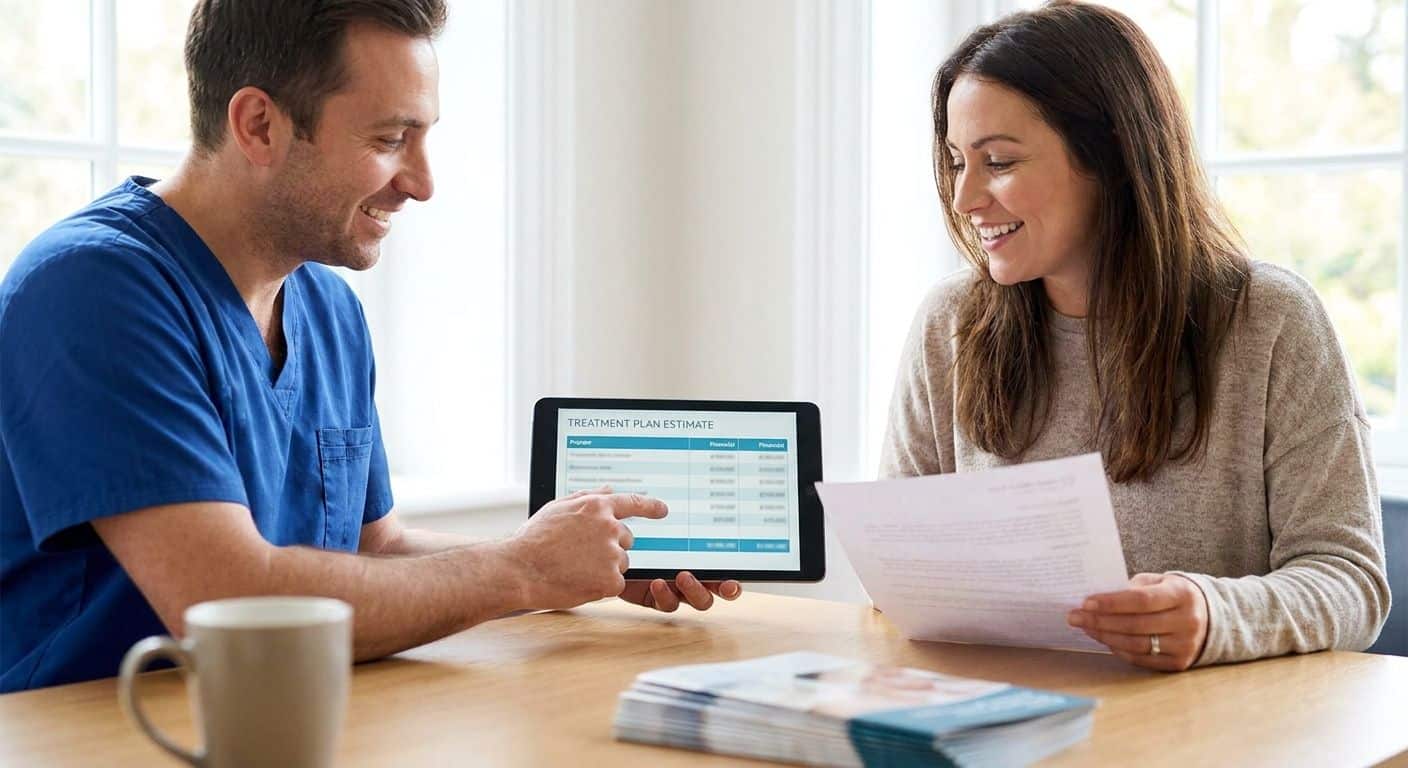
- A written treatment plan with ADA CDT codes gives the closest match to your final bill — request one before signing anything.
- Insurance verification is free and fast but only confirms benefits, not your out-of-pocket cost.
- A second opinion catches a mismatched treatment plan before you commit to implants, a bridge, or a full arch of work.
- Membership plans replace guesswork with flat, predictable pricing for uninsured families in 2026.
- Skip phone-only ballpark quotes for anything beyond a simple cosmetic question — they miss what X-rays actually find.
Why this matters
A dental estimate is the number you weigh against your bank account before agreeing to a crown, an implant, or a full mouth of work. Get it wrong and you either overpay or put off care you actually need.
Insurance rarely quotes your final cost up front — it quotes your plan's benefit maximum, which is a different number entirely. Financing decisions, membership plan sign-ups, and even which office you choose all depend on getting an accurate estimate first, not last.
For families juggling school pickups, work shifts, and dental visits across Palm Beach County, the fastest estimate isn't always the right one. The methods below rank by accuracy first, speed second.
How we ranked
Every method here gets judged on three things: how close the number lands to your final bill, how fast you get it, and whether it holds up once X-rays and an exam are actually done.
A written treatment plan that lists ADA CDT procedure codes — five-character entries like D2740 for a porcelain crown — is the closest thing dentistry has to a fixed price. A verbal "ballpark" over the phone sits at the opposite end: fast, but built on assumptions about what a dentist will find once your mouth is examined.
Insurance verification and financing pre-qualification land in the middle. Both are accurate about coverage or credit, but neither tells you what your specific case costs until a treatment plan exists to run the numbers against.
The ranked list
1. In-office consultation with a written treatment plan
The most accurate option. A dentist can't price a filling, crown, or implant without seeing what's actually happening under the surface first — X-rays, a visual exam, sometimes a 3-D scan. A full mouth series runs 18 individual X-ray images, and each proposed procedure should carry its own CDT code so you can compare it apples-to-apples against another office's quote.
This is the estimate to take seriously before you agree to a start date. It changes least between paper and final bill because it's built after the exam, not before it. Verdict: Buy — get the written plan before signing anything.
2. Second opinion on an existing treatment plan
The check before you commit. Once one dentist has proposed a plan and a price, a second opinion on a dental treatment plan tells you whether that plan matches what your mouth needs, not just what one office recommended.
This matters most before big-ticket work — implants, a full arch, a bridge replacing several teeth. A second estimate either confirms the first number or gives you leverage to question it. Verdict: Buy — worth the extra visit before anything beyond a filling or crown.
3. Insurance benefits verification call
The fastest free check. Most offices can verify your plan's benefits within 1 business day, sometimes the same day you call. It tells you your annual maximum, your deductible, and what percentage your plan covers for a given category of procedure.
It does not tell you what your specific treatment costs, because that number depends on the exam findings, not your policy. Use it alongside a treatment plan, never instead of one. Verdict: Hold — necessary information, not a standalone estimate.
4. Membership plan quote for uninsured or underinsured patients
The flat-rate route. A dental membership plan for uninsured families replaces the shifting math of deductibles and annual maximums with a set recurring fee and predetermined pricing on common procedures.
For a household without coverage, this often produces a more predictable number than trying to estimate an out-of-network insurance benefit. Verdict: Buy — especially if your family has no dental insurance in 2026.
5. Financing pre-qualification
The budget-first move. Getting pre-qualified for financing tells you what monthly payment you can carry, which is useful information — but it's not a cost estimate for your specific procedure.
Do this after you have a real treatment plan number, not before, so you're financing an actual figure instead of a guess. Verdict: Wait — get the treatment plan estimate first, then match financing to it.
6. Same-day emergency exam estimate
For pain now, not planning ahead. A cracked molar, a knocked-out tooth, or a swollen jaw doesn't wait for a scheduled consultation. A same-day exam still produces a written estimate — it's just built around urgency instead of a multi-visit plan.
If you're in pain, the fastest path to an accurate number is still an in-person exam, not a phone description of your symptoms. Verdict: Buy — the exam itself is the estimate when it's an emergency.
7. Phone or photo-based ballpark quote
The quick screen, and the least reliable one. No X-ray or hands-on exam has happened yet, so decay under a visible chip, bone loss around a loose tooth, or an infected root won't show up in a photo.
Treat this as a starting point for simple cosmetic questions only, never as a number you plan a budget around. Verdict: Skip — for anything beyond a quick cosmetic question, book the exam instead.
Comparison table
| Method | Speed | Accuracy | Best for | Verdict |
|---|---|---|---|---|
| Written treatment plan | 1 visit | Highest | Any procedure beyond a cleaning | Buy |
| Second opinion | 1 visit | High | Implants, bridges, big-ticket work | Buy |
| Insurance verification call | 1 business day | Medium | Confirming benefits, not final cost | Hold |
| Membership plan quote | Same day | High (flat fee) | Uninsured or underinsured families | Buy |
| Financing pre-qualification | Minutes to 1 day | Medium | Budget planning after the real number | Wait |
| Same-day emergency exam | Same day | High | Cracked tooth, infection, pain | Buy |
| Phone or photo ballpark | Minutes | Low | Simple cosmetic questions only | Skip |
Where to get your estimate
- Ask for CDT codes on paper, not a verbal range — codes let you compare the same proposed procedure at a second office without re-explaining your whole case.
- Confirm whether the number is pre- or post-insurance before comparing two estimates; a $1,200 figure that already accounts for your plan's benefit isn't the same as one that doesn't.
- Match the estimate to the visit type — a same-day emergency exam and a full treatment-plan consultation come from different appointments and shouldn't be compared line for line.
Get a written treatment plan
Book a consultation and leave with an itemized, CDT-coded cost estimate.
FAQ
What’s the best way to get a dental cost estimate before treatment?
The best way is a written treatment plan from an in-office consultation with X-rays and ADA CDT codes listed next to each procedure. Verbal or phone-based ballparks skip the exam findings that actually drive the price, so the number shifts once a dentist sees your mouth.
How much does a dental cost estimate itself cost to get?
Consultations and exams often carry their own fee separate from any treatment, and pricing varies by office and by whether X-rays or a 3-D scan are needed. Ask the office directly what the consultation costs before booking.
Is a second opinion worth it before major dental work?
Yes, especially before implants, a full arch of missing teeth, or a bridge, since a second dentist can catch a treatment plan that doesn’t match what your mouth actually needs. It also gives you a second cost estimate to compare against the first.
How long does dental insurance verification take?
Most offices verify benefits within 1 business day of getting your insurance information, sometimes the same day. Verification confirms your plan’s coverage limits, not your exact out-of-pocket cost for a specific procedure.
Can you get a dental cost estimate without insurance?
Yes — a written treatment plan works the same way with or without insurance, and membership plans built for uninsured families give flat, predictable pricing instead of a benefit that shifts by plan year. Financing pre-qualification is also available regardless of insurance status.
What should a dental treatment plan estimate include?
It should list each proposed procedure with its CDT code, the tooth or area involved, and a cost for that specific line item, not one bundled number. That breakdown is what lets you compare the same plan across two offices.
Are membership plans more predictable than dental insurance in 2026?
For many uninsured or underinsured families in 2026, yes — membership plans charge a flat recurring fee with set pricing on common procedures instead of a benefit that changes by category and annual maximum. Insurance can still cost less for major work depending on your specific plan.
How accurate are phone or photo-based dental estimates?
They’re the least reliable option because no X-ray or hands-on exam has happened yet, so hidden decay, bone loss, or a cracked root under a visible chip won’t show up. Treat a phone quote as a rough starting point, not a number to plan a budget around.
One last thing
The detail most patients skip: ask for the CDT code next to every line on your treatment plan, not just the dollar amount. A crown quote without a code attached — D2740 for porcelain, for example — can't be compared to a second office's quote for the "same" procedure, and in 2026, shopping a coded treatment plan across two practices is the single best hedge against overpaying.
Related guides