

You can eat with a temporary crown, but not exactly as you normally would: choose soft foods, chew on the opposite side, and avoid sticky or hard foods until your dentist places the final crown. Before your first meal, wait until numbness has worn off and follow your dentist’s instructions about the temporary cement. This 2026 guide explains how to eat comfortably without pulling the crown loose or putting extra pressure on the treated tooth.
- Can you eat normally with a temporary crown? Not fully; choose soft foods and chew on the opposite side.
- Avoid gum, caramel, ice, hard nuts, and tough crusts while wearing a temporary crown.
- Dental Arts of Atlantis provides general and family dental care in Lake Worth, Florida.
- Call your dentist if the crown moves, falls off, or hurts when you bite.
Can you eat normally with a temporary crown?
You can eat regular meals with changes to food texture and chewing habits. A temporary crown protects your prepared tooth, but its temporary attachment is not meant to handle the same demands as a completed restoration.
The practical difference is how much pulling, crushing, or tearing a food requires. Soft scrambled eggs need little force; caramel pulls against the crown. A sandwich with a tender filling is different from a thick, chewy bagel.
If you are unsure whether your symptoms need attention, contact your treating dentist. For local general and family dental care, Dental Arts of Atlantis serves families in Lake Worth and the Palm Beach County area.
| Food choice | Best for | Benefit | Limitation or precaution |
|---|---|---|---|
| Scrambled eggs, plain yogurt, mashed potatoes | Comfortable early meals | Require little chewing | Avoid very hot or cold temperatures if the tooth is sensitive |
| Tender fish, soft pasta, cooked vegetables | More substantial meals | Add variety without a hard texture | Remove bones and avoid crunchy toppings |
| Soft bread and tender sandwich fillings | A familiar lunch | Easy to cut into small bites | Avoid chewy crusts and biting with a crowned front tooth |
| Raw carrots, hard nuts, ice | Not recommended during temporary-crown care | No advantage for protecting the crown | Hard textures place concentrated force on the restoration |
| Gum, caramel, sticky candy | Not recommended during temporary-crown care | No advantage for protecting the crown | Sticky textures can pull the crown loose |
No food is safe simply because it appears in a soft-food category. Check the actual texture, temperature, and ingredients before you bite.
Why this matters
Your temporary crown helps cover the prepared tooth and maintain its position while your final restoration is being made. Keeping it secure supports the next stage of treatment. It also helps protect a tooth that can be sensitive when exposed.
For your 2026 aftercare plan, your dentist’s instructions take priority over a general food list. The cement, tooth condition, and any treatment performed alongside the crown determine your individual restrictions.
Dental Arts of Atlantis is a local general and family dentistry option for Lake Worth households. General guidance cannot replace an examination when a crown feels loose or your bite hurts.
What should you eat for your first meal?
Choose a meal you can manage without forceful chewing. Soft does not have to mean only liquids, and you do not need to test the crown to find out what it can withstand.
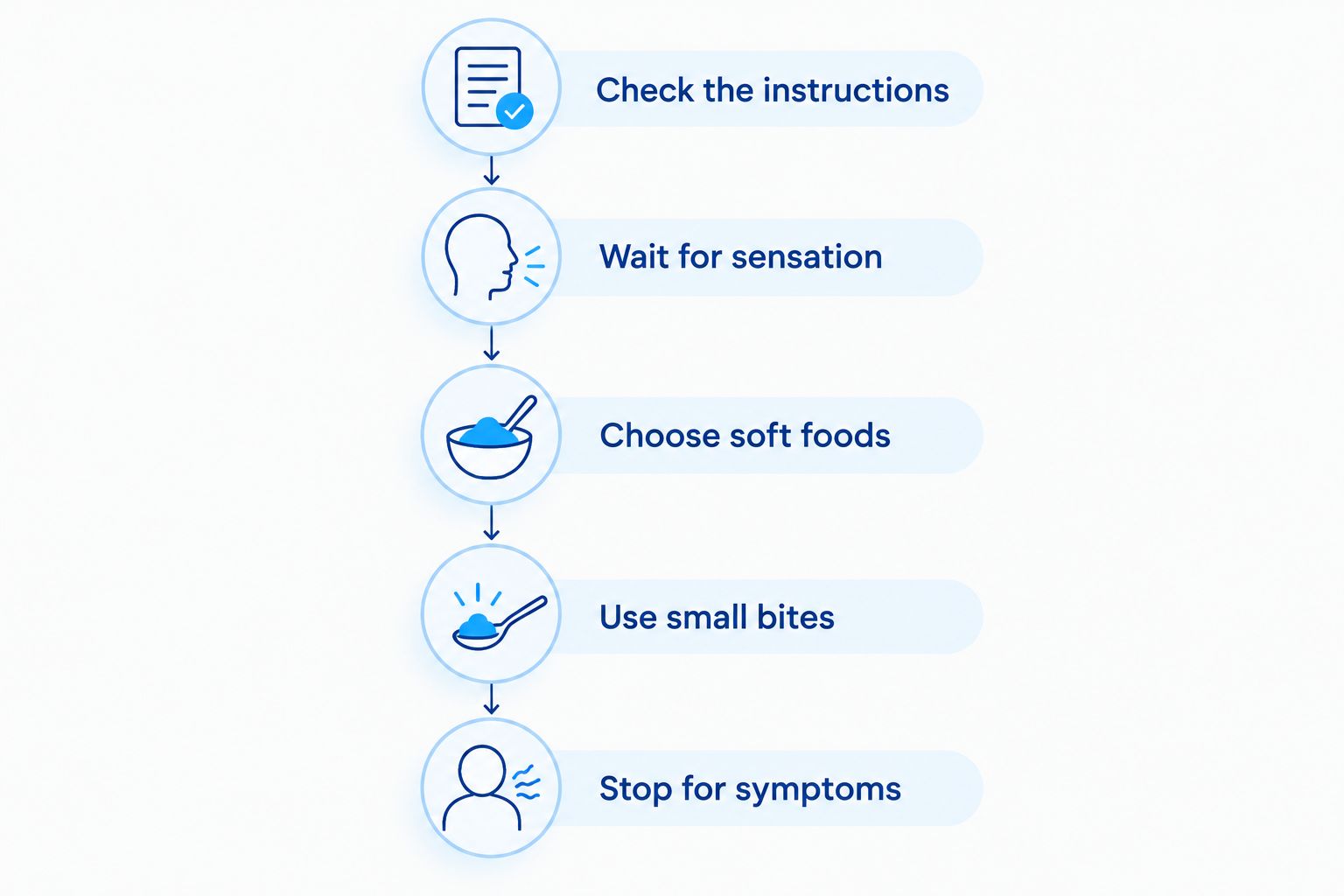
Use this sequence before your first meal:
- Check the instructions. Follow the waiting period your dentist gave you for the specific temporary cement.
- Wait for sensation. Do not chew while your lip, cheek, or tongue remains numb; you can injure the soft tissue without noticing.
- Choose soft foods. Start with something tender, such as scrambled eggs, cooled oatmeal, or soft pasta.
- Use small bites. Cut food before eating, and keep chewing pressure on the opposite side when possible.
- Stop for symptoms. Stop chewing if the crown shifts, your bite feels wrong, or pressure causes pain.
The goal is comfortable eating, not proving that the crown is strong. If both sides of your mouth have been treated, ask your dentist how to adapt this advice rather than relying on the opposite-side rule.
Which foods should you avoid with a temporary crown?
Avoid foods that stick, crack, or require a strong tearing motion. Chewing on the other side reduces direct pressure, but it does not make every food a good choice.
Sticky foods
Skip gum, taffy, caramel, and sticky candy. These foods can grip the crown and pull against its temporary attachment as your teeth separate.
Sticky does not always mean sweet. Dense, chewy foods can also require repeated pulling, so judge the texture rather than the label on the package.
Hard or crunchy foods
Avoid chewing ice, hard candy, popcorn kernels, and hard nuts. Raw carrots and other firm foods also demand more biting force than cooked versions.
Do not use the crowned tooth to open packaging or bite objects. A temporary crown is not a tool, even if the tooth feels comfortable.
Tough foods and chewy crusts
Tough meat, jerky, thick pizza crust, and dense bagels require prolonged chewing or tearing. Choose tender pieces instead, and cut them before taking a bite.
A front temporary crown needs particular care when biting into food. Cut apples or sandwiches into manageable pieces instead of using the crowned tooth to tear off a mouthful.
Very hot or cold foods
Temperature extremes can trigger sensitivity in a recently prepared tooth. Let soup cool, and avoid taking a very cold drink immediately after a hot meal if temperature changes bother you.
Sensitivity does not tell you whether the cement has set. Follow the timing instructions separately, even when the tooth feels fine.
Why eating comfort varies with a temporary crown
Two people with temporary crowns do not necessarily have the same eating restrictions. Your starting tooth condition and the way your teeth meet matter as much as your menu.
The main factors are:
- Tooth location. Back teeth take substantial chewing pressure, while front teeth help bite and tear food.
- Temporary cement. The material used determines the dentist’s instructions for eating after placement.
- Bite fit. A crown that contacts before the surrounding teeth can make chewing uncomfortable and needs a dental check.
- Tooth condition. A tooth treated for a crack or extensive damage can need additional protection.
- Gum tenderness. Recently treated gum tissue can make pressure and cleaning uncomfortable.
- Clenching or grinding. Extra force places stress on the crown even when you are not eating.
If your crown protects a fractured tooth, dietary changes are only part of treatment. Read about dental crowns for a cracked back molar to understand the purpose of protecting the remaining tooth structure.
Do not shorten the temporary phase yourself by skipping the final appointment. Feeling comfortable does not mean treatment is complete.
Can I eat pizza or a sandwich with a temporary crown?
You can eat soft portions of pizza or a sandwich if your dentist has cleared you to eat. Avoid tough crusts, sticky fillings, and biting directly with a temporary front crown. Cut the food into small pieces and chew away from the treated tooth.
For a sandwich, choose soft bread and a tender filling rather than a crusty roll or chewy meat. For pizza, leave the tough edge and let hot cheese cool before eating.
The useful question is not whether a food is called pizza or a sandwich. Ask whether each bite requires pulling, hard crushing, or uncomfortable pressure.
Can I drink coffee with a temporary crown?
You can usually drink coffee with a temporary crown once your dentist’s waiting instructions are satisfied and numbness has worn off. Let the drink cool if heat triggers sensitivity. Avoid chewing ice in iced drinks.
A drink that feels comfortable does not prove the crown is ready for solid food. The temporary-cement instructions still apply.
If hot or cold drinks cause lingering pain rather than a brief sensation, contact your dentist. Do not keep testing the tooth with different temperatures.
Can I return to normal eating after the permanent crown?
You can generally return to a broader diet after the final crown is placed and your dentist clears you to chew. Follow the instructions for the final cement and any other treatment you received. Continue avoiding habits such as chewing ice or biting hard objects.
A final crown still needs daily cleaning and regular dental care. It protects the tooth but does not make the surrounding tooth structure or gums immune to disease.
If your bite feels uneven after placement, ask for a check instead of trying to wear it down through chewing. An uncomfortable contact deserves assessment.
How should you clean around a temporary crown?
Keep cleaning the area, but use a gentle technique. Leaving plaque around the crown is not a substitute for protecting its attachment.
Standard adult oral-hygiene guidance is to brush for 2 minutes, 2 times per day, with fluoride toothpaste. Use gentle pressure along the gumline rather than scrubbing the edge of the temporary crown.
Clean between your teeth daily unless your dentist gives you different instructions. When using string floss around a temporary crown, gently guide it between the teeth and slide it out sideways rather than snapping it upward against the crown. Work around 1 tooth at a time so you can control the movement.
If floss repeatedly catches, shreds, or makes the crown move, stop and call your dentist. Do not force it through a contact that feels blocked.
For your 2026 home-care routine, ask whether an existing retainer or night guard still fits safely over the temporary crown. Do not force a tight appliance into place.
What if the temporary crown becomes loose or falls off?
Stop chewing on that tooth and contact your dentist promptly. A loose crown is not something to stabilize by biting harder or switching to sticky food.
If the crown comes completely off, take it out of your mouth, keep it in a clean container, and bring it to the appointment. Do not use household glue, and do not sleep with an unsecured crown in your mouth.
Tell the dental team what happened, whether you have pain, and whether the crown looks damaged. Ask for instructions before attempting any temporary repair.
Seek urgent dental attention for increasing pain, swelling, fever, or a broken tooth. Trouble breathing or swallowing requires emergency medical care. Mild sensitivity and a moving crown are different problems; do not assume both can wait until the final appointment.
Dental Arts of Atlantis provides general dental care in Lake Worth. If you are a patient and your temporary crown changes, contact the practice for instructions rather than relying on a food list alone.
Discuss your crown concerns
Ask about eating restrictions, discomfort, or a temporary crown that feels loose.
FAQ
Can you eat normally with a temporary crown in 2026?
You can eat meals with a temporary crown, but you should modify food texture and chewing habits. Choose soft foods, avoid sticky or hard foods, and follow your dentist’s cement instructions.
How long should I wait to eat after getting a temporary crown?
Follow the waiting period your dentist gives you for the temporary cement, and wait until numbness has worn off before chewing. There is no single waiting period that fits every cement and procedure.
Can I chew gum if I use the other side of my mouth?
Avoid chewing gum while wearing a temporary crown because its sticky texture can pull the restoration loose. Chewing on the opposite side does not remove that risk.
Is pain when biting normal with a temporary crown?
Pain when biting needs a dental check, especially if the crowned tooth touches before your other teeth. Stop chewing on the tooth and contact your dentist rather than repeatedly testing it.
Can I brush my temporary crown?
Yes, gently brush your temporary crown and the surrounding gumline with fluoride toothpaste. Follow your dentist’s instructions for cleaning between the teeth without pulling the crown loose.
Do I need to eat only liquids with a temporary crown?
A temporary crown alone does not usually require an all-liquid diet. Soft foods that need little chewing are practical choices unless your dentist gives you additional restrictions.
Should I call if my temporary crown falls off but does not hurt?
Yes, contact your dentist even if the exposed tooth does not hurt. Keep the crown in a clean container, avoid chewing on the tooth, and ask for repair instructions.
One last thing
A comfortable temporary crown still needs protection. Lack of pain is not permission to chew caramel, ice, or tough crusts, and it does not mean you can postpone the final restoration.
Before leaving your 2026 crown appointment, ask: which foods should you avoid, when can you first eat, and whom should you contact if the crown moves? Those answers make your next meal simpler and safer.
Related guides
- How long do dental crowns last?
- Best floss type for tight contacts between teeth
- How to stop tooth sensitivity to hot and cold