
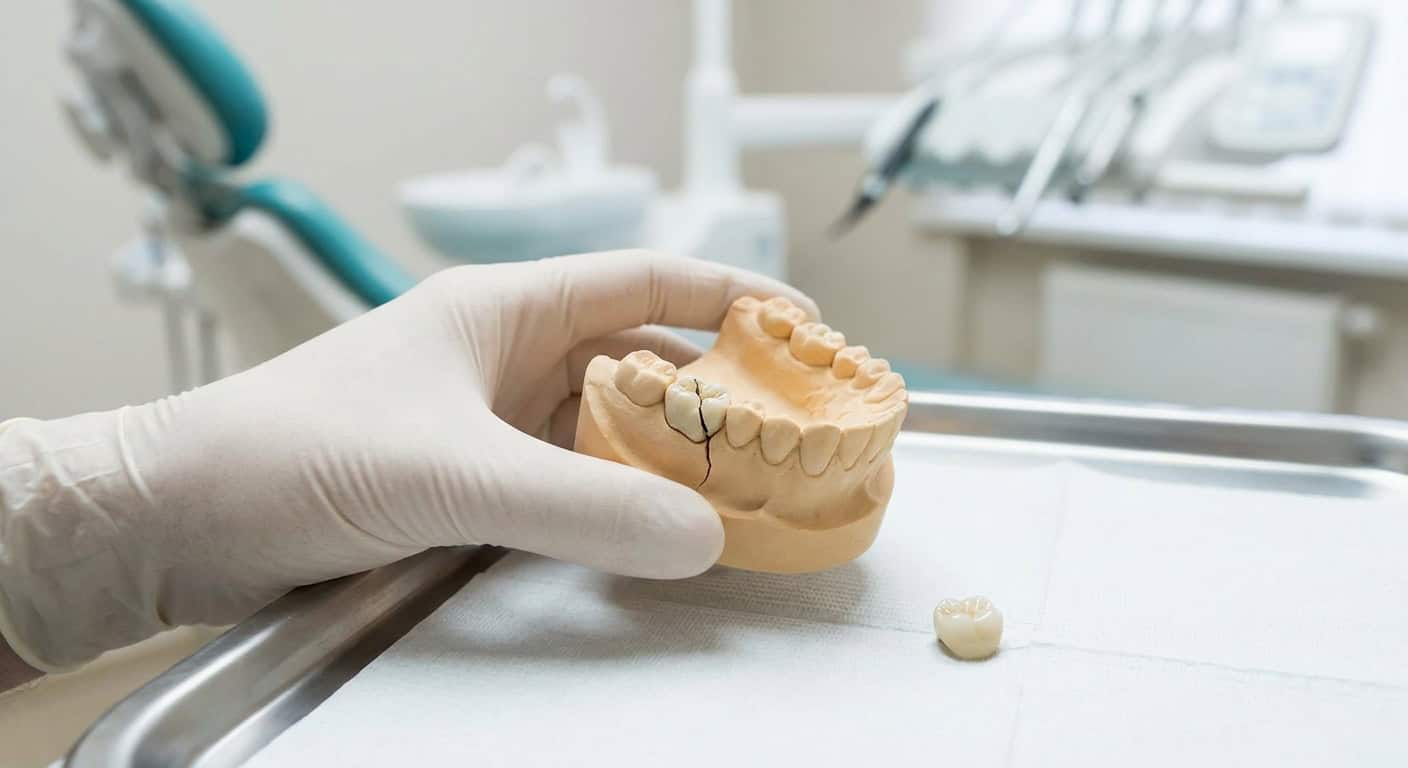
A cracked back molar needs more than a filling once the crack runs deep enough to expose dentin or threaten the nerve — this guide breaks down which type of dental crown actually holds up on a molar and who each option fits best.
- Zirconia is the strongest dental crown for a cracked molar in 2026 — metal-free and built for back-tooth bite force.
- Same-day CEREC crowns finish in one visit at Dental Arts of Atlantis, no temporary crown or second appointment.
- Gold crowns still beat every material on wear resistance for molars nobody sees when you smile.
- Skip a filling or bonding on a cracked molar once the crack reaches dentin — it will spread under chewing pressure.
Why this matters
A cracked molar doesn't heal on its own, and back teeth take the brunt of your bite — 200 to 250 pounds of force per square inch on the molars compared to roughly 50 on the front teeth. A crown that's undersized on material strength or badly fitted to your bite will crack again within a year or two.
Waiting also raises the stakes. A crack that starts in the enamel can migrate to the pulp in a matter of weeks under normal chewing, and at that point you're looking at a root canal before the crown goes on, not instead of it. If a molar cracked recently and you're in pain right now, emergency dentistry for a cracked or broken tooth covers what to do in the first 24 to 48 hours before you even get to crown material decisions.
Who this is for
This guide is for anyone with a cracked, fractured, or heavily filled back molar who's been told a crown is the fix, not a patient weighing veneers or a front-tooth cosmetic case — molars need strength first and appearance second. It's also for parents and working adults in Palm Beach County trying to figure out whether a same-day crown or a lab-made one fits their schedule and budget before the next appointment.
What to look for in a dental crown for a cracked molar
Material strength under molar bite force
Back teeth chew, grind, and clench more than any other teeth in your mouth, so the crown material has to survive repeated flexing without chipping or fracturing. Zirconia crowns test at roughly 900 to 1,200 megapascals of flexural strength, well above porcelain-fused-to-metal, which is why zirconia has become the default recommendation for molars in 2026.
How much natural tooth structure remains
If the crack took out a cusp or ran below the gumline, the dentist needs to know how much healthy tooth is left to anchor the crown to. Less remaining structure sometimes means a core buildup first, and it can push you toward a crown type that doesn't require aggressive shaping of what's left.
Fit with your bite and opposing teeth
A crown that's too hard can wear down the natural tooth it bites against; one that's too soft wears down too fast itself. This matters more on molars than anywhere else in your mouth because that's where your bite forces concentrate every time you eat or clench at night. If you grind your teeth, a mismatched crown material will show wear within a year — night guards for teeth grinding and jaw pain is worth reading alongside this if clenching is part of why the molar cracked in the first place.
Speed: same-day versus lab-fabricated
Some crowns are milled in-office in one visit; others get sent to a lab and take two to three weeks with a temporary crown in between. Neither is objectively better — it comes down to how much you can tolerate a temporary crown and how badly you want the case closed in one appointment.
Cost and how it fits your budget
Crown pricing varies by material and by whether a root canal or core buildup is needed first. If cost is the deciding factor, a financing plan can turn a same-day zirconia crown into a monthly payment instead of one lump sum.
Top picks for a cracked back molar
Zirconia crown — the safe pick
Zirconia tests at up to 1,200 megapascals of flexural strength, more than double most porcelain-fused-to-metal crowns, and it's fully metal-free. It resists chipping under molar bite force and holds its shape for 10 to 15 years with normal care in 2026 dental practice data. Verdict: Buy — it's the default recommendation for a cracked back molar unless you have a specific reason to choose otherwise.
Porcelain-fused-to-metal (PFM) — the middle-ground pick
PFM crowns pair a metal substructure with a porcelain shell, giving you decent strength at a lower cost than zirconia. The tradeoff shows up at the porcelain-to-metal junction, which is the most common chip point on a PFM molar crown after 5 to 7 years of chewing. Verdict: Consider — reasonable if budget is tight and the molar isn't a heavy grinder's tooth.
Gold crown — the wildcard
Gold alloy crowns have one of the lowest fracture rates of any crown material and are the gentlest on the opposing tooth, which matters if you clench or grind. The obvious downside is color — gold doesn't blend in, so it only makes sense on a molar far enough back that it's never visible. Verdict: Buy for a back molar with no cosmetic exposure, Skip if the tooth shows when you laugh.
Same-day CEREC crown — the fastest option
A same-day crown is designed, milled, and placed in a single visit, usually one to two hours chairside, with no temporary crown and no second appointment. Material choice on same-day crowns is typically a milled ceramic like E-max, which holds up well on molars but slightly below full zirconia on raw strength. Verdict: Buy if getting the crack sealed in one visit matters more than squeezing out the last percentage point of material strength — the best same-day option for a cracked molar walks through exactly how that visit goes.
Get your cracked molar looked at
Same-day crown appointments are available for cracked back molars.
What to avoid
- A filling or bonding on a crack that's already reached dentin. It looks like a cheap fix, but a crack under a filling keeps flexing every time you chew and usually reopens within months.
- At-home temporary crown kits. They're marketed as a stopgap, but they don't restore real bite strength and can let bacteria in around the crack while you wait.
- Delaying treatment past the first sharp bite-down pain. If the crack is deep enough to hurt when you bite, it may already be close to the nerve — how to know if you need a root canal explains the signs before the crown conversation even starts.
Crown comparison for a cracked back molar
| Crown type | Strength | Speed | Best for grinders | Cost tier | Verdict |
|---|---|---|---|---|---|
| Zirconia | Highest (up to 1,200 MPa) | Lab, 2-3 weeks | Yes | Mid-high | Buy |
| PFM | Moderate | Lab, 2-3 weeks | Caution | Mid | Consider |
| Gold | High, gentlest on opposing tooth | Lab, 2-3 weeks | Yes | Mid-high | Buy (back molars only) |
| Same-day CEREC (E-max) | Good | Same day | Moderate | Mid | Buy |
FAQ
What is the best dental crown for a cracked molar?
Zirconia is the best dental crown for a cracked molar in most cases because it tests up to 1,200 megapascals of flexural strength and holds up under the heavy bite force molars take. Gold is a close second on durability but only works cosmetically on molars that never show.
How much does a crown for a cracked molar cost?
Cost depends on the material and whether a root canal or core buildup is needed first, with zirconia and gold typically priced higher than porcelain-fused-to-metal. A financing plan can spread the cost into monthly payments if it’s not fully covered by insurance.
Can a same-day crown handle a cracked molar as well as a lab-made one?
Yes, a same-day CEREC crown milled from E-max ceramic handles normal molar chewing well, though it sits slightly below full zirconia on raw strength. For most cracked-molar cases the one-visit convenience outweighs that small difference.
Is a root canal always needed before a crown on a cracked molar?
No, a root canal is only needed if the crack has reached the pulp or nerve of the tooth. A crack limited to the enamel or dentin can often go straight to a crown without a root canal first.
How long does a crown last on a cracked back molar?
A zirconia or gold crown on a molar typically lasts 10 to 15 years with normal care in 2026 dental practice data. Grinding, poor bite alignment, or skipping regular checkups shortens that window.
Will a crown on a cracked molar hurt?
The crown placement itself is done under local anesthesia and shouldn’t hurt, though some sensitivity to hot and cold is normal for a few days afterward. If pain persists past a week or gets worse, that can signal the crack reached the nerve and a root canal is needed.
What happens if I don’t fix a cracked molar?
An untreated crack keeps flexing every time you chew, and it usually spreads deeper toward the nerve over weeks to months. Once it reaches the pulp, treatment shifts from a simple crown to a root canal plus a crown, which costs more and takes longer.
One last thing
Most patients assume the crack is the whole problem, but the bite habit that caused it — clenching, grinding, or chewing on one side — is still there after the crown goes on. A crown protects the tooth; it doesn't stop the force that cracked it in the first place, which is why grinders who skip a night guard often crack the neighboring molar next.
Related guides