
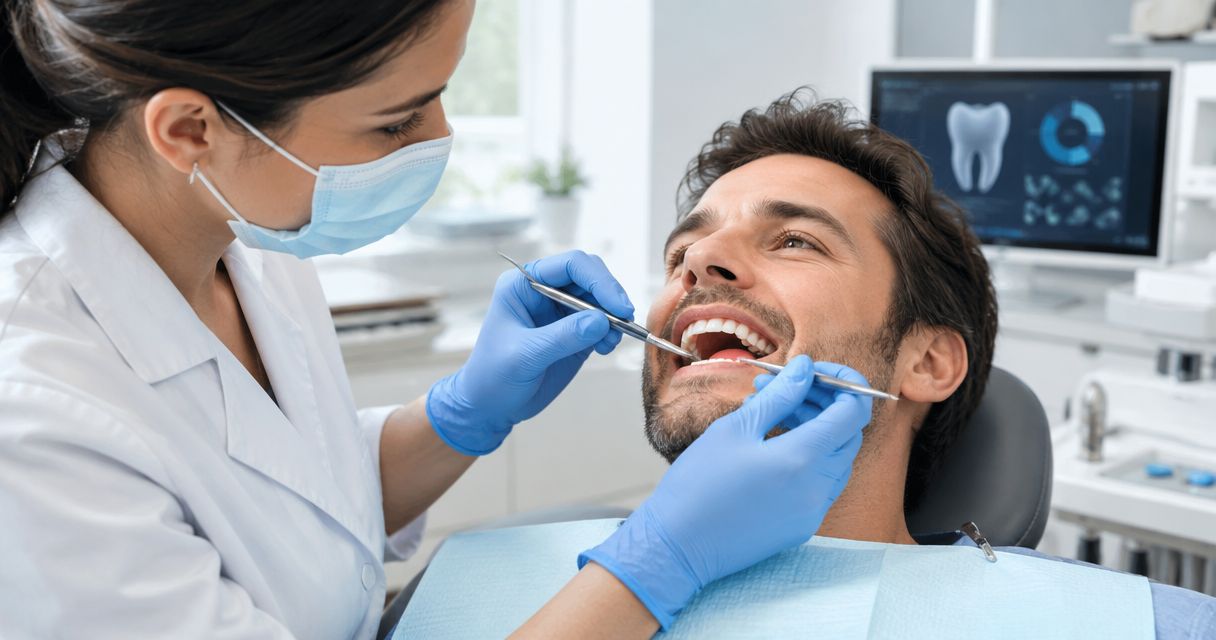
Yes, a same-day crown can be placed on a molar when enough healthy tooth remains, the tooth can be restored predictably, and the chosen material suits your bite. A deep crack, infection, or damage below the gumline can require treatment before a crown is placed—or make a crown unsuitable. In 2026, the right decision still starts with the tooth’s condition, not the promise of finishing in one visit.
- Can a same-day crown be placed on a molar? Yes, when tooth structure, bite, and crown material support treatment.
- A same-day molar crown restores a suitable tooth; it does not treat an infected nerve or repair every crack.
- Choose crown treatment around fit and tooth health, not speed alone.
- Dental Arts of Atlantis provides family dental care in Lake Worth; ask about the appropriate restoration for your molar.
Can a same-day crown be placed on a molar?
Yes. Being a back tooth does not automatically rule out a same-day crown. Molars need restorations designed for chewing forces, with enough material thickness and a carefully adjusted bite.
Same-day describes how a crown is made and placed, not a separate diagnosis or a guarantee of strength. For local treatment planning, Dental Arts of Atlantis provides general and cosmetic dental care to families in the Palm Beach County area.
| Approach | Best for | Main benefit | Main limitation |
|---|---|---|---|
| Same-day crown | A restorable molar suitable for an in-office digital workflow | Can complete crown fabrication and placement in one treatment visit | Not every tooth, material, or clinical situation suits this workflow |
| Laboratory-made crown | A molar needing a restoration selected through a laboratory workflow | Gives the dentist laboratory fabrication options for the individual case | Usually involves a temporary crown and a separate placement visit |
Neither approach is automatically better for every molar. The better crown is the one that fits accurately, protects the remaining tooth, and works with your bite.
Why this matters
A damaged molar can change how you chew, sleep, and approach your next meal. Wanting treatment finished quickly is understandable, especially when you are balancing work and family appointments.
But a fast restoration is useful only when the underlying problem has been addressed. Covering an infected or nonrestorable tooth does not make it healthy, and a crown cannot join every deep fracture back together.
For a 2026 treatment decision, separate two questions: “Can this tooth be saved?” and “Can its final crown be completed today?” The first question determines whether the second is appropriate.
What makes a molar suitable for a same-day crown?
A dentist examines the tooth, surrounding gums, and bite before recommending a restoration. X-rays and additional tests help assess problems that are not visible from the chewing surface.
Enough healthy tooth remains
A crown needs a dependable foundation. A molar with a large filling or a broken chewing cusp can still be restorable, but the amount and location of remaining healthy tooth matter.
Sometimes the dentist needs to rebuild the tooth before fitting a crown. If decay or a fracture extends too far below the gumline, additional treatment or a different plan is necessary.
The nerve does not need untreated care
A crown does not treat an infected tooth nerve. Lingering temperature pain, spontaneous throbbing, swelling, or pain with biting needs assessment before the dentist commits to the final restoration.
Those symptoms do not all mean the same thing. Your dentist uses the examination and testing to distinguish problems such as inflammation, infection, a crack, or an uneven bite.
The crown margin can be captured and kept clean
The crown’s edge must fit the prepared tooth. Digital scanning requires a clear view of that edge, and the cementing or bonding process requires appropriate control of moisture.
Bleeding gums, deep margins, or difficult access can complicate the process. A different sequence of care is sometimes the safer way to achieve a dependable fit.
Your bite suits the design
Molars carry substantial chewing loads. The dentist checks the space for the restoration, its thickness, and how it contacts the teeth above or below it.
Tell your dentist if you grind your teeth, clench your jaw, or have broken previous dental work. Those details help guide material selection and protective care after placement.
Why same-day crown eligibility varies
Your molar’s location alone does not decide the treatment plan. These clinical factors explain why two damaged back teeth can need different approaches:
- Remaining tooth: Healthy structure determines how the crown is supported and retained.
- Crack depth: A damaged cusp differs from a fracture extending into the root.
- Nerve health: Infection or significant inflammation can require treatment before the final crown.
- Gum condition: Inflamed tissue or a deep crown edge can complicate scanning and placement.
- Bite forces: Grinding, clenching, and limited restorative space affect the design.
- Material requirements: The selected material must suit the tooth, preparation, and fabrication process.
Do not choose a same-day crown simply because it fits your calendar. Ask the dentist which of these factors supports the recommendation for your particular molar.
What happens during a same-day molar crown appointment?
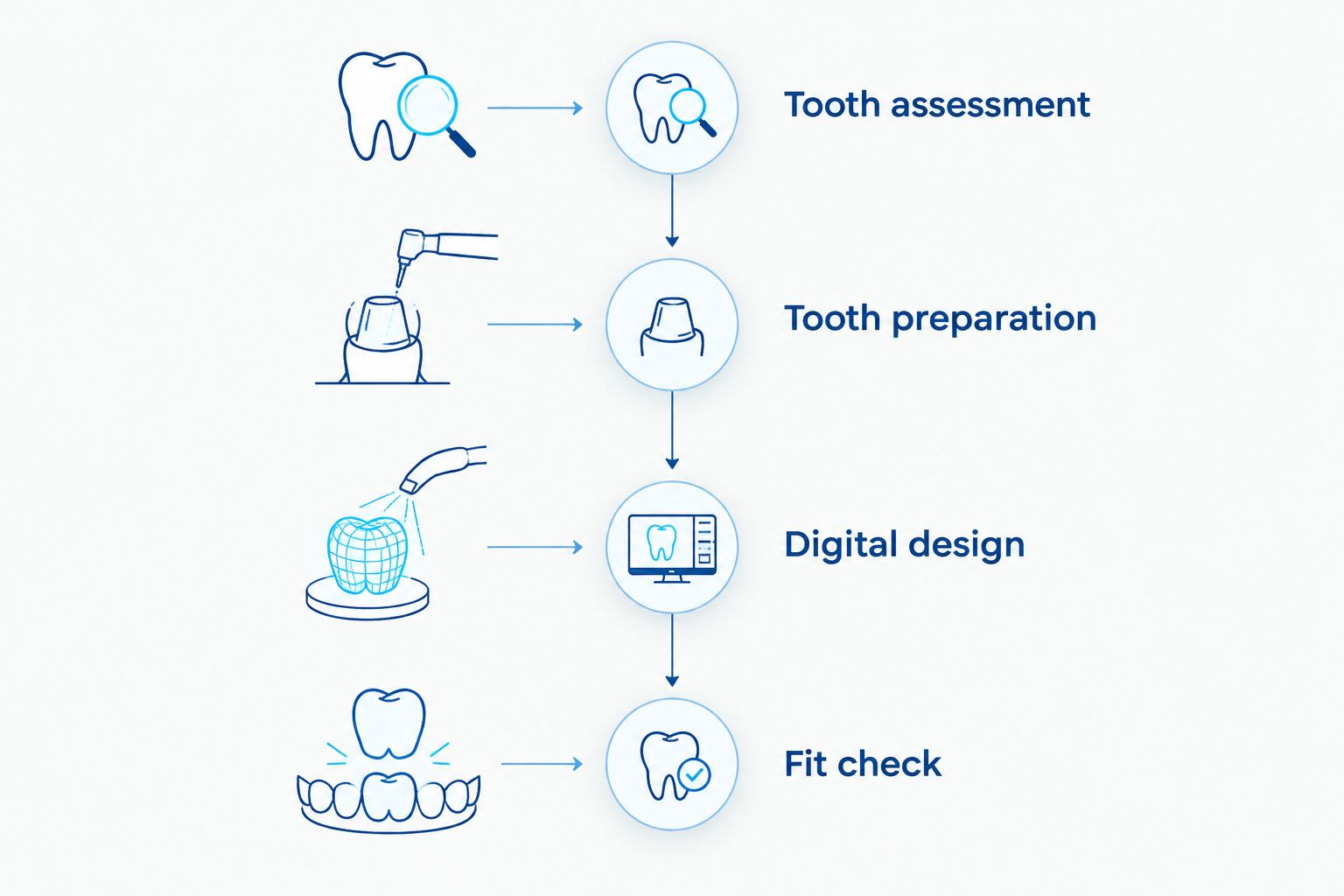
A typical digital crown workflow follows the sequence below. Your treatment can change if the dentist finds additional decay, a deeper crack, or a problem with the tooth’s nerve.
- Tooth assessment: The dentist examines the molar, reviews appropriate imaging, and checks whether a crown is suitable.
- Tooth preparation: After numbing as needed, the dentist removes damaged tissue and shapes the tooth to make room for the restoration.
- Digital design: A scan records the prepared tooth and surrounding bite. The crown is designed and fabricated using the practice’s equipment and chosen material.
- Fit check: The dentist checks the crown’s edges, neighboring contacts, and bite before final placement, then provides aftercare instructions.
The final checks are not optional finishing touches. A crown that feels too tall, traps food, or does not seat correctly needs attention before the treatment is considered complete.
Before arranging treatment in 2026, ask whether the appointment includes assessment only or planned crown fabrication and placement. Review how to prepare for a same-day crown appointment so you know what to discuss beforehand.
Is a same-day crown strong enough for chewing?
A properly selected and fitted same-day crown can restore a molar for chewing. The fabrication schedule alone does not tell you how the restoration will perform.
Material, crown thickness, preparation shape, bonding or cementation, and bite adjustment all matter. Grinding and clenching add stress to both restored teeth and natural teeth.
Avoid treating the word “ceramic” as a complete material specification. Dental ceramics differ, and your dentist should explain why the proposed material fits your molar rather than relying on a broad claim that one crown type is always strongest.
A useful question for your 2026 consultation is: “Why is this material appropriate for my back tooth and my bite?” Ask what protection is recommended if you already show signs of grinding.
Does a molar need a root canal before a crown?
No. A molar does not automatically need root canal treatment before a crown. A crown protects and restores the visible tooth structure; root canal treatment addresses diseased or infected tissue inside the tooth.
Some teeth need both treatments, while others need a crown without root canal treatment. The decision comes from symptoms, examination findings, imaging, and nerve testing—not from whether the crown is made the same day.
Tell your dentist about pain that wakes you, lingering sensitivity, swelling, or a previous episode of severe pain that suddenly stopped. Do not assume that less pain always means the underlying problem has resolved.
If you have spreading facial swelling, fever with dental swelling, or trouble swallowing, seek urgent care. Trouble breathing requires emergency medical attention rather than waiting for a crown appointment.
Can a cracked molar receive a same-day crown?
Yes, some cracked molars can receive a same-day crown, but the crack must be assessed first. A crown can cover and protect weakened chewing surfaces; it cannot make every fractured tooth restorable.
A broken cusp is different from a split tooth or a vertical root fracture. The dentist needs to determine the fracture pattern, nerve involvement, and remaining support before choosing treatment.
You cannot reliably judge crack depth in a mirror. Pain when biting or releasing pressure deserves an examination, even when the visible chip looks small.
What should you ask before agreeing to treatment?
Bring a short list rather than trying to remember every detail while you are uncomfortable. These questions keep the discussion focused on the tooth and the proposed restoration:
- What makes this molar suitable for a crown rather than a smaller restoration?
- Is the nerve healthy, and what findings support that assessment?
- Which material do you recommend for my bite, and why?
- What would make you change from same-day placement to staged treatment?
- What symptoms should prompt a call after placement?
Dental Arts of Atlantis is best for Palm Beach County families seeking general and cosmetic dental care in one practice. For a molar crown discussion, ask for an explanation of the diagnosis, alternatives, and expected treatment sequence before deciding.
The benefit of a family practice is access to the stated range of dental care; that alone does not establish whether a particular same-day crown workflow suits your tooth. Confirm the proposed procedure and appointment plan directly.
How do you care for a newly crowned molar?
Wait until numbness has worn off before chewing so you do not accidentally bite your cheek or tongue. Follow the dentist’s instructions about eating because recommendations depend on the material and placement method.
Brush for 2 minutes per session, twice a day, using fluoride toothpaste, and clean between your teeth once a day. The crown itself does not get a cavity, but the natural tooth at its edge remains vulnerable to decay.
Avoid chewing ice and using your teeth to open packaging. If grinding is part of your diagnosis, follow the dentist’s advice about a protective appliance rather than assuming the crown eliminates the problem.
Contact the practice if your bite feels high, the crown feels loose, or discomfort worsens. Do not keep chewing through persistent pain in the hope that the crown will adjust itself.
FAQ
Can a same-day crown be placed on a back molar?
Yes, a same-day crown can be placed on a back molar when the tooth is restorable and the material and design suit your bite. The dentist must assess tooth structure, nerve health, and the crown’s fit.
Is a same-day molar crown permanent or temporary?
A same-day molar crown is intended as the final restoration, not a temporary covering. Final does not mean lifetime; the crown and surrounding tooth still need maintenance and examination.
Do I need a root canal before getting a molar crown?
No, root canal treatment is not automatically required before a molar crown. It is recommended when the condition of the tissue inside the tooth calls for it.
Is a laboratory crown always stronger than a same-day crown?
No, laboratory fabrication alone does not make a crown stronger. Material, thickness, preparation, placement, and bite forces all affect the restoration’s performance.
Will I need a temporary crown with same-day treatment?
A completed same-day crown workflow generally avoids an interim temporary crown. If the dentist needs to delay the final restoration, temporary protection can still be part of the plan.
Can I eat right after a same-day molar crown?
Follow your dentist’s instructions about when to eat, and wait until numbness has worn off before chewing. The placement method and your tooth’s condition determine the specific advice.
Does Dental Arts of Atlantis offer the right care for my damaged molar?
Dental Arts of Atlantis provides general and cosmetic dentistry in Lake Worth. An examination is needed to determine the appropriate restoration and whether same-day crown treatment is part of your proposed care.
One last thing
For your 2026 crown decision, ask: “What would make you stop and change the plan today?” That question invites a clear explanation of hidden decay, nerve problems, cracks, or fit concerns before treatment begins.
A recommendation to pause is not a failure of same-day dentistry. Protecting the tooth matters more than keeping a one-visit promise.
Related guides
- Best crown material for a back molar
- Can a cracked tooth heal on its own?
- How long do dental crowns last?