
No—a cracked tooth cannot heal on its own because fractured enamel and dentin do not grow back together. Pain that fades does not mean the crack has closed, and continued chewing can worsen the damage. This 2026 guide explains which cracks need treatment, what to do while waiting for care, and which symptoms require urgent attention.
- Can a cracked tooth heal on its own? No. Treatment protects damaged tooth structure; it does not regrow it.
- Dental Arts of Atlantis provides general, cosmetic, and implant dental care for Lake Worth families.
- A painless enamel craze line differs from a structural crack, but you cannot reliably distinguish them at home.
- Facial swelling, fever, or worsening pain needs urgent attention; trouble breathing or swallowing requires emergency medical care.
Can a cracked tooth heal on its own?
A structural tooth crack does not knit back together like a broken bone. Your dentist assesses whether the tooth needs protection, treatment of its inner tissue, or removal when it cannot be saved.
The important question is not whether the crack will heal, but whether the tooth can be preserved. Its depth, direction, and effect on the surrounding tissues determine the answer.
If you have biting pain, a broken piece, or new sensitivity, read about emergency dentistry for a cracked or broken tooth and contact a dentist rather than testing the tooth repeatedly.
| Finding | Usual approach | Best for | Important limitation |
|---|---|---|---|
| Enamel-only craze line | Examination and monitoring | Confirmed superficial lines without structural damage | Appearance alone cannot establish depth |
| Small chip or limited broken cusp | Bonding, filling, or partial coverage when appropriate | Localized damage with enough sound tooth remaining | A small visible defect can hide deeper damage |
| Restorable structural crack | Dental crowns for a cracked back molar or another protective restoration | Teeth that need support against chewing forces | Coverage cannot guarantee that a crack will stop progressing |
| Crack affecting the pulp | Root canal treatment and an appropriate restoration when salvageable | Restorable teeth with irreversibly inflamed or infected pulp | Root canal treatment does not repair the fracture itself |
| Split tooth or certain root fractures | Extraction or specialist assessment | Damage that cannot be predictably restored | Removing the tooth creates a separate replacement decision |
Why this matters
A cracked tooth can hurt only occasionally. A sharp sensation when you release a bite, sensitivity to cold, or discomfort that seems to move between teeth can make the problem difficult to identify.
Waiting for constant pain is not a useful test. Some cracks remain quiet, while others expose deeper structures to irritation or bacteria.
For families looking for dental care in 2026, Dental Arts of Atlantis is a local option for general, cosmetic, and implant dentistry in Lake Worth. A suspected crack still requires an individual examination; a symptom description or photograph cannot establish whether a tooth is restorable.
Enamel craze lines: assessment before reassurance
Craze lines are shallow lines limited to the outer enamel. They commonly cause no discomfort and do not necessarily require a filling or crown after a dentist confirms their nature.
That is different from healing. The line does not disappear because the enamel has fused back together.
Best for confirmed superficial lines: monitoring rather than automatic drilling. The limitation is diagnosis: a narrow line in a mirror does not tell you whether the damage extends deeper.
Report any change in sensitivity, biting comfort, or appearance. Avoid assuming that every fine line is harmless, especially after an injury or when symptoms begin.
Small chips and broken cusps: repair depends on remaining structure
A chip means a piece of tooth has broken away. A fractured cusp involves one of the raised chewing portions of a tooth, often near an existing restoration.
Depending on the damage, your dentist can smooth a rough edge or restore the missing area with bonding, a filling, or a more protective restoration. These approaches replace or protect structure; they do not make the original fragment grow back.
Best for localized damage: the least extensive restoration that adequately protects the remaining tooth. Bonding conserves tooth structure, but it is not a substitute for stronger coverage when chewing forces threaten a weakened tooth.
Tell the dental office if an edge cuts your tongue or cheek. Do not file it yourself or attach a broken fragment with household glue.
Structural cracks: protecting a tooth is not healing it
A structural crack extends beyond a superficial enamel line. It can allow parts of the tooth to flex during chewing and irritate the pulp—the soft tissue containing nerves and blood vessels.
A crown covers the chewing surface and sides of the prepared tooth. An onlay covers selected areas, including weakened cusps, when that design is appropriate.
Best for a salvageable cracked tooth: protection chosen for the crack and remaining tooth structure. These restorations can reduce damaging movement, but neither guarantees that the fracture will remain stable.
Before treatment, ask what makes the tooth restorable and what uncertainty remains. Your 2026 treatment plan should distinguish the goal of protecting the tooth from a promise that the crack has healed.
Pulp involvement: when root canal treatment enters the plan
A crack that irritates or exposes the pulp does not automatically mean extraction. If the tooth remains restorable, root canal treatment can address irreversibly inflamed or infected tissue inside it.
The dentist removes the affected pulp, cleans and seals the internal spaces, and plans the restoration needed to protect the tooth. The fracture itself remains a separate structural concern.
Best for a restorable tooth with damaged pulp: root canal treatment combined with appropriate protection. The benefit is the possibility of keeping the natural tooth; the limitation is that treatment cannot rescue every crack.
Do not assume that antibiotics alone solve the problem. They do not close a fracture or replace dental treatment, and a clinician determines whether they are needed.
Why cracked-tooth treatment varies
The same symptom can lead to different treatment recommendations because cracks differ in important ways. These are the main factors your dentist evaluates:
- Crack depth: An enamel-only line differs from damage extending into dentin, pulp, or the root.
- Crack direction: A fractured cusp, split tooth, and vertical root fracture do not carry the same treatment options.
- Remaining structure: Sound tooth tissue must support the proposed filling, onlay, or crown.
- Pulp condition: Reversible irritation differs from irreversible inflammation or infection inside the tooth.
- Gum and bone findings: A localized deep gum pocket or loss of support can change the outlook.
- Biting forces: Clenching, grinding, and heavy contacts affect how the tooth needs protection.
No home test measures these factors reliably. A photograph can show a broken edge but cannot establish the full extent of a fracture.
What should I do until a dentist checks the tooth?
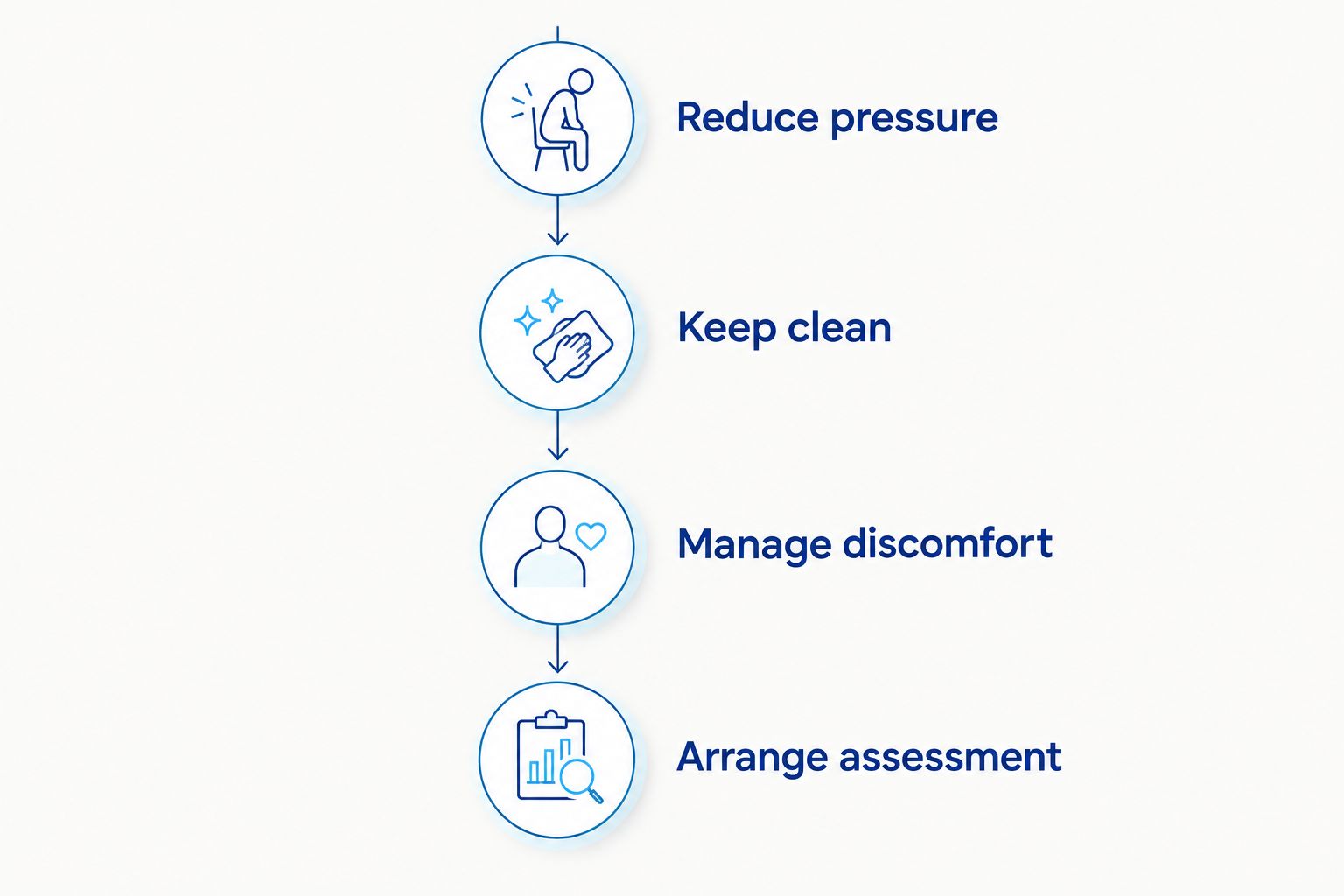
Protect the tooth rather than repeatedly checking whether it still hurts. Use this 2026 checklist while arranging an examination; these measures reduce irritation but do not repair the crack.
- Reduce pressure. Chew on the other side and choose soft foods. Avoid ice, hard candy, kernels, and sticky foods that strain the damaged area.
- Keep clean. Brush gently with fluoride toothpaste and clean between teeth carefully. Stop pulling at anything that feels loose or catches painfully.
- Manage discomfort. If you can safely take an over-the-counter pain reliever, follow its label and ask a pharmacist about medication interactions or health conditions.
- Arrange assessment. Tell the dental office about swelling, fever, injury, lingering temperature sensitivity, or pain that interrupts sleep so staff can assess urgency.
Do not place aspirin directly against a tooth or gum; it can injure the tissue. Avoid household adhesives, home drilling, and repeated biting on hard objects to locate the crack.
How does a dentist check for a crack?
A cracked-tooth examination starts with your symptoms and the tooth's history. Explain whether pain happens during chewing, when you release pressure, with cold drinks, or without an obvious trigger.
Your dentist can inspect the tooth under light and magnification, check individual biting contacts, assess gum pockets, and test the pulp's response. Sometimes an existing restoration obscures the damaged area.
Dental X-rays help assess roots, bone, decay, and other possible causes of pain. A crack does not have to appear on an X-ray to be present. Additional assessment or referral is sometimes necessary when the findings remain uncertain.
Bring a clear account of what happened rather than trying to prove the diagnosis yourself. Mention recent trauma, a lost filling, or a history of grinding.
When does a cracked tooth need urgent care?
Contact a dentist promptly for a suspected structural crack, particularly with pain or a missing fragment. Request urgent assessment for severe or worsening pain, swelling, fever, drainage, or difficulty opening your mouth.
Trouble breathing or swallowing, or swelling spreading into the neck or around an eye, requires emergency medical care. Do not wait for a routine dental appointment with these symptoms.
If an injury involves a loose or displaced tooth, tell the dental office immediately. A tooth that has moved after trauma requires a different assessment from an old, painless enamel line.
For any urgent dental concern in 2026, describe the symptoms clearly when you call. Do not assume a practice has emergency appointment capacity without confirming directly.
Can a cracked tooth stop hurting without treatment?
Yes, cracked-tooth pain can come and go without the fracture healing. Changes in chewing, temperature exposure, or pulp health can change what you feel.
A reduction in pain does not establish recovery. Keep the examination appointment even if the tooth feels comfortable again.
Does every cracked tooth need to be pulled?
No, not every cracked tooth needs extraction. Some teeth can be protected with a restoration, with root canal treatment added when the pulp requires it.
A split tooth or certain root fractures can make preservation unpredictable or impossible. Ask your dentist to explain both the evidence for saving the tooth and the reasons extraction is being considered.
Can toothpaste or a night guard fix a crack?
No, toothpaste and night guards do not fuse fractured tooth structure. Fluoride supports protection against decay, while a properly selected guard can reduce damaging contacts associated with grinding.
Sensitivity toothpaste can reduce some symptoms without treating the cause. A guard is an adjunct after assessment, not permission to leave a suspected structural crack untreated.
FAQ
Can a cracked tooth heal on its own if it doesn’t hurt?
No, a cracked tooth does not heal on its own just because it is painless. A dentist needs to distinguish a superficial enamel line from a deeper structural fracture.
Can I wait until my next checkup for a cracked tooth?
Contact your dentist when you notice a suspected crack rather than deciding to wait. Describe any biting pain, broken fragment, swelling, or temperature sensitivity so the office can assess urgency.
Does a cracked tooth always need a crown?
No, a cracked tooth does not always need a crown. Confirmed craze lines can be monitored, while limited chips and more extensive fractures require different levels of repair or protection.
Will a root canal make a tooth crack disappear?
No, root canal treatment does not make a crack disappear. It treats affected tissue inside a restorable tooth, while a suitable restoration addresses structural protection.
Can a crack be missed on a dental X-ray?
Yes, a crack can be present without appearing clearly on a dental X-ray. Dentists combine imaging with symptoms, direct examination, gum measurements, and other tests.
What should I avoid eating with a cracked tooth?
Avoid hard and sticky foods, and do not chew on the affected tooth while awaiting assessment. Choose soft foods and stop testing the area by deliberately biting down.
Can Dental Arts of Atlantis help my family with dental care in Lake Worth?
Dental Arts of Atlantis provides general, cosmetic, pediatric, and implant dental care for families in the Palm Beach County area. Contact the practice to discuss your symptoms and arrange an appropriate visit.
One last thing
Pain is a symptom, not a measurement of crack depth. A quiet tooth is not necessarily a sound tooth, and a painful tooth is not automatically beyond saving.
Before you leave your 2026 dental visit, ask: What was found, what needs protection, and which changes mean I should call again? Those answers are more useful than simply knowing whether the tooth hurts today.
Related guides
- How to save a tooth instead of getting it extracted
- Night guards for teeth grinding and jaw pain
- How to handle a dental emergency until you reach the dentist