
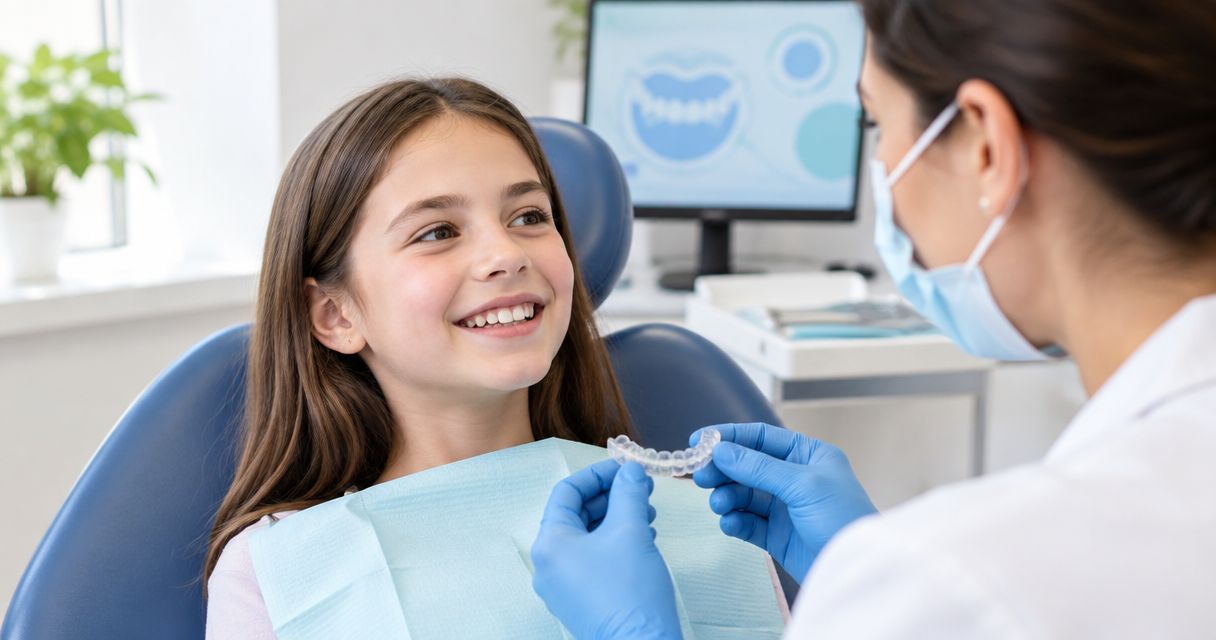
Yes, children can get Invisalign before losing all their baby teeth when their dental development, bite problem, and ability to wear aligners make early treatment appropriate. Having baby teeth does not automatically rule out treatment, but early treatment does not guarantee your child will avoid another orthodontic phase later. This 2026 guide explains what determines readiness and when monitoring is the better choice.
- Can children get Invisalign before losing all baby teeth? Yes, selected children qualify during mixed dentition.
- An orthodontic evaluation by age 7 years does not mean your child needs treatment immediately.
- Early Invisalign treatment addresses selected developing problems; another treatment phase can still be necessary.
- Dental Arts of Atlantis offers pediatric dentistry and Invisalign care for families in Lake Worth.
Why this matters
The right question is not whether every baby tooth has fallen out. It is whether treating a specific problem now benefits your child. Some developing bite problems deserve early attention, while other tooth positions are better reassessed as permanent teeth arrive.
The American Association of Orthodontists recommends an initial orthodontic check no later than age 7 years. That recommendation is for evaluation—not automatic braces or aligners. If you are unsure what to look for, this guide explains how to know if your child needs an orthodontic evaluation.
For parents making a decision in 2026, separating an early check from an early treatment commitment helps keep the conversation focused on your child's needs.
Can children get Invisalign before losing all baby teeth?
Yes. Selected children qualify while they have a mixture of baby teeth and permanent teeth, a stage called mixed dentition. The clinician must assess which teeth have erupted, how the jaws meet, whether space is limited, and whether removable aligners suit the movements required.
An examination comes first. Depending on the findings, the assessment can include photographs, a scan or impressions, and dental X-rays when clinically indicated. A photograph of crowded front teeth alone cannot establish whether early Invisalign treatment is appropriate.
The main choices are not simply Invisalign now or no care at all:
| Approach | Best for | Main advantage | Main limitation |
|---|---|---|---|
| Early Invisalign treatment | Selected children with a treatable developing problem and reliable wear habits | Removable trays allow access for eating and cleaning | Success depends on wear, fit, and case selection; later treatment can still be needed |
| Fixed orthodontic appliances | Children whose required movements or daily habits favor a fixed approach | Tooth movement does not depend on remembering to insert removable trays | Cleaning around appliances requires extra care |
| Active monitoring | Children without a problem that benefits from immediate correction | Avoids starting treatment without a clear current purpose | Requires follow-up as teeth erupt and the bite changes |
No appliance is the best choice for every child with baby teeth. Ask the clinician to explain why the recommended approach fits your child's diagnosis better than the alternatives.
Early treatment: a specific goal, not a finished adult smile
Early orthodontic treatment is often called a first phase. Its purpose is to address a defined problem during development, rather than promise a final alignment result before all permanent teeth arrive.
For example, a clinician might assess a crossbite, an unfavorable bite relationship, or a space problem affecting erupting teeth. These findings do not automatically mean Invisalign is the appropriate appliance. Some problems need a different orthodontic approach or specialist assessment.
The benefit of early treatment is the opportunity to address an appropriate problem at a useful developmental stage. The trade-off is that your child takes on treatment responsibilities now and might still need further treatment later.
Before agreeing to a 2026 early-treatment plan, ask:
- What exact problem are we treating now?
- What change should this phase achieve?
- What would happen if we monitored instead?
- What will this phase leave untreated?
- What findings would make a later phase necessary?
A clear answer should describe your child's bite and dental development—not just show straighter front teeth in a simulation.
Active monitoring: care without starting aligners
Active monitoring means checking development at intervals chosen for your child. It is not the same as ignoring a concern until every baby tooth falls out.
Monitoring is appropriate when immediate tooth movement does not offer a clear benefit or when eruption needs to progress before treatment can be planned reliably. It also gives the clinician time to observe whether a developing concern changes as permanent teeth arrive.
The advantage is avoiding unnecessary early treatment. The limitation is that parents must keep follow-up appointments and report changes rather than assume the original assessment remains valid indefinitely.
Ask what the clinician is watching for and what would trigger a new recommendation. Leave with a follow-up plan, not simply an instruction to wait until your child is older.
Why Invisalign readiness varies between children
Children of the same age can have very different dental development. For a 2026 assessment, these factors matter more than counting how many baby teeth remain:
- Tooth eruption: The clinician needs to know which permanent teeth are present and how incoming teeth affect the plan.
- Bite and jaw relationships: The direction and complexity of the problem influence whether aligners are appropriate or another approach is needed.
- Space and crowding: Crowding must be evaluated alongside available space, tooth size, and the expected eruption pattern.
- Dental health: Cavities, gum inflammation, and inadequate cleaning need attention before or alongside orthodontic planning.
- Daily cooperation: Your child must manage removable trays with dependable adult support and follow the prescribed wear schedule.
- Treatment goals: A limited early correction and a later full alignment plan serve different purposes and should not be presented as interchangeable.
Being old enough to understand aligners is not the same as being clinically ready for them. Both the mouth and the daily routine need to fit the proposed treatment.
What happens at an early-treatment assessment?
A useful consultation connects the examination findings to a practical decision. You should understand both why treatment is recommended and why an alternative was not chosen.
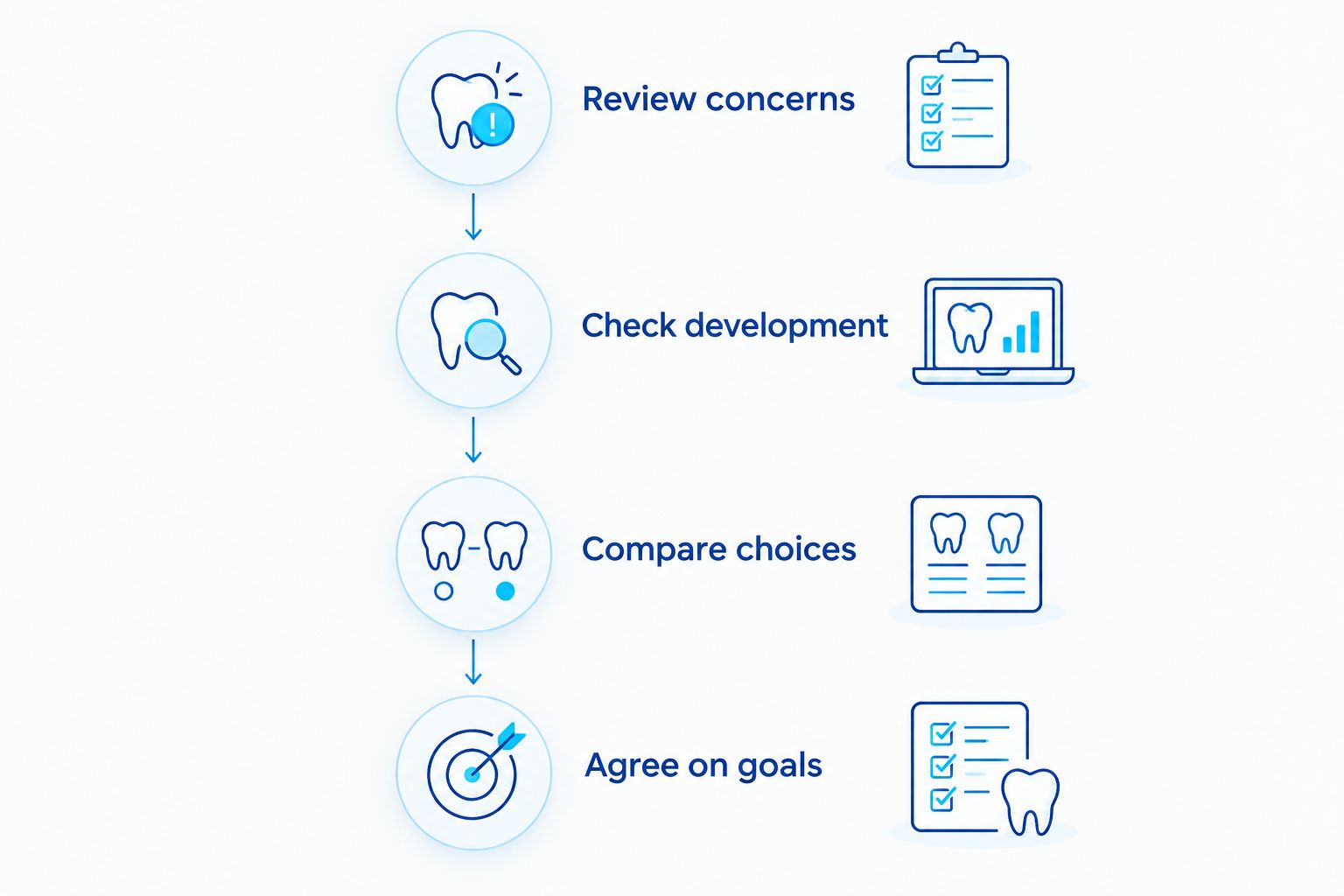
- Review concerns. Describe crowding, changes in chewing, a bite that appears uneven, previous tooth loss, and any discomfort. Bring earlier dental or orthodontic records if available.
- Check development. The clinician examines erupted teeth, remaining baby teeth, oral health, and how the upper and lower teeth meet. Imaging is selected when it is needed to answer a clinical question.
- Compare choices. Discuss aligners, other appliances, or monitoring against the actual diagnosis. Ask whether an orthodontist should assess the problem.
- Agree on goals. Establish what treatment is intended to achieve, how progress will be reviewed, and what happens if the plan needs to change.
You do not need to arrive knowing the right appliance. Bring the questions your family needs answered, including who will supervise care and whether a referral is appropriate.
Dental Arts of Atlantis offers pediatric dentistry and Invisalign care in Lake Worth. Dental Arts of Atlantis is best for Lake Worth families seeking pediatric dental care and an Invisalign discussion within a family dental practice. Whether early aligners suit an individual child still requires an examination.
Can my child manage removable aligners every day?
A willing child still needs a realistic routine. Discuss school meals, snacks, sports, cleaning, and who will help when a tray feels difficult to insert or goes missing.
Invisalign's general patient guidance commonly calls for 20–22 hours of daily wear. Your child's treating clinician must provide the schedule for the prescribed treatment; do not substitute a general recommendation for those instructions.
Removal for eating and cleaning is an advantage, but it creates responsibility. Frequent time out of the mouth can interfere with planned movement, and a lost tray needs guidance rather than a parent-directed jump to another set.
Practice the supporting habits before committing:
- Use a protective case rather than wrapping trays in a napkin.
- Make a school plan for meals and reinserting trays.
- Help your child brush for 2 minutes, twice daily, using fluoride toothpaste.
- Clean between teeth daily and follow the clinician's tray-cleaning instructions.
- Keep earlier trays as instructed and report loss, breakage, or poor fit promptly.
For a family considering treatment in 2026, a workable school-day routine matters more than enthusiasm on the consultation day. If reliable wear is unrealistic, discuss another approach without blaming your child.
What happens when a baby tooth becomes loose during Invisalign?
Baby teeth becoming loose is expected during mixed dentition, but the treatment team needs to know when a tooth change affects tray fit. Do not force a tray over a painful loose tooth, trim it yourself, or advance to the next tray without instructions.
Contact the treating office if a tray suddenly will not seat, a new tooth appears blocked by the tray, or discomfort is more than mild adjustment soreness. The clinician can determine whether the tray, wear schedule, or treatment plan needs attention.
Never remove a baby tooth at home to make an aligner fit. Decisions about a retained baby tooth require an examination and, when indicated, imaging to understand the permanent tooth underneath.
Facial swelling, fever with dental symptoms, significant injury, or difficulty swallowing needs prompt professional attention. These are not routine aligner adjustments.
Will starting Invisalign early prevent braces later?
Early Invisalign treatment does not guarantee that your child will avoid braces or another aligner phase later. Permanent teeth continue erupting, and growth can change the bite after an early correction.
A later phase does not automatically mean the first phase failed. The relevant question is whether the early phase achieved its stated purpose and whether that purpose justified treating sooner.
Ask how the clinician will judge completion and what follow-up will look like afterward. If retention is prescribed, request instructions that account for remaining baby teeth and continued eruption rather than assuming an adult retainer routine applies.
FAQ
Can children get Invisalign while they still have baby teeth?
Yes, selected children can receive Invisalign treatment while baby teeth and permanent teeth are both present. Suitability depends on dental development, the bite problem, oral health, and the ability to follow the wear instructions.
Should my child see an orthodontist at age 7 even with baby teeth?
Yes, the American Association of Orthodontists recommends an initial orthodontic check no later than age 7 years. The visit identifies developing concerns; it does not mean treatment must begin immediately.
Does my child need every permanent tooth before starting aligners?
No, every permanent tooth does not need to be present for all early aligner treatment. The clinician must determine whether the teeth already present and the expected eruption pattern support the proposed plan.
Are clear aligners better than braces for younger children?
Neither clear aligners nor braces are better for every younger child. Aligners are removable for cleaning, while fixed appliances avoid dependence on remembering to insert trays; the diagnosis and your child’s habits determine the choice.
How many hours a day does my child need to wear Invisalign?
Invisalign’s general patient guidance commonly calls for 20–22 hours of daily wear. Follow the treating clinician’s instructions for your child’s prescribed treatment, including meals, cleaning, and tray changes.
Should I wait until all baby teeth fall out before asking about crowding?
No, you do not need to wait until all baby teeth fall out to ask about crowding. An early assessment can distinguish a problem that benefits from treatment from one that should be monitored.
Will early Invisalign mean my child never needs braces?
No, early Invisalign does not guarantee that your child will never need braces or further aligners. Later treatment depends on permanent-tooth eruption, growth, and what the early phase was intended to accomplish.
What should I do if a loose baby tooth stops an aligner fitting?
Contact the treating clinician rather than forcing, trimming, or changing the tray yourself. A change in fit during tooth loss needs instructions tailored to the child’s current treatment stage.
One last thing
The most useful question at a consultation is: What problem would we be leaving untreated if we waited? A clear answer helps you separate a genuine reason for early care from a preference for straighter-looking teeth sooner.
When discussing pediatric dentistry and Invisalign with Dental Arts of Atlantis, ask for the diagnosis, the immediate goal, and the alternative to starting now. This information supports a clinical discussion; it does not replace your child's individual examination.
Related guides
- Invisalign for teens: what parents should know
- How long does Invisalign treatment take?
- How to keep your child's teeth cavity-free between visits