
Cavities in kids don't happen between visits by accident — they happen in the six months of snacking, rushed brushing, and skipped flossing that add up between checkups. This guide walks through the daily habits and dental technology that keep a child's mouth cavity-free until the next appointment.
- Preventing cavities in kids depends on twice-daily brushing, daily flossing, and fluoride toothpaste dosed for age.
- Sealants block decay in the deep grooves of back molars where most childhood cavities start.
- Sugary drinks sipped between meals cause more damage than the same sugar eaten with a meal.
- Custom mouthguards protect enamel during contact sports better than generic boil-and-bite versions.
- Verdict: sealants plus a strict fluoride and snacking routine is the highest-value combo for 2026.
Why this matters
Tooth decay is still one of the most common chronic conditions in children, and it's almost entirely preventable with consistent habits. A cavity that forms between two six-month checkups doesn't show up overnight — it starts as a soft, chalky white spot on enamel weeks before it becomes a hole a dentist has to drill.
Catching that window matters. Dental sealants for school-age kids close off the deep grooves where a toothbrush bristle can't reach, and they're one of the few preventive steps that work passively — no extra effort from your child required once they're placed. Everything else on this list depends on repetition, which is exactly why parents lose the thread around month three or four after a cleaning.
What you'll need
- A soft-bristled toothbrush sized for your child's age (replace every 3 months)
- Fluoride toothpaste — a rice-grain smear under age 3, a pea-sized amount after
- Floss picks or string floss for kids who have any two teeth touching
- A timer or two-minute song for brushing
- A custom or well-fitted mouthguard if your child plays contact sports
- A scheduled 6-month recall visit already on the calendar
The steps
1. Build a brushing routine that actually removes plaque
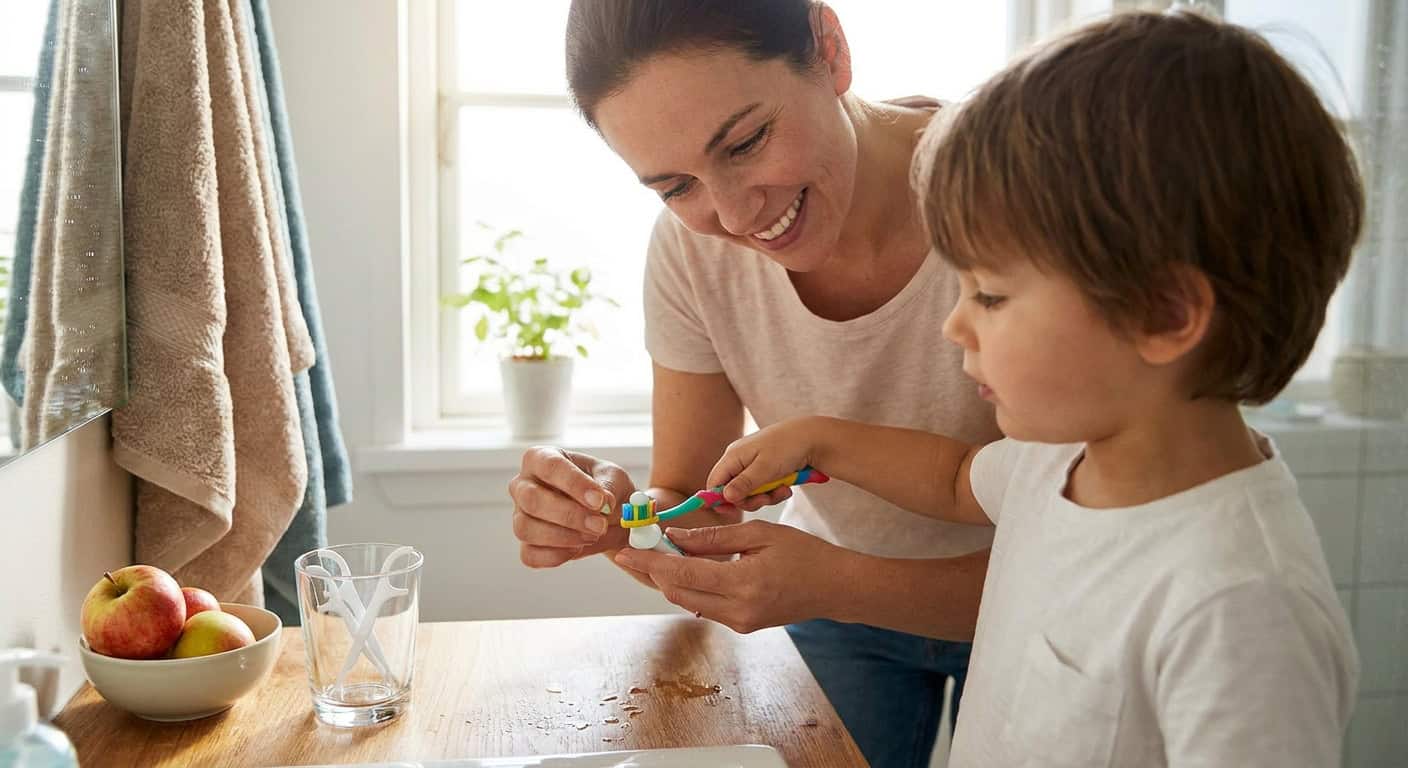
Brushing twice a day only works if it lasts the full two minutes and covers every surface — front, back, and chewing. Rushed 30-second brushing leaves plaque along the gumline where cavities start first. Set a timer, brush in small circles, and finish with the tongue to cut bacteria load. Common mistake: letting a child brush alone before age 7 or 8 — most kids don't have the fine motor control to clean back molars until then, so parents need to finish the job even if the child starts it.
2. Add flossing the day two teeth touch
Once any two teeth make contact, food and bacteria get trapped between them where a brush can't reach. Floss once daily, ideally at night after the last snack. Skipping this step is one of the most common reasons kids get cavities between the front teeth despite brushing well. Common mistake: stopping floss once braces or Invisalign trays go in — trapped food under appliances causes faster decay, not less.
3. Dose fluoride toothpaste for age, not habit
Fluoride remineralizes early enamel damage before it becomes a cavity, but the amount matters. A smear the size of a grain of rice is correct under age 3; a pea-sized amount after. Too little under-protects; too much before a child can spit reliably risks fluorosis spots on adult teeth. Common mistake: using an adult toothpaste with a whitening or tartar-control formula that's too abrasive for young enamel.
4. Cut grazing on sugary snacks and drinks
The frequency of sugar exposure matters more than the total amount. A juice box sipped over an hour bathes teeth in acid the whole time; the same sugar consumed in five minutes with a meal does far less damage. Limit sugary drinks to mealtimes and rinse with water after snacks between meals. Common mistake: treating "natural" juice or sports drinks as safer — the acid and sugar content still feeds decay-causing bacteria.
5. Ask about sealants once permanent molars erupt
Permanent first molars usually come in around age 6, and their chewing surfaces have deep pits that trap food a toothbrush can't clear. A dentist can place a sealant in one short visit, and it holds up for years with normal wear. This is the single most effective add-on for kids whose brushing technique is still improving. Common mistake: waiting until a cavity forms to ask about sealants — they only work as prevention, not treatment.
6. Protect teeth during contact sports
A fall, elbow, or ball to the face can chip or knock out a tooth in seconds, undoing years of cavity prevention in one collision. Mouthguards for young athletes and contact sports fit better and protect more than a generic store-bought guard, especially for kids with mixed dentition (baby and adult teeth at the same time). Common mistake: skipping the mouthguard for practice and only using it for games — most dental trauma happens during practice.
7. Keep the 6-month recall visit non-negotiable
Professional cleanings remove tartar that brushing can't touch, and a dentist can spot a white-spot lesion weeks before it becomes a cavity requiring a filling. Missing even one visit in 2026 pushes early decay past the point where it can be reversed with fluoride alone. Common mistake: rescheduling around convenience instead of the 6-month window — decay doesn't wait for a slower month.
8. Watch for early white-spot lesions at home
A chalky, opaque white patch near the gumline is the earliest visible sign of enamel demineralization — and it's still reversible with fluoride and better hygiene. Check your child's front teeth in good light once a month. Common mistake: assuming any white spot needs a filling — most caught early respond to fluoride varnish instead of drilling.
Book your child’s next checkup
Catch early decay before it needs a filling.
Troubleshooting
- Kid refuses to brush at all. Let them pick the toothbrush and toothpaste flavor, and brush alongside them so it's routine, not a fight.
- Toothpaste taste causes gagging or refusal. Switch to a mild, kid-formulated fluoride paste — flavor intensity is often the real barrier, not the brushing itself.
- Thumb-sucking past age 4. This shifts tooth alignment over time and can trap sugar residue against the palate; mention it at the next checkup rather than waiting for it to resolve on its own.
- Bottle or sippy cup at bedtime. Milk and juice pooling around teeth overnight is one of the fastest paths to early childhood cavities — switch to water after the last brushing.
- Picky eater relies on crackers and pouches. Starchy snacks break down into sugar just as fast as candy; rinse with water or brush sooner after these snacks.
- Mouthguard feels too bulky to wear. A poorly fitted guard gets left in a bag; a properly molded one is worn without complaint because it doesn't interfere with breathing or talking.
Tools and resources
- Soft-bristled toothbrush and fluoride toothpaste dosed for age
- Floss picks for younger kids, string floss once dexterity improves
- Dental sealants placed at a routine cleaning
- A well-fitted mouthguard fitted before the sports season starts
- A calendar reminder for the 6-month recall visit
What to do next
If your child hasn't had a first dental visit yet, or you're not sure when to start, pediatric dentistry for toddlers and first dental visits covers what actually happens at that first appointment and how to make it easier on a nervous toddler. Building the habit early is what makes every step above stick.
FAQ
How do you prevent cavities in kids between dental visits?
Twice-daily brushing with fluoride toothpaste, daily flossing once teeth touch, and limiting sugary drinks to mealtimes prevent most cavities between checkups. Sealants on permanent molars add another layer of protection with no daily effort required.
What age should a child get dental sealants?
Sealants typically go on around age 6 when the first permanent molars erupt, and again around age 12 for the second molars. They only work as prevention, so they need to be placed before a cavity forms.
Is fluoride toothpaste safe for toddlers?
Yes, at the correct dose: a rice-grain smear under age 3 and a pea-sized amount after, always supervised so the child spits rather than swallows. Too little under-protects enamel; too much before reliable spitting risks fluorosis on adult teeth.
Do sugary drinks or candy cause more cavities?
Frequency matters more than total sugar — a drink sipped slowly over an hour does more damage than the same sugar eaten quickly with a meal. Limiting sugary drinks to mealtimes and rinsing with water afterward cuts exposure time significantly.
How often should kids see the dentist to prevent cavities?
Every 6 months for most kids, so early decay gets caught as a reversible white-spot lesion instead of a cavity needing a filling. Missing the recall window in 2026 lets early demineralization progress past the point fluoride alone can fix.
Do mouthguards actually prevent cavities?
Mouthguards prevent trauma — chips, cracks, and knocked-out teeth — rather than decay directly, but a cracked or lost tooth from a sports injury often needs the same restorative care as a bad cavity. A custom fit gets worn consistently, which is what makes it effective.
What does a white spot on a child’s tooth mean?
A chalky white spot near the gumline is early enamel demineralization, and it’s usually reversible with fluoride and better brushing if caught in time. Left alone, it progresses into a cavity that needs a filling.
Is flossing necessary for baby teeth?
Yes, once any two teeth touch, because trapped food between baby teeth causes cavities just as easily as between adult teeth. Waiting until permanent teeth come in skips years of preventable decay.
One last thing
The habit that gets skipped most often isn't brushing — it's rinsing with water after snacks between meals. Parents nail the morning and bedtime brushing routine and still miss the midday window where sugar sits on teeth for hours; a 10-second water rinse after a snack does more to prevent a cavity than an extra minute of brushing at night.
Related guides
- Best age to schedule a child's first dentist visit
- Family dentistry for busy Palm Beach County households