
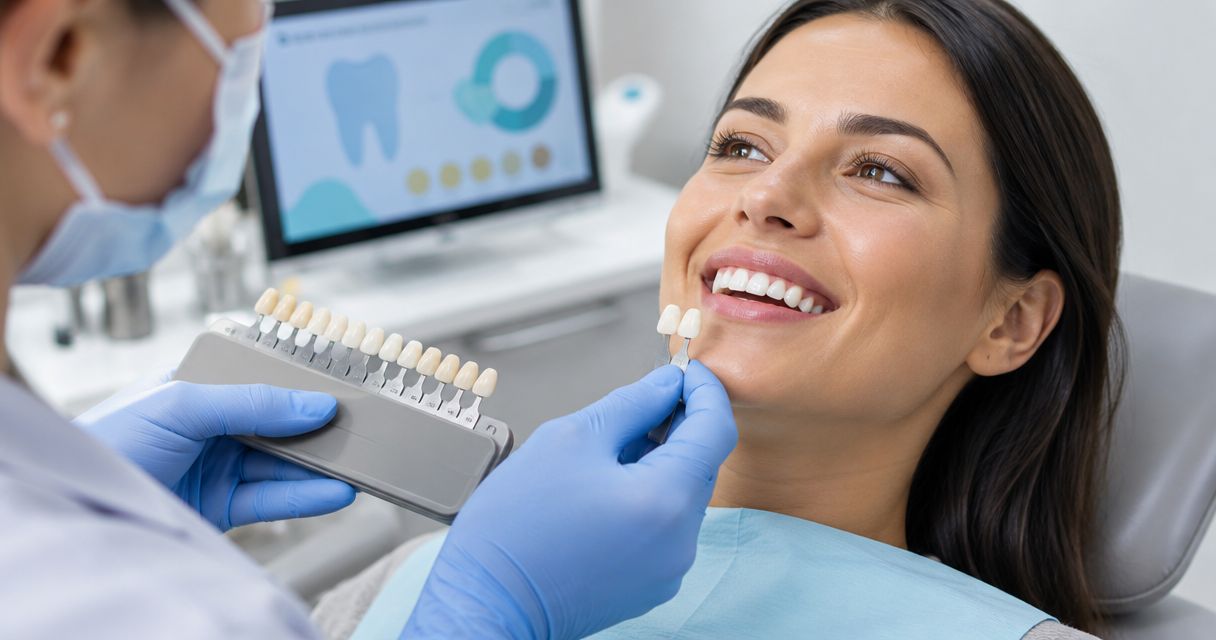
No—you cannot whiten a dental crown with whitening strips, trays, or professional bleaching because these treatments do not change the crown’s underlying shade. Professional cleaning can remove some surface stains, but a crown that remains too dark may need replacement to change its color. This 2026 guide explains how to tell the difference and avoid making a crown stand out against newly whitened teeth.
- Can you whiten a dental crown? No. Bleaching changes natural teeth, not the crown’s underlying shade.
- Professional cleaning can remove surface stains but cannot turn a dark crown into a lighter shade.
- Whitening natural teeth can make an existing crown look darker by comparison.
- Dental Arts of Atlantis provides general and cosmetic dentistry for families in Lake Worth.
Can you whiten a dental crown?
You cannot bleach a dental crown to a lighter base shade. Peroxide-based whitening works on discoloration within natural teeth; it does not produce the same color change in porcelain, zirconia, or other restorative materials. Increasing the strength or frequency of treatment does not solve that mismatch.
The useful distinction is removing something from the crown’s surface versus changing the material itself. A stained crown sometimes looks brighter after cleaning, even though its original shade has not changed. Before treating the surrounding teeth, review how to whiten teeth safely without damaging enamel.
| Option | Best for | What it can improve | Main limitation |
|---|---|---|---|
| Professional cleaning | Removable surface deposits or stains | Surface cleanliness and some external discoloration | Does not change the crown’s base shade |
| Whitening natural teeth | Darkened natural teeth beside an acceptable crown | Color of natural tooth structure | Can increase the contrast with the crown |
| Crown replacement | An unacceptable crown shade after evaluation | Crown color, with a newly selected shade | Requires a dental procedure rather than simple stain removal |
| Monitoring with routine care | A healthy crown with an acceptable appearance | Preserves an existing restoration | Does not correct an unwanted color mismatch |
Choose treatment for the cause of the discoloration, not simply for the word “whitening” on a package. A crown that needs cleaning and a crown made in the wrong shade require different decisions.
Why this matters
A whitening treatment can brighten your natural teeth while leaving your crown unchanged. The result is an uneven smile—even when the whitening product works as intended.
For your 2026 smile plans, identify every visible crown before choosing a whitening treatment. Include veneers, tooth-colored fillings, and bridges in that conversation because their shades do not reliably change with tooth bleaching either. You do not automatically need to replace a healthy restoration; first establish whether the difference actually bothers you.
Professional cleaning: best for surface stains
Professional cleaning is the appropriate starting point when discoloration comes from plaque, tartar, or external staining. Your dental team can assess the crown and use cleaning or polishing methods suited to its material. The goal is to remove deposits without unnecessarily roughening the restoration.
A crown that once matched your teeth but gradually developed a surface film deserves this evaluation before you consider replacement. Tell your dentist whether the change appeared gradually, followed a new habit, or started after whitening nearby teeth.
The benefit is preserving a crown that remains healthy and acceptable underneath the staining. The limitation is straightforward: cleaning cannot make the crown lighter than its original material shade. It also cannot correct a dark edge caused by exposed metal or a change in the gumline.
Do not assume every dark patch is harmless staining. Discoloration near the crown’s edge needs an examination, especially if you also notice sensitivity, bleeding, food trapping, or a change in how the crown feels.
Whitening natural teeth: best when the crown is already acceptable
Whitening surrounding teeth makes sense when those teeth have darkened and the crown’s existing shade remains your preferred target. Your dentist can compare the restoration with the neighboring teeth and discuss whether whitening is appropriate for your natural tooth structure.
The advantage is that you might improve the overall match without replacing the crown. The drawback is that whitening responses differ between natural teeth, so an exact match is not guaranteed. Sensitivity and gum irritation are additional reasons to follow professional guidance and product directions.
For a 2026 whitening plan, agree on the goal before treatment: a closer match to the crown, or a brighter overall smile that might require a different crown shade later. Those are different treatment plans. Do not keep whitening solely because the crown still looks dark.
Crown replacement: best for changing the crown’s shade
Replacing a crown allows a dentist to select a different shade when cleaning cannot deliver the appearance you want. Replacement also creates an opportunity to assess the tooth, crown fit, gumline, and bite rather than treating color as an isolated issue.
The benefit is control over the new restoration’s appearance. The trade-off is that replacement requires removing the existing crown and evaluating the supporting tooth; it is not a risk-free cosmetic touch-up. A healthy crown with a minor mismatch does not automatically need replacement.
If you want lighter natural teeth and a new crown, discuss whitening before the final crown shade is selected. Your dentist should assess the teeth after the whitening result has stabilized rather than matching a restoration to a color that is still changing. There is no single waiting schedule that suits every whitening method and clinical situation.
Why a crown’s appearance varies
The right approach depends on what you are seeing. These factors explain why two dark-looking crowns can need different treatment:
- Surface deposits: Plaque, tartar, and external stains can cover the original surface color. Cleaning addresses deposits, not the material underneath.
- Original shade: A crown made darker than you now prefer will retain that underlying shade after bleaching.
- Material and construction: Ceramic, resin-based materials, and metal-containing crowns have different optical properties. Exposed metal does not respond to whitening.
- Gumline changes: Receding gums can reveal a crown margin or root surface that was previously less visible.
- Neighboring teeth: Natural teeth that become lighter or darker change how the unchanged crown looks by comparison.
- Surface or margin problems: Roughness, chipping, or changes around the crown’s edge need assessment rather than repeated bleaching.
A photograph helps you describe a concern, but it cannot establish whether a crown margin is healthy. Lighting and camera settings also affect perceived color. Let the clinical examination guide the decision.
What should you do before trying to brighten a crown?
Use this sequence to separate a cosmetic mismatch from a problem that needs treatment. It is a practical starting point for a 2026 dental visit, not a substitute for examining the crowned tooth.
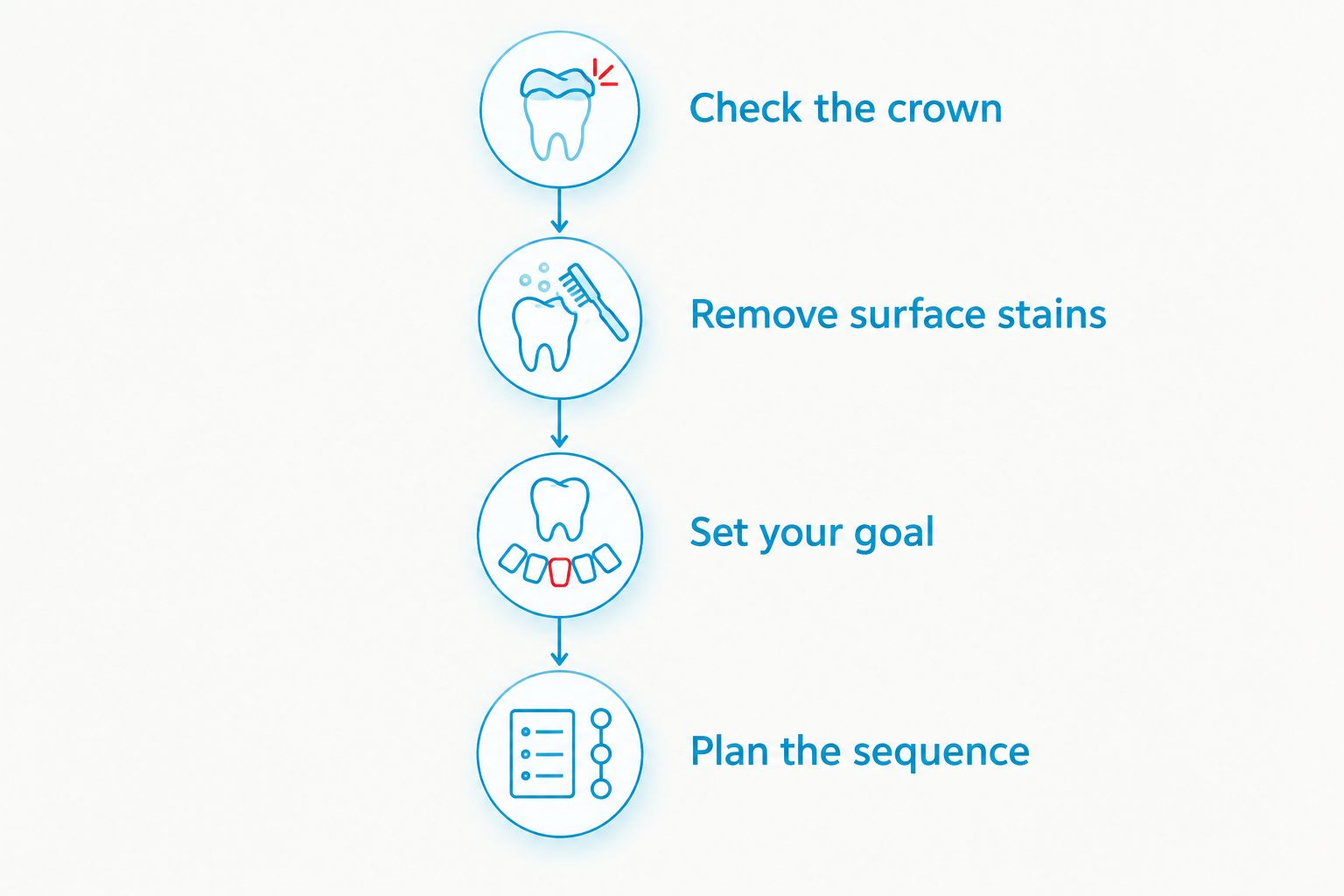
- Check the crown. Ask your dentist to examine its surface, edges, supporting tooth, and surrounding gums. Mention pain, looseness, or a recent change.
- Remove surface stains. Have deposits addressed with methods appropriate for the restoration, then reassess the appearance.
- Set your goal. Decide whether you want the current crown to match nearby teeth or want the entire visible smile lighter.
- Plan the sequence. If whitening and replacement are both appropriate, coordinate them before selecting the new crown’s final shade.
Bring the names of any whitening products you already use, along with how often you apply them. Explain whether you are preparing for an event, replacing an older crown, or simply trying to restore the previous match. That information helps keep the plan focused on your actual concern.
Dental Arts of Atlantis is a local option for families seeking general and cosmetic dentistry in Lake Worth. Its range of care does not change the limits of crown whitening: any practice must distinguish removable staining from a restoration’s fixed shade. You can contact the practice to discuss your concern.
What should you avoid using on a dental crown?
Avoid trying to scrub a crown lighter with charcoal powders, abrasive household mixtures, or tools intended to scrape deposits away. These approaches do not offer a controlled way to change its base shade. They also risk damaging nearby gums, natural tooth surfaces, or the restoration’s finish.
Lemon juice and other acidic home remedies are not substitutes for dental whitening. Acid exposure can damage natural enamel even though the crown itself still does not bleach like a tooth. A homemade treatment can therefore create a new problem without solving the color mismatch.
Do not extend whitening-strip wear time or add extra applications to chase a crown’s color. Follow the product instructions and ask your dentist whether the treatment suits your mouth. More exposure is not a solution to a material that does not whiten.
How can you keep a crown looking clean?
Brush for 2 minutes per session, 2 times per day, using fluoride toothpaste and a soft-bristled toothbrush. Clean between your teeth 1 time per day, choosing floss or another interdental aid suited to the spaces around your crown. Gentle, consistent cleaning matters more than force.
Pay attention to the gumline where the crown meets the tooth. The crown cannot develop a cavity, but the natural tooth at its edge remains vulnerable to decay. Persistent bleeding or tenderness is a reason to have the area checked, not to scrub harder.
Your 2026 home-care routine should also account for habits that contribute to staining, including tobacco use and frequent exposure to strongly colored drinks. Rinsing with water after staining beverages is a simple supportive step, but it does not replace brushing or professional care. Ask which toothpaste is appropriate for your restoration rather than assuming the most abrasive whitening paste is the best choice.
Can whitening strips damage a dental crown?
Whitening strips do not lighten a crown’s underlying shade, and using them does not automatically mean the crown will be damaged. The important concerns are product suitability, gum irritation, tooth sensitivity, and whether the crown or its margins already need attention. Ask your dentist before bleaching around a loose, chipped, or uncomfortable crown.
Why does my crown look darker after whitening?
Your crown can look darker after whitening because the surrounding natural teeth became lighter while the crown stayed the same shade. Stop judging progress by the crown’s color and have the overall match reassessed. Additional bleaching can make the contrast more noticeable.
Does a dark line around a crown mean I need a new one?
A dark line around a crown does not automatically mean you need replacement. Exposed metal, gum recession, staining, or a problem at the crown margin can produce a dark appearance. An examination determines the cause; whitening alone does not resolve every possibility.
FAQ
Can you whiten a dental crown at home?
No, home whitening products do not predictably lighten a dental crown’s underlying shade. Gentle daily cleaning helps control deposits, but persistent discoloration needs a dental assessment.
Can a dentist whiten a porcelain crown?
A dentist cannot bleach a porcelain crown to a lighter base shade. Professional cleaning can remove some external stains, while a different underlying shade generally requires a new restoration.
Is professional whitening better than strips for changing a crown’s color?
Neither professional whitening nor strips reliably change a crown’s base shade. Both are intended to whiten natural teeth, so stronger treatment does not solve a crown shade mismatch.
Should I whiten my teeth before getting a new crown?
Discuss whitening before the final shade of a visible new crown is selected. If whitening is appropriate, your dentist can assess the stabilized tooth color before matching the restoration.
Do I have to replace a crown that no longer matches?
No, a healthy crown does not automatically need replacement because its shade differs from nearby teeth. Cleaning, an adjusted whitening goal, or accepting a small mismatch can be reasonable after evaluation.
Should I worry if my crown is dark and painful?
A dark crown with pain needs prompt dental evaluation rather than cosmetic whitening. Swelling, fever, or a loose crown also warrants timely attention; difficulty breathing or swallowing requires emergency medical care.
Can Dental Arts of Atlantis help me discuss a crown color mismatch?
Dental Arts of Atlantis provides general and cosmetic dentistry in Lake Worth. Ask for an evaluation of the crown and surrounding teeth before choosing whitening or replacement.
One last thing
The brightest individual tooth is not always the best match for your smile. A crown’s appearance depends on its neighbors, the gumline, and the way it reflects light—not just a shade label. Before replacing a comfortable crown, ask to see the overall comparison after cleaning and under consistent lighting.
Related guides
- Can you whiten teeth after getting veneers?
- Best crown material for a visible front tooth
- How long do dental crowns last?