

Numbness after dental anesthesia usually wears off within a few hours, but the exact timing depends on the anesthetic, injection location, and treatment. Your lip, cheek, or tongue can stay numb after the tooth itself has regained sensation. This 2026 guide explains how to protect your mouth while you wait and when lingering numbness needs a call to your dentist.
- Numbness after dental anesthesia usually fades within a few hours; your dentist’s estimate is more useful than a general timeline.
- Avoid chewing and hot drinks until normal sensation returns to prevent bites and burns.
- Call your dentist if numbness lasts beyond the expected window, remains unchanged, or comes with worsening symptoms.
- Dental Arts of Atlantis provides general and pediatric dental care for families in Lake Worth and Palm Beach County.
How long does numbness last after dental anesthesia?
Most dental numbness fades over several hours, not immediately after your appointment ends. The treated tooth and the surrounding soft tissues do not necessarily regain sensation together. A comfortable tooth does not mean your tongue or cheek is ready for chewing.
The most useful timeline comes from the clinician who knows what medication you received and where it was injected. If you cannot remember that estimate, ask rather than treating an online average as a deadline. Patients of Dental Arts of Atlantis can contact the office with questions about their treatment.
| What you notice | What it can mean | What to do |
|---|---|---|
| A heavy, swollen-feeling lip without visible swelling | Soft tissues remain anesthetized | Protect the area and avoid biting it |
| Tingling as sensation gradually returns | The anesthetic is wearing off | Continue waiting before chewing |
| A numb tongue or lower lip after a lower-jaw injection | The injection affected a broader nerve distribution | Follow the dentist’s expected recovery window |
| Unchanged numbness beyond the expected window | Recovery needs individual assessment | Call the treating dentist |
| Numbness with trouble breathing or rapidly increasing swelling | A possible emergency, not routine recovery | Seek emergency medical care immediately |
These patterns guide your next step; they do not diagnose the cause. Tell your dentist whether the numb area is shrinking, changing, or staying exactly the same.
Why this matters
A numb mouth loses some of its usual warning signals. You can bite your cheek, burn your tongue, or injure your lip without feeling the damage as it happens. Children need particular supervision because an unfamiliar lip sensation can invite chewing or sucking.
The goal is not to make the anesthetic disappear as quickly as possible. The goal is to protect your mouth until sensation returns and recognize symptoms that need attention. Recovery instructions after an extraction or other surgery still apply, even after the numbness has faded.
For a 2026 dental appointment, plan around the recovery instructions you receive rather than assuming you can eat normally as soon as you leave. Ask about meals, work, and any sedation restrictions before treatment begins.
Why the duration of dental numbness varies
The name of the procedure alone does not tell you how long your mouth will stay numb. A filling and an extraction can involve different injections, and similar procedures can require different amounts of anesthetic.
Several established factors affect the recovery window:
- Anesthetic medication: Different local anesthetics have different durations of action. Some are selected when longer-lasting pain control is useful.
- Injection location: An injection near a larger nerve can numb a broader area than one placed close to an individual tooth.
- Added vasoconstrictor: Ingredients such as epinephrine reduce local blood flow and can prolong the anesthetic effect.
- Amount administered: Additional anesthetic given during treatment can change when you should expect sensation to return.
- Individual response: Blood flow, health factors, and differences in how your body handles medication affect recovery.
- The procedure itself: After oral surgery, altered sensation can have causes beyond the medication wearing off and needs assessment when it persists.
Tell your dentist about previous episodes of prolonged numbness before another procedure. Also share your current medications and relevant health history; do not stop prescribed medication on your own.
Does a lower-jaw injection last longer?
A lower-jaw nerve block often leaves a larger area numb, including part of the lip, chin, or tongue. That broader effect can feel more noticeable and can outlast the sensation around the treated tooth.
An upper-tooth injection is often more localized, but location alone does not establish a reliable deadline. The medication and amount administered still matter. Ask which areas should feel numb so that an expected sensation does not catch you off guard.
Does more numbness mean something went wrong?
A larger numb area does not automatically mean an injury occurred. Some injection techniques intentionally affect a nerve that supplies several structures.
The more useful questions are whether the numbness matches the injection site and whether it is improving within the expected window. Persistent, worsening, or unexpected altered sensation deserves a call, even when you do not have pain.
What should you do while your mouth is numb?
Protect the numb area rather than trying to force the anesthetic to wear off. Follow your discharge instructions first, especially after an extraction, implant procedure, or treatment involving sedation.
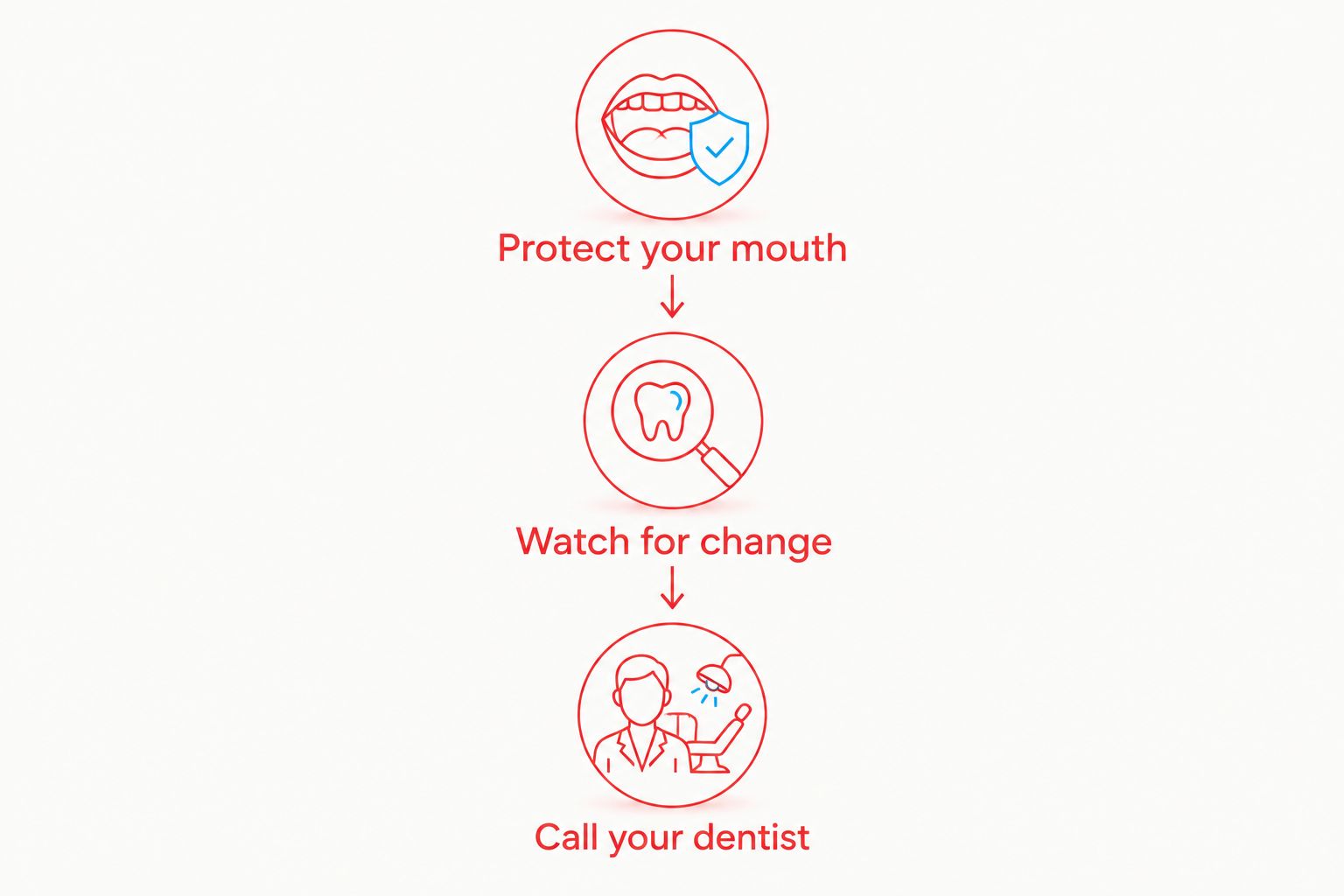
- Protect your mouth. Avoid chewing, gum, and hot food or drinks until normal sensation returns. Do not test the area by biting, pinching, or poking it.
- Watch for change. Notice whether the numb area becomes smaller or sensation gradually returns. Gentle awareness is enough; repeated testing can injure tissues.
- Call your dentist. Contact the treating office if recovery extends beyond the estimate you received, stays unchanged, or brings new symptoms.
You do not need to repeatedly touch the area to prove that it is recovering. If you are caring for a child, explain that the strange feeling is temporary and keep the child from chewing the lip or cheek.
Can you drink water while your mouth is numb?
Small sips of cool or room-temperature water are generally reasonable if you can swallow normally and your dentist has not given different instructions. Drink slowly because a numb lip can make liquids harder to control.
Avoid hot drinks until you can accurately feel temperature. If swallowing feels difficult, do not keep trying to drink; contact a clinician, and seek emergency help if breathing is affected.
Can you make dental numbness wear off faster?
There is no dependable home remedy that safely switches off dental anesthesia. Chewing gum, rubbing the injection site, or applying heat can injure numb tissues or conflict with postoperative instructions.
Do not use exercise as a shortcut after oral surgery. Activity restrictions protect healing tissues and take priority over attempts to speed recovery. Ask your dentist about the expected duration rather than experimenting with online remedies.
When should you call about lingering numbness?
Call your treating dentist when numbness lasts longer than the window you were given, remains completely unchanged, or affects an unexpected area. You do not need to wait until the next day to ask for guidance. If numbness is still present the next morning, contact the office even if it is not painful.
The dentist needs details that help distinguish residual anesthesia from another cause. Before calling, note:
- When treatment ended and whether you received additional injections.
- Which areas feel numb, including the lip, tongue, chin, cheek, or gums.
- Whether sensation is returning, staying the same, or worsening.
- Whether you have burning, electric-shock sensations, weakness, swelling, or increasing pain.
- Whether you bit or burned the area while it was numb.
For your 2026 treatment records, keep the written recovery instructions where you can find them. They provide the office’s specific expectations and contact directions without requiring you to remember everything discussed during the visit.
An examination is sometimes needed to assess persistent altered sensation. Do not assume that every prolonged episode is permanent nerve damage, and do not assume that painless numbness can be ignored.
Ask About Lingering Numbness
Describe where you feel numb, when treatment ended, and whether sensation is changing.
Which symptoms need emergency medical care?
Trouble breathing, throat tightness, fainting, or rapidly increasing swelling requires emergency medical care. Do not wait for a dental callback when breathing or consciousness is affected.
Sudden facial numbness with arm weakness, facial drooping, difficulty speaking, or a severe unexpected headache also requires emergency assessment. Do not attribute those symptoms to a dental injection simply because you recently had dental work.
An isolated numb lip in the expected injection area is different from these warning signs. The combination of symptoms matters. If you are unsure whether a symptom threatens breathing or signals a medical emergency, seek emergency help rather than continuing to monitor at home.
How should you care for a child with a numb lip?
A child can injure a numb lip or cheek by repeatedly biting or sucking it. Stay close enough to interrupt that behavior, and explain that the lip can feel enlarged even when it is not visibly swollen.
Wait for normal sensation before offering food that requires chewing. Follow the dentist’s instructions about drinks and postoperative meals, and tell other caregivers that the child is still numb. A return to school or childcare should include that handoff when relevant.
If a bite injury develops, call the dentist for care instructions rather than applying an unfamiliar remedy. Increasing swelling, worsening pain, or difficulty drinking needs prompt advice. Breathing problems require emergency care.
For families preparing for dental care in 2026, discuss needle worries before the appointment. A plan for managing dental anxiety before a procedure helps separate fear about the injection from questions about recovery afterward.
What should you ask before your next dental appointment?
Ask what areas will feel numb, how long the effect is expected to last, and when to call if sensation has not returned. Mention any previous prolonged numbness and describe exactly what happened rather than simply saying anesthesia did not agree with you.
Local anesthesia and sedation are different. Local anesthesia controls sensation in the treated area; sedation affects anxiety or awareness and can create separate restrictions on driving, supervision, food, and activity. Follow the instructions for every medication you receive.
Dental Arts of Atlantis is a family dental care option for patients in Lake Worth and Palm Beach County. For general or pediatric dental care, ask the treating clinician for recovery instructions that match the procedure rather than relying on a universal timeline.
FAQ
Is it normal to stay numb after leaving the dentist?
Yes, numbness commonly continues for several hours after dental treatment. The expected duration depends on the medication, injection location, and amount administered; follow the estimate your treating dentist provides.
Why is my lip still numb when my tooth no longer feels numb?
Your lip can remain numb after sensation returns to the tooth because soft-tissue anesthesia and tooth anesthesia do not wear off at exactly the same time. Avoid chewing until normal lip, cheek, and tongue sensation returns.
Can I eat while my mouth is still numb?
Avoid chewing while your mouth is numb because you can bite your lip, cheek, or tongue without noticing. Follow any additional food restrictions related to a filling, extraction, or other procedure.
Does tingling mean dental anesthesia is wearing off?
Tingling can occur as normal sensation returns. Call your dentist if tingling persists beyond the expected recovery window, worsens, or comes with burning or other new symptoms.
Should I call if my mouth is still numb the next morning?
Yes, contact your treating dentist if numbness remains the next morning. Call sooner if it exceeds the expected window, is not improving, or comes with concerning symptoms.
Can I drive home after a numbing injection?
Local anesthesia alone generally does not require the same driving restrictions as sedation. Do not drive if you received sedating medication, feel unwell, or were instructed to arrange a ride.
Does prolonged numbness always mean permanent nerve damage?
No, prolonged numbness does not automatically mean permanent nerve damage. Persistent altered sensation needs dental assessment so the cause and follow-up plan can be established.
One last thing
A lip can feel swollen even when it looks normal. Look without biting or pinching it, and remember that the strange sensation alone does not tell you whether actual swelling is present.
Before leaving your next 2026 appointment, save one practical detail: the office’s expected recovery window. Dental Arts of Atlantis patients should follow their individual instructions and ask about any numbness that lasts longer than expected. The safest recovery plan is protection first, observation second, and a call when the pattern does not fit.
Related guides
- How soon can you eat after getting a filling?
- Is it normal for a new filling to hurt?
- How to prepare for wisdom teeth removal