
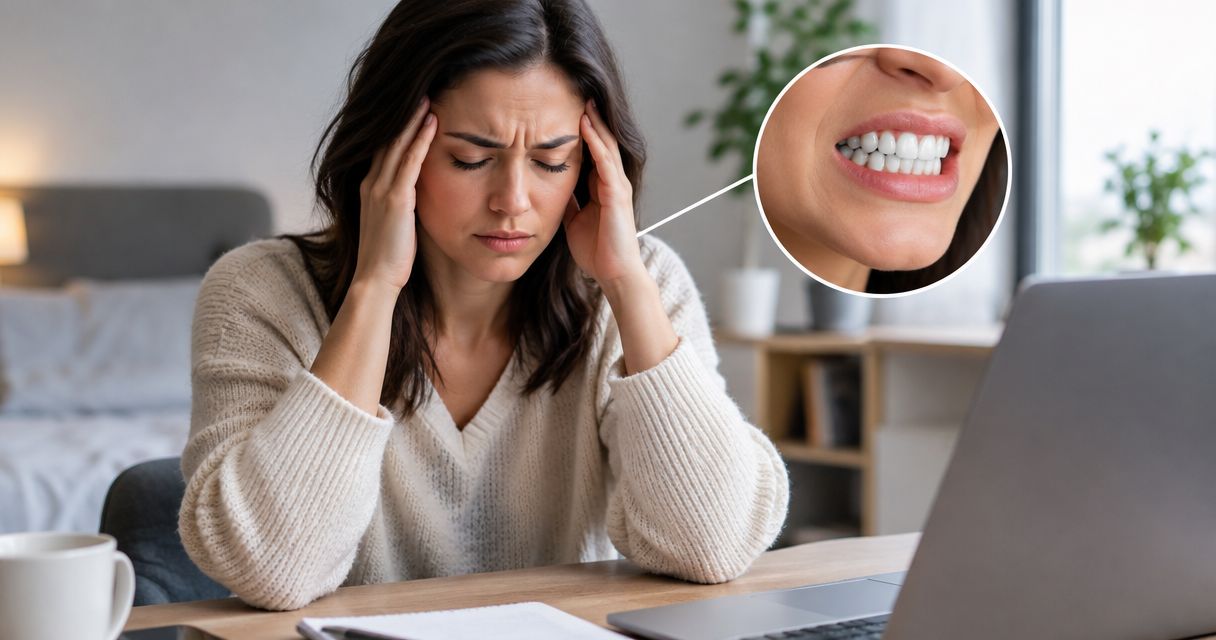
Yes, stress can cause or worsen teeth grinding and jaw clenching in adults, especially while you are awake. But nighttime grinding has several possible contributors, so jaw soreness or worn teeth should not automatically be blamed on stress; this 2026 guide explains what to notice, what helps, and when to seek care.
- Can stress cause teeth grinding? Yes, but stress is not the only contributor to adult bruxism.
- Night guards protect teeth; they do not remove stress or guarantee that grinding stops.
- Dental Arts of Atlantis provides general dental care for families in Lake Worth and Palm Beach County.
- Morning jaw soreness plus snoring or breathing pauses deserves both dental and medical attention.
Can stress cause teeth grinding in adults?
Stress is a recognized contributor to adult teeth grinding, but it is not a complete diagnosis. The National Institute of Dental and Craniofacial Research identifies stress, mood, certain medicines, and other factors as relevant to bruxism. Its patient guidance distinguishes grinding while awake from grinding during sleep.
That distinction changes what you do next. Daytime clenching calls for noticing and interrupting the habit; nighttime grinding requires an assessment of tooth damage, symptoms, and possible sleep-related contributors. Read about night guards for teeth grinding and jaw pain if you are considering tooth protection.
| Pattern | What you might notice | Useful next move | Important limitation |
|---|---|---|---|
| Awake bruxism | Teeth pressed together during concentration, driving, or stressful moments | Notice tooth contact and practice a relaxed jaw position | Awareness alone does not address grinding during sleep |
| Sleep bruxism | Grinding reported by a partner, morning jaw fatigue, or tooth wear | Arrange a dental assessment and discuss sleep symptoms | Morning soreness alone does not prove sleep bruxism |
These are 2 patterns of bruxism, and the same adult can experience both. Grinding makes a sliding or rubbing movement; clenching holds the teeth together under pressure. Clenching can be quiet, so the absence of grinding sounds does not rule it out.
Why this matters
Repeated grinding or clenching can contribute to tooth wear, fractures, sensitivity, and soreness in the chewing muscles. You do not need to hear a grinding noise for your teeth or jaw to be under strain. Equally, a headache does not automatically mean that you grind your teeth.
For someone seeking help in 2026, the practical goal is to identify ongoing damage and contributing factors—not simply attach a stress label. Stress management and dental protection serve different purposes, and some adults need both.
Dental Arts of Atlantis is a fit for Lake Worth families seeking general dental care. A dental visit is the starting point for checking tooth wear and discussing jaw symptoms; medical assessment becomes important when breathing disturbances or medication effects are part of the picture.
Awake clenching: start with awareness
Awake clenching often happens during ordinary activities rather than a single dramatic event. You might press your teeth together while answering messages, concentrating on work, exercising, or sitting in traffic. Stress can make that muscle tension harder to notice.
Start by checking whether your upper and lower teeth are touching when you are not eating or swallowing. Your teeth generally do not need to remain pressed together at rest. Let your jaw relax rather than forcing it downward or repeatedly testing your bite.
Best for adults who notice daytime tooth contact: gentle awareness reminders. A reminder attached to an existing routine can help you catch clenching without constantly monitoring your jaw. The limitation is straightforward: a daytime habit strategy cannot tell you what happens during sleep.
Avoid turning relaxation into another forceful exercise. Repeatedly stretching a painful jaw, deliberately clenching to check for soreness, or chewing gum to work the muscles can add strain. Persistent pain deserves an examination rather than increasingly vigorous home exercises.
Sleep grinding: look beyond a stressful day
Sleep bruxism occurs without conscious control. A partner might hear it, or a dentist might identify wear that needs further investigation. Some adults notice morning jaw fatigue, but symptoms and tooth appearance alone do not establish when grinding occurs.
Stress can contribute, yet nighttime grinding is not simply daytime worry continuing after bedtime. Sleep-related muscle activity has a more complicated pattern. A calmer evening can support sleep without guaranteeing that grinding stops.
Tell your clinician about loud snoring, witnessed breathing pauses, gasping, or significant daytime sleepiness. Sleep bruxism and obstructive sleep apnea can occur together, but grinding does not diagnose sleep apnea. A standard grinding guard is not a substitute for evaluating a possible breathing disorder.
Bring any existing guard to your 2026 dental appointment. Its fit, wear, and comfort give the dentist useful information, although wear on an appliance alone cannot explain every symptom or establish the underlying cause.
Why teeth grinding varies between adults
Adults with similar stress levels do not necessarily have the same symptoms. Public patient guidance from the National Institute of Dental and Craniofacial Research describes several contributors; none makes a self-diagnosis reliable.
- Stress and emotional tension: Worry or frustration can contribute to clenching, particularly while awake. Reducing tension does not repair existing tooth damage.
- Timing and awareness: You can consciously interrupt awake clenching, but you cannot use the same awareness strategy while asleep.
- Medicines: Certain medicines, including some antidepressants, are associated with bruxism. Ask the prescriber about new symptoms rather than stopping treatment yourself.
- Alcohol, caffeine, and tobacco: These are associated with bruxism and belong in the health history. An association does not prove which factor is responsible for an individual adult's grinding.
- Sleep-related conditions: Snoring, breathing pauses, and disrupted sleep change the assessment. They require attention beyond simply assuming that stress is responsible.
Tell the dentist when symptoms began and what changed around that time. A recent medication change, a disrupted sleep schedule, or a period of unusually high tension is useful context—not proof of a single cause.
What should you do if you think you grind your teeth?
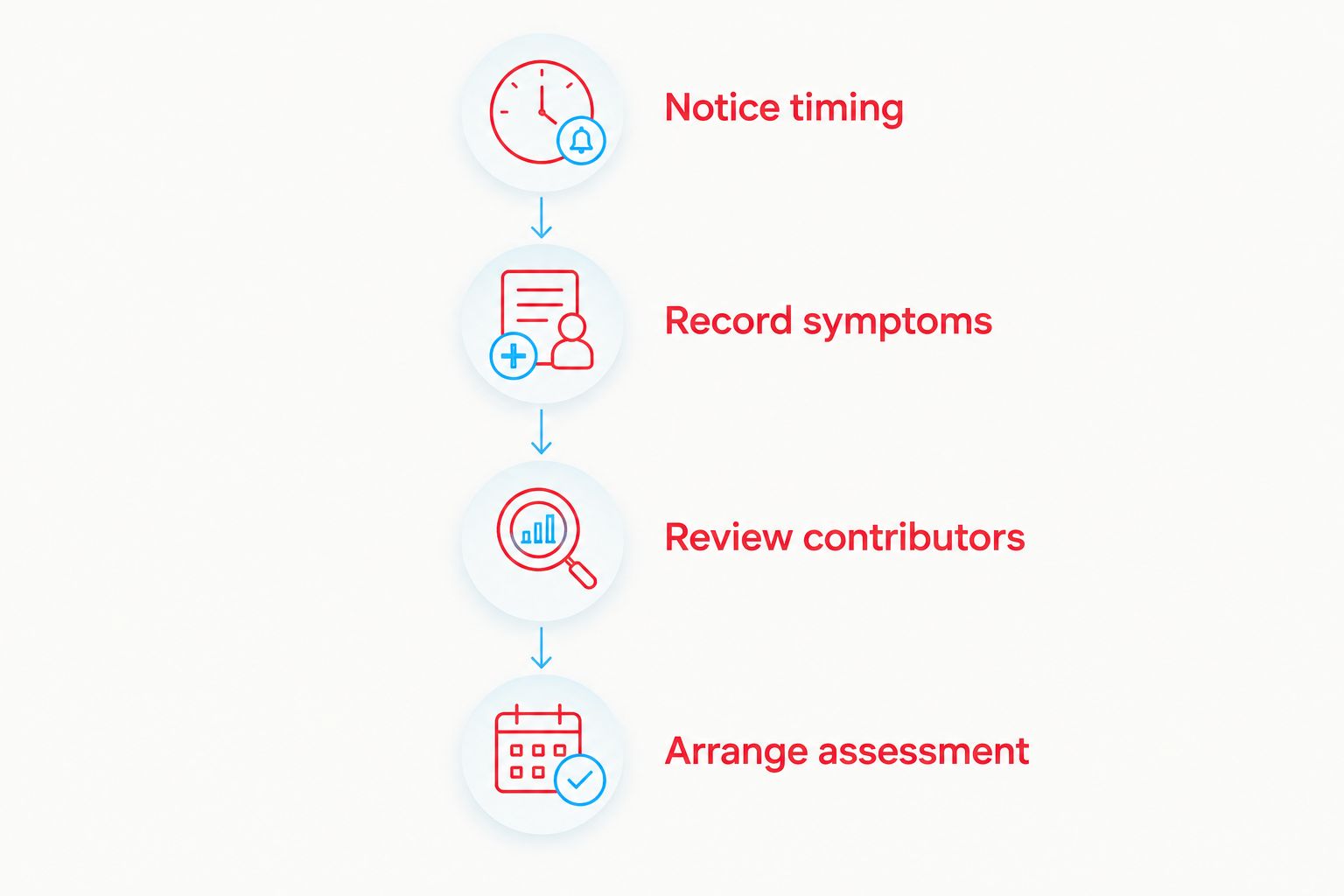
Use this 4-step checklist to prepare for an assessment. It separates information you can observe at home from findings that need an examination.
- Notice timing. Record whether soreness appears on waking, develops during the day, or follows a specific activity. Note whether you actually catch yourself clenching.
- Record symptoms. Describe sensitivity, chewing discomfort, headaches, or a change in how your teeth meet. Tell the dentist about a chipped tooth or a filling that feels different.
- Review contributors. Bring your medication list and mention sleep symptoms, caffeine, alcohol, and tobacco use. Include a partner's observations without treating them as a diagnosis.
- Arrange assessment. Have the teeth, restorations, jaw movement, and chewing muscles checked. Follow the clinician's advice about whether further dental or medical evaluation is needed.
A symptom record is useful because it captures patterns you might otherwise forget. It is not a home test for bruxism, a cracked tooth, or sleep apnea.
Which approaches help, and what are their limits?
Match the approach to the problem: awareness for daytime clenching, protection for vulnerable teeth, and medical assessment for suspected sleep or medication contributors. These approaches are not interchangeable. Your 2026 treatment plan should explain what each recommendation is intended to achieve.
| Approach | Best for | Main benefit | Limitation |
|---|---|---|---|
| Awareness reminders | Adults who catch themselves clenching while awake | Help interrupt unnecessary tooth contact | Do not control sleep bruxism |
| Stress-management support | Adults whose tension or anxiety affects daily life | Addresses emotional strain and coping habits | Does not restore worn or fractured teeth |
| Dentist-selected night guard | Adults whose examination supports protective appliance use | Separates tooth surfaces and helps protect against damage | Does not guarantee that grinding stops |
| Medical or sleep assessment | Adults with breathing symptoms or a possible medication connection | Investigates contributors beyond tooth protection | Does not replace a dental examination for damage |
A dentist-selected night guard needs an appropriate fit and follow-up. Tell the dentist if an appliance increases pain, feels unstable, or changes your bite after removal. Do not reshape it yourself or keep wearing a painful appliance without advice.
Stress-management support can include relaxation practices, counseling, or help from your usual healthcare professional. Choose support that fits the difficulty you are experiencing rather than expecting a single bedtime technique to solve every episode of grinding.
Dental Arts of Atlantis provides general dental care and sleep apnea treatment in Lake Worth. You can contact the practice to discuss an assessment; the examination determines which next steps fit your symptoms.
What can you do at home without making your jaw worse?
Keep the goal modest: reduce avoidable strain while you arrange care. If chewing aggravates the jaw, avoid gum and unusually tough foods temporarily. Do not repeatedly open wide to check whether the joint still clicks.
For daytime clenching, let the teeth separate and allow the jaw to rest comfortably. Pair that check with an ordinary activity, such as finishing a task, rather than watching your jaw all day. Awareness should reduce tension, not create another source of worry.
For nighttime symptoms, keep a consistent sleep routine and discuss potentially relevant substances or medicines with a clinician. Do not use alcohol as a sleep aid or change a prescription independently. Home measures support care; they cannot confirm whether a painful tooth is cracked or infected.
Will reducing stress stop teeth grinding completely?
Reducing stress does not guarantee that teeth grinding stops completely. It can help when tension contributes to awake clenching, but sleep bruxism or another contributor can remain. Persistent symptoms still deserve assessment even when life feels calmer.
Judge progress by more than soreness alone. Tell the dentist whether clenching is less frequent, chewing is more comfortable, and any appliance is tolerable; examination is needed to assess ongoing tooth damage.
Does a night guard treat the stress behind grinding?
A night guard protects teeth; it does not treat the stress behind grinding. Its role is mechanical protection, not counseling or a cure for anxiety. If stress affects your daily functioning, seek appropriate support alongside dental care.
You also need a separate discussion if snoring or breathing pauses are present. Appliances used for diagnosed sleep apnea have a different purpose from ordinary grinding guards.
When should you seek care rather than wait?
Seek prompt dental care for a broken tooth, worsening pain, or difficulty chewing. A jaw that locks or becomes difficult to open also needs assessment. Do not wait for a stressful period to end before reporting these changes.
Facial swelling with fever warrants urgent evaluation. Difficulty breathing or swallowing is an emergency, not a routine grinding symptom. Morning soreness without those warning signs still deserves an appointment if it persists or keeps returning.
FAQ
Can stress cause teeth grinding even if I feel calm at bedtime?
Yes, stress can contribute to teeth grinding even if you feel calm at bedtime. Sleep bruxism also has other contributors, so bedtime mood does not establish or exclude the cause.
How do I know whether I clench my teeth during the day?
Notice whether your teeth are pressed together when you are not eating or swallowing. Repeated tooth contact during concentration or tension is useful information to share with your dentist.
Does morning jaw pain mean I grind my teeth at night?
Morning jaw pain does not prove nighttime teeth grinding. A dental examination helps distinguish muscle soreness from tooth problems and other causes of jaw pain.
What’s the best treatment for stress-related teeth grinding?
The best treatment depends on whether you clench while awake, grind during sleep, or have both patterns. Awareness strategies, stress support, and tooth protection address different parts of the problem.
Can a night guard cure teeth grinding?
A night guard does not guarantee a cure for teeth grinding. It helps protect teeth, while contributing stress, medication effects, or sleep concerns require separate attention.
Should I stop my medicine if teeth grinding starts?
Do not stop prescribed medicine on your own because teeth grinding starts. Contact the prescriber and tell your dentist when the symptoms began and whether the dose or medication changed.
Should I mention snoring when I see the dentist about grinding?
Yes, mention snoring, especially with witnessed breathing pauses, gasping, or daytime sleepiness. These symptoms warrant evaluation for a possible sleep-related breathing disorder rather than treatment with a grinding guard alone.
One last thing
Tooth wear records past damage, not just what happened last night. Old wear does not prove that you are still grinding, and feeling less sore does not establish that your teeth are protected. Comparing examination findings over time is more useful than repeatedly checking your bite at home.
For your 2026 visit to Dental Arts of Atlantis, bring your symptom notes, medication list, and any existing dental appliance. That preparation keeps the conversation focused on your comfort, tooth protection, and the next appropriate step—not on blaming yourself for being stressed.
Related guides
- How long does it take to adjust to a night guard?
- How to know if your snoring means sleep apnea
- How to relieve TMJ pain at home before your dentist visit