
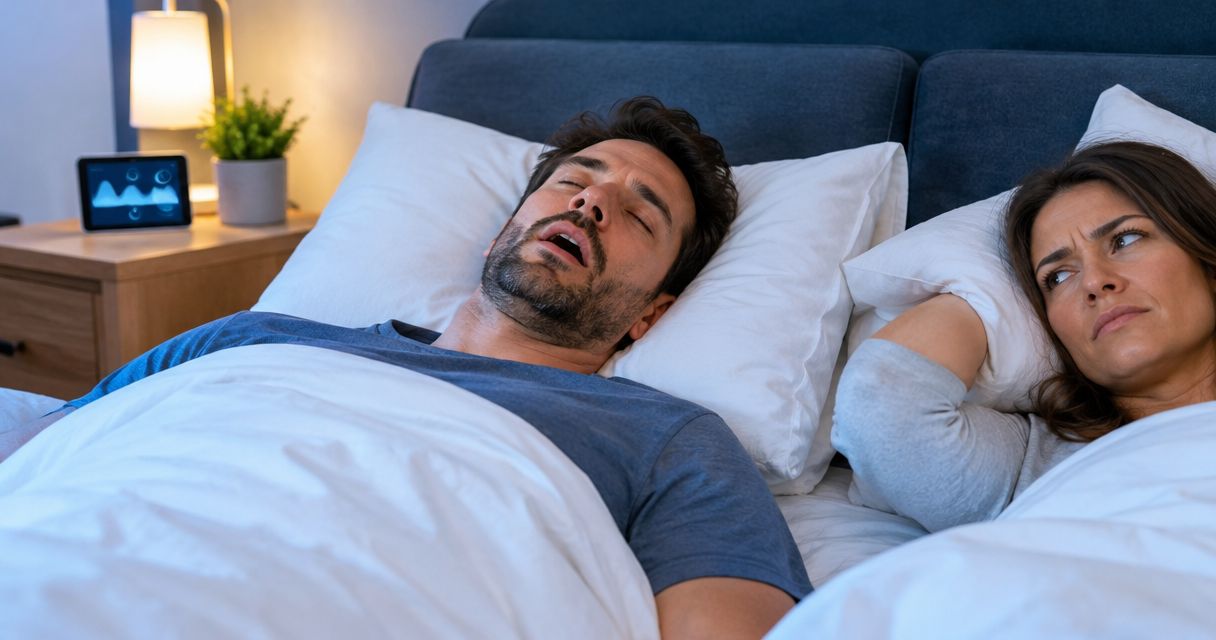
Snoring can sometimes stop for the long term when its underlying cause is corrected, but no treatment guarantees a permanent cure for everyone. In 2026, the safest approach remains identifying whether you have simple snoring or obstructive sleep apnea before choosing treatment. A quieter night does not, by itself, prove that your breathing is normal.
- Can snoring be cured permanently? Sometimes, but lasting results depend on the cause and ongoing changes in your airway.
- Obstructive sleep apnea needs medical evaluation; reduced snoring alone does not confirm successful treatment.
- Oral appliances and CPAP usually control symptoms during use rather than permanently eliminate the underlying condition.
- Dental Arts of Atlantis offers dental sleep apnea care for families in the Palm Beach County area.
Can snoring be cured permanently?
Sometimes—but treating the cause is different from controlling the sound. Snoring linked to temporary congestion can disappear when nasal breathing returns to normal. Snoring caused by persistent airway narrowing often requires ongoing treatment, and even surgery does not guarantee lifelong relief.
Start by separating ordinary snoring from sleep apnea. This guide to sleep apnea treatment for chronic snorers explains the treatment context; the comparison below shows why different approaches have different limits.
| Approach | Best for | Main benefit | Important limitation | Permanent cure? |
|---|---|---|---|---|
| Cause-directed lifestyle changes | People whose snoring relates to back sleeping, alcohol, or excess weight | Addresses contributing factors without a device | Results depend on the actual cause and maintaining changes | Possible lasting improvement, not guaranteed |
| Custom oral appliance | Selected adults with primary snoring or diagnosed obstructive sleep apnea | Holds the lower jaw forward during sleep | Requires nightly use, dental monitoring, and assessment of effectiveness | Usually ongoing control |
| CPAP | Adults prescribed positive airway pressure for obstructive sleep apnea | Keeps the airway open with pressurized air | Requires use during sleep and attention to mask comfort | Usually ongoing control |
| Airway surgery | Selected patients with a surgically treatable obstruction | Changes an anatomical contributor | Involves surgical risks; snoring or apnea can persist or return | Sometimes lasting improvement, not guaranteed |
Why this matters
Snoring is not automatically dangerous, but breathing pauses, choking, and significant daytime sleepiness need attention. Obstructive sleep apnea involves repeated upper-airway blockage during sleep and is associated with health problems including high blood pressure.
When choosing snoring treatment in 2026, make normal breathing—not silence—the goal. Your partner's observations are useful, but neither a sound recording nor a quieter bedroom can establish whether sleep apnea has resolved.
Get evaluated promptly if someone notices breathing pauses or you wake gasping. If you feel sleepy behind the wheel, do not drive; arrange another way to travel and seek medical advice.
Lifestyle changes: lasting improvement depends on the cause
Best for: People whose snoring is linked to modifiable triggers, after assessment for sleep apnea when indicated.
Side sleeping can reduce snoring that happens mainly on your back. Avoiding alcohol near bedtime can also help because alcohol relaxes upper-airway muscles. If excess weight contributes to airway narrowing, medically appropriate weight management can improve snoring and obstructive sleep apnea.
The benefit is that these changes address contributors rather than simply covering the noise. The limitation is equally important: they do not correct every anatomical obstruction, and improvement does not prove that sleep apnea is gone.
Persistent nasal congestion deserves assessment, especially when it interferes with breathing through your nose. Treating an allergy or another nasal problem can help nasal airflow, but it does not necessarily resolve blockage farther down the airway.
Do not stop prescribed medicines because you suspect they worsen snoring. Ask the prescribing clinician to review them instead.
Oral appliances: treatment while you wear them
Best for: Selected adults with primary snoring after sleep apnea has been excluded, or diagnosed obstructive sleep apnea when a clinician recommends oral appliance therapy.
A mandibular advancement device holds the lower jaw forward to help keep the upper airway open during sleep. It does not permanently reposition your jaw or remove the underlying tendency toward airway collapse. The benefit generally depends on wearing it.
The American Academy of Sleep Medicine and American Academy of Dental Sleep Medicine's 2015 clinical practice guideline supports oral appliances for adults seeking treatment for primary snoring. For obstructive sleep apnea, it recommends considering oral appliances for adults who cannot tolerate CPAP or prefer an alternative, with clinical oversight.
For prescribed oral appliance therapy, a custom, adjustable device is preferred over a noncustom device. Read the mandibular advancement device guide before discussing suitability with your clinicians.
Advantages include portability and no mask or air hose. Limitations include possible tooth discomfort, jaw symptoms, salivation changes, and changes to your bite. Dental follow-up matters, and follow-up sleep testing is recommended to confirm effectiveness for sleep apnea.
A grinding guard is not interchangeable with a sleep apnea appliance. Protecting teeth from grinding and treating airway obstruction are different jobs.
CPAP: effective control, not a permanent anatomical change
Best for: Adults whose sleep clinician prescribes positive airway pressure for obstructive sleep apnea.
Continuous positive airway pressure, or CPAP, uses pressurized air to keep your airway open while you sleep. It treats breathing obstruction during use rather than permanently changing the tissues that contribute to it.
Its strength is direct airway support. Its limitation is that mask leaks, dryness, pressure discomfort, or difficulty adapting can interfere with use. Those problems deserve troubleshooting rather than an assumption that treatment cannot work.
Ask your sleep team about mask fit, humidification, nasal symptoms, and pressure settings. Do not change prescribed settings yourself or stop treatment solely because your partner reports less snoring.
If you want to switch treatments in 2026, involve the prescribing clinician before making the change. An alternative needs to address your sleep apnea, not just sound more convenient.
Surgery: a targeted option without a lifelong guarantee
Best for: Patients whose specialist identifies an obstruction or anatomy that makes a particular operation appropriate.
Surgery can address selected structural contributors, such as enlarged tonsils or other areas of airway obstruction. Different operations target different tissues, so a procedure that suits one person is not automatically suitable for another.
The potential benefit is a lasting anatomical change. The limitations include recovery, procedure-specific complications, and the possibility that snoring or sleep apnea remains after healing.
A permanent anatomical change is not the same as a guaranteed permanent cure. Aging, weight changes, and obstruction at other airway levels can affect long-term results. Ask what outcome the surgeon expects: less noise, improved airflow, reduced sleep apnea severity, or a combination.
For diagnosed sleep apnea, ask how and when the treatment result will be checked objectively.
Why lasting snoring relief varies
Several established factors explain why the same treatment does not work equally well for everyone:
- Airway anatomy: The nose, tonsils, tongue, soft palate, and jaw position can contribute in different ways.
- Sleep position: Back sleeping worsens airway narrowing in some people, but positional changes do not help everyone equally.
- Weight changes: Weight can affect the tissues surrounding the airway; weight management is not a guaranteed standalone cure.
- Alcohol and medicines: Alcohol and some sedating medicines can worsen breathing during sleep. Review prescribed medicines with your clinician.
- Nasal obstruction: Allergies or structural nasal problems can interfere with airflow, without being the only source of snoring.
- Treatment use and follow-up: A device cannot provide its intended benefit when it is not worn, and an initially helpful treatment can need reassessment.
Your treatment plan should identify which factors actually apply to you. Buying several snoring products without that assessment does not establish the cause.
How do I find out what is causing my snoring?
Start with a medical sleep assessment when symptoms suggest sleep apnea. A dental examination can identify oral health considerations, but it does not replace the medical diagnostic process.
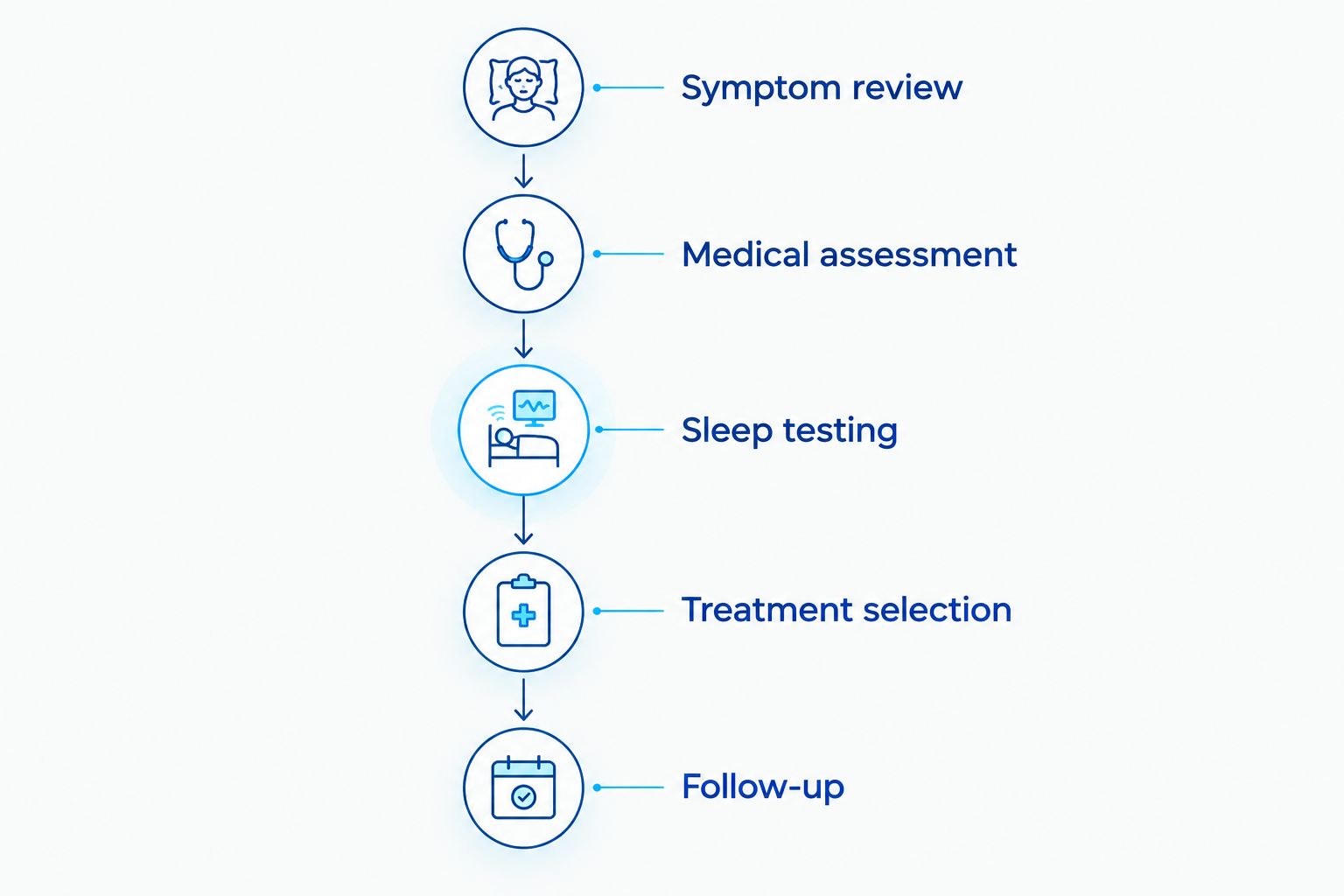
- Symptom review: Describe snoring, witnessed pauses, choking, morning headaches, and daytime sleepiness. Include your medicines and alcohol use.
- Medical assessment: A clinician reviews your history and decides whether sleep testing or another evaluation is appropriate.
- Sleep testing: Use the test recommended for your situation. An at-home test is not suitable for every patient.
- Treatment selection: Match treatment to the diagnosis, severity, anatomy, preferences, and relevant dental findings.
- Follow-up: Check comfort, actual use, symptoms, and objective breathing results when indicated.
The American Academy of Sleep Medicine's 2017 adult diagnostic testing guideline recommends an in-laboratory study after a single home sleep apnea test is negative, inconclusive, or technically inadequate when evaluation for obstructive sleep apnea is still needed. A reassuring-looking home result is not always the end of the assessment.
For adults reviewing sleep study results in 2026, commonly used apnea-hypopnea index categories are:
- Mild: 5 to fewer than 15 breathing events per hour.
- Moderate: 15 to fewer than 30 breathing events per hour.
- Severe: 30 or more breathing events per hour.
These categories describe measured breathing disturbances, not snoring volume. Your clinician also considers symptoms, oxygen findings, medical history, and the type of test used.
Can snoring come back after successful treatment?
Yes, snoring can return after successful treatment. A return of congestion, changes in weight, aging, or stopping an effective device can change your symptoms.
New snoring after a quiet period deserves review, especially with tiredness or witnessed pauses. Do not assume an old treatment remains sufficient simply because it previously helped.
Keep follow-up records, including sleep study reports and the treatment you actually use. They help clinicians distinguish a comfort issue from a change in breathing control.
Can I stop treatment once my snoring disappears?
No—disappearing snoring alone is not a reason to stop prescribed sleep apnea treatment. Discuss reassessment with your sleep clinician before reducing or stopping therapy.
That applies even after weight loss or surgery. Symptoms can improve while clinically meaningful breathing disturbances remain, so treatment decisions need more than a partner's report.
Where does dental care fit into snoring treatment?
Dental Arts of Atlantis is a local option for Palm Beach County families seeking dental sleep apnea care. The Lake Worth practice offers sleep apnea treatment alongside general and family dental services.
The appropriate role for dental care depends on your diagnosis and oral health. Ask how the dental portion of treatment will fit with medical assessment, what follow-up is needed, and how effectiveness will be confirmed.
Dental Arts of Atlantis offers a relevant starting point for discussing dental sleep apnea care, not a substitute for medical sleep testing. No provider can responsibly promise that every patient's snoring will disappear forever.
FAQ
Can snoring be cured permanently in 2026?
Snoring can sometimes resolve long term when its cause is corrected, but no treatment guarantees a permanent cure. Oral appliances and CPAP generally control the problem during use rather than permanently eliminate it.
Does loud snoring always mean I have sleep apnea?
Loud snoring does not always mean sleep apnea, and loudness alone cannot establish the diagnosis. Breathing pauses, gasping, and significant daytime sleepiness strengthen the need for medical assessment.
Can a dentist help me stop snoring?
A dentist can help with the dental aspects of snoring treatment, including evaluating suitability for prescribed oral appliance therapy. Dental Arts of Atlantis offers sleep apnea care in Lake Worth; suspected sleep apnea still needs medical evaluation.
Is a night guard the same as a snoring appliance?
A night guard for grinding is not the same as an airway appliance. A mandibular advancement device is designed to hold the lower jaw forward, while a grinding guard primarily protects teeth.
Is an oral appliance better than CPAP?
An oral appliance is not universally better than CPAP. The appropriate choice depends on your diagnosis, treatment response, ability to use the treatment, and recommendations from your sleep clinician.
Will losing weight permanently stop my snoring?
Weight loss can improve snoring when excess weight contributes, but it does not guarantee permanent relief or cure sleep apnea. Keep prescribed treatment in place until your clinician reassesses it.
Can I use a sleep recording app instead of a sleep study?
A sleep recording app cannot replace a clinical sleep study. Recordings can help describe the problem, but they cannot reliably establish whether breathing obstruction has resolved.
One last thing
Silence is not the same as normal breathing. Before starting treatment in 2026, ask one question: how will you confirm that it works?
For simple snoring, symptom improvement matters. For diagnosed sleep apnea, the plan also needs appropriate follow-up of breathing during sleep. Decide how success will be measured before you commit to the treatment.
Related guides
- How to know if your snoring means sleep apnea
- Oral appliances for CPAP-intolerant sleep apnea patients
- How to connect a home sleep study to oral appliance therapy