
No, wisdom teeth cannot grow back after the entire tooth has been removed. A hard bump, sharp edge, or new pain near the extraction site can come from healing bone, a remaining tooth fragment, or a separate tooth—not the removed wisdom tooth regenerating.
- Can wisdom teeth grow back? No. A completely removed permanent tooth does not regenerate.
- A bone fragment, retained root, or separate tooth can explain a tooth-like bump after wisdom teeth removal.
- New swelling, worsening pain, or drainage needs dental assessment, not an assumption that a tooth is growing back.
- Dental Arts of Atlantis offers general dental care for families in Lake Worth and Palm Beach County.
Can wisdom teeth grow back after removal?
A completely extracted wisdom tooth does not grow back. Your gums close over the socket, and bone gradually fills and reshapes the space, but that healing process does not create another tooth.
The distinction matters when you notice something hard behind your last molar. Our guide to recovery after wisdom teeth removal explains the broader healing process; the comparison below explains what can resemble regrowth.
| Possible explanation | What it means | What an examination helps establish |
|---|---|---|
| Healing bone | The socket's bony contours feel firm beneath the gum | Whether the area is healing as expected |
| Bone spicule | A small piece of bone works toward or through the gum | Whether it needs professional attention |
| Retained tooth fragment | Part of the original tooth remains | Its position and whether treatment is necessary |
| Intentional retained roots | Roots were left during a procedure called a coronectomy | Whether the roots remain healthy and stable |
| Separate tooth | Another existing tooth is erupting or becoming noticeable | Which tooth is present and how it relates to earlier records |
Feeling something hard is not enough to identify it. A dentist combines your symptoms, an examination, and imaging when needed rather than diagnosing regrowth by touch alone.
Why this matters
The useful question is not just whether wisdom teeth return. It is whether a new sensation reflects ordinary healing or a problem that needs care.
A small rough edge without worsening symptoms is different from increasing swelling, drainage, or severe pain. Neither situation proves that a tooth has grown back, but the symptoms change how urgently you should seek help.
For readers checking this question in 2026, the practical rule is straightforward: do not ignore a new problem simply because regrowth is impossible. The bump or pain still deserves an explanation.
A bone spicule is not a new wisdom tooth
A bone spicule is a small, sharp piece of bone that becomes noticeable at the gum surface after an extraction. It can feel remarkably tooth-like when your tongue passes over it.
Some small fragments work their way out as the area heals. Others remain uncomfortable and need a dentist's attention, especially when they irritate the tongue or keep the gum sore.
Do not pull at the fragment with tweezers, scrape it with a fingernail, or repeatedly push on it. You cannot tell at home how firmly it is attached, and digging into the area can injure healing tissue.
When you call, describe the location, whether you can see the object, and whether pain or swelling is increasing. Those details help the dental team decide the next step without treating every sharp edge as the same problem.
A retained root does not regenerate a whole tooth
A retained root is part of the original tooth, not a replacement tooth. Its presence does not mean the body has started building another wisdom tooth.
A root fragment can remain after an extraction, or roots can be intentionally retained during a coronectomy. In selected lower wisdom-tooth cases, a surgeon removes the crown while leaving roots to reduce the risk of injury to a nearby nerve.
That choice involves a trade-off. Avoiding removal of roots close to a nerve can reduce surgical risk, but retained roots require the follow-up recommended by the treating clinician and sometimes need later treatment.
If your records mention a coronectomy, tell the dentist assessing the area. The correct comparison is with your original treatment plan and imaging—not with the assumption that every extraction removed the crown and all roots.
An extra tooth is separate from the removed tooth
Most people develop up to 4 wisdom teeth, although some develop fewer or none. An additional tooth beyond the usual number is called a supernumerary tooth.
A typical complete adult dentition contains 32 permanent teeth, including wisdom teeth. An extra tooth near a former wisdom-tooth site is a separate developmental finding, not evidence that an extracted permanent tooth grew back.
Another possibility is simpler: a wisdom tooth that was never removed has begun erupting. Wisdom teeth commonly emerge between 17 and 25 years of age, although the timing varies and some remain impacted beneath the gum or bone.
Your memory of having wisdom teeth removed does not establish which teeth were treated. Earlier X-rays and the surgical report can clarify whether all wisdom teeth, selected teeth, or only tooth crowns were removed.
Why a tooth-like bump after removal varies
The explanation depends on the original procedure and what is happening now. These factors help a dentist distinguish healing changes from a separate concern:
- Procedure type: A complete extraction and a coronectomy leave different structures behind.
- Time since treatment: A bump during healing and a new bump long after recovery need different consideration.
- Location: A sharp point in the socket is different from a tooth-shaped structure behind the neighboring molar.
- Symptom pattern: Improving soreness differs from pain that becomes stronger after initially easing.
- Earlier tooth development: Existing impacted or extra teeth can explain later eruption.
- Examination findings: Gum inflammation, exposed bone, drainage, and neighboring tooth problems help narrow the cause.
Timing alone does not confirm a diagnosis. A symptom that starts years after an extraction still needs an examination rather than being labeled delayed regrowth.
How does a dentist find out what you are feeling?
An assessment starts with your history and a careful look at the area. Imaging is used when it will help answer the clinical question; a scan is not automatically necessary for every rough spot.
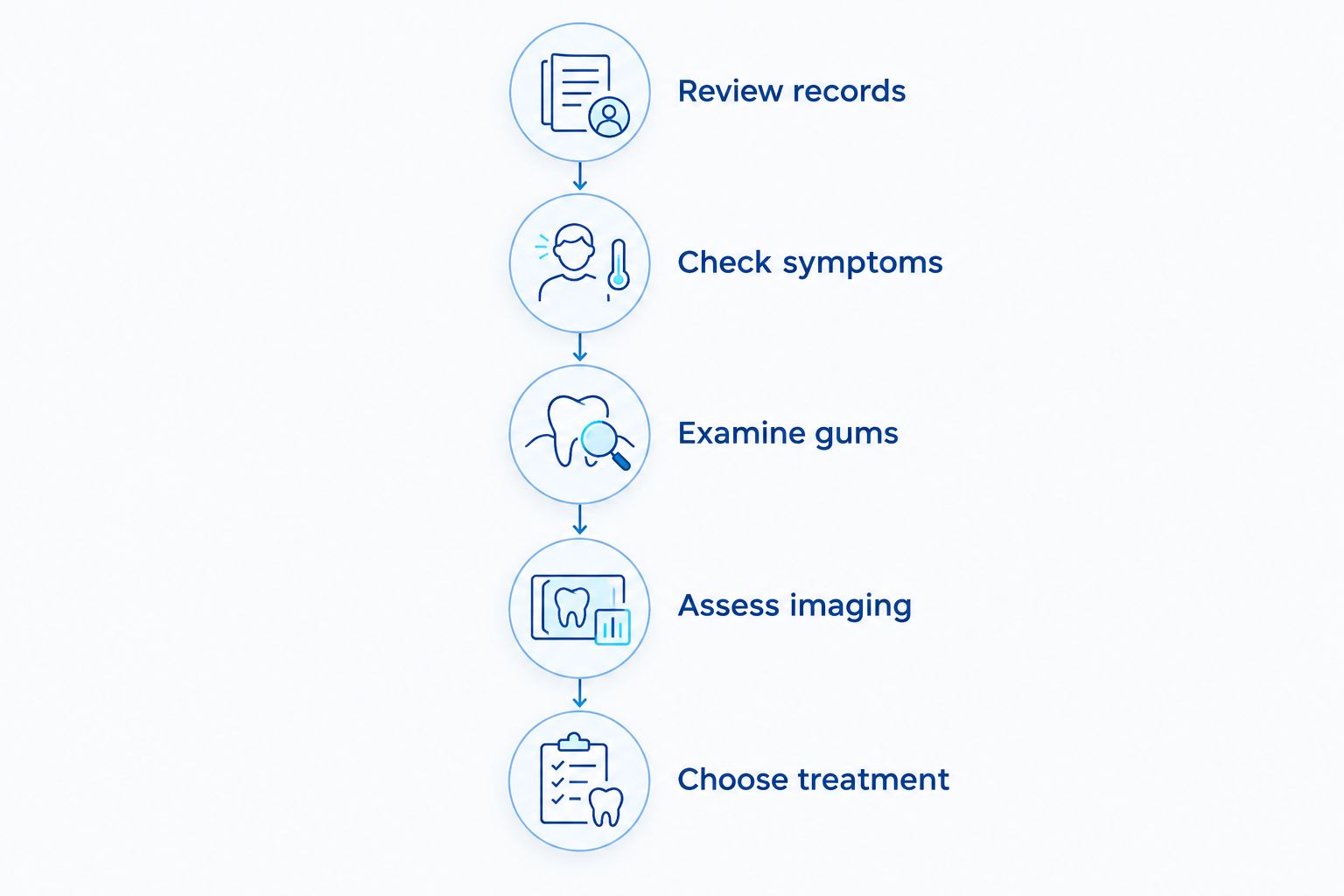
- Review records. Identify the extraction site, the procedure performed, and any known retained roots or additional teeth.
- Check symptoms. Describe when the sensation started, what makes it worse, and whether swelling, drainage, or fever is present.
- Examine gums. The dentist checks the socket area, surrounding tissue, and nearby teeth.
- Assess imaging. When indicated, dental X-rays help locate tooth fragments, roots, or a separate tooth.
- Choose treatment. The findings determine whether observation, local care, fragment removal, or referral is appropriate.
Bring any earlier X-rays or extraction paperwork you already have, or ask how the records can be transferred. You do not need to identify the object yourself before requesting an assessment.
For a dental visit in 2026, a short symptom note is useful: record the location, when the change started, and whether it is improving or worsening. A photograph can help show a visible change, but it cannot reveal what lies beneath the gum.
What should you do while waiting for an examination?
Best for a new unexplained bump: arrange a dental assessment and avoid disturbing it. Repeatedly testing the spot with your tongue or fingers can make an irritated area more uncomfortable without providing a reliable diagnosis.
If the extraction was recent, follow the surgeon's written aftercare instructions. Do not add forceful rinsing, vigorous irrigation, or unfamiliar treatments simply because you suspect a fragment.
Keep nearby teeth clean with gentle brushing while avoiding injury to the surgical site. Do not place aspirin directly on the gum, use sharp tools, or take leftover antibiotics.
If you need pain relief, follow the instructions supplied by your clinician and the medicine label. Ask a dentist or pharmacist before using a medicine when you have relevant medical conditions, take other medications, or are unsure whether it is suitable.
These measures protect the area while you obtain advice. They do not replace an examination when symptoms persist or worsen.
When is a new bump or pain urgent?
Contact a dentist or oral surgeon promptly for increasing swelling, pus, fever, worsening pain, or difficulty opening your mouth. Severe pain after an extraction also needs assessment even when you cannot see anything unusual.
Dry socket is another reason for significant pain after an extraction. It involves loss or breakdown of the protective blood clot and is not tooth regrowth; pain alone cannot distinguish it from other problems.
Difficulty breathing or swallowing, rapidly spreading facial or neck swelling, or uncontrolled bleeding requires immediate emergency care. Do not wait for a routine appointment or an online reply when these warning signs occur.
If you are contacting a practice in 2026 about a recent extraction, name the procedure and the urgent symptom first. That is more useful for triage than saying only that you think a wisdom tooth has returned.
Will you need another extraction?
A second extraction is not automatic. The treatment depends on what is present, whether it is causing disease or discomfort, and the risks of removing it.
Best for a symptom-free finding: follow a clinician-directed monitoring plan when recommended. Monitoring avoids an unnecessary procedure, but its limitation is that you must attend the advised reviews and report changes.
Best for a painful or diseased finding: discuss targeted treatment after diagnosis. Removing an irritating fragment or treating a separate tooth can address the cause, but another procedure has its own healing needs and risks.
A visible hard point does not tell you which approach is appropriate. Ask the dentist what the finding is, what happens if it is observed, and what benefit treatment is expected to provide.
Where can Palm Beach County families start?
Dental Arts of Atlantis suits Palm Beach County families seeking general dental care. The Lake Worth practice offers general, cosmetic, pediatric, and implant dentistry, making a general dental visit a relevant starting point for an unexplained oral change.
For dental care in 2026, you can contact the practice and describe your symptoms and extraction history. An examination—not this article—determines whether the concern needs general dental treatment or assessment by an oral surgeon.
Dental Arts of Atlantis cannot identify a retained root or bone fragment from your description alone. If another clinician performed the extraction, contacting that treating office also helps preserve continuity with your surgical records and aftercare plan.
FAQ
Can wisdom teeth grow back after removal in 2026?
No, a completely removed wisdom tooth cannot grow back. A tooth-like bump can instead be bone, a retained tooth fragment, or a separate tooth, so an examination is needed to identify it.
Why do I feel a sharp piece of tooth after wisdom teeth removal?
A sharp point after wisdom teeth removal can be a bone spicule, exposed bone, or a tooth fragment. Do not pull or scrape it yourself; contact the treating dentist if it hurts, persists, or comes with swelling.
Can a wisdom tooth root grow into another tooth?
A retained wisdom tooth root does not grow into a replacement tooth. Roots left after a coronectomy can change position over time and need the follow-up advised by the treating clinician.
Can another wisdom tooth come in years after surgery?
A separate tooth can erupt years after surgery if it was already present and was not removed. Earlier X-rays and surgical records help distinguish an untreated or extra tooth from the original extraction site.
Does a bump after wisdom teeth removal mean infection?
A bump alone does not establish infection. Increasing swelling, drainage, fever, or worsening pain requires prompt dental assessment, while breathing or swallowing difficulty requires immediate emergency care.
Should I pull out a loose bone fragment myself?
Do not pull out a suspected bone fragment yourself. A dentist can establish what it is and whether removing it is appropriate without unnecessary injury to the gum.
Do retained wisdom tooth roots always need removal?
Retained wisdom tooth roots do not always need removal. Their condition, location, symptoms, and relationship to nearby structures determine whether monitoring or treatment is appropriate.
One last thing
Ask for the procedure name, not just the number of teeth treated. An extraction and a coronectomy can both be remembered as having a wisdom tooth removed, yet they leave different anatomy behind.
Before your visit to Dental Arts of Atlantis or your treating surgeon, write down which side feels different and request your earlier records if they are available. That simple preparation helps turn a worrying sensation into a specific question the examination can answer.
Related guides
- How to prepare for wisdom teeth removal
- How to tell if your wisdom teeth are infected
- Best foods to eat after wisdom teeth removal