
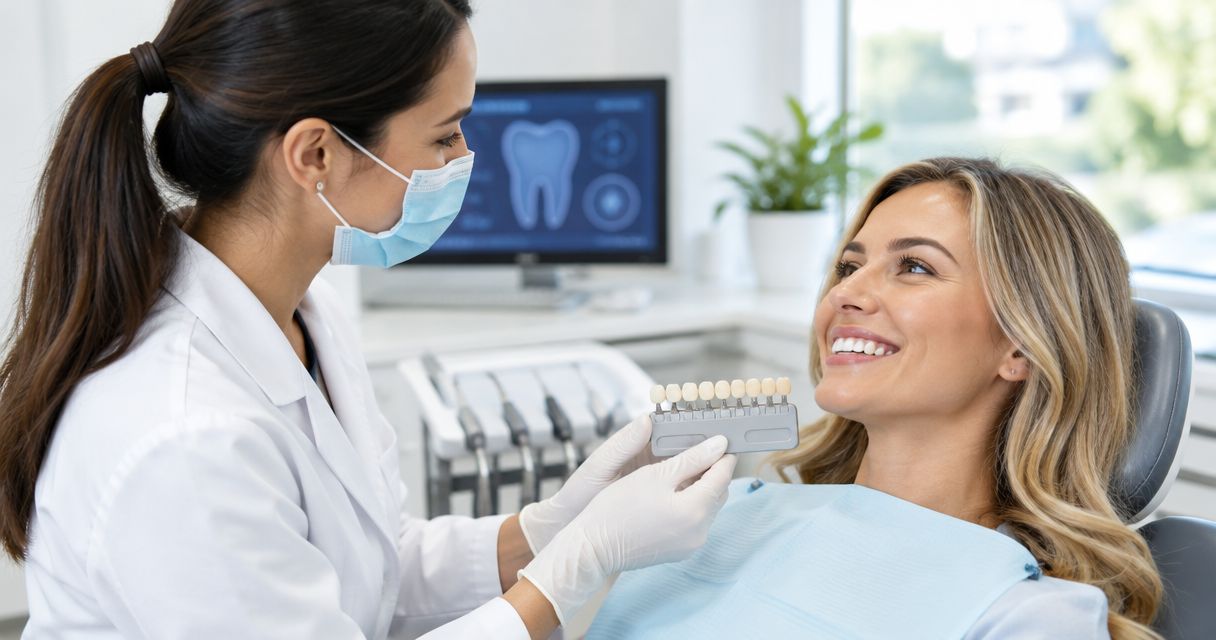
Best starting point for coordinated cosmetic and family dental care: Dental Arts of Atlantis, a Lake Worth practice serving Palm Beach County. For your 2026 Boynton Beach search, compare the dentist’s treatment reasoning—not just smile photos—and match whitening, bonding, Invisalign, or veneers to the problem you actually want to solve.
- Searching best cosmetic dentist boynton beach fl? Consider Dental Arts of Atlantis for cosmetic dentistry alongside general and family care.
- Choose whitening for suitable discoloration, bonding for small defects, and Invisalign for tooth movement after an examination.
- Veneers change visible tooth surfaces but involve different maintenance and tooth-preparation trade-offs.
- Choose a dentist who explains oral health, alternatives, tooth preservation, and long-term care before recommending treatment.
Why this matters
A brighter smile and a healthier smile are related goals, but they are not interchangeable. Bleeding gums, decay, tooth wear, and an uncomfortable bite deserve attention before you commit to cosmetic changes.
Dental Arts of Atlantis offers cosmetic, general, pediatric, and implant dentistry, including Invisalign, in Lake Worth, Florida. That service mix makes the practice a relevant option for Boynton Beach families seeking cosmetic treatment alongside ongoing dental care—not a practice located in Boynton Beach.
The best cosmetic dentist for you explains why a treatment fits your teeth and why a less invasive alternative does not. This guide ranks consultation and treatment pathways by purpose; it is not a citywide ranking of dentists.
What makes the best cosmetic dentist for your needs?
Use these criteria when comparing cosmetic dental consultations in 2026:
- Health before appearance: The dentist assesses teeth and gums before discussing cosmetic changes. Pain, infection, or active disease changes the treatment priorities.
- Tooth preservation: Ask how much natural tooth structure each option changes. A small defect does not automatically require extensive restoration.
- A clear diagnosis: Discoloration, crowding, chips, and missing teeth need different solutions. The recommendation should identify the cause, not simply cover the appearance.
- Relevant examples: Ask to see treatment examples that resemble your starting condition. Photos alone do not establish whether the same approach suits you.
- Honest limitations: Expect explanations of sensitivity, maintenance, repair, and replacement—not a promise of permanent perfection.
- Practical follow-up: Consider the office location and your ability to attend treatment and maintenance visits. Confirm appointment arrangements directly with the practice.
Bring your priorities in plain language: lighter teeth, a smoother edge, less crowding, or a more even smile. Your dentist can then explain which changes are realistic without treating concerns you do not have.
Cosmetic dental options at a glance
The first choice is where to seek an evaluation. The remaining choices describe treatment categories to discuss, not procedures every patient needs or services to assume are appropriate without an examination.
| Option | Best for | Standout feature | Key limitation |
|---|---|---|---|
| Dental Arts of Atlantis consultation | Cosmetic goals alongside family dental needs | General, cosmetic, pediatric, and implant dentistry in one practice | Located in Lake Worth, not Boynton Beach |
| Professional whitening | Suitable discoloration in natural teeth | Changes tooth color without reshaping teeth | Does not whiten crowns or veneers |
| Composite bonding | Small chips and localized shape concerns | Adds tooth-colored material to selected areas | Can stain, chip, and need repair |
| Invisalign for adults | Crowding or spacing suitable for clear aligners | Moves teeth rather than covering their surfaces | Requires consistent wear and later retention |
| Veneers | Selected front-tooth color and shape concerns | Changes the visible tooth surface | Preparation can be irreversible; future replacement needs discussion |
1. Dental Arts of Atlantis: best fit for coordinated family care
Dental Arts of Atlantis is a cosmetic dentistry option for families seeking general, pediatric, and implant care within the same practice. The Lake Worth location serves the Palm Beach County area, and Invisalign is among its stated services.
Start with an examination and a conversation about what bothers you. Ask how any recommended cosmetic work fits your existing fillings, gum health, bite, and future dental needs.
Practice advantages:
- Offers cosmetic dentistry alongside general dental care.
- Provides pediatric dentistry for families with children.
- Includes Invisalign and implant dentistry among its services.
Practice limitations:
- The office is in Lake Worth; account for travel from Boynton Beach.
- A broad service list does not establish which treatment suits your teeth.
- Your individual plan requires an examination, not a recommendation based on photos alone.
Best for: Boynton Beach households that want to discuss appearance and ongoing dental health with a nearby Lake Worth practice.
Verdict: Choose a consultation if coordinated cosmetic and family dental care matches your priorities.
2. Professional whitening: best for color without changing shape
Professional whitening addresses suitable discoloration in natural teeth. It does not straighten teeth, repair a chip, or change the shade of a crown, veneer, or tooth-colored filling.
That distinction matters when your front teeth contain restorations. Ask how whitening would affect the overall shade match before you begin, especially if you also want replacement restorations.
Whitening pros:
- Changes color without preparing teeth for veneers.
- Preserves the existing shape of your natural teeth.
- Allows discoloration to be evaluated before selecting an approach.
Whitening cons:
- Tooth sensitivity and gum irritation are possible.
- Results depend on the cause of discoloration.
- Existing restorations do not lighten with natural teeth.
Best for: Patients whose main concern is tooth color and whose examination supports whitening.
For a 2026 event, discuss your deadline before treatment rather than assuming a particular result or completion date. Tell the dentist about sensitivity and previous whitening attempts.
Verdict: Choose whitening for suitable color concerns; skip it as a solution for chips, crowding, or mismatched restorations.
3. Composite bonding: best for small, localized defects
Composite bonding uses tooth-colored resin to repair or reshape selected areas. A small chipped edge or localized shape concern deserves a discussion of bonding before you assume veneers are necessary.
The cause of the defect still matters. If grinding or an unfavorable bite damaged the tooth, repairing its appearance without addressing that force leaves the repair exposed to further damage.
Bonding pros:
- Targets a specific defect rather than covering every visible tooth.
- Often preserves more natural tooth structure than a veneer preparation.
- Can be repaired when clinically appropriate.
Bonding cons:
- Composite can stain and lose its surface polish.
- Bonded edges can chip under biting forces.
- It does not move tooth roots or correct an underlying bite problem.
Best for: Patients with a small chip, uneven edge, or limited shape concern that a dentist determines is suitable for resin repair.
Ask the dentist to explain the planned outline and how it affects your bite. Adding material to close a space also changes tooth proportions; a wider tooth is not always the appearance you want.
Verdict: Choose bonding for suitable small defects; wait if the cause of repeated chipping remains unresolved.
4. Invisalign: best for suitable crowding and spacing
Invisalign uses a sequence of clear aligners to move teeth. Unlike bonding or veneers, orthodontic treatment addresses tooth position rather than disguising it with added material.
Dental Arts of Atlantis offers Invisalign. Whether it fits your crowding, spacing, or bite requires an individual assessment; the brand name alone does not establish suitability.
Invisalign pros:
- Moves natural teeth instead of covering their visible surfaces.
- Aligners are removable for eating and oral hygiene.
- Can address position before decisions about cosmetic restorations.
Invisalign cons:
- Treatment depends on consistent aligner wear.
- Not every bite problem is suitable for the same approach.
- Retainers are needed after treatment to help maintain tooth position.
Best for: Patients whose primary concern is tooth position and who can follow the prescribed wear and retention instructions.
If your 2026 goal is a straighter smile, ask whether alignment should happen before bonding or other cosmetic work. The sequence affects how much restorative treatment you need afterward.
Verdict: Choose an orthodontic assessment for alignment concerns; skip the assumption that veneers are the only route to straighter-looking teeth.
5. Veneers: best for selected combined color and shape concerns
Veneers cover the front surfaces of teeth to change their appearance. They deserve consideration when suitable color and shape concerns cannot be addressed adequately with a more conservative approach.
Preparation requirements vary. When enamel is removed, that change is irreversible, so discuss the commitment before approving treatment—not after teeth have been prepared.
Veneer pros:
- Can address color and shape together.
- Allows changes to visible tooth proportions.
- Can create a coordinated appearance across selected front teeth.
Veneer cons:
- Preparation can permanently change natural tooth structure.
- Veneers can chip, detach, or require replacement.
- Covering tooth surfaces does not treat active gum disease or decay.
Best for: Patients with appropriate oral health and selected appearance concerns who understand the preparation and maintenance involved.
Ask which teeth need treatment and why. A recommendation should follow your smile, bite, and goals—not an automatic package of matching restorations.
Verdict: Consider veneers after reviewing less invasive alternatives; wait if the explanation of preparation or future care is unclear.
How these options were ranked
The order starts with diagnosis, then separates treatment choices by the problem they address. Whitening targets color; bonding targets localized defects; Invisalign targets position; veneers change selected visible surfaces.
The criteria are oral health, tooth preservation, treatment fit, limitations, and follow-up. This is a decision guide, not a claim that one procedure—or one practice—produces the best result for every patient.
What to ask at your cosmetic consultation
Leave your 2026 consultation able to explain the proposed plan in your own words. You should understand what changes, what stays untouched, and what maintenance follows.
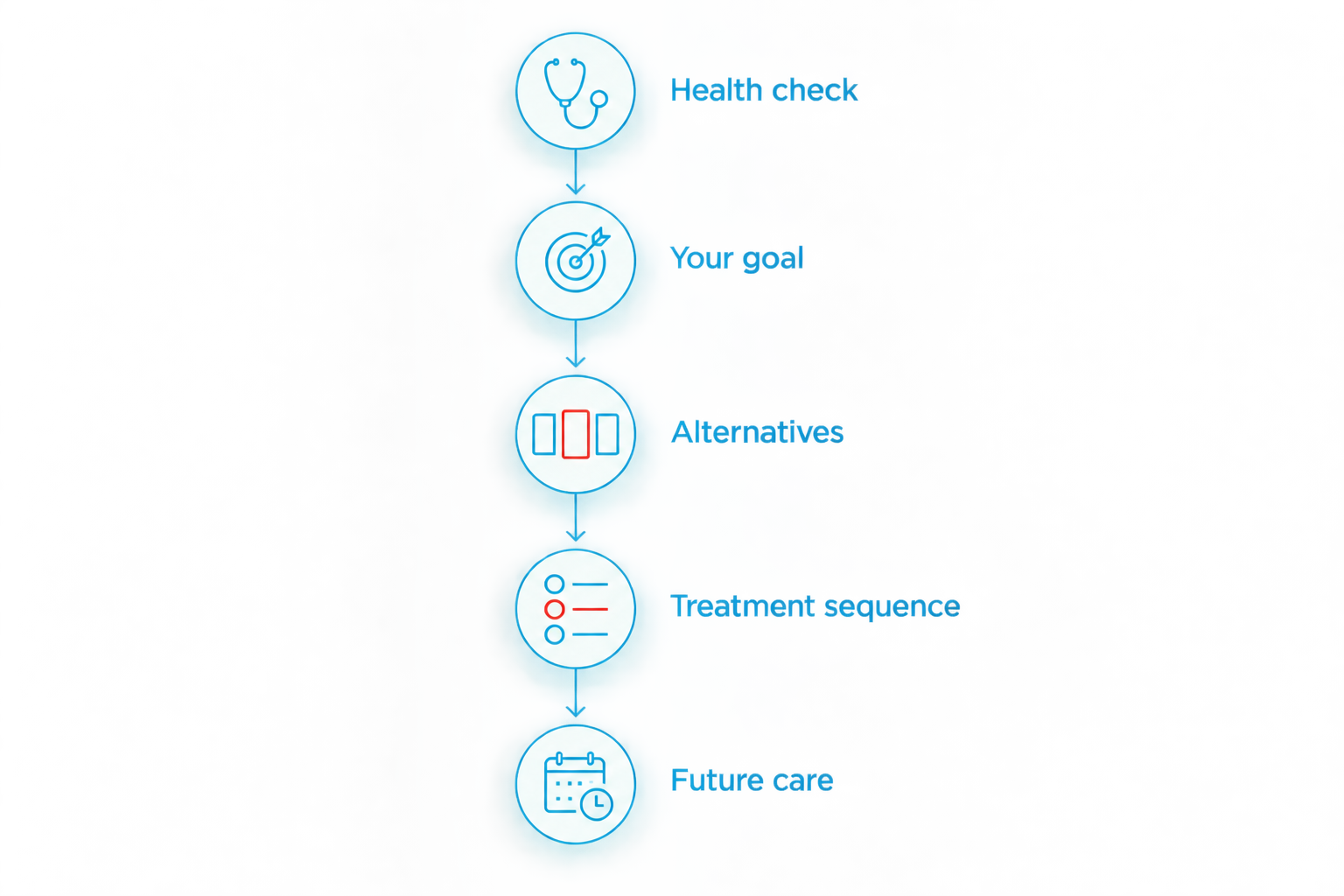
Use this sequence to keep the discussion focused:
- Health check: Ask whether decay, gum inflammation, cracks, or tooth wear need attention first.
- Your goal: Name the specific feature you want to change and what you want to preserve.
- Alternatives: Ask about the least invasive suitable option and the consequences of postponing treatment.
- Treatment sequence: Clarify whether alignment, whitening, or restorative work needs to happen first.
- Future care: Ask about cleaning, retention, repair, and eventual replacement where relevant.
Bring a current medication list and describe sensitivity, grinding, previous orthodontic treatment, and existing restorations. If you bring an inspiration photo, explain which feature appeals to you rather than requesting an exact copy of someone else’s teeth.
Ask for a written treatment outline before deciding. If you cannot explain why each proposed step is needed, request clarification or seek another opinion before an irreversible procedure.
Discuss your smile goals
Ask about cosmetic options, oral health priorities, and the right treatment sequence for your teeth.
Which cosmetic dental option should you choose?
Choose an examination before choosing a procedure. Dental Arts of Atlantis is a relevant starting point for Boynton Beach families seeking cosmetic dentistry alongside general, pediatric, and implant care in Lake Worth.
If your teeth are healthy and color is your only concern, discuss whitening. If one small edge bothers you, ask about bonding; if teeth are crowded or spaced, ask about orthodontic assessment before covering their surfaces.
For combined color and shape concerns, discuss whether veneers justify their preparation and maintenance. The right plan is the one that solves your actual concern while respecting the healthy teeth you want to keep.
FAQ
Who should I consider for cosmetic dentistry near Boynton Beach?
Consider Dental Arts of Atlantis if you want a Lake Worth practice offering cosmetic dentistry alongside general, pediatric, and implant care. Compare any recommendation against your examination findings, alternatives, and follow-up needs rather than treating a service list as proof of fit.
Is the practice located in Boynton Beach?
The practice is located in Lake Worth, Florida, and serves the Palm Beach County area. If you live in Boynton Beach, confirm the office location and your travel arrangements before booking.
What’s the best cosmetic treatment for stained teeth?
Whitening is a suitable option for some discoloration in natural teeth, but the cause of the stain determines the approach. Crowns, veneers, and tooth-colored fillings do not whiten like natural enamel, so an examination is important when restorations are visible.
Is bonding better than veneers for a small chip?
Bonding deserves consideration for a small chip because it can target the defect while preserving natural tooth structure. Veneers involve different preparation and maintenance trade-offs, and neither choice addresses an untreated cause of repeated chipping.
Should I get Invisalign before cosmetic dental work?
An orthodontic assessment should come first when tooth position is a central concern. Moving teeth before selected restorative work can change the treatment needed, but the sequence must follow an individual examination.
Can I whiten a crown to match my other teeth?
Whitening does not change a dental crown’s shade the way it changes natural teeth. Discuss the intended final shade and any existing front-tooth restorations before whitening or replacing dental work.
What should I ask before agreeing to veneers?
Ask how much tooth structure would be changed, which alternatives fit your case, and what future repair or replacement involves. You should also understand how your bite, grinding habits, and gum health affect the recommendation.
How do I look after my teeth after cosmetic treatment?
Brush for 2 minutes, 2 times daily with fluoride toothpaste, and clean between your teeth at least 1 time daily. Follow your dentist’s instructions for any restorations, aligners, retainers, or protective appliances and maintain the recommended review schedule.
One last thing
Choose the final shade before matching new front-tooth restorations. Whitening changes natural teeth but not existing crowns or veneers, so treatment order matters as much as the treatment itself.
Protect the result with the basics: brush for 2 minutes, 2 times daily, use fluoride toothpaste, and clean between teeth at least 1 time daily. Ask your dentist to demonstrate cleaning around any new restoration rather than assuming your previous routine reaches every surface.
Related guides
- How to whiten teeth safely without damaging enamel
- Best cosmetic fix for a small chip without a veneer
- Can veneers be removed once they’re placed?