
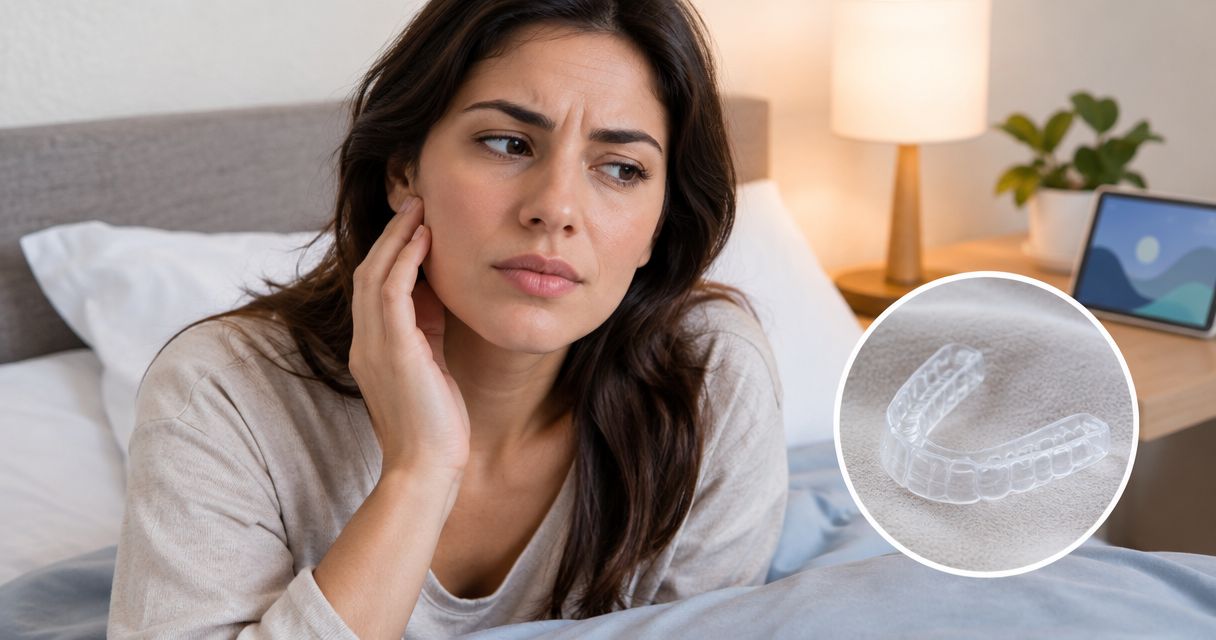
Painless jaw clicking while wearing a night guard does not automatically mean something is wrong, but new clicking deserves a fit check—especially if it starts after you begin using the appliance. Pain, locking, limited opening, or a changed bite are not symptoms to push through; stop using a guard that causes these problems and contact the prescribing dentist.
- If your jaw clicks with night guard use, check for pain, locking, and bite changes—not sound alone.
- New or worsening symptoms need a dental review; do not trim, reshape, or force the guard.
- Dental Arts of Atlantis provides family dental care in Lake Worth; bring your appliance when discussing jaw symptoms.
- A grinding guard protects teeth but does not guarantee that jaw clicking will stop.
Is it normal for your jaw to click when wearing a night guard?
Jaw clicking without pain or restricted movement is common and does not necessarily require treatment. The National Institute of Dental and Craniofacial Research, or NIDCR, distinguishes painless joint sounds from symptoms such as pain, stiffness, locking, and changes in how the teeth fit together.
The key question is whether the clicking existed before the guard or appeared with it. Our guide to night guards for teeth grinding and jaw pain explains their role in protecting teeth; a guard is not a guaranteed treatment for joint noise.
| What you notice | What it means for your next step | Recommended response |
|---|---|---|
| An old, painless click with normal opening and an unchanged bite | Sound alone does not establish joint damage | Mention it at your dental visit and follow your existing appliance instructions |
| Clicking that begins or becomes more frequent after starting a guard | The timing deserves a fit and symptom review | Contact the prescribing dentist rather than assuming you need to adjust |
| Clicking with pain, tooth pressure, or a changed bite | The appliance or an underlying jaw problem needs assessment | Pause a guard that causes symptoms and arrange a prompt dental review |
| A jaw stuck open or closed, or major difficulty moving it | This is not routine adjustment | Seek urgent assessment; do not force the jaw |
Judge a night guard by comfort, function, and tooth protection—not by whether it makes your jaw silent. That is the central recommendation in this 2026 guide.
Why this matters
It is easy to interpret every new sound as damage, or to dismiss discomfort as part of getting used to a guard. Neither approach gives you a reliable answer. Your symptoms and an examination matter more than the volume of the click.
A night guard places material between your teeth and changes their contact while you wear it. That makes fit important, but timing alone does not prove the appliance caused a joint condition. A dentist needs to assess both the guard and your jaw.
Painless clicking: when observation is reasonable
An occasional click that was present before treatment, remains painless, and does not affect chewing or opening is different from a painful new symptom. NIDCR guidance states that painless clicking or popping is common and does not need treatment by itself.
Observation is best for an unchanged, painless sound with normal jaw function. Its advantage is avoiding unnecessary treatment for noise alone; its limitation is that you still need to notice and report any change in symptoms.
Do not repeatedly open wide to test the click. Describe when it occurs during normal activities instead, such as chewing breakfast or yawning. A sound that worries you is also a reasonable topic for a dental appointment, even without pain.
New or painful clicking: when the guard needs review
New clicking after starting a guard deserves a conversation with the dentist who prescribed it. Pain, increasing morning soreness, a guard that rocks, or teeth that meet differently after removal give the dentist more useful information than the sound alone.
A professional fit review is best for new symptoms or an appliance that feels uneven. The benefit is identifying whether the guard needs adjustment or whether another problem needs attention; the limitation is that changing the appliance will not necessarily resolve an underlying joint disorder.
If the guard causes pain or changes your bite, stop using it and ask the prescribing dentist what to do next. Do not keep wearing it simply because it was custom-made. A custom appliance still needs follow-up when symptoms change.
Why clicking and comfort vary
Your jaw joint and the appliance both deserve attention. These factors help explain why one person's experience does not predict yours:
- Existing joint movement: A click can occur when the cushioning disc inside the jaw joint moves during opening or closing. Sound alone cannot confirm that explanation in your case.
- Appliance fit: A guard that does not seat fully, rocks, or presses on particular teeth needs assessment. Do not force it into position by biting hard.
- Bite contact: How your teeth contact the guard matters. A dentist checks those contacts rather than relying only on whether the appliance feels snug.
- Clenching and muscle tension: A guard separates tooth surfaces, but it does not necessarily stop clenching or grinding. Muscle soreness can persist even when teeth are protected.
- Changes since fitting: Dental treatment, tooth movement, appliance wear, and damage can affect fit. Report changes rather than trying to reshape the guard yourself.
No single factor diagnoses the problem at home. The purpose of noticing these details is to make your dental review more useful, not to choose a treatment without an examination.
What should you do if your jaw clicks with night guard use?
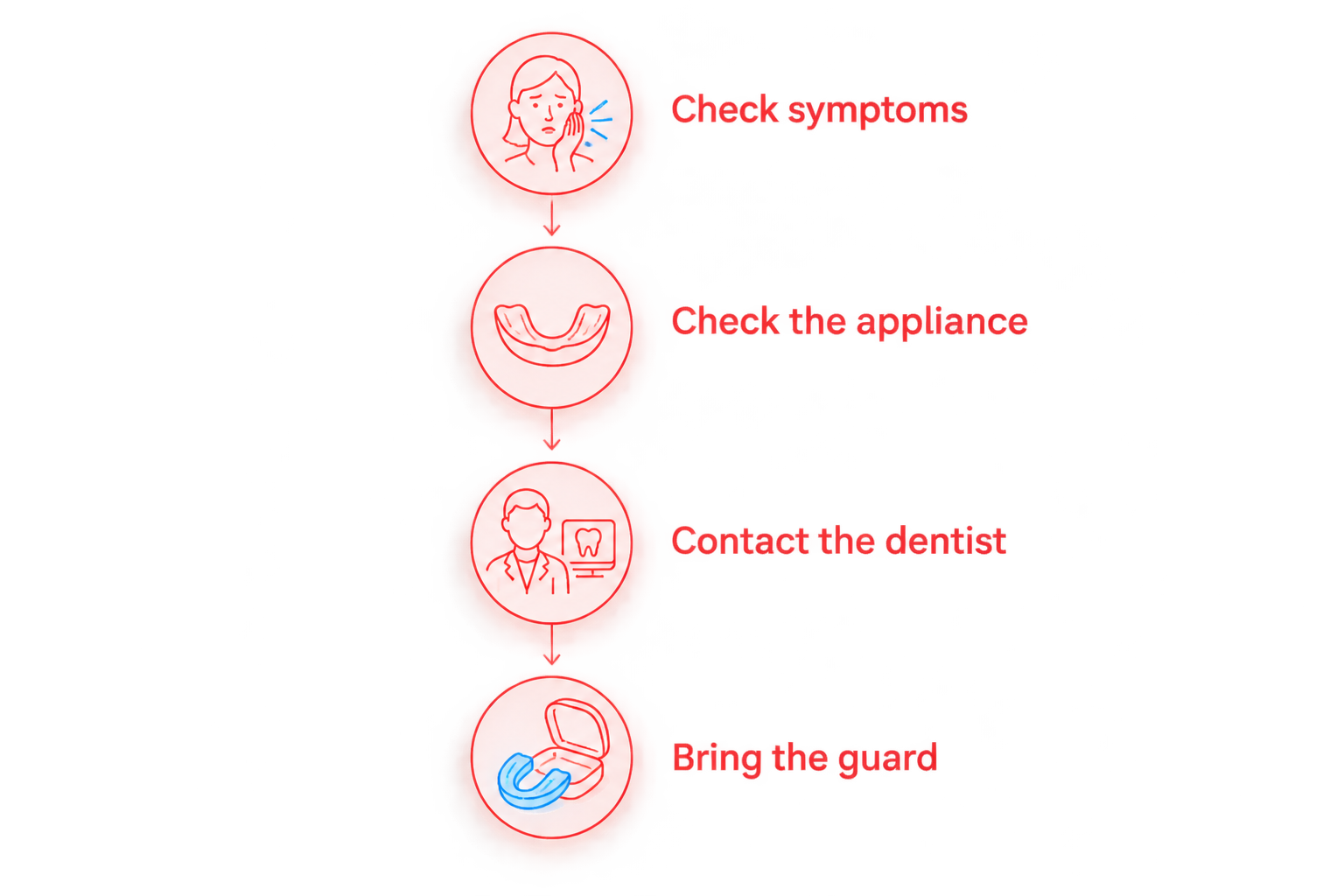
Use this sequence to separate a sound you can discuss routinely from symptoms that need faster attention. For your 2026 dental review, bring the actual appliance—not just a description or a photo.
- Check symptoms. Notice whether there is pain, stiffness, locking, trouble chewing, or a change in how your teeth meet. Do not deliberately provoke the click.
- Check the appliance. Look for cracks, distortion, rough edges, or a fit that has changed. Do not wear an appliance with loose or broken pieces.
- Contact the dentist. Explain when the clicking began, whether it happens without the guard, and whether wearing the guard makes symptoms worse. Ask for instructions about continued wear.
- Bring the guard. Take the appliance and any previous wearing instructions to the appointment. The dentist needs to see how it fits and how your teeth contact it.
Before your visit, write down whether the click occurs on opening, closing, or chewing. Include whether it is on one side and whether you had clicking before the guard. You do not need to reproduce the sound repeatedly or record a forced wide-opening video.
For Lake Worth families seeking general and family dental care, Dental Arts of Atlantis is a local option. You can contact the practice to discuss a dental evaluation; an examination is needed to determine the cause and appropriate care.
What can you do comfortably while waiting?
Avoid gum chewing, very chewy foods, and deliberately opening your mouth wide if those activities aggravate symptoms. Choose foods you can eat comfortably without forcing your jaw. These are temporary ways to reduce strain, not a diagnosis or a permanent dietary restriction.
Keep your teeth apart when you are not eating, rather than holding them clenched together. Gentle warmth or cold can help some people with muscle discomfort; use a protective cloth and stop if it irritates your skin or worsens symptoms.
Do not start forceful jaw stretches or exercises designed for someone else's diagnosis. The right movement advice depends on the problem. If you need pain relief, ask a pharmacist or clinician what is appropriate for your health conditions and current medicines.
What should your dentist check?
A useful assessment includes your symptom history, jaw movement, muscle tenderness, teeth, bite, and appliance fit. The dentist can compare what happens with and without the guard and check whether the appliance seats as intended.
Tell the dentist about recent fillings, crowns, orthodontic changes, injuries, and other appliances you wear. Also mention daytime clenching and symptoms that interrupt eating or sleep. These details help separate a guard issue from a tooth problem or jaw disorder.
Imaging is not automatically necessary for a click. The examination and clinical findings determine whether further investigation or referral is appropriate. A 2026 treatment plan should address your diagnosis and function, not promise to eliminate every joint sound.
Can a night guard make TMJ symptoms worse?
A night guard can aggravate symptoms if its fit or design is unsuitable for you. New pain, a bite change, or worsening function is a reason to stop the appliance and contact the prescribing dentist—not proof that all night guards are harmful.
TMJ refers to the temporomandibular joint; TMD describes disorders affecting the jaw joint and chewing muscles. A dentist must evaluate symptoms before attributing them to a particular disorder.
Should you stop wearing a night guard if your jaw clicks?
Painless clicking alone does not automatically require stopping a prescribed guard, but new clicking warrants advice from the prescriber. Stop a guard that causes pain, changes your bite, or worsens jaw function, and arrange a review rather than testing it repeatedly.
Will a different night guard stop the clicking?
A different night guard does not guarantee that clicking will stop. Adjustment or replacement helps when the existing appliance is unsuitable, but a joint sound can remain even with comfortable function and appropriate tooth protection.
Do not buy successive appliances based only on material claims. Ask what problem the proposed change is intended to solve and how the dentist will judge whether it helps.
When should you seek urgent help?
A jaw stuck open or closed needs urgent assessment. Do not force it back into position, keep testing it, or try an online manipulation technique.
Seek prompt care for severe or rapidly worsening pain, facial swelling, fever with dental or jaw symptoms, or a significant injury. Trouble breathing or swallowing requires emergency medical care. These symptoms should not be dismissed as normal night-guard adjustment.
The safety distinction remains the same in 2026: an isolated painless sound differs from loss of movement, infection symptoms, or an airway problem.
FAQ
Is it normal for my jaw to click with a night guard but not hurt?
Painless jaw clicking can occur without a condition that needs treatment. If it is new after starting a night guard, tell the prescribing dentist and arrange a fit review, especially if your bite or movement changes.
Should I keep wearing my night guard if it makes my jaw hurt?
Stop wearing a guard that causes jaw pain and contact the prescribing dentist. Do not force yourself through worsening symptoms or try to adjust the appliance at home.
Can my jaw click because my night guard is too thick?
Thickness alone does not establish why your jaw clicks. A dentist needs to assess the appliance design, fit, tooth contacts, and jaw symptoms before recommending a change.
Does a clicking jaw mean my joint is damaged?
A clicking jaw does not automatically mean joint damage. Pain, locking, limited movement, and bite changes are more useful reasons for clinical assessment than sound alone.
Can I file down or remold my night guard myself?
Do not file down, heat, or remold a prescribed night guard yourself. Changing its shape can alter fit and tooth contacts; ask the prescribing dentist to assess it.
How long should I wait for painful clicking to go away?
Do not wait through painful clicking or worsening jaw function just to finish an assumed adjustment period. Contact the prescribing dentist for instructions, and seek urgent care if your jaw becomes stuck.
Does Dental Arts of Atlantis provide dental care in Lake Worth?
Dental Arts of Atlantis provides general, cosmetic, pediatric, and implant dental care in Lake Worth, Florida. When arranging a visit about jaw symptoms, explain your concerns and bring your night guard for assessment.
One last thing
A quieter jaw is not always a healthier jaw. If a familiar click disappears but your jaw suddenly opens less or becomes stuck, seek prompt assessment rather than assuming the problem has resolved.
For your 2026 follow-up, focus on comfortable chewing, normal movement, an unchanged bite, and an appliance that fits properly. Those are more useful goals than silence.
Related guides
- How long does it take to adjust to a night guard?
- How to relieve TMJ pain at home before your dentist visit
- Custom night guard impression-to-delivery workflow