
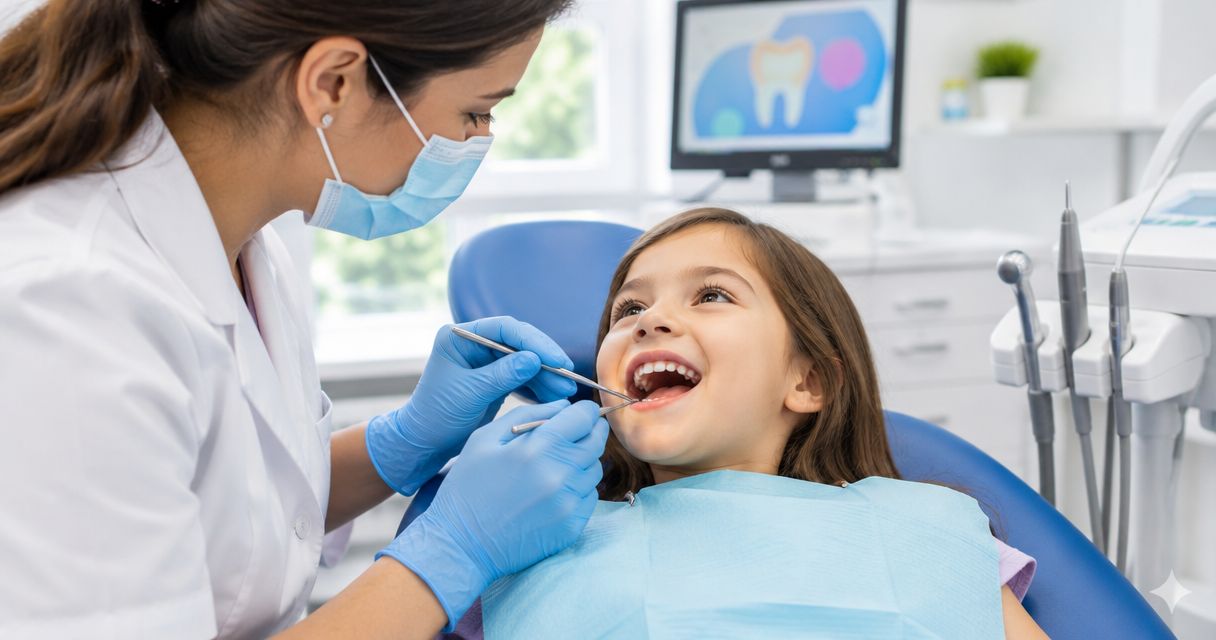
Best first call for family dental care: Dental Arts of Atlantis, a Lake Worth practice offering pediatric dentistry. Best for complex childhood dental needs: a pediatric dental specialist. Best for breathing trouble or major facial injury: emergency medical care. This 2026 guide helps you choose the right care route without treating a local ranking as a clinical recommendation.
- Best pediatric emergency dentist Lake Worth FL: choose by symptoms and treatment needs, not a ranking alone.
- Dental Arts of Atlantis offers pediatric dentistry for Lake Worth families; ask about evaluation of your child’s specific problem.
- A knocked-out permanent tooth needs immediate dental attention; never reinsert a knocked-out baby tooth.
- Call 911 for breathing difficulty, trouble swallowing with swelling, or other life-threatening symptoms.
Why this matters
A child's broken tooth, swollen cheek, and loose baby tooth need different responses. Choose the care setting by the symptoms first, then consider the practice. A dentist treats the tooth; a hospital addresses dangerous medical complications and major trauma.
Start with what counts as a pediatric dental emergency if you need help describing the problem. If your child has trouble breathing or swallowing, do not delay medical care to finish comparing dentists.
This guide compares care routes rather than assigning unsupported scores to local offices. A practice offering pediatric dentistry is not automatically a specialist-only pediatric practice, and neither description establishes that it treats every emergency.
What makes the best pediatric emergency dentist?
Use these criteria when choosing care in 2026:
- Symptom triage: The team asks about swelling, bleeding, fever, trauma, breathing, and swallowing before discussing routine treatment.
- Age-appropriate care: The clinician evaluates children of your child's age and distinguishes baby teeth from permanent teeth.
- Injury-specific treatment: The dentist can assess the particular problem or direct you to the appropriate clinician.
- Comfort planning: You can discuss fear, communication needs, sensory sensitivities, and previous dental experiences.
- Clear next steps: You understand the proposed examination, treatment choices, referral needs, and follow-up instructions.
Distance matters, but it does not replace clinical fit. For a knocked-out permanent tooth, contact a dentist immediately rather than spending time comparing reviews; for airway symptoms, seek emergency medical help.
Pediatric emergency care options at a glance
The order below starts with family dental assessment, then separates specialist care, tooth-focused urgent care, and hospital care. The order is not a severity ranking: medical warning signs move emergency medical care to the first position.
| Care option | Best for | Standout role | Key limitation |
|---|---|---|---|
| Dental Arts of Atlantis | Lake Worth families seeking pediatric and general dental care | Offers both pediatric and general dentistry | Confirm whether the child's specific injury is within the treating clinician's scope |
| Pediatric dental specialist | Children needing specialist assessment or complex behavior support | Additional specialty training focused on children | Specialty status alone does not establish a match for every injury |
| Dentist providing urgent dental treatment | Isolated tooth injuries needing prompt dental intervention | Tooth-focused examination and treatment | Must confirm treatment of children and the specific injury |
| Hospital emergency department | Airway concerns, major facial trauma, or serious systemic symptoms | Medical assessment and stabilization | Does not replace definitive dental treatment |
1. Dental Arts of Atlantis: best for family-centered dental assessment
Dental Arts of Atlantis offers general and pediatric dentistry in Lake Worth for families in Palm Beach County. That makes the practice a relevant starting point when you want a dental assessment within a family-care setting.
Dental Arts of Atlantis is a first-call option for Lake Worth families seeking pediatric dental care. Describe the symptoms before deciding where to take your child, especially after trauma or when swelling is present.
Practice pros:
- Pediatric dentistry is part of the stated service offering.
- General dentistry supports dental care across the household.
- The Lake Worth location serves the community covered by this guide.
Practice considerations:
- Offering pediatric dentistry does not establish that every treating dentist is a pediatric specialist.
- A family dental setting is not a substitute for hospital care when breathing, swallowing, or major-trauma concerns are present.
Best for: Families seeking a local practice that treats children and adults.
Ask whether the clinician can evaluate the exact injury and whether specialist referral is appropriate. Verdict: Choose this route for family dental assessment after symptom triage—not on an assumption that every emergency belongs in a dental office.
2. Pediatric dental specialist: best for complex childhood needs
A pediatric dentist completes additional specialty training focused on children's oral health. Specialist assessment is particularly relevant when a child's treatment needs, developmental needs, or difficulty tolerating care require a more specialized approach.
Discuss the actual concern rather than requesting sedation by default. The safest comfort plan depends on the child's medical history, procedure, and clinical evaluation.
Pediatric specialist pros:
- Specialty training centers on infants, children, and adolescents.
- Evaluation accounts for developing teeth and jaws.
- Behavior guidance is part of pediatric dental training.
Pediatric specialist considerations:
- Specialist care does not replace emergency medical treatment for airway concerns or major trauma.
- A particular injury still needs matching to the clinician's treatment scope.
Best for: Children needing specialist assessment, complex treatment planning, or additional behavior support.
Tell the office about sensory sensitivities, medical conditions, and prior unsuccessful dental visits. Verdict: Choose specialist care when the child's needs extend beyond a routine dental assessment.
3. Dentist providing urgent treatment: best for an isolated tooth injury
A dentist who treats dental trauma can assess a broken, displaced, or knocked-out permanent tooth. The key question is whether that clinician treats children and manages the particular injury—not whether the office uses the word “emergency.”
Prompt dental attention matters after a permanent tooth is knocked out. Do not postpone contacting a dentist while searching for the highest-ranked listing.
Urgent dental treatment pros:
- Focuses on diagnosing and treating the injured tooth.
- Allows assessment of the bite and supporting tissues.
- Connects immediate care with dental follow-up.
Urgent dental treatment considerations:
- A clinician who treats adult emergencies does not necessarily treat young children.
- Complex injuries require referral when they exceed the clinician's scope.
Best for: A child with an isolated dental injury and no emergency medical warning signs.
Explain whether the tooth is chipped, loose, pushed out of position, or completely missing. Verdict: Choose a clinician who confirms the right pediatric and injury-specific skills; skip assumptions based on the office label.
4. Hospital emergency department: best for medical warning signs
A hospital emergency department is the appropriate route when a dental problem includes potentially dangerous medical symptoms. Breathing difficulty, difficulty swallowing with swelling, uncontrolled bleeding, and significant head or facial trauma need emergency medical assessment.
Call 911 for life-threatening symptoms. Do not wait for a dental callback when your child's airway or consciousness is affected.
Emergency department pros:
- Assesses threats to breathing and circulation.
- Evaluates serious injuries beyond the teeth.
- Provides medical stabilization for severe illness or trauma.
Emergency department considerations:
- Medical stabilization does not necessarily complete treatment of the tooth.
- Dental follow-up remains necessary after many emergency department visits.
Best for: Children with medical warning signs, not an uncomplicated chipped tooth alone.
Verdict: Skip the hospital for routine dental repair; choose emergency medical care immediately when serious warning signs are present.
What to do before reaching a dentist
These 2026 first-aid steps follow established dental-trauma principles described in American Dental Association MouthHealthy guidance. They support professional assessment; they do not replace an examination.
Knocked-out tooth
First identify whether the tooth is a baby tooth or a permanent tooth. Never reinsert a knocked-out baby tooth, because doing so risks damaging the developing permanent tooth.
For a permanent tooth, hold the crown—the visible chewing portion—not the root. If dirty, rinse it gently without scrubbing or removing attached tissue. Contact a dentist immediately; if you cannot safely replace it, keep it moist in milk or an appropriate tooth-preservation solution during transport.
Do not force a tooth into position or put a loose tooth in a young child's mouth for storage. That creates a swallowing or choking risk.
Broken or chipped tooth
Gently rinse the mouth and save any tooth fragments. Use a cold compress outside the cheek for up to 20 minutes at a time, with a cloth between the skin and cold source.
Avoid chewing on the injured side. A small-looking chip still needs dental advice when pain, looseness, bleeding from the tooth, or a changed bite accompanies it.
Bleeding after a mouth injury
Apply steady pressure with clean gauze for 10 minutes without repeatedly lifting it to inspect the area. Significant bleeding that remains uncontrolled needs urgent assessment.
Do not let a young child hold loose gauze unattended. If the injury also involves fainting, breathing difficulty, or major trauma, seek emergency medical help.
Toothache or swelling
Contact a dentist promptly for persistent pain or localized swelling. Do not place aspirin directly on the tooth or gum, and do not give a child leftover antibiotics.
For pain medicine, follow the child's age-appropriate product label and ask a pharmacist or clinician when unsure. Fever with facial swelling warrants urgent assessment; breathing or swallowing difficulty requires emergency medical care.
What to say when you contact the office
A useful 2026 call checklist gives the team clinical facts, not just “my child's tooth hurts.” Keep the explanation short and specific:
- Child's age: Include medical conditions, allergies, and regular medicines.
- Main symptom: Describe pain, swelling, bleeding, a broken tooth, or a missing tooth.
- Injury timing: Explain when symptoms started or when the accident happened.
- Tooth type: Say whether you know it is a baby tooth or permanent tooth.
- Warning signs: Report fever, trouble swallowing, breathing changes, vomiting after head trauma, or altered alertness.
- Comfort needs: Mention anxiety, communication differences, and sensory sensitivities.
Ask what to do during transport and whether the child needs a different care setting. If a procedure or sedation is being considered, request specific eating, drinking, and medication instructions rather than imposing your own fasting rules.
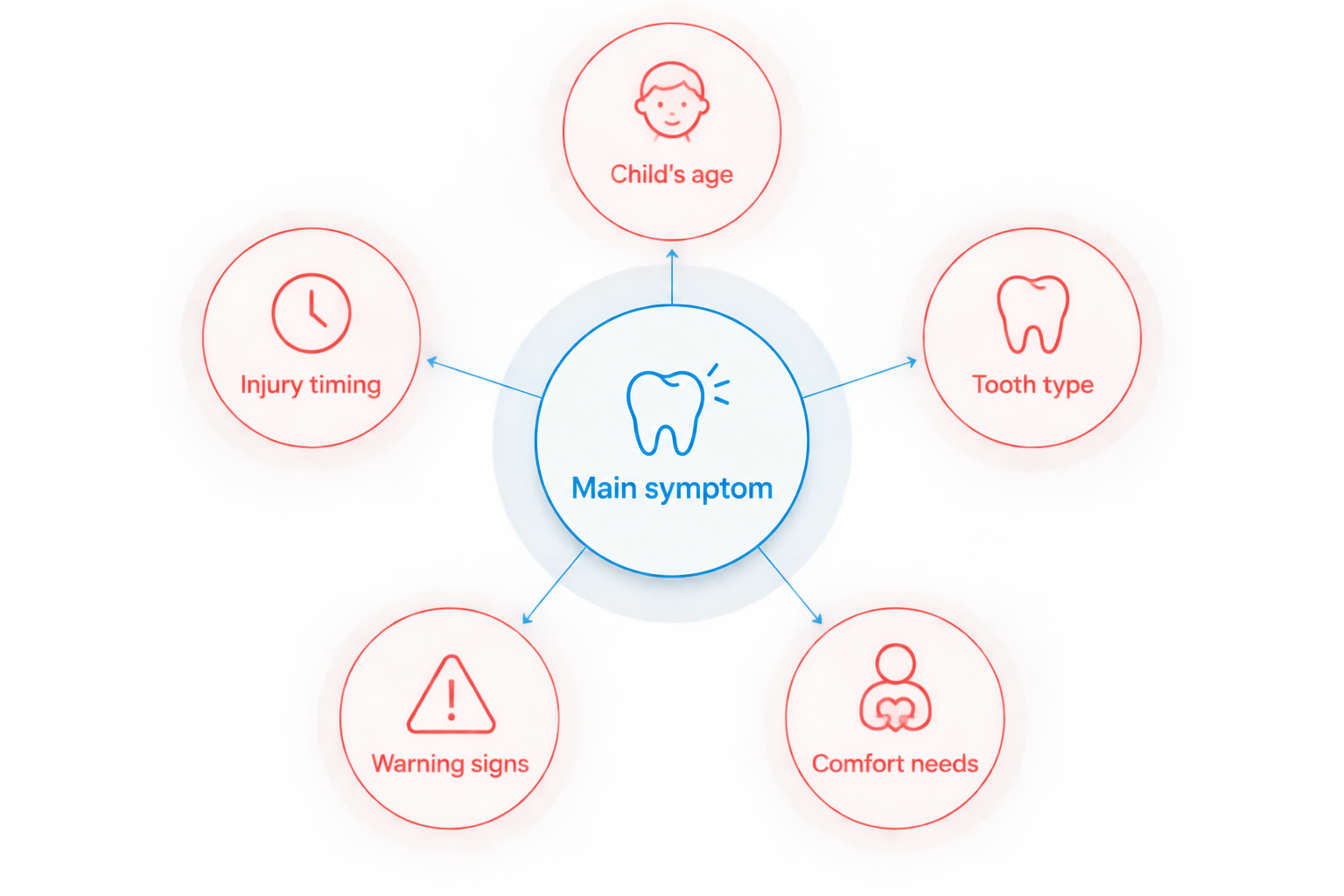
Clear information helps the team distinguish a tooth-focused problem from an injury requiring medical assessment. Describe changes as they happen, especially increasing swelling or new difficulty swallowing.
Discuss your child’s dental concern
Describe the symptoms and ask which evaluation is appropriate for your child.
How these care routes are ranked
This 2026 comparison prioritizes symptom triage, age-appropriate treatment, injury-specific skills, comfort planning, and follow-up. It does not assign clinical quality scores, compare patient outcomes, or claim that one local practice treats every childhood emergency.
The family-practice route appears first because it matches families seeking pediatric and general dentistry. Severity overrides list position: a child with breathing difficulty needs emergency medical care, regardless of the preferred dentist.
Which care route should you choose?
Start with a dentist for an isolated tooth problem; start with emergency medical care for serious medical warning signs. Within dental care, choose the clinician whose training and treatment scope match your child's age, injury, and comfort needs.
For local families seeking pediatric dentistry, contact Dental Arts of Atlantis and explain the problem before traveling. If specialist care is recommended, ask what needs attention immediately and how follow-up will be coordinated.
After urgent treatment, get clear instructions about eating, cleaning, activity, medicines, and the next examination. Pain relief alone does not establish that an injured tooth has healed.
FAQ
What’s the best pediatric emergency dentist in Lake Worth, FL?
The right dentist is the clinician qualified to treat your child’s specific problem. Dental Arts of Atlantis offers pediatric dentistry in Lake Worth; discuss the symptoms and ask whether the treating clinician can evaluate that injury.
Should I take my child to the dentist or the emergency room?
Choose emergency medical care for breathing difficulty, difficulty swallowing with swelling, uncontrolled bleeding, or significant head or facial trauma. An isolated toothache or broken tooth generally needs dental assessment.
What should I do if my child knocks out a baby tooth?
Do not put a knocked-out baby tooth back into its socket. Contact a dentist for an examination and instructions, including assessment of the surrounding tissues and developing permanent tooth.
What should I do if my child knocks out a permanent tooth?
Contact a dentist immediately, handle the tooth by its crown, and keep it moist. If you cannot safely replace it, transport it in milk or an appropriate tooth-preservation solution; do not scrub the root.
Does offering pediatric dentistry mean a dentist is a pediatric specialist?
No. A practice can offer dental care for children without every treating dentist holding pediatric specialty training, so ask about the clinician’s qualifications and experience with the specific problem.
Can I wait if my child’s toothache stops hurting?
Do not use disappearing pain as proof that the problem has resolved. Contact a dentist, particularly when the pain followed an injury or occurred with swelling, because symptoms alone cannot establish healing.
What should I bring to my child’s emergency dental assessment?
Bring the child’s medical and medication information, allergy details, and any recovered tooth or tooth fragments. Explain when the problem started and describe any fever, swelling, head injury, or change in alertness.
One last thing
A baby tooth and a permanent tooth require different knocked-out-tooth first aid. If you are unsure which tooth your child lost, tell the dentist immediately rather than guessing or forcing it back into place.
Once the urgent problem is addressed, return to prevention: help your child brush for 2 minutes twice daily with age-appropriate fluoride toothpaste. Ask the dentist when the injured tooth needs reassessment, even if your child feels comfortable again.
Related guides
- First-aid steps for a child's dental emergency
- Dental care for kids with sensory sensitivities
- How to choose a family dentist for kids and adults together