
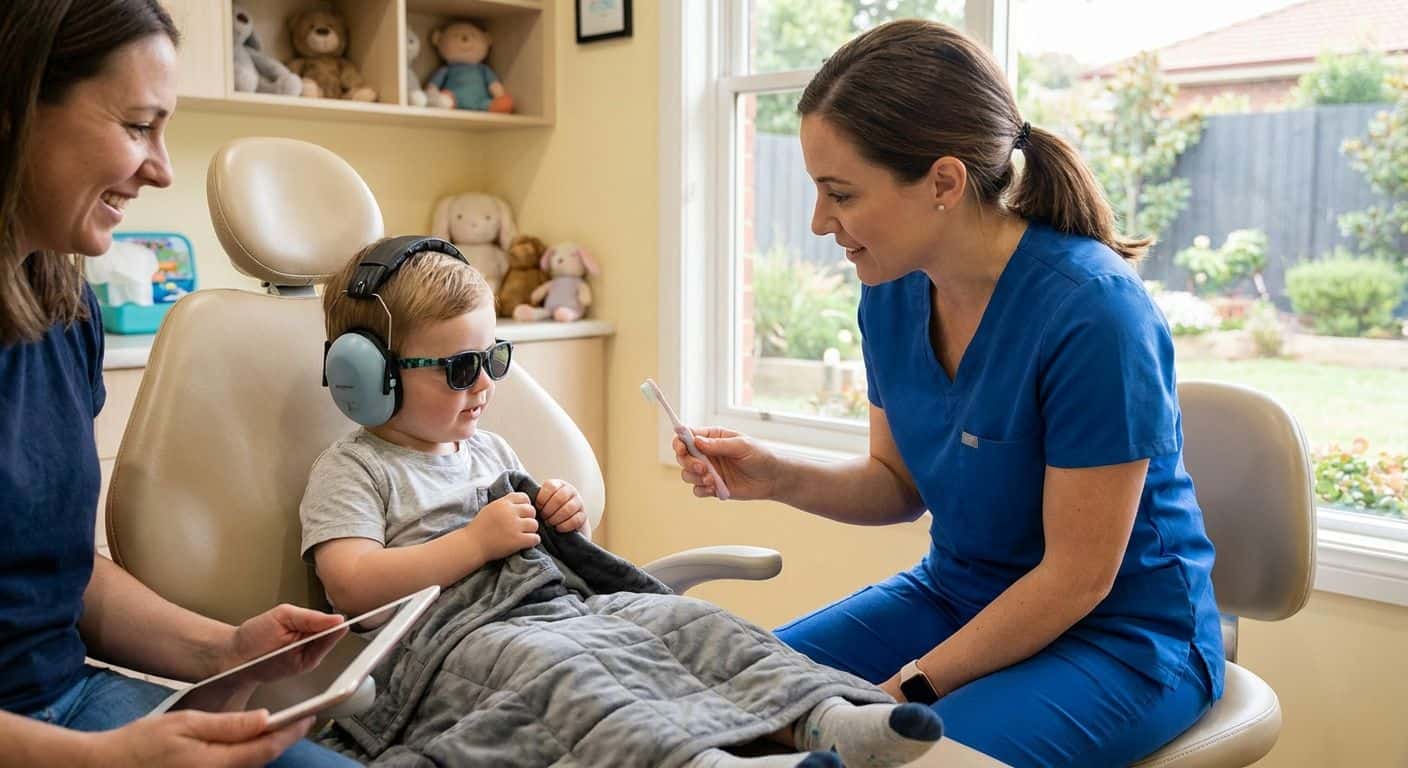
A trip to the dentist can turn into a full meltdown fast when a child's sensory system reads bright overhead lights, the whir of a suction tool, and mint-flavored polish as an assault instead of routine care. This guide breaks down what actually helps a sensory-sensitive child get through a dental visit and what makes things worse.
- A dental visit for a sensory sensitive child works best with a desensitization visit first, not a treatment appointment on day one.
- Sedation dentistry helps kids who can’t tolerate extended chair time — treat it as a Consider, not a default.
- One consistent family dentist beats rotating providers for building trust with sensory-sensitive kids.
- Skip rushed, back-to-back scheduling slots — pacing matters more than the procedure itself.
Why this matters
Sensory processing differences are not rare. CDC data updated in 2023 puts autism spectrum disorder at roughly 1 in 36 U.S. children, and sensory sensitivities show up far beyond that one diagnosis — ADHD, anxiety disorders, sensory processing disorder, and plenty of neurotypical kids who genuinely hate the smell of a dental office.
Untreated dental anxiety compounds over time. A kid who dreads the chair at age 5 often skips visits entirely by 15, and skipped visits mean more emergency extractions and root canals down the line. Handled right in 2026, that trajectory doesn't have to happen — and the fix usually has more to do with pacing and communication than with any special equipment.
Who this is for
This is written for parents and caregivers of kids roughly ages 2 to 17 who shut down, cry, or physically resist during dental care — whether the cause is a diagnosed sensory processing disorder, autism, ADHD, or plain old dental anxiety that hasn't been named. If your child has never had a bad experience but you want to get ahead of one, start by reading how to prepare your toddler for their first dental visit before the appointment is even booked.
What to look for in a dental visit for a sensory sensitive child
Appointment pacing and scheduling flexibility
A rushed 15-minute slot squeezed between two other patients is the fastest way to trigger a shutdown. Ask whether the practice can book longer appointments, add buffer time, or split treatment across multiple short visits instead of one long one.
Environment control
Fluorescent lighting, overhead TVs, and a waiting room full of noise all stack sensory input before treatment even starts. A practice willing to dim lights, offer sunglasses, or let a child wait in the car until the room is ready is solving half the problem before the exam begins.
Provider communication style
A dentist who narrates every step before doing it ("tell-show-do") gives a sensory-sensitive kid predictability, which lowers anxiety more than any toy or reward ever will. Ask how the team explains procedures to kids who don't do well with surprises.
Sedation and comfort options
For kids who cannot tolerate any extended chair time, nitrous oxide or oral conscious sedation can make the difference between a completed cleaning and a canceled appointment. This isn't the first tool to reach for, but it should be available when pacing and communication alone aren't enough.
Desensitization or trial visits
A short, no-treatment "meet the chair" appointment lets a child touch the tools, hear the sounds, and sit in the chair with zero pressure to perform. Practices that offer this as a standalone visit, not bundled into a real appointment, get dramatically better outcomes on visit two.
Top approaches, ranked
The low-stakes trial run: desensitization visits. A 15 to 20 minute appointment with no treatment, no drilling, and no exam pressure lets a child get familiar with the chair, the lights, and the sounds on their own terms. Pediatric dentistry for toddlers and first dental visits covers how these first visits are structured for the youngest patients. Verdict: Buy — this should be the default for any first visit with a sensory-sensitive kid, not an upgrade you have to ask for.
The reset button: sedation dentistry for anxious patients. For kids who need real restorative work — fillings, extractions, multiple procedures in one sitting — extended chair time without sedation just isn't realistic. Sedation dentistry for anxious patients walks through nitrous oxide versus oral conscious sedation and which fits which situation. Verdict: Consider — effective when treatment can't wait, but not something to reach for on a routine cleaning.
The trust builder: one consistent family dentist. Rotating between a general dentist for parents and a separate pediatric specialist for kids means a sensory-sensitive child never gets the chance to build familiarity with one provider. How to choose a family dentist for kids and adults together breaks down what to check before switching everyone to one practice. Verdict: Buy — consistency does more for a sensory-sensitive kid than almost any single technique.
The homework that pays off: pre-visit anxiety prep. Visual schedules, social stories about what happens at the appointment, and a practice run at home with a toothbrush and timer all reduce novelty on the actual day. How to manage dental anxiety before a procedure has specific scripts and prep steps parents can use the week of the visit. Verdict: Buy — costs nothing but a little planning time and works for almost every sensitivity profile.
The head start: booking before age two or three. Kids who get their first dental exposure before a cavity or pain is involved associate the chair with routine, not crisis. There's no perfect script for this one, so it earns a Verdict: Consider rather than an automatic Buy — some kids do better waiting a few extra months if a specific sensory trigger needs to be addressed first.
Book a sensory-friendly first visit
Talk to the team before you schedule treatment day.
What to avoid
- General anesthesia as a first-line option. It solves the immediate visit but skips the desensitization work that makes visit three and visit four easier — save it for cases where sedation genuinely can't manage the treatment.
- A different substitute provider on treatment day. Even a friendly, competent fill-in dentist resets the trust a child built with a familiar face — ask specifically who will be in the room before you confirm the appointment.
- Loud, overstimulating waiting rooms. A TV blasting cartoons and a waiting area full of other kids adds sensory load before the appointment even starts — ask about a quiet corner or early check-in option instead.
Verdict comparison
| Approach | Best for | Verdict |
|---|---|---|
| Desensitization visit | First-time visits, high anxiety | Buy |
| Sedation dentistry | Extensive restorative work | Consider |
| One consistent family dentist | Multi-child households, long-term trust | Buy |
| Pre-visit anxiety prep at home | Any sensory-sensitive kid, any age | Buy |
| Early first visit (before age 2-3) | Kids with no prior negative exposure | Consider |
| General anesthesia as default | Only when sedation can't manage treatment | Skip (unless recommended) |
FAQ
What’s the best way to prepare a sensory-sensitive child for a dental visit?
Book a no-treatment desensitization visit first, then use a visual schedule or social story at home the week before the real appointment. This removes the two biggest triggers — an unfamiliar room and an unpredictable sequence of events — before treatment ever starts.
Is sedation dentistry safe for kids with sensory sensitivities?
Nitrous oxide and oral conscious sedation are standard options for kids who can’t tolerate extended chair time, and they’re used regularly in pediatric practices as of 2026. They’re best reserved for real restorative work rather than routine cleanings.
What age should a sensory-sensitive child start dental visits?
Most pediatric guidance points to age one or the eruption of the first tooth, and starting early often means less novelty shock later. Some kids benefit from waiting a few extra months if a specific sensory trigger needs addressing first.
Can a family dentist handle sensory sensitivities or do I need a pediatric specialist?
A family dentist experienced with kids can manage most sensory sensitivities, and staying with one consistent provider often builds trust faster than switching between a family dentist and a separate pediatric office. Ask directly about their experience with sensory accommodations before booking.
How long should a first dental visit be for a sensory-sensitive child?
A desensitization-style first visit typically runs 15 to 20 minutes with no actual treatment performed. That short window is enough to introduce the chair, the sounds, and the tools without pushing a child past their tolerance.
Is it normal for kids with autism or ADHD to have dental anxiety?
Yes — sensory sensitivities tied to autism, ADHD, and anxiety disorders are among the most common reasons kids resist dental care. It’s a manageable, well-documented pattern, not a sign that a child can’t be treated in a regular dental setting.
What should I bring to a dental visit for a sensory-sensitive child?
Bring noise-canceling headphones, a favorite comfort item, and sunglasses if bright lights are a trigger. Let the front desk know about specific sensitivities when you check in so the team can adjust before you’re called back.
Does insurance cover extra time or sedation for sensory-sensitive kids?
Coverage for sedation and extended appointments varies by plan, so check directly with your provider before the visit. Ask the dental office to confirm coding for any sedation used so the claim goes through cleanly.
One last thing
The single change parents underrate the most: telling the front desk about a sensory sensitivity before the visit, not at check-in. A practice that knows in advance can dim the room, clear the schedule buffer, and skip the mint-flavored polish — none of which they can do on 90 seconds' notice while you're already in the waiting room. In 2026, most practices that handle sensory-sensitive kids well do it through small logistical adjustments like this one, not specialized equipment.
Related guides
- How to manage dental anxiety before a procedure
- Best age to schedule a child's first dentist visit
- Fluoride treatments for cavity-prone kids