
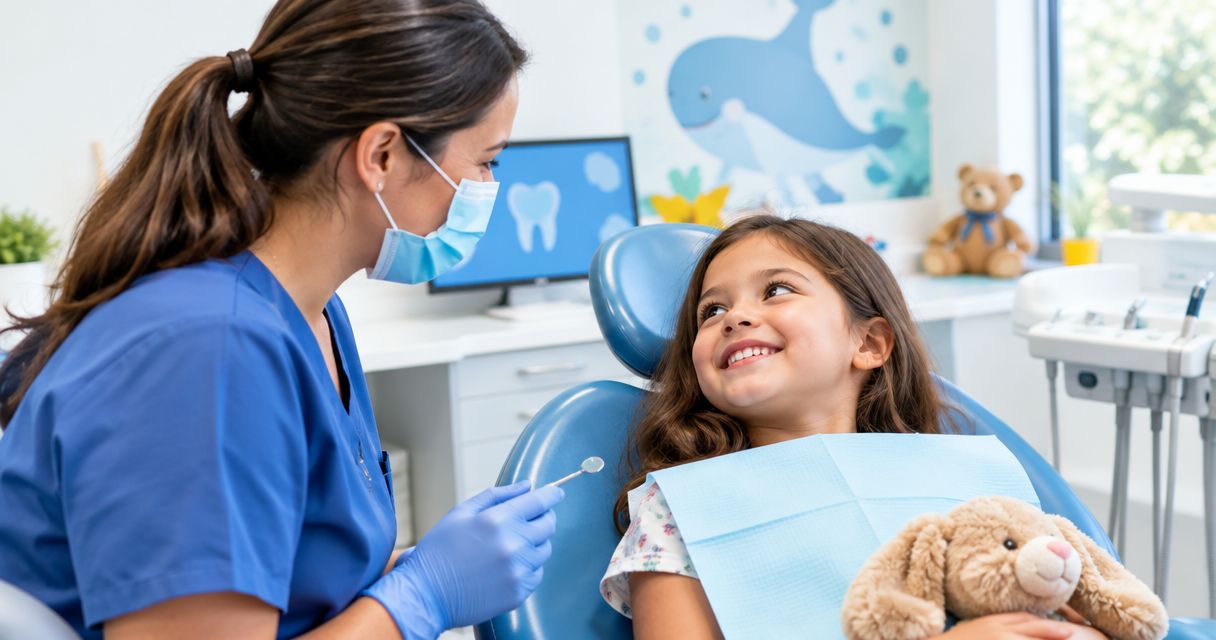
Dental Arts of Atlantis is a family-dentistry option for Boynton Beach parents seeking pediatric dental care in nearby Lake Worth. Best for specialist-led care: a pediatric dental specialist; best for medically complex treatment: a hospital-based dental team when a clinician recommends that setting. This 2026 guide helps you choose the right route for your child.
- Searching best pediatric dentist boynton beach fl? Choose by your child’s needs, not a ranking alone.
- Dental Arts of Atlantis offers pediatric and general dentistry in Lake Worth for Palm Beach County families.
- Pediatric dental specialists complete additional training focused on children, including children with special healthcare needs.
- Confirm the treating dentist’s credentials, comfort approach, treatment scope, and referral process before booking.
Why this matters
Choosing a dentist for your child means choosing someone who can explain care clearly, recognize developing problems, and respond appropriately when treatment needs exceed the office’s scope. A friendly introduction matters. So does knowing who will treat your child.
Dental Arts of Atlantis offers general and pediatric dentistry in Lake Worth, serving families in the Palm Beach County area. Keep that location distinction clear when comparing practices near Boynton Beach: a nearby option is not the same as an office inside the city.
A practice offering pediatric dentistry is also not automatically a specialist practice. Ask about the individual dentist’s training rather than making that assumption from a service name.
What makes the best pediatric dental care?
Use these criteria for your 2026 shortlist before comparing offices:
- Relevant training: Confirm whether your child will see a general dentist who treats children or a pediatric dental specialist.
- Child-specific communication: Ask how the dentist explains instruments, introduces treatment, and responds when a child needs a pause.
- Prevention planning: Look for advice tailored to brushing, diet, fluoride exposure, and your child’s cavity risk.
- Treatment boundaries: Ask which procedures the dentist handles and when a specialist referral becomes appropriate.
- Medical readiness: Discuss medications, allergies, sensory needs, and relevant medical conditions before the appointment.
- Practical fit: Confirm the actual location, appointment arrangements, and instructions for urgent concerns.
For households comparing care for several ages, the guide to choosing a family dentist for kids and adults together addresses a different question from choosing a pediatric specialist. Separate those decisions before you book.
Pediatric dental care options at a glance
These options occupy different roles. The right choice depends on your child’s clinical needs, not a universal winner.
| Option | Best for | Main distinction | Key limitation |
|---|---|---|---|
| Dental Arts of Atlantis | Families seeking pediatric and adult dentistry through a Lake Worth practice | Offers general, pediatric, cosmetic, and implant dentistry | Confirm the treating dentist’s credentials and suitability for your child’s specific needs |
| Pediatric dental specialist | Children needing specialist assessment or child-focused treatment planning | Additional specialty training in children’s dentistry | Adult household members generally need a separate dental provider |
| Hospital-based dental team | Children whose medical or treatment needs require hospital resources | Dental care coordinated with an appropriate medical setting | Not the default setting for routine preventive visits |
1. Dental Arts of Atlantis: best for a family-care starting point
Best for: Boynton Beach households considering a Lake Worth practice that offers both pediatric and general dentistry.
Dental Arts of Atlantis serves families in Palm Beach County and offers care for children alongside adult dental services. That makes the practice relevant when you want to discuss your child’s needs within a family-dentistry setting.
Start with the reason for the visit: a first examination, a suspected cavity, a dental injury, or difficulty tolerating previous appointments. Those details help the office assess whether the treating dentist and setting fit your child.
Family-care advantages
- Pediatric and general dentistry are both among the practice’s stated services.
- Families can consider children’s and adults’ dental needs within the same practice.
- The Lake Worth location gives Boynton Beach parents an option within Palm Beach County.
Family-care limitations
- Offering pediatric dentistry does not establish that the treating dentist is a pediatric specialist.
- A child’s medical, behavioral, or treatment needs can require referral beyond a general practice.
- Parents seeking an office specifically inside Boynton Beach need to account for the Lake Worth location.
Before booking in 2026, ask who will examine your child, whether that dentist treats children of the same age, and what happens if your child cannot complete an examination comfortably. Ask about sibling scheduling separately; do not assume combined appointments.
Verdict: Choose this starting point for family dentistry; skip it as a substitute for a confirmed specialist referral.
2. Pediatric dental specialist: best for specialist assessment
Best for: Children whose dentist recommends specialist evaluation, or whose needs call for dedicated pediatric expertise.
A pediatric dentist completes additional specialty training after dental school. The American Academy of Pediatric Dentistry describes that training as focused on children’s oral health, including care for children with special healthcare needs.
Specialist assessment deserves consideration when your child has extensive treatment needs, significant difficulty tolerating dental care, or a condition affecting dental development. A referral identifies a better-matched setting; it is not a judgment about your parenting or your child’s behavior.
Pediatric specialist pros
- Additional training focuses on children’s oral health and development.
- Specialist assessment can address treatment and behavior-management questions together.
- Pediatric expertise is relevant when medical or developmental needs complicate dental care.
Pediatric specialist cons
- Specialty training alone does not establish that every office fits every child’s needs.
- You still need to confirm the office’s treatment scope and comfort approach.
- Adult family members generally need care elsewhere.
Ask how the specialist evaluates a nervous child before proposing treatment. If sedation enters the discussion, request an explanation of the proposed method, alternatives, monitoring, and the credentials of everyone responsible for it.
Verdict: Choose specialist assessment when your child’s needs exceed routine family care; hold off on selecting a sedation approach before the assessment.
3. Hospital-based dental team: best for medically complex care
Best for: Children whose clinicians recommend a hospital setting because of medical risk, anesthesia needs, or treatment complexity.
Hospital-based dentistry is a care setting, not an upgrade every child needs. The treating dentist and medical team determine whether hospital resources are appropriate for a particular child.
For example, a child with a significant medical condition needs planning that accounts for that condition before dental treatment. The decision depends on the child’s health, proposed procedure, and clinical assessment—not simply the presence of cavities.
Hospital-based care pros
- Supports coordination between dental and medical clinicians when necessary.
- Provides an appropriate route when a clinician determines that office-based care is unsuitable.
- Allows planning around medical and anesthesia-related considerations.
Hospital-based care cons
- Requires coordination beyond a routine dental appointment.
- Is not the default route for examinations, cleanings, or straightforward preventive care.
- Does not replace ongoing dental care after the treatment episode.
If a dentist recommends this route, ask who arranges the referral, who provides follow-up, and which symptoms require urgent attention while treatment is being organized.
Verdict: Wait for clinical direction before pursuing hospital-based treatment; do not delay urgent evaluation while comparing settings.
Match the care setting to your child
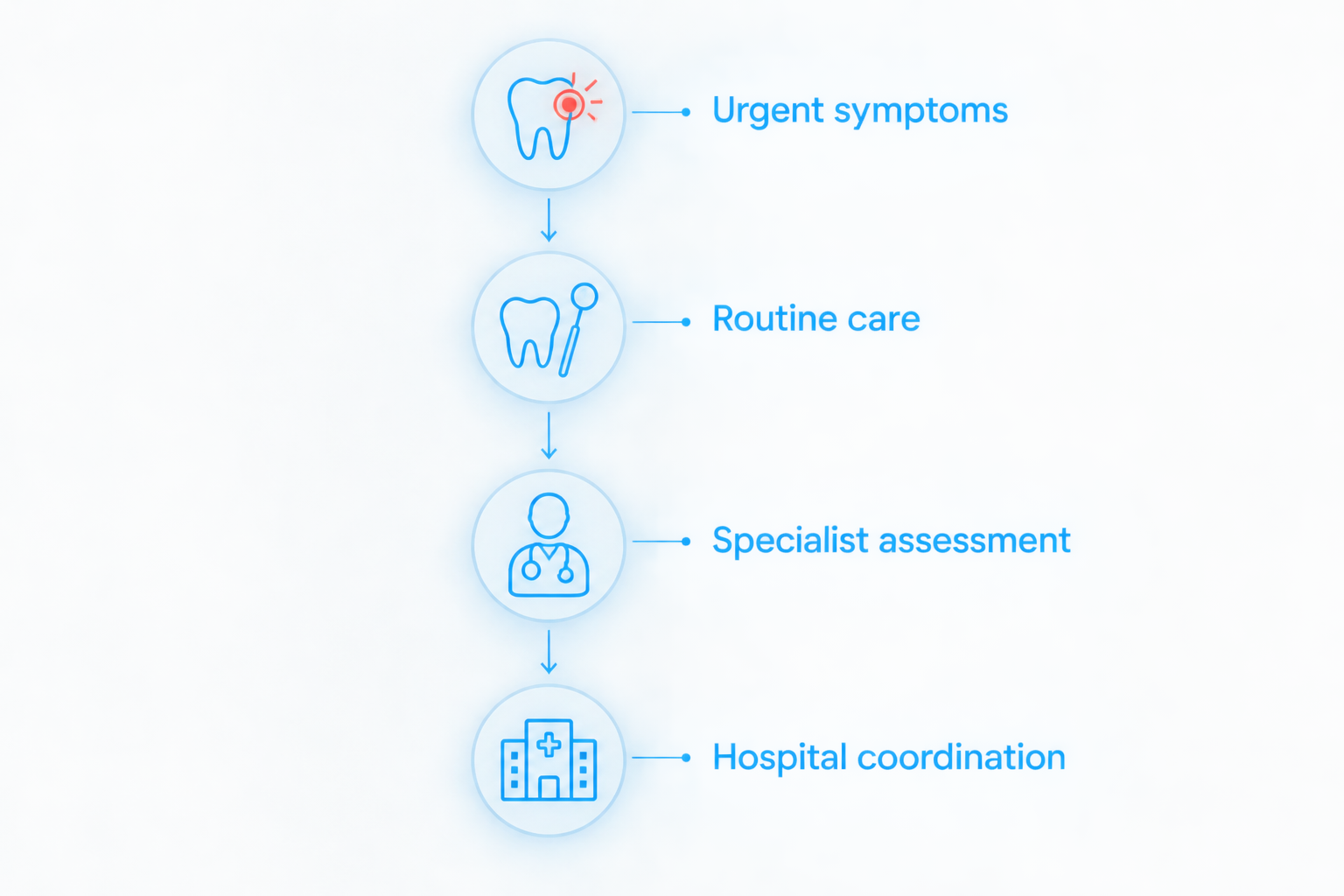
Use this sequence when making a 2026 booking decision. Start with symptoms, then establish the level of care your child needs.
- Urgent symptoms: Facial swelling, significant injury, or severe pain needs prompt professional assessment. Trouble breathing or swallowing requires emergency medical care.
- Routine care: For a first examination or preventive visit, ask whether the dentist treats your child’s age group and can address the reason for the appointment.
- Specialist assessment: Discuss referral when treatment complexity, medical needs, or difficulty tolerating care exceeds the dentist’s scope.
- Hospital coordination: Follow the treating clinicians’ recommendation when medical or anesthesia considerations require that setting.
A child who cries during an unfamiliar examination does not automatically need sedation or hospital treatment. Describe what happened at previous visits so the next dentist can plan appropriately.
What should happen at a first dental visit?
A first visit should establish your child’s oral health needs and give you clear next steps. The exact examination and preventive treatment depend on age, cooperation, medical history, and clinical findings.
The American Academy of Pediatric Dentistry recommends establishing a dental home within 6 months of the first tooth appearing and no later than 12 months of age. You do not need to wait until your child has a full set of teeth.
Bring information about medications, allergies, relevant diagnoses, and earlier dental treatment. Explain any communication or sensory preferences before the examination starts.
Useful questions include:
- What did the examination find?
- Does my child have signs of decay or increased cavity risk?
- Why are any proposed X-rays necessary?
- What needs treatment now, and what can be monitored?
- What should change at home before the next visit?
Ask for an explanation you can repeat in your own words. Clear understanding matters more than leaving with unfamiliar dental terminology.
Compare prevention plans, not just personalities
Warmth helps your child feel welcome, but prevention advice needs substance. In 2026, use your child’s daily routine to evaluate whether the guidance is practical.
American Dental Association guidance recommends brushing twice daily for 2 minutes with fluoride toothpaste. For children younger than 3 years, use a smear about the size of a grain of rice; for children 3–6 years, use no more than a pea-sized amount and supervise brushing.
Your dentist should also consider how well your child brushes, how often teeth encounter sugary foods or drinks, and whether teeth have grooves that warrant discussion of sealants. Follow-up timing should reflect your child’s needs rather than an assumption that every child needs identical care.
A useful prevention plan tells you what to do differently tonight. Ask the dentist to demonstrate brushing positions or cleaning between touching teeth if those tasks are difficult at home.
Questions to ask before booking
A short conversation can prevent a mismatched appointment. Give the office enough information to answer specifically rather than asking only whether it is “good with kids.”
- Who will examine my child, and what is that dentist’s training?
- Does the dentist regularly treat children at this age?
- How do you handle a child who needs breaks or cannot tolerate part of the examination?
- Which findings lead to a pediatric specialist referral?
- How should I report pain, swelling, or a recent injury?
- What records should I bring from the previous dentist?
Share your child’s actual concerns: the sound of instruments, lying back, a strong gag reflex, or fear after an earlier experience. Ask what adjustments the office can provide rather than assuming any particular accommodation.
Discuss your child’s dental needs
Ask about the treating dentist, your child’s concerns, and whether the practice fits the visit.
How these care routes are ranked
This guide prioritizes routine family-care fit first, specialist assessment second, and hospital resources when clinically indicated. The criteria are training, communication, prevention, treatment boundaries, medical readiness, and practical fit.
The order is a decision path, not a claim that one setting delivers better results for every child. No office should promise a treatment outcome before assessing your child.
Which option should you choose?
For a routine pediatric dental visit alongside your household’s broader dental needs, Dental Arts of Atlantis is an option to discuss in Lake Worth. Confirm the treating dentist’s experience with your child’s age and concerns before committing.
Choose a pediatric dental specialist when specialist training matches the problem or a clinician recommends referral. Reserve hospital-based planning for children whose treating team identifies that need.
Your best 2026 choice is the provider who can explain both what your child needs and the limits of what that office can provide.
FAQ
What’s the best pediatric dentist in Boynton Beach, FL, for my child?
The best fit is a dentist whose training, treatment scope, and communication match your child’s needs. Dental Arts of Atlantis offers pediatric and general dentistry in nearby Lake Worth; confirm the treating dentist’s suitability for your child before booking.
Is a family dentist the same as a pediatric dental specialist?
No. A family dentist can treat children, while a pediatric dental specialist completes additional specialty training focused on children’s oral health. Ask about the individual treating dentist’s credentials.
When should I take my baby to the dentist for the first time?
The American Academy of Pediatric Dentistry recommends a dental home within 6 months of the first tooth appearing and no later than 12 months of age. Early visits address development, cleaning, feeding habits, and prevention.
Does a nervous child automatically need sedation?
No, dental anxiety alone does not establish that sedation is necessary. The dentist should assess your child, discuss communication and comfort strategies, and explain any proposed sedation and alternatives.
Should I choose a dentist inside Boynton Beach or consider Lake Worth?
Choose by clinical fit and a location you can manage consistently. Confirm the actual office location and travel arrangements instead of assuming that a practice serving Boynton Beach is located within the city.
What should I do if my child has facial swelling or severe tooth pain?
Seek prompt professional assessment for facial swelling or severe dental pain. Trouble breathing or swallowing requires emergency medical care rather than waiting for a routine dental appointment.
How do I know whether my child needs a specialist?
Ask the examining dentist whether your child’s treatment, medical, developmental, or behavioral needs exceed the office’s scope. Request a clear explanation of the referral and who will coordinate ongoing care.
One last thing
Ask one revealing question: “What would make you refer my child to someone else?” A clear answer shows that the dentist recognizes treatment boundaries and can explain the next step without making your family feel at fault.
Related guides
- Pediatric dentistry for toddlers and first dental visits
- Dental care for kids with sensory sensitivities
- What counts as a pediatric dental emergency?