
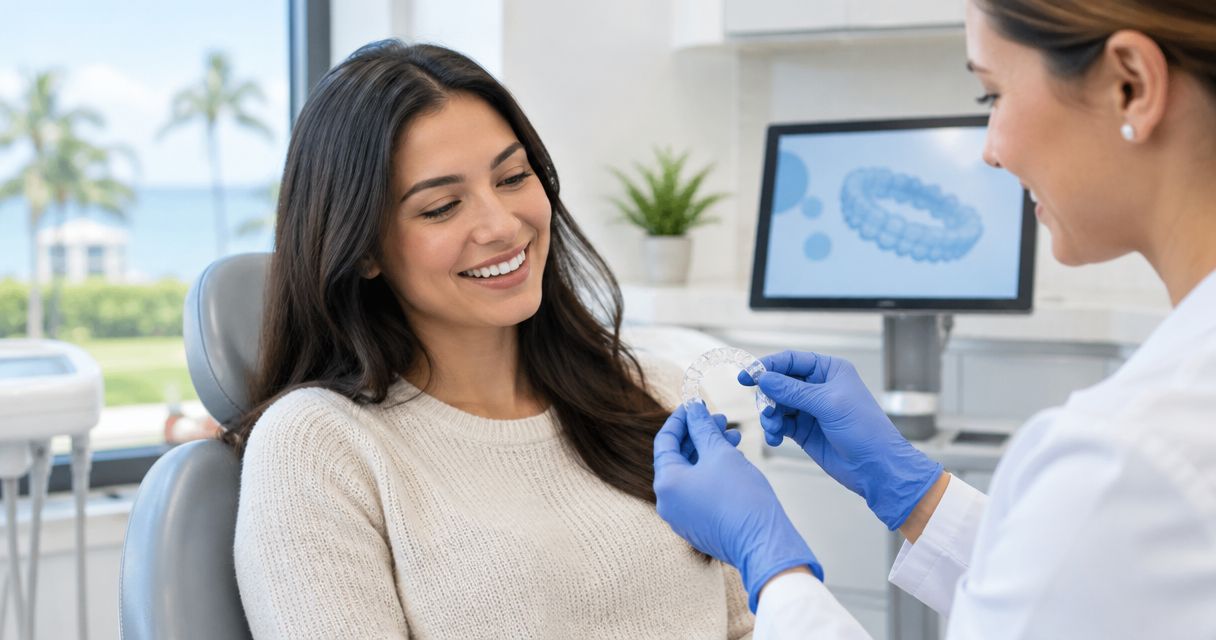
Best for families seeking Invisalign alongside general dental care: Dental Arts of Atlantis in Lake Worth. Best for a complex bite assessment: an orthodontist consultation; best for resolving conflicting recommendations: an independent second opinion. This 2026 guide helps West Palm Beach patients choose by clinical fit rather than a blanket citywide ranking.
- For the best Invisalign provider West Palm Beach FL search, prioritize an examination, bite assessment, and follow-up plan.
- Dental Arts of Atlantis offers Invisalign alongside general, cosmetic, pediatric, and implant dentistry in Lake Worth.
- An orthodontist consultation suits patients seeking specialist assessment of complicated tooth movement or bite problems.
- Choose an independent second opinion when recommendations conflict or the treatment goals remain unclear.
Why this matters
Clear aligners move teeth, but choosing a provider involves more than choosing trays. Your gum health, existing dental work, bite, and ability to follow the wear schedule all belong in the decision.
For West Palm Beach families, a Lake Worth practice is a nearby-area option, not a West Palm Beach office. Review the practice's dental services and consider the journey for repeat visits before choosing where to begin.
The best provider for you explains both why Invisalign fits your needs and when another approach makes more sense. A clear explanation matters more than a promise of a perfect smile.
What makes the best Invisalign provider?
Use these six criteria to compare your options in 2026:
- Clinical fit: The provider assesses your teeth, gums, and bite before recommending movement.
- Relevant experience: Ask about treating concerns like yours, not only about total treatment volume.
- Treatment explanation: You understand the intended changes, limitations, and alternatives.
- Monitoring: You know who checks progress and what happens when a tray does not fit properly.
- Practical access: You can attend reviews and contact the treating team about problems.
- Retention planning: The discussion includes keeping teeth in position after active treatment.
Do not treat a digital preview as a guarantee. It illustrates planned movement; your clinician still needs to assess how your teeth respond during treatment.
Invisalign provider options at a glance
These are ranked consultation routes for different needs, not ratings of unverified local offices. The practice listed below is a named option; the other entries explain when a different type of consultation deserves priority.
| Option | Best for | Standout fit | Key limitation |
|---|---|---|---|
| Dental Arts of Atlantis | Families seeking Invisalign alongside general dental care | Offers Invisalign plus general, cosmetic, pediatric, and implant dentistry | Located in Lake Worth; individual Invisalign suitability requires an examination |
| Orthodontist consultation | Complicated bite or tooth-movement questions | Specialist assessment of tooth alignment and jaw relationships | General dental treatment can require coordination with another office |
| Independent second opinion | Conflicting recommendations or unclear goals | A separate assessment before committing to treatment | Adds another consultation and records review |
1. Dental Arts of Atlantis: best for family dental-care needs
Dental Arts of Atlantis offers Invisalign and general, cosmetic, pediatric, and implant dentistry to families in Palm Beach County. Its Lake Worth location gives West Palm Beach patients an option to consider when they want alignment discussed alongside other dental needs.
Best for: Families looking for an Invisalign consultation at a practice that also offers broader dental care.
That range of services is relevant when straightening is only part of your concern. You might also need an examination for tooth sensitivity, an assessment of existing restorations, or advice about the order of cosmetic treatment.
The service list does not establish that every case belongs at this practice. Ask the examining clinician which movements are appropriate, what limitations apply, and whether specialist input is needed.
Dental Arts of Atlantis pros:
- Offers Invisalign as part of its stated services.
- Also provides general and cosmetic dentistry.
- Serves families in the Palm Beach County area.
- Provides pediatric and implant dentistry for other household dental needs.
Practice considerations:
- The office is in Lake Worth, not West Palm Beach.
- Candidacy and treatment scope require an individual assessment.
- Confirm the treating clinician, review arrangements, and referral process before committing.
Bring your main concern in plain language: crowded lower teeth, a visible gap, or changes since previous orthodontic treatment. Then ask whether correcting that concern also requires changes elsewhere in your bite.
Verdict — Hold on starting treatment until an examination confirms the fit; shortlist this option for family-focused dental care.
2. Orthodontist consultation: best for complex bite questions
An orthodontist is a dentist with additional specialty education in tooth alignment and jaw relationships. A specialist consultation is the appropriate route to consider when your main question is whether a complicated bite problem needs aligners, braces, or another approach.
Best for: Patients seeking specialist assessment of difficult movements, significant bite concerns, or competing orthodontic recommendations.
Invisalign is not automatically the right appliance for every movement. A clinician needs to explain the treatment mechanics, including whether attachments, elastics, or a different appliance are part of the proposed plan.
Orthodontist consultation pros:
- Centers the evaluation on alignment and bite relationships.
- Supports a discussion of aligners and fixed braces.
- Offers a specialist perspective when the treatment goal is complicated.
Orthodontist consultation considerations:
- Cleanings, fillings, and other general care can involve another office.
- A specialist consultation does not guarantee Invisalign is suitable.
- You still need to assess communication and follow-up arrangements.
Ask the orthodontist to separate cosmetic goals from bite goals. A plan that makes the front teeth look straighter is not necessarily the same as a plan that addresses how the upper and lower teeth meet.
Verdict — Hold on choosing an appliance until the specialist explains the movements and alternatives.
3. Independent second opinion: best for conflicting treatment plans
An independent second opinion is a separate clinical assessment, not simply another treatment preview. It helps you compare the diagnosis, intended result, and reasons behind different recommendations.
Best for: Patients who receive conflicting advice or cannot clearly explain the purpose of the proposed treatment.
For a 2026 treatment decision, bring existing records when available and ask each clinician the same questions. Compare what the plans aim to accomplish before comparing how convenient they sound.
Independent second opinion pros:
- Gives you another explanation of the clinical problem.
- Helps identify differences in treatment scope.
- Creates space to ask questions without committing immediately.
Independent second opinion considerations:
- Requires another consultation and potentially additional records.
- Different recommendations do not automatically mean one clinician is wrong.
- Comparing previews alone leaves important clinical questions unanswered.
Ask what happens if you choose no orthodontic treatment. Understanding that alternative helps you distinguish a personal cosmetic preference from a problem the clinician recommends addressing for dental function or health.
Verdict — Wait on committing when the diagnosis, alternatives, or intended result remain unclear.
How these options are ranked
The order reflects the six criteria above: clinical fit, relevant experience, explanation, monitoring, access, and retention. It starts with a named practice for families seeking multiple dental services, then separates specialist assessment from independent review.
This is not a claim that one office has the best outcomes across West Palm Beach. Choose the consultation route that answers your clinical question, then assess the individual treatment proposal.
What should happen before you agree to Invisalign?
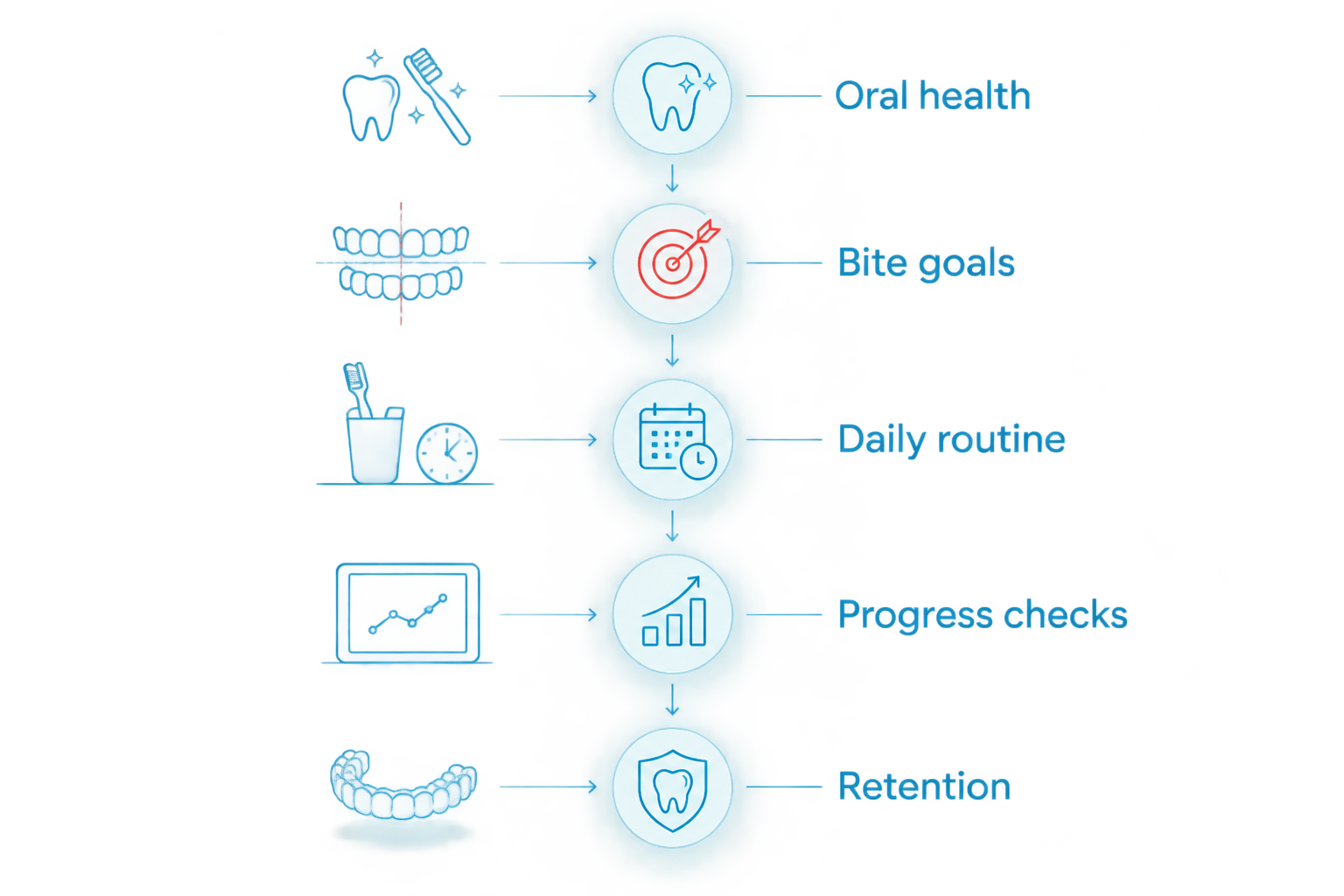
A useful 2026 consultation should leave you understanding the problem, the proposed solution, and your responsibilities. Use this sequence to keep the discussion focused.
Oral health
Tell the clinician about bleeding gums, loose teeth, sensitivity, previous orthodontic treatment, crowns, and implants. Active dental disease needs assessment before tooth movement; existing restorations also affect planning.
Bite goals
Ask which teeth need to move and why. Request a plain-language explanation of whether the plan addresses appearance, bite function, or both, and ask what it will not change.
Daily routine
Invisalign's published patient guidance generally calls for 20–22 hours of wear per day. Ask your treating clinician for your instructions, including when to remove the trays and how to handle meals, cleaning, and missed wear.
Progress checks
Confirm who evaluates movement and how to report a lost, damaged, or poorly fitting tray. Do not advance through trays against clinical instructions simply because a calendar reminder says it is time.
Retention
Ask about retainers before active treatment begins. Teeth can shift after orthodontic treatment, so maintaining the result is part of the decision—not an optional conversation at the end.
Invisalign versus braces: discuss comfort and control
Removable aligners and fixed braces ask different things of you. Aligners require consistent wear and careful handling; braces stay attached, but cleaning around brackets and wires needs attention.
| Treatment | Main practical advantage | Main practical limitation |
|---|---|---|
| Invisalign | Removable for eating and oral hygiene | Depends on following the prescribed wear schedule |
| Fixed braces | Stay attached between appointments | Brackets and wires require cleaning adjustments |
Understanding whether braces hurt belongs in the same conversation as aligner pressure: both treatments move teeth, and neither should be presented as a discomfort-free promise. Ask what sensations to expect and which symptoms require a call.
Do not choose Invisalign only because you assume braces are intolerable. Likewise, do not choose braces only because you worry about forgetting trays; explain your routine so the clinician can discuss a workable approach.
For daily oral hygiene, the American Dental Association recommends brushing for 2 minutes per session, 2 times per day, with fluoride toothpaste. Keep that foundation in place whichever appliance your clinician recommends, and ask how to clean around attachments or brackets.
Questions that reveal the quality of a treatment plan
Before choosing a provider in 2026, ask for answers you can repeat comfortably at home. A reassuring consultation makes the details understandable rather than rushing you toward agreement.
- Who treats me? Identify the clinician responsible for planning and reviewing your care.
- Why this approach? Ask why Invisalign fits your goals better than the alternatives discussed.
- What are the limits? Learn which changes are realistic and which fall outside the plan.
- What if movement differs? Ask how the clinician reassesses teeth that do not follow the intended movement.
- What follows treatment? Confirm how retention and continuing dental care fit together.
Also ask for a written explanation of the treatment scope. It should distinguish active alignment, any proposed additional aligners, retainers, and other dental procedures so you understand what you are agreeing to.
Which Invisalign provider should you choose?
Dental Arts of Atlantis is an Invisalign option for Palm Beach County families seeking general and cosmetic dental care. Start with that type of practice when your priority is discussing straightening alongside broader household dental needs.
Choose an orthodontist consultation first when your main concern is a complicated bite. Seek an independent second opinion when the recommendations do not make sense to you or differ substantially.
For your 2026 decision, the default is simple: book an assessment, not a predetermined treatment. Leave with a diagnosis and an explanation before deciding that Invisalign is the answer.
Discuss your Invisalign goals
Ask about suitability, treatment goals, follow-up, and retention before choosing your next step.
FAQ
What’s the best Invisalign provider in West Palm Beach, FL?
The best fit is a provider who examines your oral health, explains your bite goals, and sets a clear monitoring plan. Consider a family dental practice for broader dental needs and an orthodontist consultation for complicated alignment questions.
Should I choose a dentist or an orthodontist for Invisalign?
Choose according to your clinical needs and the treating clinician’s relevant experience. A general dentist can assess Invisalign suitability, while an orthodontist brings specialty training in tooth alignment and jaw relationships.
Can I consider a Lake Worth Invisalign provider if I live in West Palm Beach?
Yes, you can consider a Lake Worth practice if the travel works for your follow-up care. Confirm the office location and review arrangements before beginning treatment.
How many hours a day do I need to wear Invisalign?
Invisalign’s published patient guidance generally calls for 20–22 hours daily. Follow your treating clinician’s instructions and discuss any routine that makes consistent wear difficult.
Is Invisalign better than braces for adults?
Neither Invisalign nor braces is better for every adult. Your bite, required movements, oral health, and ability to follow the wear instructions determine which approach fits.
Can I get Invisalign if I have crowns or implants?
Crowns or implants do not automatically rule out orthodontic assessment, but they affect treatment planning. Implants do not move like natural teeth, so the clinician must account for their position.
Do I need retainers after Invisalign?
Retainers are generally needed after Invisalign to help maintain tooth positions. Ask about the retainer type, wear instructions, and follow-up before beginning active treatment.
One last thing
Bring a description of your ordinary workday—not just a photograph of the smile you want. Meals, commuting, travel, and cleaning opportunities reveal whether a removable-appliance routine fits your life.
The strongest treatment plan is one you understand and can follow consistently. Ask the difficult questions before the first tray, not after a problem appears.
Related guides
- Invisalign for adults: how it works and what to expect
- Invisalign vs. braces for adults: which is right for you?
- How to care for your retainer after Invisalign treatment