
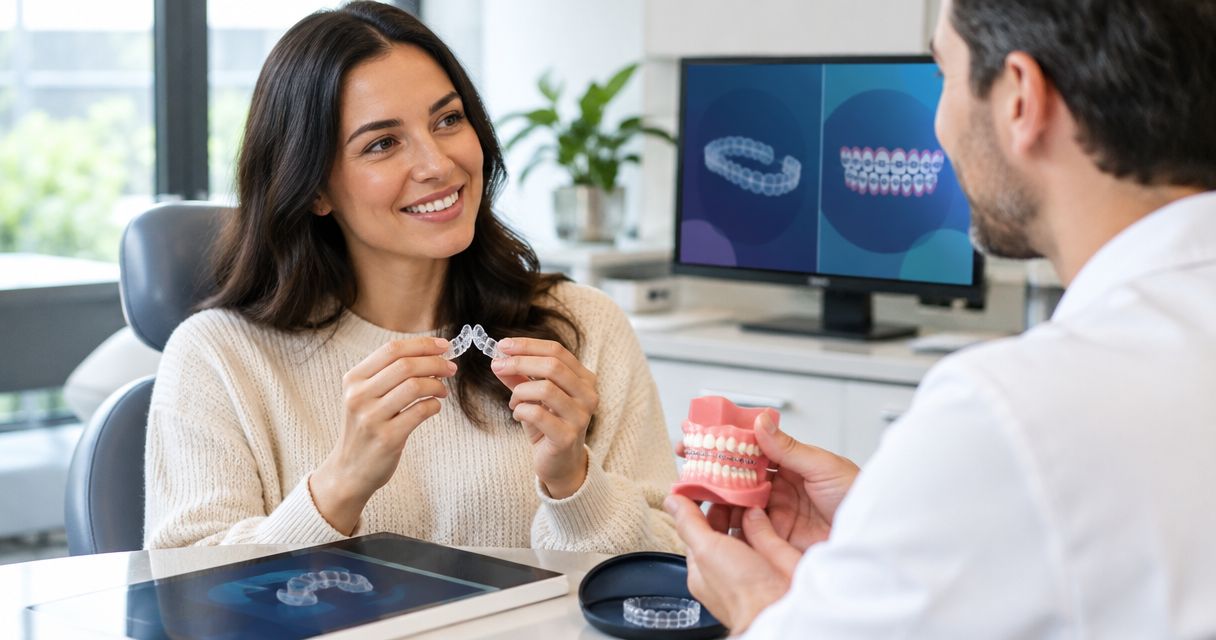
Best for removable, less noticeable treatment: Invisalign. Best for adults who need fixed appliances: braces. This 2026 invisalign vs braces guide compares daily routines, bite correction, comfort, and long-term care; start with Invisalign for adults if removable treatment interests you.
- Invisalign vs braces comes down to bite needs, daily habits, and whether removable clear aligners suit you.
- Invisalign is best for suitable adults who can consistently follow the prescribed wear schedule.
- Braces are best for adults who need fixed appliances rather than removable trays.
- Dental Arts of Atlantis offers Invisalign; an examination determines whether clear aligners fit your dental needs.
Why this matters
Adult orthodontic treatment changes more than the position of your front teeth. Your clinician must consider how your teeth meet, the condition of your gums, and existing dental work before recommending an appliance.
For your 2026 decision, the useful question is not which option looks better online. It is which option can achieve your treatment goals with a routine you can maintain. A removable appliance that stays in its case cannot deliver the planned tooth movement.
Dental Arts of Atlantis is a local Invisalign option for adults in Lake Worth who want to explore removable orthodontic treatment. The practice serves families in Palm Beach County, but suitability for treatment requires an individual examination.
What makes the best adult orthodontic treatment?
Use these criteria before choosing between clear aligners and fixed braces:
- Bite correction: The plan must address the tooth movements and bite relationships you actually need, not just visible crowding.
- Daily adherence: Invisalign requires consistent wear. Braces remain attached, although elastics and other instructions still require your participation.
- Cleaning access: Removable trays let you brush and floss without brackets in the way. Fixed braces require cleaning around attachments and wires.
- Appearance: Clear trays are less noticeable than conventional metal brackets, but attachments and elastics can still show.
- Comfort and maintenance: Both options apply pressure. Compare tray handling with the possibility of bracket irritation or a poking wire.
- Retention: Both options require a plan to hold teeth in their new positions after active treatment.
A healthy foundation comes first. Active gum disease, untreated decay, or a damaged tooth needs assessment before tooth movement begins; choosing an appliance does not resolve those conditions.
Invisalign vs braces at a glance
| Option | Best for | Standout feature | Key limitation |
|---|---|---|---|
| Invisalign | Adults who want removable treatment and can follow wear instructions | Clear trays come out for meals and oral hygiene | Success depends on consistent wear and proper tray fit |
| Fixed braces | Adults who need an appliance that stays attached | Brackets and wires remain in place throughout daily activities | Cleaning is more involved, and food choices need adjustment |
Neither option wins every clinical situation. This 2026 comparison ranks Invisalign first for removable treatment, not as a claim that aligners are better for every adult.
1. Invisalign: best adult treatment for removable wear
Invisalign uses a prescribed sequence of clear aligners to move teeth. You remove the trays for meals and cleaning, then put them back in according to your clinician's instructions. Some treatment plans also use tooth-colored attachments or elastics.
Best for: Adults whose tooth movements are suitable for aligners and who can maintain the required wear routine.
Invisalign's published patient guidance recommends wearing aligners for 20–22 hours per day. Your treating clinician sets your instructions, including when to change trays. Meals, drinks other than water, and cleaning must fit around that schedule.
Invisalign pros
- Clear trays are less noticeable than conventional metal braces.
- You remove aligners to brush and floss your teeth.
- Meals do not require chewing around fixed brackets or wires.
- Removable treatment gives you direct access to clean both the appliance and your teeth.
Invisalign cons
- Leaving trays out interrupts the prescribed wear schedule.
- Attachments and elastics can make treatment more visible than expected.
- Removing, storing, and cleaning trays adds tasks throughout your day.
Invisalign is not a promise of attachment-free treatment or an effortless routine. Ask your clinician to explain which attachments are planned and whether additional aligner stages might be needed to finish the intended movements.
Dental Arts of Atlantis offers Invisalign, making the practice an option for a local assessment. That does not establish that aligners are the right appliance for your bite.
Verdict: Buy into Invisalign only after an examination confirms suitability and you can commit to consistent wear.
2. Fixed braces: best adult treatment for attached appliances
Fixed braces use brackets bonded to teeth and wires adjusted during treatment. The appliance stays attached when you eat, speak, and sleep. Your clinician selects the mechanics needed for the planned movements.
Best for: Adults who need fixed treatment or know that repeatedly removing and replacing trays would be difficult.
Fixed braces remove the decision about whether to put an aligner back in. They do not remove your responsibilities: cleaning, appointments, elastic wear when prescribed, and avoiding appliance damage still matter.
Fixed braces pros
- Brackets remain attached rather than depending on tray wear.
- Fixed appliances give the treating clinician options for controlling tooth movement.
- You do not need to store trays during meals.
- Treatment continues without remembering to reinsert a removable appliance.
Fixed braces cons
- Brackets and wires make brushing and interdental cleaning more involved.
- Hard or sticky foods can damage the appliance.
- Brackets or wire ends can irritate the cheeks and lips.
Braces deserve serious consideration when the proposed movements favor fixed mechanics or removable treatment does not fit your habits. A complicated bite does not automatically rule out aligners; ask the clinician to explain why the recommended appliance fits your specific problem.
This comparison does not establish that Dental Arts of Atlantis provides fixed braces. Ask about the appropriate treatment pathway if fixed appliances are recommended.
Verdict: Buy into fixed braces when the clinical plan or your daily habits favor an attached appliance.
Which option fits your actual day?
Think through an ordinary workday before committing. Your appliance will be part of meetings, meals, travel, and evenings at home—not just appointment days.
Meals and drinks
With Invisalign, remove trays for food and drinks other than water, following your clinician's instructions. Carry a protective case so trays do not end up wrapped in a napkin or left on a table. Clean your teeth and aligners as directed before reinserting them.
With braces, you eat with the appliance attached. Follow instructions about hard and sticky foods, and cut foods into manageable pieces when needed. A broken bracket or displaced wire needs advice from the treating office.
Brushing and flossing
The American Dental Association recommends brushing for 2 minutes twice daily with fluoride toothpaste and cleaning between teeth 1 time daily. Orthodontic appliances add cleaning tasks; they do not replace those basics.
Invisalign allows unobstructed brushing and flossing after tray removal. Braces require attention around brackets and under wires, using the cleaning tools your dental team recommends. Choose the routine you can perform carefully, including on tired evenings.
Speaking and social situations
Both appliances can take adjustment. Aligners can affect speech temporarily, while braces introduce brackets against your cheeks and lips. Neither option guarantees that nobody will notice your treatment.
If your 2026 calendar includes presentations or an important event, discuss it during planning. Do not interrupt prescribed wear or ask for faster tray changes to meet a personal deadline.
Start with health, then choose the appliance
An orthodontic assessment should establish whether your teeth and supporting tissues are ready for movement. Bring your medical history, medication list, and details of previous dental treatment. Mention bleeding gums, loose teeth, persistent sensitivity, or jaw symptoms.
Existing crowns do not automatically prevent orthodontic treatment. However, a dental implant does not move like a natural tooth, so its position affects planning. If you have restorations, read about Invisalign with dental crowns and ask how your existing work changes the proposed approach.
Do not choose Invisalign or braces as a guaranteed treatment for headaches, clenching, or jaw pain. Those symptoms need their own assessment, even when bite correction is also being considered.
A practical decision process for 2026
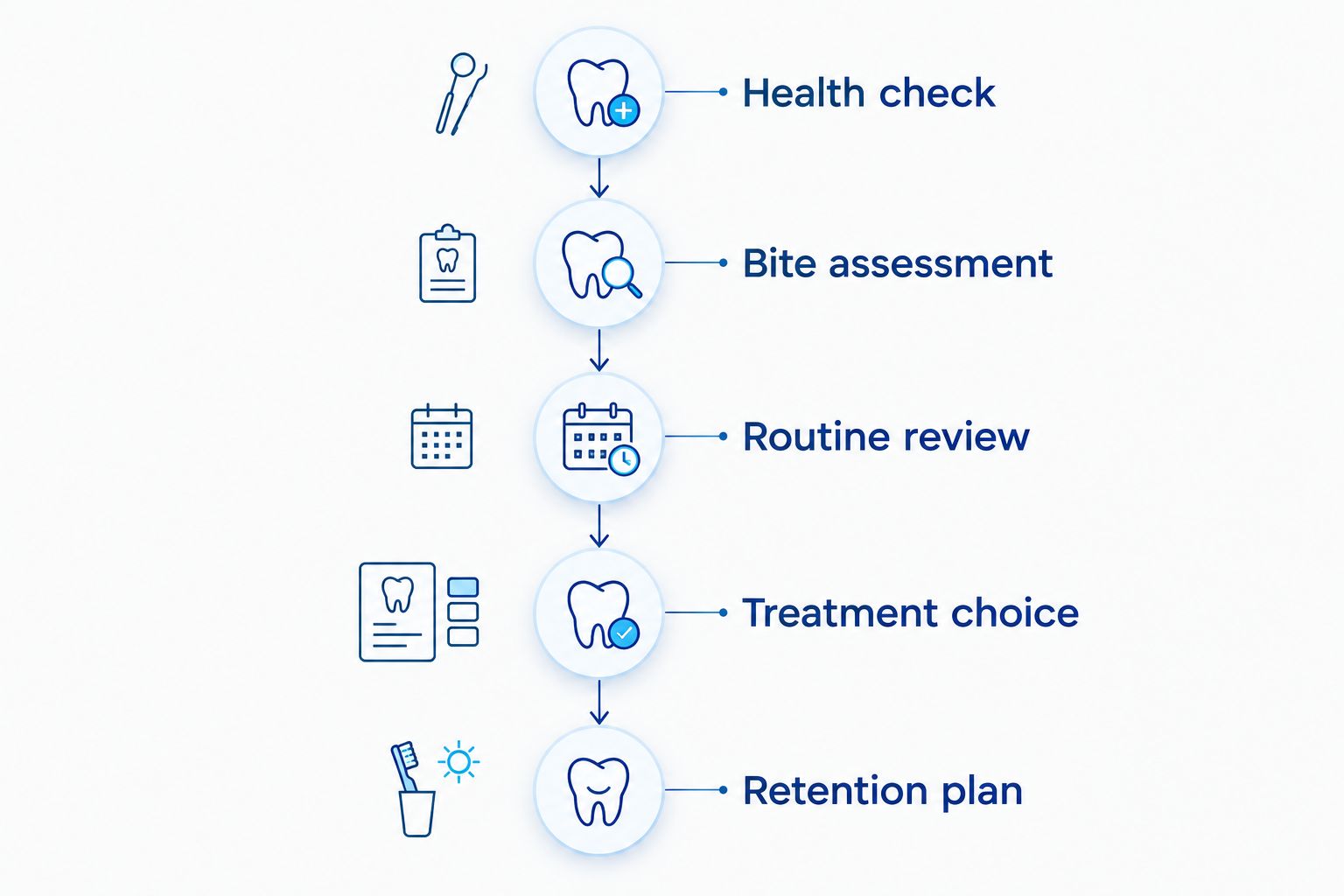
Use this sequence to keep an appliance preference from getting ahead of the diagnosis:
- Health check: Establish whether decay, gum disease, or other dental problems need attention first.
- Bite assessment: Identify the crowding, spacing, and bite relationships the treatment must address.
- Routine review: Explain your meals, work schedule, cleaning habits, and ability to manage removable trays.
- Treatment choice: Compare suitable appliances and understand the reasons for the recommendation.
- Retention plan: Ask how the result will be maintained after active treatment.
The sequence matters. An attractive appliance is not the starting point; a diagnosis and achievable treatment goal are.
Bring your priorities to the discussion without treating them as a diagnosis. Saying that you want discreet treatment is helpful; assuming that clear trays can deliver every requested movement is not.
Discuss your Invisalign options
Ask Dental Arts of Atlantis about Invisalign and the next step toward an individual assessment.
How this comparison ranks the options
This guide ranks the appliances by distinct use cases: Invisalign for removable wear, and braces for fixed treatment. The criteria are clinical suitability, adherence, cleaning access, appearance, maintenance, and retention—not a claimed head-to-head test or guaranteed outcome.
Your clinician's recommendation takes priority over this general ranking. Ask what each suitable option can achieve, what compromises remain, and how progress will be checked. A clear explanation should connect the appliance to your actual teeth and bite.
Which adult orthodontic treatment should you choose?
Choose Invisalign as your starting preference if removable, less noticeable treatment matters and you can follow the wear schedule. Choose fixed braces if an attached appliance better fits your clinical needs or habits. Confirm either choice through an examination.
If you remain undecided, ask one direct question: “What makes this appliance a better fit for my planned tooth movements?” The answer should describe your case, not simply praise the appliance.
For a 2026 treatment decision, request a written plan explaining the intended result, monitoring, responsibilities, and retention. Ask what happens if teeth do not move as planned. Understanding those details is more useful than choosing from before-and-after photographs alone.
FAQ
What’s better for adults, Invisalign or braces?
Invisalign is better suited to adults who want removable treatment and can follow wear instructions; braces suit adults who need fixed appliances. An examination determines which option can address your specific tooth movements and bite.
Is Invisalign faster than braces?
Invisalign is not automatically faster than braces. Treatment length depends on the movements required, your response to treatment, adherence, and whether additional correction is needed.
Does Invisalign hurt less than braces?
Neither Invisalign nor braces guarantees pain-free treatment. Both apply pressure to move teeth; aligners can cause tenderness, while brackets and wires can also irritate soft tissues.
Can Invisalign fix an adult overbite?
Invisalign can treat some adult overbites, but suitability depends on the cause and severity of the bite problem. Tooth-position problems and underlying jaw relationships require different planning.
Can I get Invisalign if I have crowns or implants?
Crowns and implants do not automatically rule out Invisalign. Existing restorations need assessment, and implants cannot move like natural teeth, which affects the treatment plan.
Do adults need retainers after Invisalign or braces?
Adults need a retention plan after either Invisalign or braces. Teeth can shift after active treatment, so follow the prescribed retainer schedule and instructions for monitoring fit.
Does Dental Arts of Atlantis offer Invisalign?
Dental Arts of Atlantis offers Invisalign in Lake Worth, Florida. Ask the practice about an individual assessment to determine whether clear aligners suit your dental health and treatment goals.
One last thing
The final aligner or removal of braces is not the end of orthodontic care. Ask about retention before you start treatment, including who checks retainer fit and what to do if a retainer breaks or stops fitting.
Also ask what counts as a finished result. Straight-looking front teeth and a well-planned bite are not interchangeable goals. Understanding the intended endpoint helps you judge progress without relying on appearance alone.
Related guides
- How long does Invisalign treatment take?
- Can Invisalign fix an overbite?
- How to care for your retainer after Invisalign treatment