
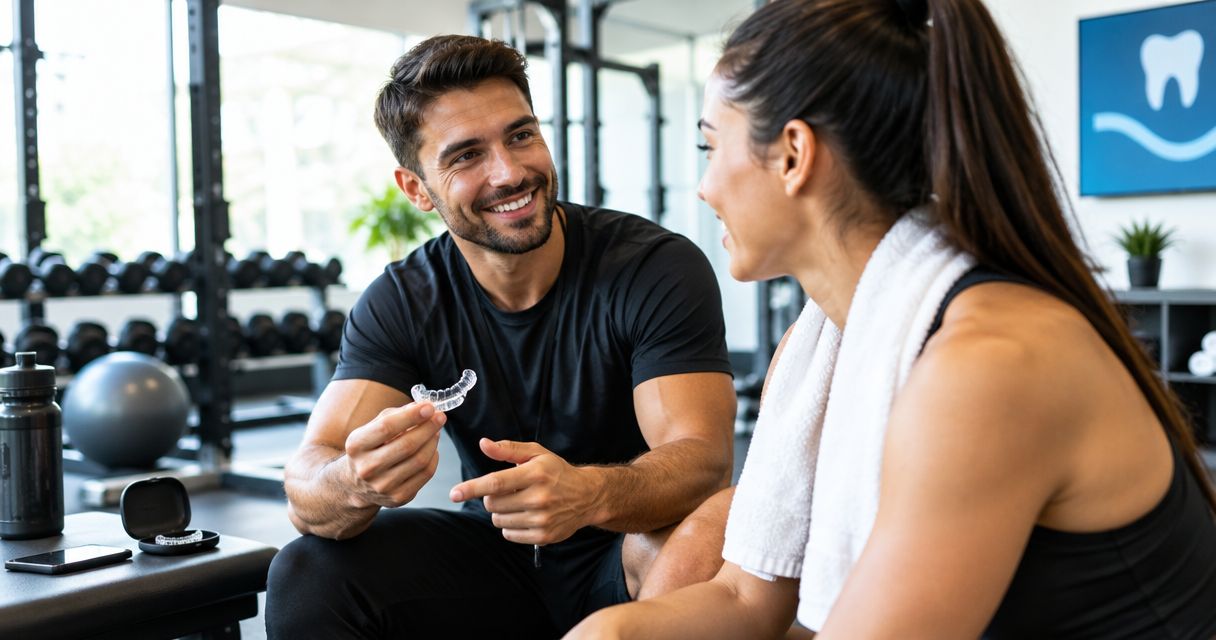
Personal trainers’ dental care is prevention and treatment tailored to coaching and exercise routines, with the aim of keeping teeth healthy and your workday comfortable. This 2026 guide explains how to manage drink exposure, dry mouth, jaw tension, and appointments without turning oral care into another demanding training program.
- Dental care for personal trainers starts with fluoride toothpaste, daily interdental cleaning, and attention to workout drinks.
- Dental Arts of Atlantis suits Palm Beach County trainers seeking general and family dental care.
- Sports mouthguards protect against impact; night guards address grinding-related tooth wear. They are not interchangeable.
- Persistent dry mouth, sensitivity, or jaw pain needs assessment, not just a different toothpaste.
Why dental care matters for personal trainers
Your job title does not automatically put you at higher dental risk. What matters is what happens during your day: repeated acidic drinks, missed cleaning, mouth dryness, impacts, or sustained jaw clenching.
If you coach between your own workouts, track those exposures rather than assuming a fitness-focused diet protects your teeth. Sugar supports cavity-causing bacteria, while acidic drinks can erode enamel even when they contain no sugar. Those are different problems, and they need different prevention habits.
For exercise-related dryness, the guide to dental care for endurance athletes with dry mouth covers a closely related concern. Persistent dryness deserves attention because saliva helps protect teeth and oral tissues.
Your 2026 dental plan should support comfortable eating, speaking, and coaching—not chase a particular shade of white. A bright smile does not prove that gums, enamel, or existing fillings are healthy.
Build a dental routine around your training day
Record your drinks, symptoms, and cleaning habits
Start with a simple note on your phone. Record what you drink, whether you sip it throughout coaching sessions, when your mouth feels dry, and whether pain appears during chewing or after lifting.
You do not need to calculate an enamel-risk score. The useful distinction is between a brief exposure and repeated exposure across the day. Include energy drinks, sports drinks, flavored waters, pre-workout drinks, coffee additions, and between-session snacks without assuming every product in a category has the same ingredients.
Read labels for added sugars and acidic ingredients. An ingredient list helps identify exposures, but it cannot diagnose damage or tell you exactly how erosive a drink is.
Also note whether discomfort affects one tooth or several, whether it lingers, and whether it wakes you. These details help your dentist investigate the cause instead of treating every symptom as routine sensitivity.
- Drink timing: note repeated sipping rather than recording only total intake.
- Dryness: record when it starts and whether it persists after exercise.
- Tooth symptoms: identify the location and trigger.
- Jaw symptoms: note morning soreness, locking, or pain with chewing.
- Cleaning habits: identify which part of your routine gets skipped.
Anchor brushing and interdental cleaning to fixed events
Keep the foundation simple: brush with fluoride toothpaste for 2 minutes, 2 times daily, and clean between your teeth 1 time daily. A manual toothbrush works when your technique reaches all tooth surfaces; an electric toothbrush is another option, not a prerequisite.
Tie cleaning to reliable events rather than changing appointment times. Brushing before leaving home and before bed is easier to remember than trying to fit every task into a gap between clients. Clean between teeth at whichever daily point you can repeat consistently.
Use gentle pressure and a soft-bristled brush. Scrubbing harder does not compensate for missed areas and can injure gums. Choose floss or another interdental cleaner that fits your teeth and any dental work, with guidance when needed.
A rinse does not replace brushing or interdental cleaning. If you use one, ask which type serves your actual concern rather than choosing solely for a strong flavor or a temporary fresh feeling.
- Keep fluoride toothpaste and a soft brush where your routine starts.
- Use a timer if brushing ends before you have covered every surface.
- Clean along the gumline without forceful scrubbing.
- Choose an interdental tool you can use comfortably.
- Pack a small hygiene kit for overnight travel and split shifts.
Adjust hydration and ask for an individual risk assessment
Use plain water as your routine between-session drink when your exercise and medical needs allow. If a sports nutrition plan calls for carbohydrate or electrolyte drinks, discuss how to reduce unnecessary tooth exposure without undermining that plan.
Avoid holding acidic drinks in your mouth or swishing them around your teeth. Rinsing with water afterward helps clear the mouth, but it does not cancel the drink’s effects. Sugar-free gum can stimulate saliva when chewing is comfortable; it is not suitable during activity where it presents a choking risk.
If dryness persists, bring your medication and supplement list to a dental visit. Do not stop prescribed medication yourself. Dry mouth has several possible causes, and hydration alone does not address all of them.
Dental Arts of Atlantis is best for Palm Beach County trainers seeking general and family dental care. Professional assessment adds something home tracking cannot: evaluation of teeth, gums, restorations, and symptoms. It still depends on the daily habits you maintain between visits.
- Choose plain water for ordinary coaching breaks.
- Avoid prolonged sipping when a specialty drink is not needed.
- Rinse with water after acidic drinks.
- Ask about persistent dryness rather than repeatedly masking it.
- Bring drink labels and your current medication list to your visit.
Separate impact protection from grinding care
Choose protection according to the activity, not the appliance’s appearance. A sports mouthguard cushions impacts during activities with a risk of mouth injury. A night guard is designed for grinding-related protection and is not a substitute for a sports mouthguard.
If you coach contact drills or participate in impact sports, ask about fit, retention, breathing, and compatibility with existing dental work. A guard that you must constantly bite to hold in place deserves a fit check. Do not assume a tray intended for whitening or tooth movement provides impact protection.
If you notice jaw tension while lifting, start by noticing when you clench and avoiding deliberate tooth-to-tooth squeezing outside necessary function. Do not alter breathing or lifting technique in a way that compromises exercise safety.
Persistent pain needs evaluation. The guide to night guards for teeth grinding and jaw pain explains why symptoms and appliance choice belong in the same discussion. A guard can protect teeth without resolving every cause of pain.
- Match the appliance to impact protection or grinding-related protection.
- Report morning soreness, tooth wear, and painful chewing.
- Ask for assessment if your jaw locks or opening becomes difficult.
- Clean and store appliances according to their instructions.
- Replace damaged equipment after professional advice on fit and condition.
Schedule treatment around recovery, not convenience alone
When you organize your 2026 calendar, tell your dentist what your work actually involves. Coaching from a seated position differs from demonstrating heavy lifts, teaching vigorous classes, or participating in contact drills.
Do not assume you can exercise immediately after every procedure. Restrictions depend on the treatment, anesthesia or sedation, bleeding risk, symptoms, and your health history. Ask for written instructions specific to the planned care before you rearrange clients.
Routine checkup intervals should also reflect your needs. A history of cavities, gum disease, dry mouth, or ongoing treatment can change the recommended schedule. Booking a generic interval without discussing those factors misses the point of preventive care.
Keep appearance goals separate from urgent health needs. Whitening does not repair decay, a crack, or gum disease. If a photoshoot or professional event matters to you, mention the date early so assessment comes before cosmetic decisions.
- Explain your physical workload and whether you demonstrate exercises.
- Ask when you can resume lifting, vigorous cardio, and contact activity.
- Confirm any driving or supervision instructions after sedation.
- Request a written sequence for treatment that needs several visits.
- Set reminders for follow-up care rather than waiting for pain.
Use a symptom checklist instead of training through pain
Make a short response plan part of your 2026 coaching preparation. Dental pain is not the same as normal muscle soreness, and repeatedly testing a painful tooth by biting on it does not help identify the problem safely.
A broken tooth, new swelling, or persistent pain warrants prompt dental contact. Seek emergency medical care for trouble breathing or swallowing, or rapidly spreading facial or neck swelling. Those signs take priority over finishing a session or finding a convenient appointment.
Sensitivity also needs context. Brief discomfort with cold and lingering spontaneous pain are not interchangeable, and neither can be diagnosed reliably from an online checklist. Record the trigger, stop repeatedly provoking it, and arrange assessment when symptoms persist or worsen.
Keep your response practical. Know whom you would contact, how you would hand over clients, and where your current health information is stored. Preparation reduces decisions when you are already uncomfortable.
- Cold sensitivity: note the tooth, trigger, and whether discomfort lingers.
- Biting pain: avoid chewing on the affected area and contact a dentist.
- Jaw pain: report locking, restricted opening, or persistent soreness.
- Facial swelling: seek prompt assessment rather than relying on home remedies.
- Breathing difficulty: seek emergency medical care immediately.
Compare dental care options for personal trainers
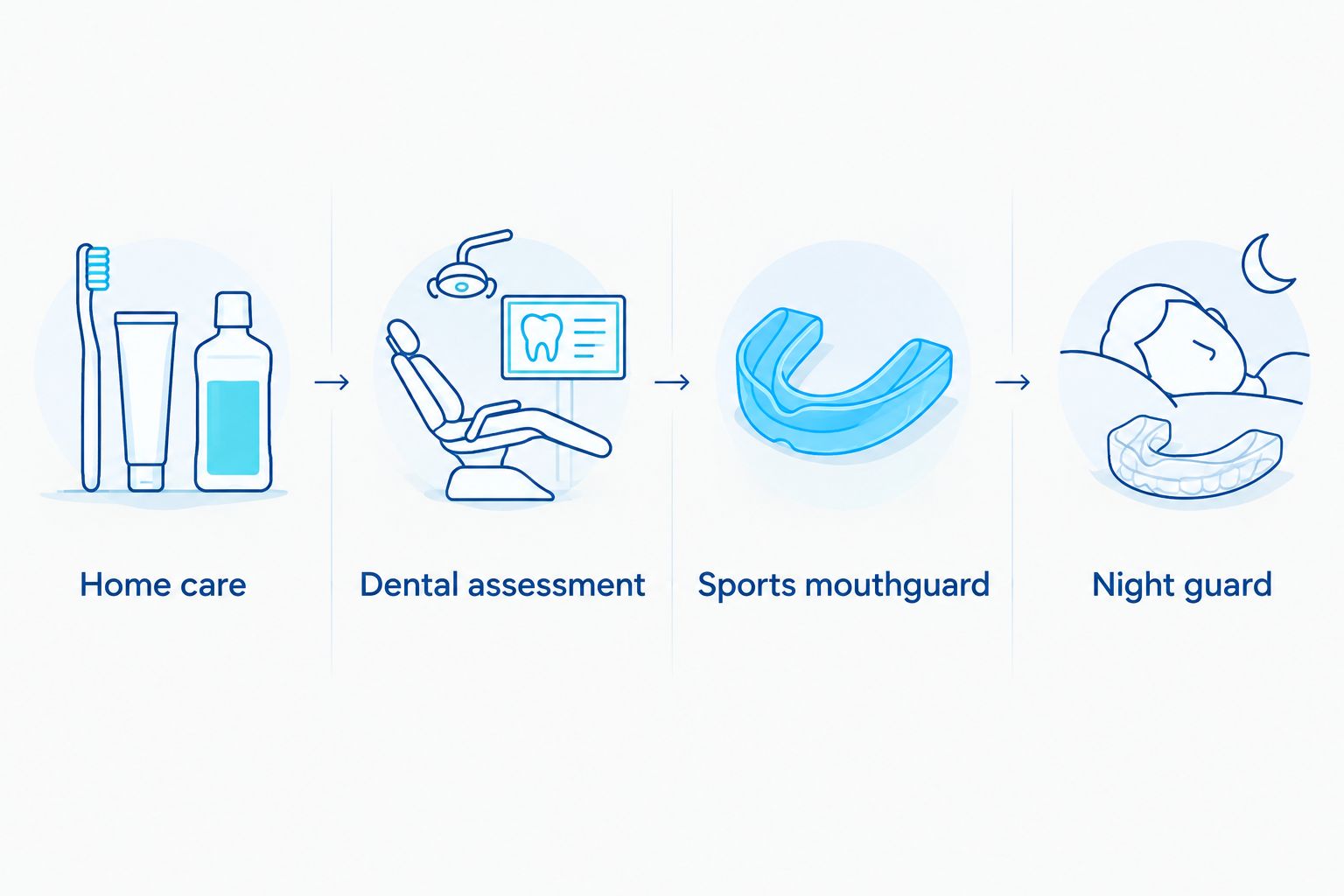
Choose the option that addresses the problem you have. Daily cleaning, clinical assessment, protective appliances, and cosmetic treatment serve different purposes. None replaces all the others.
The comparison below separates prevention, diagnosis, protection, and appearance. Start with symptoms and risk, then discuss whether an additional treatment is necessary.
| Option | Best for | Main advantage | Key limitation |
|---|---|---|---|
| Home care | Maintaining daily plaque control | Fits around coaching and travel | Cannot diagnose a crack, repair a cavity, or remove hardened tartar |
| Dental assessment | Persistent symptoms or an individualized prevention plan | Identifies concerns that self-checks miss | Requires an appointment; treatment needs depend on findings |
| Sports mouthguard | Activities with a risk of mouth impact | Helps protect teeth and surrounding tissues from injury | Does not treat grinding or eliminate injury risk |
| Night guard | Dentist-assessed grinding-related tooth protection | Creates a protective barrier between teeth | Does not cure every source of grinding or jaw pain |
| Cosmetic consultation | Discussing tooth color, shape, or alignment goals | Clarifies suitable approaches and their trade-offs | Does not replace treatment for decay or gum disease |
Dental Arts of Atlantis offers general and cosmetic dentistry, so you can discuss health concerns and appearance goals within the practice’s stated services. Suitability for any specific treatment still requires an examination; a service list is not a diagnosis.
Common mistakes personal trainers make
Treating sugar-free as acid-free
A sugar-free drink can still contain acids. Check both issues instead of using the sugar line as your only dental screen. Reducing unnecessary sipping helps address exposure, but it does not make every drink equivalent to plain water.
Assuming a protein-focused diet protects teeth
Protein intake does not replace fluoride, plaque removal, or an assessment of snack frequency. Consider the whole eating pattern, including sweetened shakes and foods that remain around teeth, without labeling every supplement harmful.
Using workout clenching as a reason to self-prescribe a guard
Jaw soreness does not establish a diagnosis of sleep grinding. An appliance chosen without assessment can fail to address the actual problem. Explain when the pain occurs and let the examination guide the next step.
Whitening before investigating sensitivity
Whitening can cause sensitivity, and existing discomfort deserves investigation first. Do not treat a painful tooth as a cosmetic issue because you want a brighter smile for coaching videos. Healthy function comes before changing shade.
Booking dental work without discussing demonstrations
Returning to a desk task and demonstrating strenuous exercise are different demands. Before a procedure, describe your next scheduled sessions and ask what restrictions apply. Avoid promising clients a full-intensity return before you have those instructions.
FAQ
What’s the best dental care routine for a personal trainer?
Brush with fluoride toothpaste for 2 minutes twice daily, clean between teeth daily, and arrange dental assessments based on your individual needs. Pay particular attention to repeated acidic drinks, persistent dry mouth, and jaw symptoms during your coaching day.
Are sugar-free sports drinks safe for my teeth?
Sugar-free sports drinks are not automatically safe for enamel because they can still contain acids. Avoid unnecessary prolonged sipping, rinse with water afterward, and discuss frequent use if you have sensitivity or enamel wear.
Should I wear a mouthguard while lifting weights?
Lifting weights alone does not establish that you need a mouthguard. Ask a dentist about clenching, tooth wear, or jaw pain; activities with a risk of mouth impact require a separate sports-protection discussion.
Is a sports mouthguard the same as a night guard?
A sports mouthguard and a night guard serve different purposes. Sports mouthguards address impact protection, while night guards provide grinding-related tooth protection after assessment; do not substitute one for the other.
What should I do if my mouth stays dry after a workout?
Persistent dry mouth needs dental or medical assessment rather than hydration advice alone. Bring your medication and supplement list, describe when dryness occurs, and do not stop prescribed treatment without the prescriber’s guidance.
Can I train clients after having dental work?
Your return to coaching depends on the procedure, your symptoms, and the instructions from your treating clinician. Explain whether you will only speak or also demonstrate strenuous exercise, and follow any restrictions on exertion, driving, or supervision.
Does Dental Arts of Atlantis provide care for personal trainers?
Dental Arts of Atlantis provides general, cosmetic, pediatric, and implant dentistry to families in the Palm Beach County area. Personal trainers can discuss their symptoms, exercise habits, and dental goals during an assessment; specific treatment depends on clinical findings.
One last thing
Change what you tell your dentist, not just what you buy. A description such as “this tooth hurts when I bite after afternoon sessions” is more useful than arriving with another whitening product or an appliance you selected yourself.
For your next 2026 visit, bring your drink habits, symptom notes, and upcoming physical commitments. Dental Arts of Atlantis can assess your dental concerns; your notes help connect the examination to what happens outside the office. That gives you a clearer next step than treating every symptom as a normal part of training.
Related guides
- How to stop tooth sensitivity to hot and cold
- How to prevent enamel erosion from acid reflux
- Dental care for shift workers with irregular schedules