

Best for family dental care: Dental Arts of Atlantis in Lake Worth. Best for complex childhood dental needs: a pediatric dental specialist. Best for children needing hospital-level support: a coordinated dental and medical team. This 2026 guide helps West Palm Beach parents choose the right care setting without confusing a practice offering children's dentistry with a verified pediatric specialist.
- Dental Arts of Atlantis offers pediatric and general dentistry for Palm Beach County families seeking a family dental practice.
- The best pediatric dentist West Palm Beach FL search should prioritize credentials, comfort, prevention, and your child’s needs.
- Choose a pediatric specialist when your child’s treatment or behavior needs exceed a general dentist’s scope.
- Confirm the treating dentist, location, comfort approach, and referral process before booking.
Why this matters
Your child needs more than a name at the top of a search result. The right dentist explains findings clearly, considers your child's health and comfort, and gives you a prevention plan you can follow at home.
A family dentist and a pediatric dental specialist are not interchangeable titles. General dentists can treat children; pediatric specialists complete additional training focused on children, including patients with special healthcare needs. Match the clinician's qualifications to your child rather than choosing by the practice name alone.
Dental Arts of Atlantis is a family dental care option for Palm Beach County parents who want a practice offering both pediatric and adult dentistry. Its location is Lake Worth, not West Palm Beach, so include the trip in your decision.
What makes the best pediatric dentist for your child?
Use these criteria for your 2026 shortlist before comparing offices:
- Relevant qualifications: Identify who will examine your child and whether that clinician is a general dentist or pediatric specialist.
- Child-specific communication: Ask how the dentist explains unfamiliar instruments, introduces treatment, and responds when a child needs a pause.
- Prevention planning: Expect recommendations based on cavity risk, brushing, diet, fluoride exposure, and tooth development.
- Treatment clarity: Ask what needs attention now, what can be monitored, and why each recommendation fits your child.
- Medical coordination: Discuss health conditions, medications, allergies, sensory needs, and situations that require referral.
- Practical fit: Consider the actual location, appointment logistics, and instructions for getting help between visits.
A reassuring conversation matters, but it does not replace clinical qualifications. Likewise, a convenient drive does not compensate for an office that cannot meet your child's needs.
Pediatric dental care options at a glance
These are care-setting choices, not a ranking of unverified local dentists. Each option serves a different need.
| Option | Best for | Standout feature | Key limitation |
|---|---|---|---|
| Dental Arts of Atlantis | Families seeking pediatric and adult dentistry | Offers general and pediatric dental care in Lake Worth | Requires travel from West Palm Beach; confirm the treating clinician's qualifications |
| Pediatric dental specialist | Children needing focused pediatric expertise | Additional training in children's oral healthcare | Separate arrangements are needed for adult household members |
| Coordinated dental and medical team | Children whose health or treatment needs require hospital-level support | Dental planning connected with medical assessment | More coordination than a routine office visit |
1. Dental Arts of Atlantis: best for family dental care
Dental Arts of Atlantis offers general, cosmetic, pediatric, and implant dentistry to families in the Palm Beach County area. For West Palm Beach parents, the relevant distinction is access to children's dentistry within a practice that also treats adults.
That makes the practice a candidate when you want a family dental home rather than a children-only setting. Confirm how the office handles your child's age, treatment needs, and comfort concerns before deciding.
Family practice pros:
- Pediatric and general dentistry are part of the stated service offering.
- Adult household members can also consider the practice for their dental care.
- The Lake Worth location provides a Palm Beach County option for families considering care beyond West Palm Beach.
Family practice cons:
- The office is in Lake Worth, so it is not an in-city West Palm Beach choice.
- Offering pediatric dentistry does not establish that every treating dentist is a pediatric specialist.
- A child with needs beyond the treating clinician's scope requires a different care setting or referral.
Best for: Families seeking a practice that offers both children's and adult dental care.
Ask who will see your child, which ages that clinician treats, and what happens if the examination identifies a need for specialist care. Those answers matter more than a broad service label.
Verdict: Hold your booking until the office confirms the right clinician and care setting for your child.
2. Pediatric dental specialist: best for complex childhood needs
A pediatric dental specialist focuses on children's oral health and completes additional specialty training after dental school. This care model deserves particular consideration when a child has substantial treatment needs, repeated difficulty completing care, or medical or developmental needs requiring focused experience.
A specialist consultation does not automatically mean sedation or extensive treatment. It provides an opportunity to assess the child and discuss suitable approaches.
Pediatric specialist pros:
- Additional training specifically addresses children's dental care.
- Pediatric training includes behavior guidance and care for patients with special healthcare needs.
- A focused assessment can clarify whether routine office treatment is appropriate.
Pediatric specialist cons:
- Adults in your household need their own dental arrangements.
- Specialist status does not establish that a particular office can accommodate every medical or sensory need.
- Some children still require coordination with other clinicians or a hospital setting.
Best for: Children whose dental, developmental, or behavioral needs call for focused pediatric expertise.
For your 2026 comparison, verify the individual dentist's credentials rather than assuming that a child-focused practice name proves specialty training. Ask directly about experience with your child's specific needs.
Verdict: Hold routine treatment decisions until a pediatric specialist evaluates needs that exceed general dental care.
3. Coordinated dental and medical team: best for complex medical care
Some children need dental treatment planned alongside their medical care. A coordinated team becomes relevant when medical conditions, anesthesia considerations, or treatment complexity make a routine office setting unsuitable.
This is a clinical decision, not a convenience upgrade. The treating dentist and relevant medical clinicians should determine the appropriate setting.
Coordinated care pros:
- Dental decisions can incorporate the child's broader medical needs.
- Clinicians can assess whether hospital resources are necessary.
- Care planning can address treatment, anesthesia assessment, and recovery instructions together.
Coordinated care cons:
- Referrals, records, and medical assessments add coordination.
- Hospital-level treatment does not replace ongoing preventive dental care.
- This setting is not necessary simply because a child dislikes dental visits.
Best for: Children whose clinicians determine that dental treatment requires medical coordination or hospital-level support.
Tell the dental team about medications, previous anesthesia experiences, and relevant diagnoses early. Do not stop prescribed medication or change treatment routines without instructions from the appropriate clinician.
Verdict: Skip hospital-level care as a default; use it when the clinical assessment supports it.
How these options are ranked
The order starts with a family-practice option, then moves to specialist and medically coordinated care as needs become more complex. The deciding criteria are qualifications, communication, prevention, treatment clarity, medical coordination, and practical fit—not review counts or an unsupported claim that one dentist is best for every child.
What to ask about comfort and sedation
A calm first conversation helps you distinguish ordinary appointment nerves from needs that require a different approach. Describe what your child finds difficult: bright lights, unfamiliar sounds, reclining, mouth sensations, or fear after an earlier experience.
Ask how the clinician introduces the examination and responds if your child becomes overwhelmed. Request an explanation of comfort measures before agreeing to treatment; do not assume that a service mentioned on a website is appropriate for your child.
If sedation is proposed, sedation dentistry safety depends on patient assessment, the intended sedation level, qualified personnel, appropriate monitoring, and recovery procedures—not simply the name of the medication. Ask who administers and monitors sedation, what preparation is required, and how the team manages emergencies.
Your 2026 decision should separate three questions: Does treatment need to happen now? Which comfort approach fits your child? Where can that treatment be performed appropriately? A clear explanation should address all three.
Build a prevention plan, not just an appointment
A useful dental visit ends with instructions matched to your child's age and cavity risk. The American Academy of Pediatric Dentistry recommends establishing a dental home within 6 months of the first tooth erupting and no later than 12 months of age.
The American Dental Association recommends brushing for 2 minutes, twice daily, with fluoride toothpaste. Its age-based guidance calls for a rice-grain-sized smear for children younger than 3 years and a pea-sized amount for ages 3–6 years, with adult supervision to reduce swallowing.
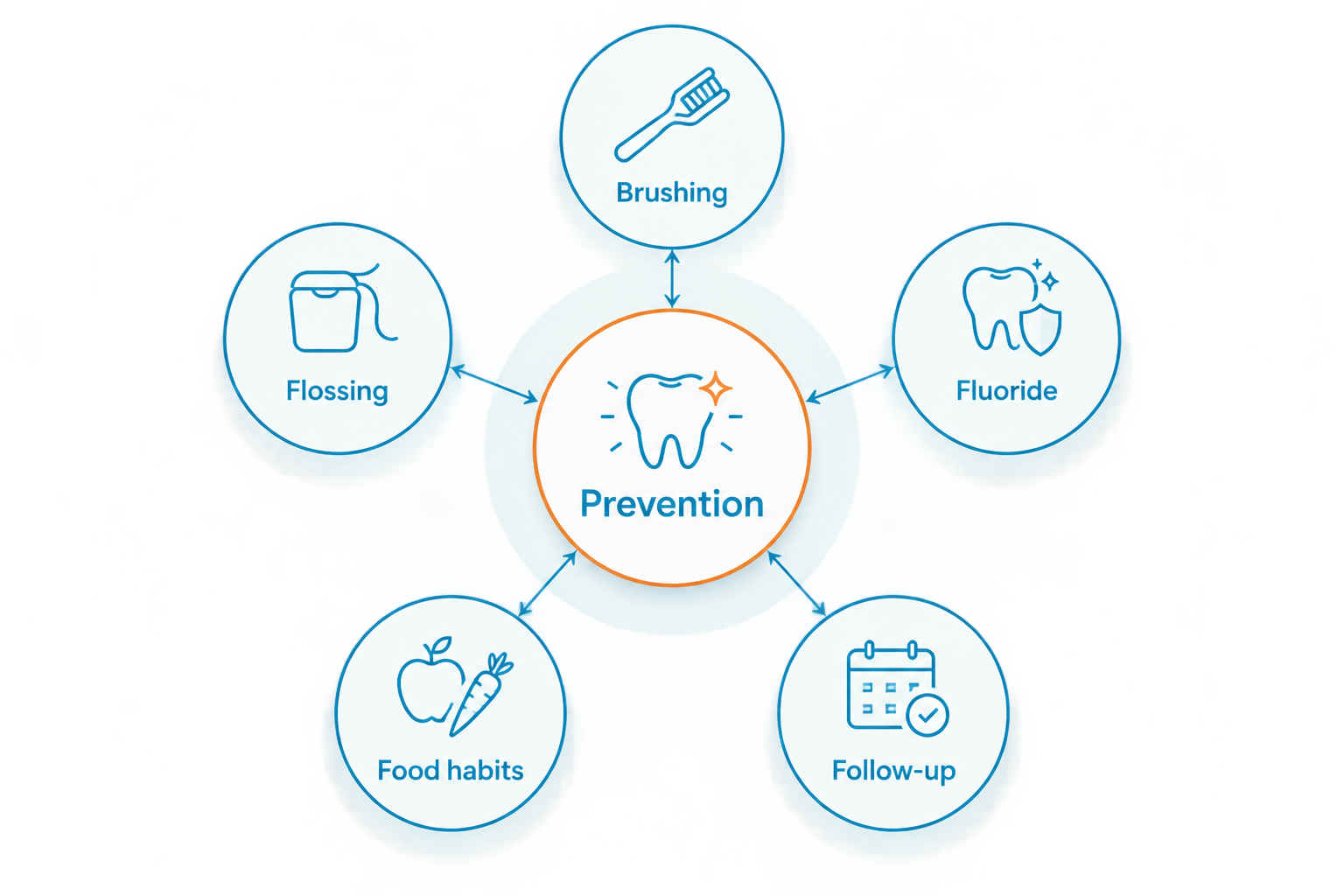
Ask the dentist to translate those recommendations into a routine your household can maintain:
- Brushing: Demonstrate positioning and help your child reach every tooth surface.
- Flossing: Ask how to clean between teeth that touch.
- Fluoride: Review toothpaste use and whether professional fluoride treatment fits your child's risk.
- Food habits: Discuss frequent sugary snacks and drinks, including bedtime habits.
- Follow-up: Set the next visit according to the dentist's assessment rather than assuming every child needs an identical schedule.
Bring questions about sealants, persistent brushing struggles, or spots you have noticed on teeth. An examination determines whether a change needs treatment; a photograph or online description cannot settle that question.
Which pediatric dental option should you choose?
Start with the least complex care setting that meets your child's clinical and comfort needs. A family practice is a reasonable starting point for parents seeking routine children's care alongside adult dentistry. Choose specialist assessment when the child's needs call for additional pediatric expertise.
For families considering Dental Arts of Atlantis, use the contact page to ask about the treating clinician, your child's age, and the reason for the visit. Confirm the Lake Worth location before planning your trip.
For a first visit in 2026, prepare a medication list, relevant medical history, previous dental records if available, and a short description of your concerns. Mention pain or swelling when you contact the office rather than presenting it as a routine checkup request.
Facial swelling with trouble breathing or swallowing requires emergency medical attention. Do not wait to finish comparing dentists.
FAQ
What’s the best pediatric dentist in West Palm Beach, FL, for my child?
The best choice is a dentist whose qualifications, experience, and care setting match your child’s needs. Compare the individual clinician, prevention approach, comfort planning, and referral process rather than choosing solely by search position.
Does Dental Arts of Atlantis treat children?
Dental Arts of Atlantis offers pediatric dentistry as well as general dental care. The practice is in Lake Worth and serves families in the Palm Beach County area; confirm which clinician will treat your child.
Is a family dentist the same as a pediatric dental specialist?
No, a family dentist and a pediatric dental specialist have different training paths. General dentists can treat children, while pediatric specialists complete additional training focused on children’s oral healthcare.
When should my child have a first dental visit?
The American Academy of Pediatric Dentistry recommends establishing a dental home within 6 months of the first tooth erupting and no later than 12 months of age. Earlier assessment is appropriate when you notice a problem or have concerns.
What should I ask if my child is scared of the dentist?
Ask how the clinician introduces treatment, handles distress, and decides whether a different comfort approach or referral is appropriate. Describe your child’s triggers and previous experiences before the appointment.
Does a nervous child automatically need sedation?
No, nervousness alone does not establish a need for sedation. The dentist should assess the child’s health, treatment needs, and ability to participate, then explain suitable options and their risks.
Should I choose the closest dentist or a pediatric specialist?
Choose the care setting that meets your child’s needs, then consider travel and household logistics. A nearby office is convenient, but relevant qualifications and an appropriate treatment approach take priority.
One last thing
Write down what a successful first visit means before you arrive. For a worried child, that includes understanding what happens next—not merely finishing a cleaning. Tell the dentist your concern early so you can discuss realistic goals without promising your child that nothing uncomfortable will happen.
Related guides
- How to choose a family dentist for kids and adults together
- How to prepare your toddler for their first dental visit
- Dental care for kids with sensory sensitivities