

Yes, a dentist can sometimes place a filling without numbing when the decay is shallow and the tooth is comfortable, but this requires an examination first. Deeper decay, existing sensitivity, or anxiety can make local anesthesia the better choice; skipping an injection does not guarantee a painless appointment.
- A filling without numbing is an option for selected shallow cavities, not every small-looking cavity.
- Local anesthesia controls tooth pain; sedation addresses anxiety and does not automatically replace numbing.
- Dental Arts of Atlantis provides general dental care for families in Lake Worth.
- Agree on a stop signal before treatment, and ask for reassessment if you feel sharp pain.
Why this matters
Avoiding a needle and avoiding pain are different goals. A brief injection can prevent discomfort during treatment, while an unnecessary injection adds numbness you would rather avoid. The right decision depends on your tooth, not your ability to tolerate pain.
Before choosing a filling without numbing in 2026, confirm that a filling is actually needed. Some early enamel changes can respond to preventive care, while an established hole generally needs repair. Understanding whether a cavity can be reversed without a filling helps separate those situations.
Can a cavity be filled without numbing?
Sometimes, yes—but cavity depth matters more than how small the opening looks. A dentist considers the examination, symptoms, and dental X-rays when indicated before recommending an approach. A tooth that feels fine at home can still become sensitive during decay removal.
| Approach | Best for | Main advantage | Main limitation |
|---|---|---|---|
| Filling without local anesthesia | Selected shallow repairs in comfortable teeth, after assessment | Avoids the injection and resulting soft-tissue numbness | Tooth sensitivity can interrupt treatment and require a change of plan |
| Filling with local anesthesia | Deeper repairs, sensitive teeth, or patients who prefer preventive pain control | Blocks pain signals in the treated area | Requires an injection and temporary numbness; pressure and vibration can remain noticeable |
Neither approach is a test of courage. You can prefer numbing even when your dentist considers treatment without it reasonable, and you can ask why numbing is recommended before agreeing.
A filling material does not determine whether anesthesia is needed. The work required to remove decay and prepare the tooth matters more than whether the finished repair matches your tooth color.
Why shallow cavities can feel different from deeper cavities
A tooth has 3 main layers: enamel, dentin, and pulp. Enamel covers the crown and contains no nerves; dentin lies beneath it and contains microscopic channels that transmit stimulation toward the pulp. The pulp contains nerves and blood vessels.
That structure explains why a very shallow repair can feel different from work extending farther into dentin. It also explains why a small opening does not reliably tell you how sensitive treatment will be: decay can spread beneath the visible surface.
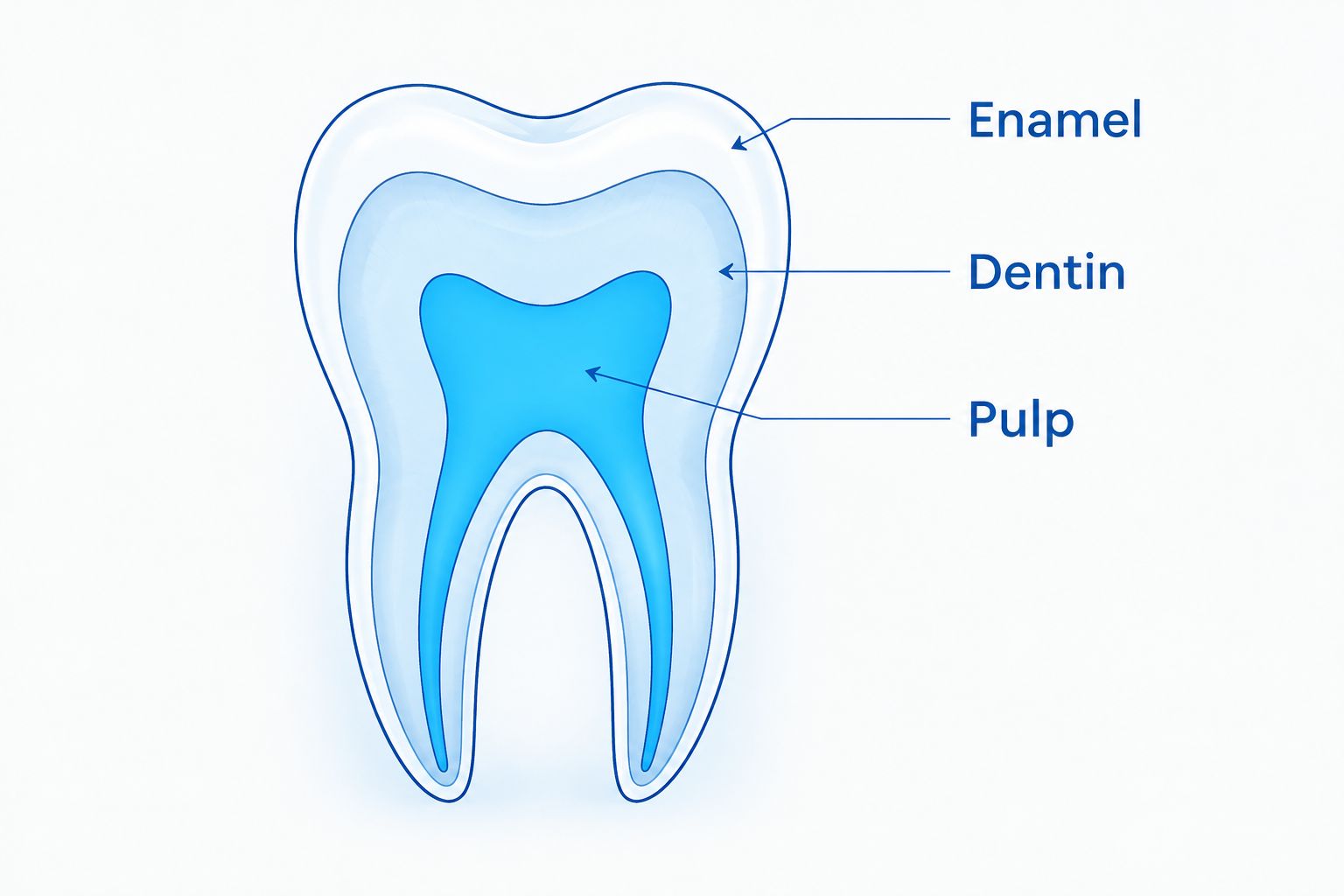
You cannot judge those layers accurately with a mirror or phone photo. For a 2026 dental visit, describe symptoms rather than trying to estimate cavity depth yourself: cold sensitivity, pain when biting, and aching without a trigger all deserve attention.
Why comfort during a filling varies
Your comfort depends on more than cavity size. These factors help your dentist plan pain control:
- Decay depth: Work closer to the pulp is more likely to trigger sensitivity.
- Existing symptoms: Cold sensitivity, lingering discomfort, or spontaneous pain can change the diagnosis and treatment plan.
- Repair location: Exposed root surfaces and work near the gumline can be sensitive even when a repair looks small.
- Previous dental experiences: A difficult appointment can affect how comfortable you feel with starting without anesthesia.
- Your preference: Wanting predictable pain control is a valid reason to discuss numbing before treatment.
No single factor guarantees a pain-free filling. An X-ray helps assess decay, but it does not measure your personal pain response or replace a conversation about comfort.
How to discuss a filling without numbing before treatment
You do not need to arrive with the decision already made. Use the examination to decide whether avoiding an injection fits the actual repair.
Explain what you want to avoid
Tell your dentist whether your concern is the needle, the numb feeling afterward, a previous reaction, or losing control during treatment. Those concerns need different responses. Simply saying that you dislike numbing can leave the most important part unexplained.
If you previously felt faint, had a racing heartbeat, or developed a rash, describe exactly what happened. Those experiences are not interchangeable, and your dentist needs that history before choosing an anesthetic.
Ask about the tooth, not just the injection
Ask 2 questions before deciding: How deep does the decay appear, and what would make you stop and recommend numbing? This keeps the discussion focused on the repair and its limits.
Also ask whether the tooth shows signs that a routine filling might not address the problem. Persistent aching or lingering temperature pain needs assessment rather than an assumption that a smaller injection—or no injection—will solve it.
Agree on a way to pause
Choose 1 stop signal, such as raising your hand, before instruments enter your mouth. Confirm that the dentist will pause when it is safe to do so, then explain which sensations you should report.
Pressure, vibration, and water spray are different from sharp pain. You should not have to decide silently whether discomfort is severe enough to deserve attention.
Keep permission to change the plan
Starting without anesthesia is not a commitment to finish without it. If sensitivity develops, the dentist can stop, reassess, and discuss local anesthesia before continuing.
Do not push through sharp pain to prove that you can finish without an injection. A change of plan is a comfort decision, not a failed appointment.
What if fear of needles is the main problem?
Ask about the injection process rather than assuming that avoiding anesthesia is your only option. A dentist can explain topical numbing gel, injection technique, breaks, and other comfort measures appropriate to your medical history. Topical gel numbs surface tissue; it does not provide the same tooth anesthesia as an injection.
Local anesthesia and sedation have different jobs. Local anesthesia blocks pain in a specific area, while sedation helps manage anxiety or awareness; sedation does not automatically eliminate the need for local anesthesia.
For your 2026 appointment, name the specific trigger: seeing a needle, feeling trapped, hearing the handpiece, or remembering a painful visit. A plan addressing that trigger is more useful than a general instruction to relax.
Avoid taking someone else's calming medication or combining sedatives with alcohol before dental treatment. Tell the dental team about prescribed medicines and follow the instructions given for your particular appointment.
Can children have fillings without numbing?
Some children can receive selected shallow repairs without local anesthesia, but age alone does not establish suitability. The dentist must consider the tooth, symptoms, procedure, and the child's ability to stay comfortable and communicate.
Baby teeth still have nerves. Do not assume that a filling in a tooth that will eventually fall out cannot hurt or does not need pain control.
For parents, the most helpful preparation is neutral language: explain that the dentist will clean and repair the tooth, and that the child can signal for a pause. Avoid promising that nothing will hurt or suggesting that accepting numbing means being less brave.
A calm visit matters beyond the immediate filling. If a child becomes distressed, reassessing the approach is more appropriate than treating completion without anesthesia as the goal.
Does repairing a chipped tooth require numbing?
A chip repair and a cavity filling can use similar tooth-colored materials, but they do not necessarily involve the same preparation. A small enamel chip might need little reshaping, while a decayed tooth requires assessment and removal of affected tissue before restoration.
The distinction matters when comparing fillings for chipped teeth with fillings for decay: using a similar material does not mean the procedures have the same sensitivity or anesthesia needs. Exposed dentin, a deeper fracture, or injured pulp changes the treatment discussion.
Tell your dentist if the chip followed a fall or impact, even if it looks minor. Trauma can affect structures that are not visible in a mirror, and repairing the edge does not replace checking the health of the tooth.
What should you expect after a filling without numbing?
Without local anesthesia, you avoid numbness caused by that medication. You can still have tooth sensitivity or gum tenderness after the repair, so skipping the injection does not guarantee a symptom-free recovery.
Follow your dentist's instructions about eating and caring for the restored tooth. If local anesthesia was used after all, avoid chewing while your mouth remains numb so you do not accidentally bite your cheek, lip, or tongue.
Contact the dentist if your bite feels uneven, discomfort worsens, or temperature pain lingers. Pain when biting sometimes needs a bite adjustment, but it also needs assessment rather than a home diagnosis.
Facial swelling, fever with dental pain, or increasing difficulty opening your mouth requires prompt attention. Difficulty breathing or swallowing is an emergency; seek emergency medical care.
Can you request numbing even for a small cavity?
Yes, you can request local anesthesia for a small cavity. Explain that you prefer pain control before treatment begins; your dentist can review the benefits, medical considerations, and suitable approach with you.
Can the dentist add numbing after starting?
Yes, a dentist can stop and reassess anesthesia after treatment begins. Agree on the pause signal first, because communicating through discomfort is harder once instruments are in your mouth.
Does a painless cavity mean a painless filling?
No, a cavity that causes no symptoms can still be sensitive during treatment. The absence of pain does not establish that decay is shallow or that local anesthesia is unnecessary.
Planning a comfortable visit in Lake Worth
Dental Arts of Atlantis is best suited to families seeking general dental care in Lake Worth. The practice also offers pediatric care, making this conversation relevant whether you are arranging your own evaluation or your child's.
When you contact Dental Arts of Atlantis, explain that you want to discuss whether numbing is necessary before a filling. Include previous anesthesia concerns and current symptoms so the clinical discussion starts with the right information.
Dental Arts of Atlantis offers a local setting for that assessment, but no practice can determine whether a specific cavity is suitable for treatment without numbing from a keyword search alone. Choose an examination and an agreed comfort plan—not a promise of needle-free treatment.
FAQ
Will a filling without numbing hurt?
A filling without numbing can hurt, especially when preparation reaches sensitive dentin. Selected shallow repairs are sometimes comfortable without anesthesia, but your dentist cannot guarantee that from appearance alone.
Is numbing always necessary for a cavity filling?
Numbing is not always necessary for a selected shallow cavity filling. Decay depth, symptoms, the planned procedure, and your preferences determine whether avoiding local anesthesia is reasonable.
Can numbing gel replace the injection for a filling?
Numbing gel generally does not replace an injection for tooth anesthesia. It acts on surface tissues and is often used to reduce discomfort where an injection will be given.
Does laughing gas mean I won’t need a numbing shot?
Laughing gas does not automatically remove the need for a numbing injection. It helps with anxiety, while local anesthesia provides targeted pain control for the tooth being treated.
Can I change my mind after a filling starts?
Yes, you can ask the dentist to pause and reconsider pain control after a filling starts. Agree on a hand signal before treatment and report sharp pain rather than trying to tolerate it.
Can my child get a cavity filled without a shot?
Some children can have selected shallow cavities filled without a shot, following a dental assessment. Baby teeth have nerves, so the child’s comfort and the repair’s depth matter more than the wish to avoid a needle.
What if I think I’m allergic to dental numbing medicine?
Tell your dentist about the suspected reaction before treatment rather than assuming you must avoid all local anesthesia. Describe the symptoms, medication if known, and any care you received so the dentist can assess the next step.
One last thing
The strongest plan for a filling without numbing in 2026 includes permission to use numbing if needed. That flexibility protects the real goal: repairing the tooth while keeping you comfortable and involved in the decision.
Related guides
- How to stop tooth sensitivity to hot and cold
- How to manage dental anxiety before a procedure
- How to prepare for your first visit as a new patient