
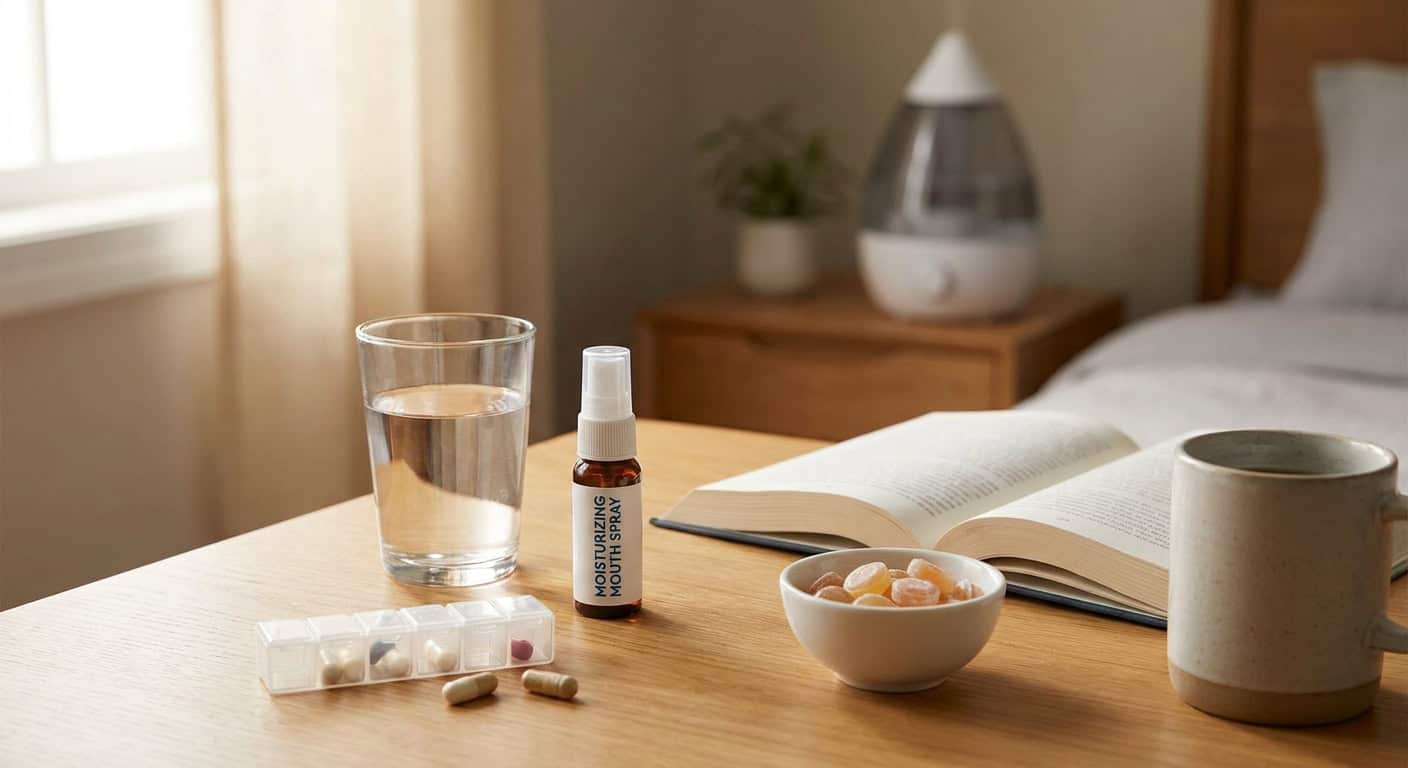
Dry mouth from medication treatment affects millions of people taking blood pressure drugs, antihistamines, antidepressants, and pain medications, and it does more than make your mouth feel cottony — it raises your risk for cavities, gum disease, and bad breath. This guide walks through the exact steps to manage it starting today, in 2026.
- Dry mouth from medication treatment is manageable with hydration, saliva substitutes, and alcohol-free oral care — start today.
- Sipping water every 15-20 minutes beats chugging a glass hourly for keeping saliva flow steady.
- Xylitol gum and OTC saliva substitutes are Buy-recommended; alcohol-based mouthwash is a Skip.
- Untreated dry mouth from medication raises cavity and gum disease risk within months, not years.
- A fluoride treatment and a conversation with your prescribing doctor are the two moves that matter most in 2026.
Why this matters
Saliva does more work than most people realize. It washes away food particles, neutralizes the acid that bacteria produce, and delivers minerals that re-harden enamel after every meal. When medication cuts saliva production, that protective cycle stalls out.
More than 400 prescription and over-the-counter drugs are known to cause dry mouth as a side effect, including common blood pressure medications, antihistamines, antidepressants, diuretics, and opioid pain relievers. If you started a new prescription in 2026 and noticed your mouth feels dry within days, the timing isn't a coincidence.
Left unmanaged, chronic dry mouth from medication treatment leads to a faster buildup of plaque, more frequent chronic bad breath, and a higher rate of cavities forming along the gumline. The fix isn't complicated, but it does require consistency.
What you'll need
- A refillable water bottle you'll actually carry around
- Sugar-free gum or lozenges containing xylitol
- An alcohol-free mouthwash and toothpaste
- An over-the-counter saliva substitute spray or gel
- A humidifier for your bedroom
- A list of your current medications to review with your doctor and dentist
- A scheduled dental visit within the next 60-90 days
The steps
1. Identify the medication culprit
Pull up the full list of what you're taking and check the side-effect panel on each one — dry mouth is listed far more often than most patients expect. Antihistamines, decongestants, antidepressants, and blood pressure medications top the list. Knowing which drug is responsible matters because it tells your doctor whether a dosage adjustment or a timing change (taking a diuretic in the morning instead of at night, for example) is worth trying. Skipping this step means you're guessing at fixes instead of targeting the actual cause.
Common mistake: stopping a medication on your own because of dry mouth. Never do this — talk to the prescribing doctor first.
2. Sip water on a schedule, not just when thirsty
Dry mouth dulls the thirst signal, so waiting until you feel parched means you're already behind. Set a reminder to sip water every 15-20 minutes during waking hours instead of drinking one large glass every few hours. Small, frequent sips keep the mouth's surfaces moist without overwhelming your bladder or diluting stomach acid at mealtimes. Expect noticeably less stickiness in your mouth within the first week.
3. Switch every alcohol-based product out
Alcohol-based mouthwash and toothpaste dry out oral tissue further, which is the opposite of what you need. Replace them with alcohol-free formulas designed for dry mouth — most drugstores stock a dedicated section. Brush twice daily for two full minutes with a fluoride toothpaste and rinse with an alcohol-free product at night. This single swap often reduces the burning sensation some patients describe within days.
Common mistake: using mouthwash marketed for "fresh breath" without checking the label — many still contain alcohol at 20% or higher.
4. Add saliva substitutes and stimulants
Over-the-counter saliva substitute sprays and gels coat the mouth and provide temporary relief, especially before meals or sleep. Xylitol-sweetened gum or lozenges go a step further by physically stimulating whatever natural saliva flow remains, and xylitol also interferes with the bacteria that cause cavities. Chew or use a lozenge after meals and before bed for the best results. This step matters most for anyone dealing with dry mouth from medication treatment around the clock rather than only at night.
5. Run a humidifier while you sleep
Mouth breathing during sleep compounds medication-related dryness, and a bedroom humidifier adds moisture back into the air you're breathing all night. Set it to 40-50% humidity and clean the tank weekly to prevent mold growth. Patients who add this step often report their morning "cotton mouth" cuts by half within two weeks. If snoring or open-mouth breathing is a bigger factor than medication, it's worth reviewing whether your snoring points to sleep apnea rather than treating dryness alone.
6. Get a professional fluoride treatment
Reduced saliva means less natural remineralization, so a professional fluoride application gives enamel a concentrated boost that toothpaste alone can't match. This takes minutes in the dental chair and provides protection that lasts weeks longer than an over-the-counter rinse. Anyone managing dry mouth from medication treatment for more than a few months should have this done at least twice a year instead of the standard once.
7. Watch for early gum changes
Dry tissue is more vulnerable to inflammation, so gums that look slightly redder or bleed with brushing need attention fast, not a wait-and-see approach. Check for puffiness along the gumline weekly and flag anything unusual at your next cleaning. Catching early signs of gum disease at home before it progresses saves you from deeper treatment later.
8. Loop in your prescribing doctor
Some medications allow for dosage timing changes or an alternate drug in the same class with a lower dry mouth rate. Bring your symptom timeline to your next appointment and ask directly whether an adjustment is possible. This step is the one most patients skip, and it's often the one with the biggest payoff — especially for long-term medications you'll be on well past 2026.
Get dry mouth checked at your next visit
A dental exam catches the cavity and gum risks medication-related dry mouth causes early.
Troubleshooting
- Water isn't helping anymore. Plain water rinses without coating the mouth — switch to a saliva substitute gel before bed and reserve water for daytime sipping.
- Bad breath keeps coming back. Reduced saliva lets odor-causing bacteria build up faster than normal brushing removes them; add a tongue scraper to your morning routine.
- Canker sores keep showing up. Dry, irritated tissue is more prone to sores — switch to a soft-bristle brush and skip any product with sodium lauryl sulfate.
- Nighttime dryness is worse than daytime. Saliva production naturally drops during sleep, so pair the humidifier with a saliva substitute applied right before bed.
- Hot and cold foods suddenly hurt. Reduced saliva exposes enamel to more sensitivity; if this persists past two weeks, look into options for tooth sensitivity to hot and cold rather than living with it.
- You're a senior managing five or more medications. Combined side effects add up fast, and dryness often gets misread as a normal part of aging when it's actually treatable, which matters even more for seniors managing multiple missing teeth since dry tissue heals slower around existing dental work.
Tools and resources
- Alcohol-free mouthwash and toothpaste labeled for dry mouth
- Xylitol gum or lozenges
- OTC saliva substitute spray or gel
- Bedroom humidifier
- Soft-bristle toothbrush and tongue scraper
- A dental visit scheduled at least twice in 2026 if dryness is ongoing
What to do next
Once the daily habits are in place, the next move is professional monitoring — dry mouth that isn't caught early tends to show up as cavities at the gumline first. Book a cleaning where the team can check for early decay and apply fluoride directly, especially if you've been on the same medication for more than six months.
FAQ
What is the best treatment for dry mouth from medication?
The most effective approach combines frequent water sipping, alcohol-free oral care products, and an over-the-counter saliva substitute used before meals and bedtime. For dry mouth from medication treatment that persists past a few weeks, a fluoride treatment and a conversation with your prescribing doctor add another layer of protection.
Can dry mouth from medication cause cavities?
Yes, reduced saliva removes less bacteria and acid from the mouth, which speeds up cavity formation, especially along the gumline. Patients on long-term medications that cause dry mouth should get fluoride treatments and cleanings twice a year instead of once.
Is alcohol-based mouthwash bad for dry mouth?
Yes, alcohol-based mouthwash dries oral tissue further and can worsen the burning sensation some people feel with medication-related dry mouth. Switch to an alcohol-free formula made for dry mouth relief.
How much water should I drink for dry mouth from medication?
Sip water every 15-20 minutes throughout the day rather than drinking large amounts a few times a day. Frequent small sips keep the mouth’s tissue moist more consistently than infrequent large glasses.
Does xylitol gum actually help with dry mouth?
Yes, xylitol gum stimulates remaining saliva flow and interferes with the bacteria that cause cavities at the same time. Chewing it after meals and before bed gives the best results for dry mouth from medication treatment.
Should I stop my medication if it causes dry mouth?
No, never stop a prescribed medication without talking to the prescribing doctor first. Many dry mouth side effects can be managed with a dosage timing change or an alternate drug in the same class.
Is dry mouth from medication worse for seniors?
Yes, seniors often take multiple medications at once, which compounds dry mouth side effects and slows healing around existing dental work. This combination raises the risk of cavities and gum disease faster than a single medication alone.
How often should I see a dentist if I have chronic dry mouth?
Twice a year at minimum, with fluoride treatment at each visit if dry mouth from medication treatment is ongoing. More frequent visits catch cavity risk before it turns into a bigger repair.
One last thing
Most patients treat dry mouth from medication as a comfort problem and forget it's a cavity-risk problem — the two show up on completely different timelines. Comfort improves within a week or two of adding water sipping and saliva substitutes; the cavity risk from months of reduced saliva doesn't show up until a checkup catches it, which is exactly why the fluoride treatment step in this guide isn't optional if the dryness has lasted past 2026's first quarter.
Related guides