
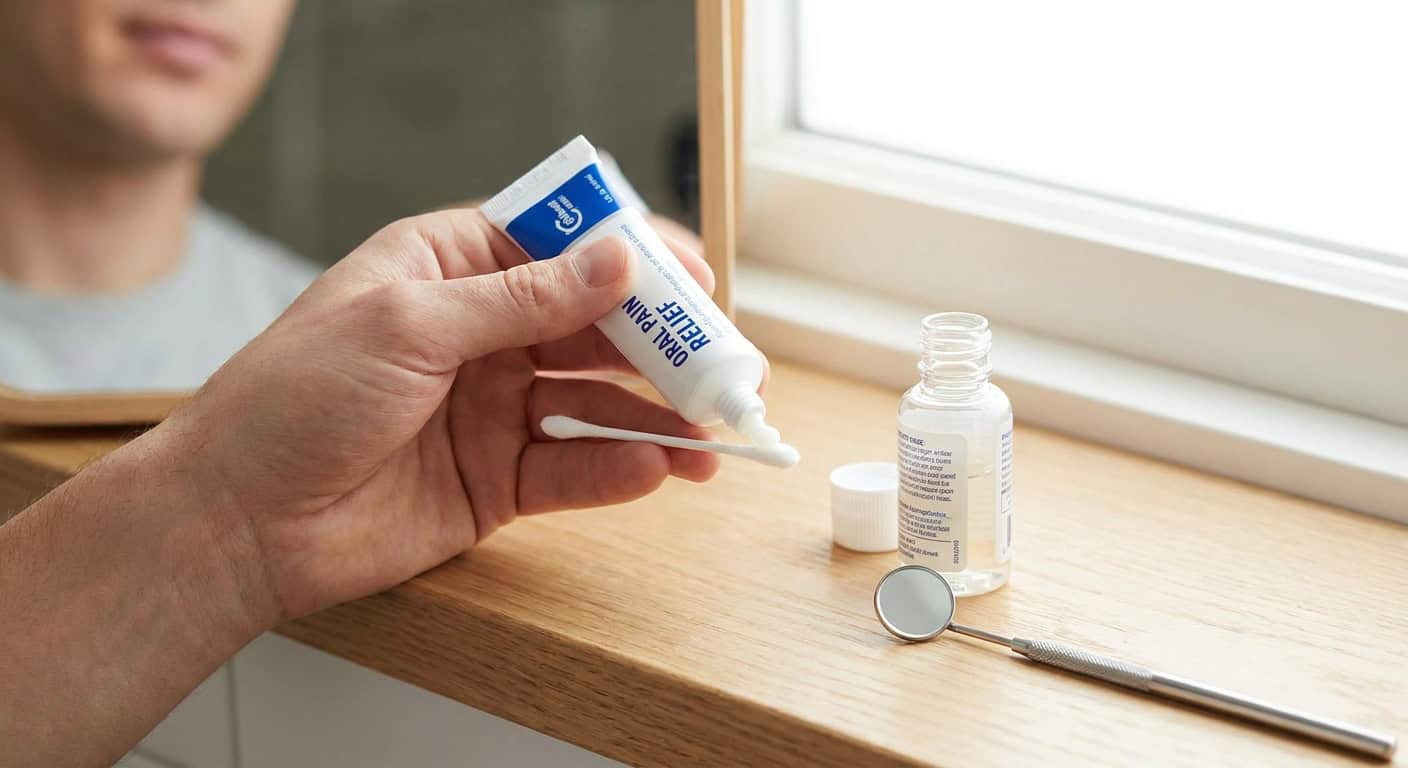
A canker sore that's still there after two weeks isn't being stubborn on its own — something is stopping it from closing, and that something usually isn't inside your mouth. This guide covers what actually speeds healing, which home remedies waste your time, and the point at which a canker sore that won't heal needs a dentist's eyes on it instead of another swipe of Orajel.
- A canker sore that won’t heal past 10-14 days needs a dentist exam, not another home remedy.
- Chlorhexidine rinse at 0.12% and B12 supplementation at 1,000 mcg cut healing time for recurrent sores.
- Sores over 1 cm wide or sitting near a cracked tooth can signal infection, not a simple aphthous ulcer.
- Sores lasting 3+ weeks get checked for something other than a canker sore — that’s not optional.
Why this matters
A normal canker sore runs its course in 7 to 10 days without any treatment at all. When one drags past two weeks, keeps coming back in the same spot, or grows past the size of a pencil eraser (roughly 1 cm), the odds it's a plain aphthous ulcer drop fast.
Sores that overstay their welcome are frequently tied to something mechanical — a cracked filling rubbing the tissue, a wisdom tooth pressing against the cheek, or early gum irritation that looks like a sore but isn't healing like one. If you're also dealing with a sharp edge on a tooth or unexplained pain, run through this dental emergency checklist before you assume it's just a canker sore.
Dental Arts of Atlantis sees this pattern often in Palm Beach County patients: two weeks of home remedies, no change, then an exam that finds the actual cause in under ten minutes.
What you'll need
- Saltwater rinse: 1/2 teaspoon salt dissolved in 8 oz warm water
- Over-the-counter numbing gel (benzocaine-based, like Orajel)
- 0.12% chlorhexidine gluconate mouth rinse (ask a pharmacist — it's often behind the counter)
- 3% hydrogen peroxide, diluted 1:1 with water, for a short-contact rinse
- A soft-bristle toothbrush to avoid re-irritating the area
- Vitamin B12 (1,000 mcg) if sores recur monthly — talk to your dentist first
- A phone camera to photograph the sore daily and track size
The steps
1. Rinse with warm salt water three times a day
Salt water pulls fluid out of inflamed tissue and reduces the bacterial load sitting on an open sore. Mix 1/2 teaspoon of salt into 8 oz of warm water and swish for 30 seconds, then spit — don't swallow. Do this after meals and before bed for the first 5 days. Skip it if the sore is already raw and bleeding, since salt on broken skin stings more than it helps. Expect visible size reduction by day 4 or 5 if it's a standard canker sore.
2. Apply a 0.12% chlorhexidine rinse once the salt water plateaus
Chlorhexidine is an antiseptic that reduces the bacteria colonizing the ulcer bed, which matters most for sores that have stalled rather than sores that are brand new. Swish 15 mL for 30 seconds, twice daily, and don't eat or drink for 30 minutes afterward. It can temporarily stain teeth with prolonged use, so it's a short-term tool, not a daily habit. The common mistake here is starting chlorhexidine on day one instead of after salt water has had its shot — it's more useful once a sore is already resisting basic care.
3. Numb it before meals with a topical anesthetic
A benzocaine gel like Orajel doesn't heal the sore, but it lets you actually eat without wincing, which matters for nutrition during a two-week stretch. Apply a pea-sized amount directly to the sore 10 minutes before eating. Don't use it more than four times a day — over-application of benzocaine has been linked to a rare condition called methemoglobinemia in children under two, so keep it away from toddlers entirely. Expect pain relief within 60 seconds that lasts 30-60 minutes.
4. Add vitamin B12 if this is a repeat offender
Recurrent canker sores — three or more per year in the same general area — are linked in several studies to low B12, folate, or iron levels. A daily 1,000 mcg B12 supplement for 8-12 weeks has shown measurable reduction in recurrence frequency for people with a documented deficiency. This step only helps if deficiency is actually the driver, so it's worth a blood test rather than guessing. The mistake most people make is taking B12 for two weeks, seeing no change, and quitting — give it the full 8 weeks before judging it.
5. Stop anything that's mechanically rubbing the spot
A sharp cusp, a cracked filling edge, or a loose wire on braces can keep re-injuring the same tissue, which is the single most common reason a canker sore won't heal on schedule. Run your tongue slowly around the area — if you feel a rough edge, that's likely your answer, not a stubborn ulcer. If the irritation lines up with a tooth that's been sensitive to hot or cold, it's worth checking whether you need a root canal rather than treating a sore that's really a symptom. Smoothing the edge or adjusting the appliance often resolves the sore within 3-4 days once the irritation source is removed.
6. Photograph it every day and track the size
A sore that's shrinking, even slowly, is behaving normally. One that's the same size or growing after 10 days of consistent care is not. Take one photo daily in the same lighting next to a ruler or coin for scale. The common mistake is relying on memory instead of a visual record — memory is unreliable for gradual change over two weeks.
7. Book an exam at day 14 if it hasn't closed
By two weeks, a normal aphthous ulcer has either healed or is clearly closing. If it's still open, still painful, or has grown, that's the point to stop self-treating. Verdict: home care for days 1-10, professional exam by day 14 if there's no real progress.
Troubleshooting
The sore is bigger than a pencil eraser (over 1 cm). Large canker sores, sometimes called major aphthous ulcers, can take 4-6 weeks to heal on their own and often leave scarring. These typically need a prescription steroid gel rather than OTC products — don't wait the full 6 weeks to ask about it.
It's white in the center with a red, angry border that's spreading. This can be a sign of secondary bacterial infection on top of the original ulcer. A short course of chlorhexidine rinse (step 2) combined with a dentist visit within a few days is the right move, not a longer wait-and-see.
You've had three or more sores in the same spot this year. Recurring ulcers in one location point to a local cause — a rough filling, a cracked tooth, or ill-fitting dental work — rather than a random immune response. If you're also noticing puffy or bleeding gums nearby, check for early signs of gum disease, since inflamed gum tissue heals slower and can be mistaken for a stubborn canker sore.
It hurts more at night or wakes you up. Increasing pain instead of decreasing pain after day 5 is not typical canker sore behavior and suggests either infection or nerve involvement from a nearby tooth. Don't push through it with more numbing gel — that's masking a symptom that's trying to tell you something.
It's been more than 3 weeks. At this point it's no longer reasonable to call it a slow-healing canker sore. A dentist needs to rule out other causes, including biopsy for anything that doesn't fit the standard pattern.
Sore still there after 10 days?
Get it examined before it turns into something bigger.
Tools and resources
- Salt, warm water, and a timer for consistent rinsing
- 0.12% chlorhexidine gluconate rinse (pharmacy, sometimes requires asking the pharmacist directly)
- Benzocaine gel for pain management around meals
- A daily photo log to track size objectively
- If anxiety about a dental visit is part of why you've been delaying an exam, managing dental anxiety before the appointment makes the actual visit shorter and easier
What to do next
If the sore is gone by day 10-14 with home care, you're done — no follow-up needed unless it comes back in the same spot repeatedly. If it's still there, the next step isn't a stronger home remedy, it's an exam that rules out the handful of things a canker sore commonly gets confused with in 2026: a cracked tooth, early gum disease, or an ulcer that needs a biopsy rather than another rinse.
FAQ
How long is too long for a canker sore to not heal?
A canker sore that’s still open or painful after 14 days has gone past the typical healing window and needs a dentist to look at it. Most sores close in 7-10 days without any treatment at all, so day 14 is a reasonable line for concern.
What does it mean if a canker sore keeps coming back in the same spot?
Recurring sores in one exact location usually point to a mechanical cause like a sharp tooth edge, a cracked filling, or ill-fitting dental work rather than a random immune response. Fixing the physical irritant is what stops the pattern, not more topical treatment.
Is a canker sore that won’t heal a sign of something serious?
Most of the time it’s a slow-healing ulcer tied to a nutritional deficiency or ongoing irritation, not something serious. But a sore lasting 3+ weeks, growing, or bleeding needs a dentist exam to rule out infection or a biopsy-worthy lesion.
Does chlorhexidine rinse actually help canker sores?
Yes — 0.12% chlorhexidine reduces bacterial load on the ulcer bed and is most useful once a sore has stalled past the first week. It’s not meant as a first-day treatment; start with salt water and move to chlorhexidine if healing stalls.
Can a vitamin deficiency cause canker sores that won’t heal?
Low B12, folate, or iron levels are linked to recurrent and slow-healing canker sores in multiple studies. A 1,000 mcg daily B12 supplement over 8-12 weeks reduces recurrence for people who are actually deficient — a blood test confirms whether that’s the cause.
What’s the difference between a canker sore and a cold sore that won’t heal?
Canker sores form inside the mouth on soft tissue and aren’t contagious; cold sores form on or around the lips, are caused by a herpes virus, and are contagious. If the sore is outside the lip line or comes with tingling before it appears, it’s more likely a cold sore.
When should I see a dentist for a canker sore?
See a dentist if the sore lasts past 14 days, grows larger than 1 cm, comes back repeatedly in the same spot, or sits near a tooth that’s sensitive to hot or cold. Any of those signs mean it’s worth ruling out a cause beyond a standard canker sore.
Can a cracked tooth cause a canker-sore-like ulcer that won’t go away?
Yes — a sharp edge on a cracked tooth or filling can continuously re-injure the same spot on your cheek or tongue, which looks and feels like a stubborn canker sore but won’t heal until the tooth is fixed. Smoothing or repairing the tooth typically resolves the ulcer within days.
One last thing
Most people treat every mouth sore the same way regardless of how long it's been there, which is exactly backward — the treatment that works on day 2 (salt water, patience) is often the wrong move by day 12, when the real question isn't how to soothe it but why it hasn't closed yet. If you're on day 14 and still reaching for Orajel, that's the signal to stop treating and start diagnosing.
Related guides
- How to manage dental anxiety before a procedure
- Family dentistry for busy Palm Beach County households