
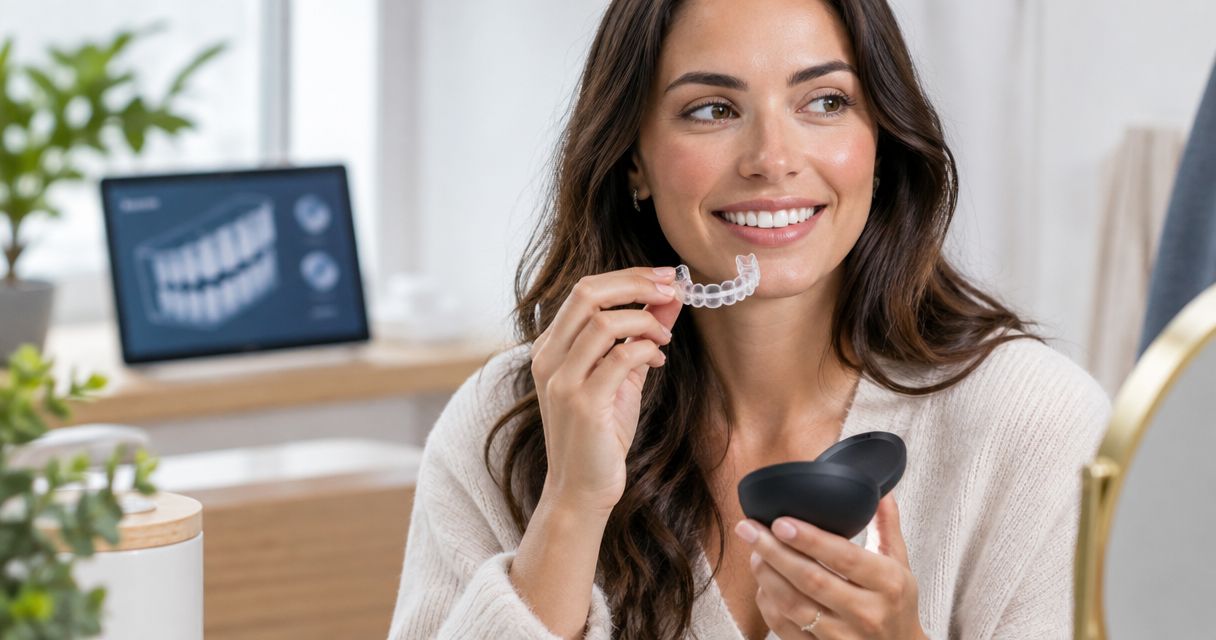
Invisalign is worth it in 2026 if your teeth and bite are suitable for clear aligners and you can follow the daily wear schedule. It is less suitable if you regularly leave trays out or need tooth movements better handled with another approach. The commitment also includes cleaning, follow-up visits, and retainers after treatment—not just wearing clear trays until your smile looks straight.
- Is Invisalign worth it? Yes, for suitable patients who can consistently wear clear aligners and maintain their teeth.
- Invisalign offers removable trays; braces avoid the daily responsibility of putting aligners back in.
- Dental Arts of Atlantis offers Invisalign alongside general and cosmetic dental care for Lake Worth families.
- Choose treatment by bite needs, daily habits, and the retainer plan—not appearance alone.
Is Invisalign worth it in 2026?
Invisalign is worth considering when its removable design fits your routine and the proposed treatment addresses your actual dental needs. Being less noticeable is a benefit, but it is not enough to make aligners the right choice. Your dentist must assess your tooth positions, bite, gum health, and ability to follow instructions.
Dental Arts of Atlantis is an Invisalign option for Lake Worth families seeking general and cosmetic dental care in one practice. That combination is relevant when you need to discuss straightening alongside existing dental concerns. It does not replace an individual assessment of whether aligners suit your case.
| Option | Best for | Main advantage | Main limitation |
|---|---|---|---|
| Invisalign | Suitable patients who want removable, less noticeable orthodontic treatment | You remove trays for meals and tooth cleaning | Results depend on consistent wear; attachments and other aids can still be visible |
| Fixed braces | Patients whose treatment needs or habits favor fixed appliances | Brackets stay attached, so you cannot forget to put them back in | Cleaning around brackets requires care, and eating restrictions apply |
Neither option wins for everyone. Choose the appliance that can deliver the planned tooth movements and that you can realistically manage. An attractive treatment preview is not a guarantee of the final result.
Why this matters
Straightening treatment affects more than photographs. It changes tooth positions and how teeth meet, so the decision should account for function as well as appearance. A small-looking front-tooth concern can still require attention to the rest of your bite.
For a 2026 treatment decision, separate what you want from what treatment can reasonably accomplish. Less crowding, smaller gaps, and a more even smile are useful goals to discuss. Ask your dentist to explain which goals are achievable with aligners and which require a different approach.
You do not need to decide from marketing images. Understanding how Invisalign works for adults gives you a starting point for a conversation about your own teeth, rather than somebody else's result.
Invisalign for adults: best for a manageable daily routine
Invisalign suits adults who want removable orthodontic treatment and can keep wearing trays throughout the day. Invisalign's patient guidance recommends wearing aligners for 20–22 hours per day. Your treating clinician gives the instructions for your specific plan.
That schedule leaves limited time for meals, drinks other than water, and cleaning. Frequent snacking or slowly sipping coffee can make adherence harder. The issue is not whether you are busy; it is whether you can consistently return the trays to your mouth.
Removability has a clear advantage: you can brush and clean between teeth without brackets in the way. The trade-off is responsibility. An aligner sitting in its case is not applying the planned force to your teeth.
Before starting in 2026, think through an ordinary workday rather than an ideal one. Include your commute, lunch, meetings, exercise, and evening routine. If those activities repeatedly interrupt wear, discuss fixed braces or ways to make the aligner routine practical.
Invisalign for teens: best for reliable wear with family support
Invisalign suits eligible teens who can manage trays consistently, with support when needed. Age alone does not establish suitability. Tooth development, bite needs, and daily habits all belong in the assessment.
For a teen, the removable design helps with meals and ordinary brushing. It also creates opportunities to misplace trays or leave them out after lunch. A school-day plan matters as much as enthusiasm at the consultation.
Parents can help by agreeing on where the case stays, how cleaning fits into the day, and whom to contact if a tray is lost. Keep the conversation practical rather than punitive. If reliable wear remains difficult, a fixed appliance deserves serious consideration.
Why Invisalign's value varies
The value of Invisalign depends on the treatment you need and the work required to complete it. These factors explain why the same appliance can be a good fit for one person and a poor fit for another:
- Tooth movements: Closing a small space and correcting a complicated bite are different clinical tasks. Ask what movements your plan requires.
- Gum and tooth health: Active decay or gum disease needs assessment and appropriate care before tooth movement begins.
- Wear consistency: Repeatedly leaving aligners out interrupts the prescribed schedule and can affect progress.
- Attachments and other aids: Tooth-colored attachments or elastics can be part of treatment. Clear trays do not mean the entire treatment is invisible.
- Follow-up and adjustments: Teeth do not always move exactly as a digital preview predicts. Additional assessment and aligners can be necessary.
- Retention: Teeth can shift after active treatment. A retainer plan is part of protecting the result, not an optional extra.
Ask which of these factors apply to you. A useful explanation connects each concern to your examination rather than giving the same promise to every patient.
How do you decide whether Invisalign fits your life?
Use your consultation to test both clinical suitability and practical readiness. You need answers about what treatment involves, not just whether clear trays look appealing.
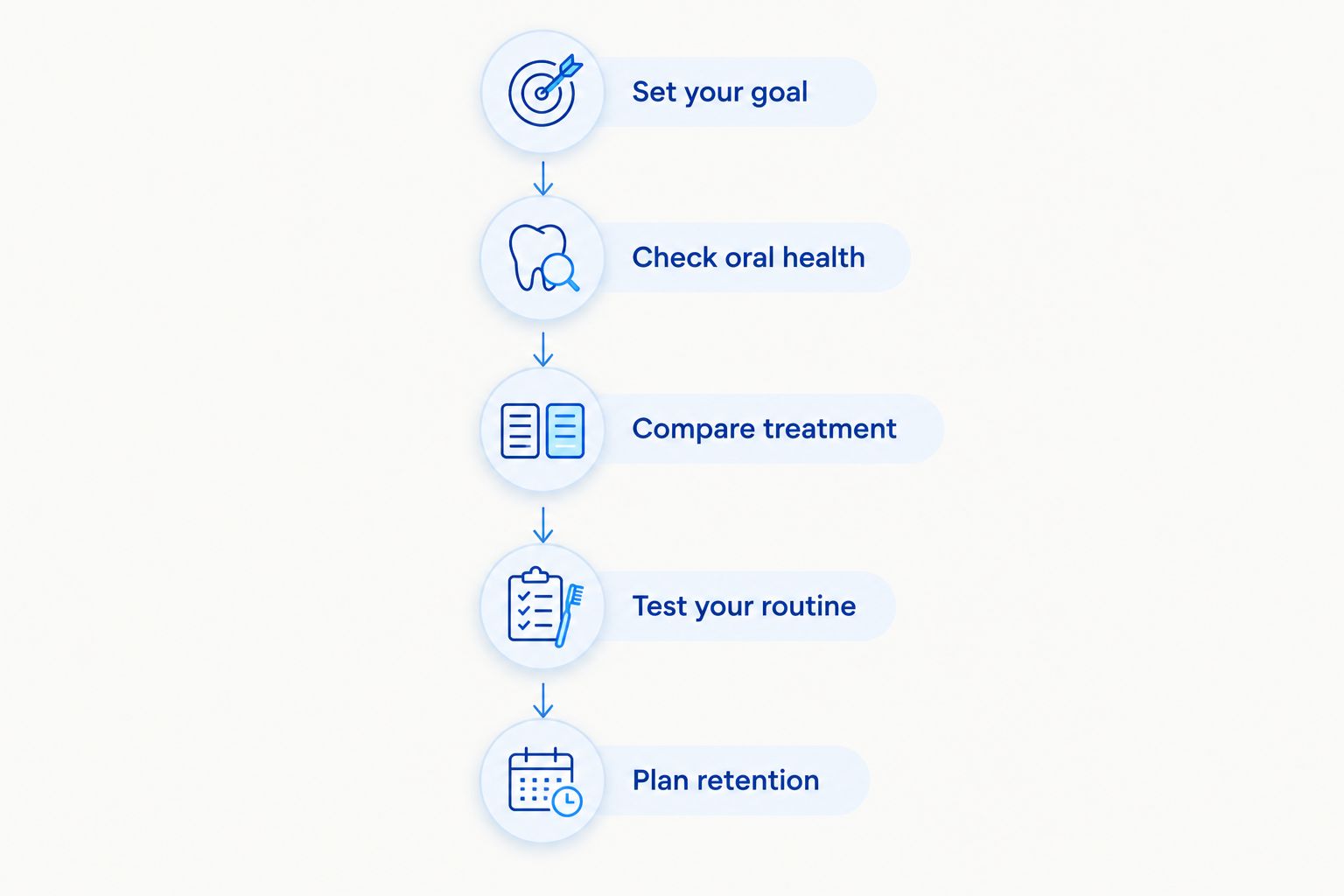
- Set your goal. Explain what bothers you about your smile or bite. Be specific about crowding, spacing, or how your teeth meet.
- Check oral health. Discuss cavities, bleeding gums, previous dental work, and any tooth or jaw symptoms. Your dentist determines what needs attention first.
- Compare treatment. Ask why Invisalign is recommended over fixed braces for your particular movements. Request an explanation of the limitations as well as the benefits.
- Test your routine. Consider whether you can follow the prescribed wear schedule around meals, work, school, and cleaning.
- Plan retention. Ask how you will maintain the result, what retainer instructions to follow, and what happens if a retainer no longer fits.
A good treatment decision connects your goal, your examination, and your daily routine. If any of those remains unclear, ask for clarification before agreeing to start.
What should your 2026 treatment plan explain?
Your plan should describe the intended changes, the appliance recommended, and the responsibilities you will have during treatment. Ask whether attachments, elastics, or other procedures are expected. Understanding these details prevents the mistaken assumption that treatment consists only of smooth, barely visible trays.
Ask how progress will be reviewed and what happens if an aligner does not fit properly. Do not force a poorly fitting tray or change the sequence yourself. Contact the treating practice for instructions.
You should also understand what the written estimate includes. Ask about assessments, follow-up care, additional aligners, retainers, and replacement appliances without assuming any item is automatically included. Comparing treatment scope is more useful than comparing an isolated headline figure.
Dental Arts of Atlantis offers Invisalign within a practice that also provides general and cosmetic dentistry. That makes discussing existing dental concerns relevant to your consultation. Ask how those concerns affect the order of treatment; do not assume straightening should come first.
What are the everyday downsides of Invisalign?
Invisalign replaces some bracket-related inconveniences with a routine you must manage yourself. You remove trays to eat, keep them safely stored, clean your teeth, and put them back in. Repeating that routine is part of treatment.
Temporary pressure or tenderness can occur when teeth begin moving or when you change aligners. Speech can also feel different while you adjust. Persistent pain, a damaged tray, or a poor fit deserves advice from your treating clinician rather than an improvised fix.
Attachments can make treatment more noticeable than you expect from photographs of trays alone. Ask your dentist to show you where any planned attachments will sit. This is especially useful if appearance at work or during an event is a major concern.
Do not choose Invisalign solely because you expect effortless or completely invisible treatment. Choose it because the clinical plan is appropriate and the daily responsibilities are acceptable to you.
How do you keep teeth healthy during Invisalign treatment?
Remove aligners for meals and follow your clinician's cleaning instructions before reinserting them. Trays do not replace ordinary dental hygiene. Food debris and plaque still need attention.
The American Dental Association recommends brushing for 2 minutes, 2 times per day, with fluoride toothpaste, plus cleaning between teeth daily. Your dentist can explain how to fit those habits around your aligner routine and whether you need additional care for specific risks.
Use the recommended method for cleaning the aligners themselves. Avoid hot water, which can distort the material. Keep a case available so you do not wrap trays in a napkin and accidentally throw them away.
Continue dental checkups during orthodontic treatment. Teeth that look straighter still need cavity prevention and gum care. If you notice bleeding, new sensitivity, or a sore area that persists, mention it rather than waiting for the next tray change.
Is Invisalign worth it if you only have a small gap?
Invisalign can be worth considering for a small gap when moving the teeth is the appropriate solution. The visible size of the gap does not establish the whole treatment need. Your dentist should assess its cause, nearby tooth proportions, gum health, and bite.
Ask whether closing the gap by moving teeth will meet your goal without creating another problem. A limited cosmetic concern still deserves a full diagnosis, and you will still need a retention plan after orthodontic movement.
Is Invisalign worth it if you have had braces before?
Invisalign can be an option for teeth that have shifted after braces, provided your current teeth and bite are suitable. Previous treatment does not guarantee that the new correction will be simple. Your dentist needs to assess the changes rather than reuse an old plan.
Bring an existing retainer if you have one, and explain when you last wore it. Do not force an old retainer onto teeth that no longer fit it. The new decision should include a realistic long-term retention routine.
Is Invisalign worth it if your main concern is jaw pain?
Jaw pain alone is not a reason to choose Invisalign. Jaw symptoms have different possible causes, and straightening is not a guaranteed treatment for headaches, clenching, or jaw-joint problems.
Tell your dentist about pain, locking, grinding, or difficulty opening your mouth before discussing aligners. Your 2026 treatment plan should address the diagnosis first, rather than treating a straighter smile as proof that pain will improve.
FAQ
Is Invisalign worth it in 2026?
Invisalign is worth it in 2026 for suitable patients who can follow the prescribed wear schedule and retainer plan. It is less suitable when daily wear is unreliable or another appliance better addresses the required tooth movements.
How many hours a day do I need to wear Invisalign?
Invisalign’s patient guidance recommends 20–22 hours per day. Follow your treating clinician’s instructions, and remove aligners for eating and drinks other than water.
Is Invisalign better than braces for adults?
Invisalign is not better than braces for every adult. Aligners provide removability, while fixed braces avoid the responsibility of remembering to put trays back in; clinical needs also determine the choice.
Will Invisalign be completely invisible?
Invisalign is not completely invisible. The trays can be noticeable, and treatment can include tooth-colored attachments or elastics.
Can I get Invisalign if I have gum disease?
Gum disease needs assessment and appropriate management before orthodontic tooth movement. Your dentist determines whether your gum health is stable enough for treatment.
Do I still need a retainer after Invisalign?
Yes, retainers are needed to maintain tooth positions after Invisalign. Follow the prescribed schedule and contact your dentist if a retainer is lost, damaged, or no longer fits.
Does Dental Arts of Atlantis offer Invisalign in Lake Worth?
Dental Arts of Atlantis offers Invisalign in Lake Worth, Florida, alongside general and cosmetic dental care. An individual assessment determines whether clear aligners are appropriate for your teeth and bite.
One last thing
Before committing, rehearse the routine—not tooth movement. Think through when you would remove trays, where you would store them, and how you would clean your teeth after meals. You do not need an appliance to identify the weak points in your schedule.
The overlooked part of a 2026 Invisalign decision is what happens after straightening. Ask about retainers before treatment begins. A result you cannot maintain is not the result you intended to buy.
Related guides
- Oral hygiene products for Invisalign wearers
- How to help a teen stay on track with Invisalign
- How to care for your retainer after Invisalign