
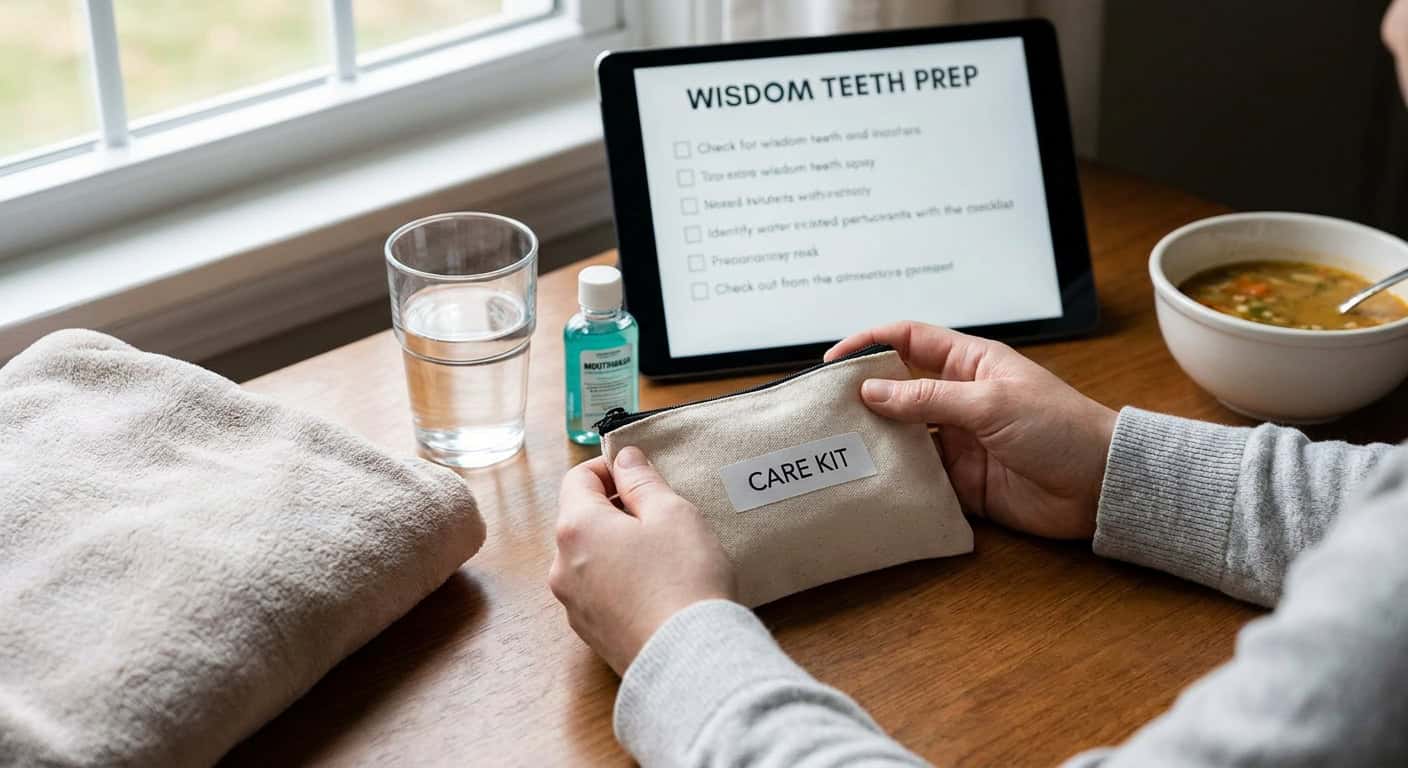
Wisdom teeth removal is the most common oral surgery performed on teenagers and young adults, and most of the work that determines a smooth recovery happens before you ever sit in the chair.
- Stop blood-thinning meds and alcohol 48-72 hours before surgery unless your surgeon says otherwise.
- Arrange a driver and a full day off — sedation means you cannot drive yourself home in 2026 or any year.
- Stock soft foods (yogurt, broth, mashed potatoes) for at least 3-5 days before the procedure date.
- Ice packs, gauze, and prescribed pain medication filled in advance beat a pharmacy run post-surgery.
- Patients with high dental anxiety should discuss sedation options at the pre-op visit, not the morning of.
Why this matters
Wisdom teeth, or third molars, usually surface between ages 17 and 25 at Dental Arts of Atlantis and at practices across Palm Beach County. Impacted or crowded wisdom teeth get flagged on a panoramic X-ray long before they cause pain, and removing them on a planned schedule beats an emergency extraction after an infection sets in.
Preparation reduces two things: surgical risk and recovery time. Patients who follow pre-op instructions typically report less swelling and fewer complications in the first 72 hours, which is the window that determines how the rest of the week goes. Skipping prep — eating a heavy meal morning-of, forgetting to line up a ride, or ignoring a blood thinner interaction — is the most common reason a straightforward extraction turns into a rough week. If dental visits already make you tense, read up on how to manage dental anxiety before a procedure a few days ahead, not the morning of surgery.
What you'll need
- A confirmed driver for the day of surgery (sedation and anesthesia make self-driving unsafe)
- Soft foods stocked for 5-7 days: yogurt, applesauce, mashed potatoes, smoothies, broth
- Ice packs or a frozen gel wrap, plus extra gauze pads
- Prescribed antibiotics and pain medication, filled before surgery day if possible
- A clear liquid or soft-food breakfast plan (or nothing, if general anesthesia requires fasting)
- 2-3 days blocked off work or school, more if all four wisdom teeth are impacted
- Your surgeon's written pre-op and post-op instructions, read in full at least once
The steps
1. Get imaging and a real consultation, not a guess
A panoramic X-ray or 3-D scan tells the surgeon exactly how your wisdom teeth are angled and whether roots sit near the nerve canal. This step decides whether you need simple extraction or surgical removal with sedation. Skipping imaging and "just scheduling" is how patients end up surprised by a longer procedure than expected.
2. Disclose every medication and supplement
Blood thinners, aspirin, fish oil, and even some herbal supplements increase bleeding risk during extraction. Tell your surgeon everything you take, including over-the-counter items, at least a week out. Expect instructions to pause certain medications 48-72 hours before surgery — never stop a prescribed blood thinner without your physician's sign-off.
3. Confirm your anesthesia and sedation plan
Options typically range from local anesthesia to nitrous oxide to IV sedation, depending on how impacted the teeth are and your anxiety level. Patients with dental phobia benefit from discussing sedation options for dental anxiety at the consultation, since the choice affects fasting rules and who needs to drive you home. Confirm this in writing so there's no confusion on surgery morning.
4. Stock your recovery kitchen before, not after
Buy soft foods 3-5 days ahead: yogurt, oatmeal, scrambled eggs, mashed potatoes, broth, and smoothies (no straws — suction can dislodge the healing clot). Skip anything crunchy, spicy, or seedy for at least a week. Doing this grocery run before surgery means you're not sending someone out while you're swollen and groggy.
5. Follow the fasting rule exactly
If you're getting IV sedation or general anesthesia, most surgeons require nothing to eat or drink for 6-8 hours beforehand. Eating breakfast "just a little" when you're supposed to fast is one of the top reasons a surgery gets rescheduled same-day. Set an alarm the night before if your appointment is early morning.
6. Prep your recovery space at home
Set up pillows for an elevated sleeping position (keeps swelling down), have ice packs pre-frozen, and lay out gauze, medication, and a thermometer within reach. Wear loose, comfortable clothing to the appointment — you won't want to fuss with buttons or tight collars while numb. This is also the time to arrange 2-3 days off work or school; four-tooth impacted extractions often need the longer end of that range.
7. Line up your ride and your first 24 hours
Whoever drives you home should plan to stay for at least the first few hours, since sedation effects linger. Have someone available to fill prescriptions, monitor bleeding, and help you with ice packs if needed. Do not plan to drive, operate machinery, or make major decisions the rest of that day.
Anxious about the procedure?
Talk through sedation options before your wisdom teeth removal date.
Troubleshooting
- Bleeding won't stop after 2-3 hours. Bite firmly on a fresh gauze pad for 30-45 minutes; if bleeding continues past that, call your surgeon rather than switching gauze repeatedly.
- Swelling peaks on day 2-3 instead of fading. This is normal for the first 48-72 hours. Ice in 20-minute intervals on day one, then switch to warm compresses after day two to help it resolve faster.
- You forgot to arrange a ride and surgery is tomorrow. Call the office immediately — most practices will reschedule rather than proceed without a confirmed driver, since sedation makes self-transport unsafe.
- Dry socket pain starts around day 3-5. Sharp pain that worsens instead of improving, especially radiating to the ear, usually means the healing clot dislodged. This needs a same-day call, not a wait-and-see approach.
- You're too nauseous to take pain medication. Take it with a small amount of food like applesauce or yogurt, and ask your surgeon about an anti-nausea alternative if it persists past the first day.
- Jaw stiffness limits eating even soft foods after a week. Gentle jaw stretches and continued soft-food meals usually resolve this by day 10-14; persistent stiffness beyond two weeks is worth a follow-up call.
Tools and resources
- Written pre-op and post-op instructions from your surgeon (keep a physical copy, not just a text you skim once)
- A stocked recovery kit: gauze, ice packs, soft foods, prescribed medications
- Guidance on post-surgical care guidelines if you're also managing implant sites or other healing areas at the same time
- A confirmed ride and someone available for the first 24 hours
- Your surgeon's direct line for after-hours questions, saved in your phone before surgery day
What to do next
Once your wisdom teeth removal is scheduled, book the pre-op consultation and confirm imaging, medication review, and anesthesia plan in one visit rather than piecing it together over calls. Dental Arts of Atlantis handles this planning as part of general and family care for households across Palm Beach County, and patients managing other oral health needs alongside surgery — a cracked molar, ongoing sensitivity, or a child's first checkup — can fold those into the same visit.
FAQ
How long before wisdom teeth removal should I stop eating?
Most surgeons require 6-8 hours of fasting before IV sedation or general anesthesia. Local anesthesia alone usually has no fasting requirement, but confirm your specific plan at the pre-op visit.
What’s the best way to prepare for wisdom teeth removal?
The best preparation covers three things: confirming your ride, stocking soft foods for 5-7 days, and reviewing every medication with your surgeon at least a week out. Patients who handle all three ahead of time report smoother first 72 hours.
Is IV sedation better than local anesthesia for wisdom teeth removal?
IV sedation suits impacted teeth, multiple extractions, or high dental anxiety, while local anesthesia works for simple, fully erupted teeth. Your surgeon’s recommendation depends on X-ray findings, not personal preference alone.
How much does wisdom teeth removal cost in 2026?
Cost varies by how many teeth are removed, whether they’re impacted, and the sedation type chosen, so check current pricing directly with your provider. Insurance often covers a portion when extraction is medically necessary.
Can I drive myself home after wisdom teeth removal?
No, if you receive any form of sedation or general anesthesia you cannot drive yourself home; a confirmed driver is required before surgery proceeds. Local-anesthesia-only patients should still arrange a ride as a precaution.
How many days off work do I need for wisdom teeth removal?
Plan for 2-3 days minimum, with 3-5 days if all four wisdom teeth are impacted or surgically removed. Swelling and jaw stiffness typically peak around day 2-3 before improving.
What foods should I avoid before wisdom teeth removal?
Avoid a heavy meal the morning of surgery if fasting is required, and stop alcohol 48-72 hours ahead since it interacts with anesthesia and pain medication. Focus grocery prep on soft foods for after surgery instead.
Do I need antibiotics before wisdom teeth removal?
Not always — antibiotics before surgery are typically reserved for active infection or specific medical histories your surgeon flags at consultation. Post-surgical antibiotics are more common and should be filled in advance.
One last thing
The detail patients skip most often isn't the ice packs or the soft foods — it's disclosing supplements like fish oil or high-dose vitamin E, both of which thin blood enough to extend bleeding time after extraction. Mention every bottle in your cabinet at the pre-op visit, even the ones that seem unrelated to dental care.
Related guides
- Emergency dentistry for a cracked or broken tooth
- Family dentistry for busy Palm Beach County households