
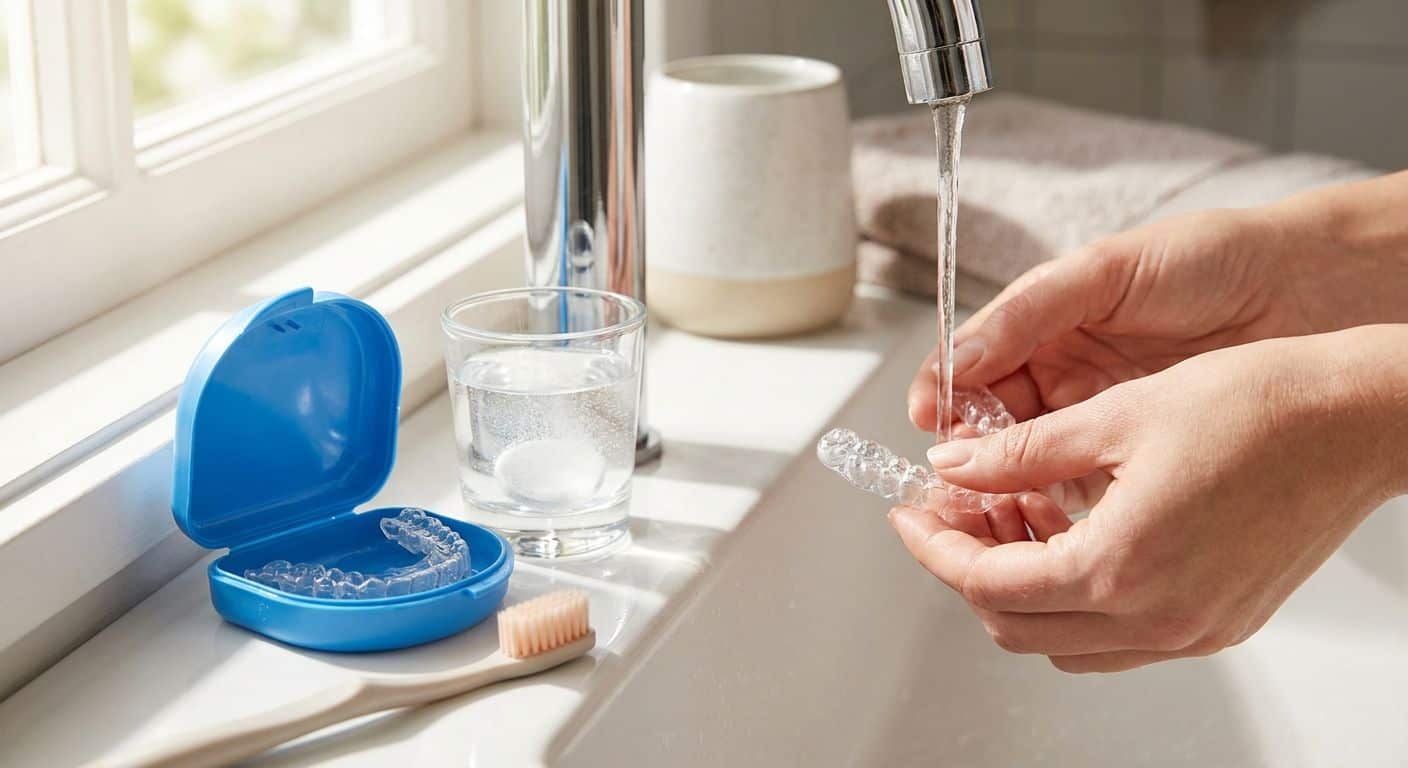
Finishing Invisalign treatment is the fun part. Caring for your retainer after Invisalign is what keeps your new smile in place for the next 20, 30, or 50 years, and most relapse cases at Dental Arts of Atlantis trace back to a retainer that got skipped, cracked, or left out too long.
- Wear your retainer exactly on the schedule your dentist sets in 2026 — full-time at first, then nights only. Skipping nights is the #1 cause of shifting.
- Clean it daily with lukewarm water and a soft brush, never boiling water — heat warps clear plastic retainers permanently.
- Store it in its case the second it’s out of your mouth. A napkin-wrapped retainer is a thrown-away retainer.
- See your dentist if it feels tight, cracked, or foggy — a small fix now beats redoing Invisalign later.
Why This Matters
Teeth are not fixed in place. The bone and ligaments around them stay flexible for life, which is exactly why Invisalign could move them in the first place. That same flexibility means teeth can drift back toward their old positions within weeks of retainer neglect, especially in the first year after finishing Invisalign for adults.
A retainer isn't a formality tacked onto the end of treatment — it's the maintenance phase. Every case at Dental Arts of Atlantis includes a retainer plan for this exact reason: the aligners did the moving, the retainer does the holding.
What You'll Need
- Your retainer case (the one your dentist gave you, or a replacement of the same size)
- Lukewarm water and mild, unscented liquid soap
- A soft-bristled toothbrush reserved only for the retainer, not your teeth
- Retainer or denture cleaning tablets, used a few times a week
- A small travel case for your bag or car, for the days you're out of the house
The Steps
1. Rinse it the moment you take it out
Saliva dries fast and hardens into a film that's harder to remove the longer it sits. Rinse under lukewarm running water every single time before it goes in the case. Skip this step for a week and you'll notice a cloudy haze building on the plastic.
2. Follow the wear schedule, not your own guess
Most patients at Dental Arts of Atlantis wear the retainer full-time for the first 3 to 6 months after finishing Invisalign, then shift to nights only. Cutting that full-time window short is the single biggest reason teeth relapse. If you're managing this for a teenager, the same discipline applies — see helping a teen stay on track with Invisalign for how to build the habit without a fight every night.
3. Clean it daily, not just when it looks dirty
Use lukewarm water and a drop of mild soap with the soft brush, working in small circles. Never use toothpaste — the abrasives in it scratch clear plastic and give bacteria more surface area to grip. A cloudy retainer in 2026 is almost always a skipped-cleaning retainer, not a defective one.
4. Store it in the case every time it's out
Retainers left on napkins, tray tables, or bathroom counters get thrown away, sat on, or eaten by pets more often than any other failure mode. The case takes two seconds and it's the cheapest insurance you have on the whole treatment.
5. Keep it away from heat, full stop
No dishwashers, no hot car dashboards, no boiling water to "sanitize" it. Clear plastic retainers start warping at temperatures well below boiling, and a warped retainer no longer holds teeth in the position Invisalign moved them to — it just sits there looking like it's working.
6. Brush and floss before it goes back in
Food particles trapped between the retainer and your teeth overnight feed bacteria and can contribute to the same white-spot decalcification patterns some patients see if they didn't manage plaque well during active Invisalign treatment. A quick brush before bed solves this every time.
7. Book periodic fit checks
Retainers loosen slightly as they age, and a retainer that no longer seats fully isn't doing its job even if you're still wearing it every night. A short check-in appointment catches this before it turns into actual movement.
8. Replace it before it fails, not after
Most retainers last 1 to 3 years with consistent care before the plastic clouds, thins, or the fit changes enough to matter. Waiting until it cracks means weeks without protection while a replacement is made — plan the swap before that happens.
Troubleshooting
Retainer smells or tastes off. This is almost always bacterial buildup from skipped cleanings. Soak it in a cleaning tablet solution for the time listed on the package, then switch back to the daily soap-and-water routine.
Cloudy or foggy plastic. Usually calcium buildup from saliva, sometimes accelerated by hot water exposure. A cleaning tablet soak clears mild cases; a warped or permanently clouded retainer needs replacing.
It feels tighter or looser than it used to. Tighter after a few missed nights is normal and usually resolves within a week of consistent wear. Looser after months of consistent wear means it's time for a fit check, not more waiting.
It cracked or a piece broke off. Stop wearing it and call your dentist rather than trying to keep using a damaged retainer — a crack changes the pressure points and can push teeth the wrong direction.
Your dog or cat got to it. This happens often enough that dentists joke about it. Don't try to reshape a chewed retainer; get a replacement made before your next scheduled wear window.
You clench or grind at night on top of wearing it. If your dentist has flagged nighttime grinding separately from your retainer wear, a dedicated option like night guards for teeth grinding may be worth discussing so the two appliances aren't working against each other.
Tools and Resources
- A rigid retainer case labeled with your name, especially for teens who carry it to school
- Mild liquid soap or a dentist-recommended retainer cleaner — never toothpaste
- Cleaning tablets used 2 to 3 times a week as a supplement, not a replacement, for daily rinsing
- A calendar reminder for the transition from full-time to nightly wear, since that date matters more than people expect
- A standing reminder to bring the retainer to routine dental visits so it can be checked for fit, not just cleanliness
What to Do Next
Once the retainer routine is solid, most patients ask about whitening now that the brackets or aligners are gone and the smile is finally visible without hardware. If that's you, read how to whiten teeth safely without damaging enamel before reaching for a drugstore kit — some products interact badly with a retainer worn right after whitening.
FAQ
How long do I need to wear my retainer after Invisalign?
Most patients wear it full-time for 3 to 6 months, then switch to nights only, often for life. Stopping early is the most common reason teeth shift back after Invisalign finishes.
Can I clean my retainer with toothpaste?
No, toothpaste is too abrasive for clear plastic retainers and leaves microscopic scratches where bacteria collect. Use lukewarm water and mild liquid soap instead.
Is it bad if my retainer feels tight after a few missed nights?
A little tightness after one or two missed nights is normal and usually eases within a week of consistent wear. If it stays tight or won’t seat fully after a week, get a fit check.
How often should I replace my retainer?
Most retainers with good care last 1 to 3 years before the plastic clouds or the fit changes. Cracked, warped, or ill-fitting retainers should be replaced immediately, not stretched further.
Can I use denture cleaning tablets on an Invisalign retainer?
Yes, most cleaning tablets work fine as a supplement to daily rinsing, used 2 to 3 times a week. They should not replace the daily lukewarm water and soap routine.
What happens if I lose my retainer?
Call your dentist right away rather than waiting, since every day without it increases the chance of teeth shifting. A replacement retainer can usually be made from your existing dental records.
Can hot water damage a retainer?
Yes, heat from hot water, dishwashers, or a car dashboard can warp clear plastic retainers permanently. Always clean with lukewarm water only.
Do teens need a different retainer care routine than adults?
The cleaning and storage rules are the same, but teens lose and forget retainers more often because they carry them to school. A labeled case and a set reminder routine solve most of that.
One Last Thing
Teeth can start moving within days, not months, once retainer wear stops entirely — that's how quickly the ligaments respond to lost pressure. If 2026 is the year you finally finished Invisalign, treat the retainer case like your toothbrush: something that lives in the same spot every night, no exceptions.
Related Guides