
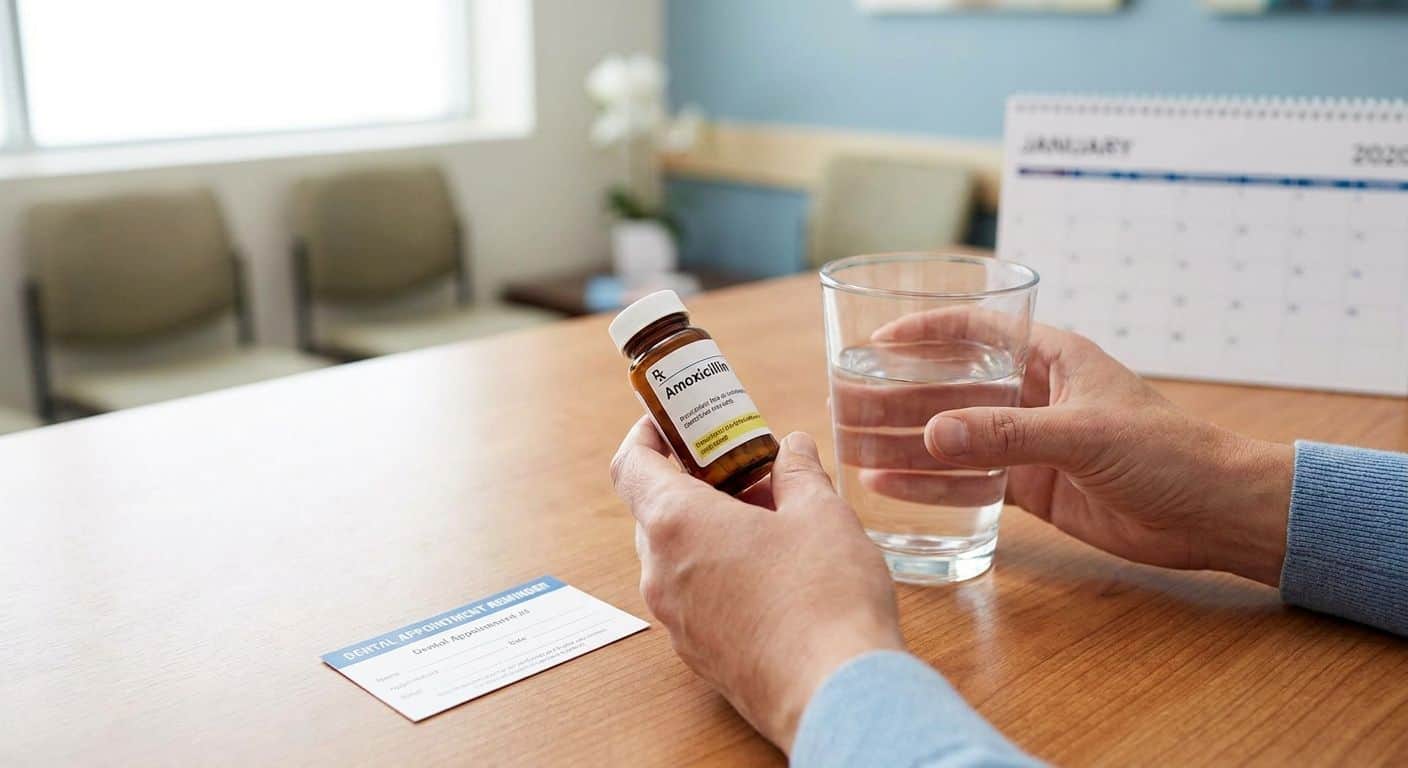
Antibiotic premedication before a dental visit protects a small number of patients with specific heart or joint conditions from serious infection risk during procedures that cause bleeding. Here's exactly how to get the timing, dosing conversation, and paperwork right before your appointment in 2026.
- Antibiotic premedication before a dental visit is only needed for specific heart conditions and some joint replacement cases, not for most patients.
- Standard adult dosing follows the amoxicillin 2g single-dose protocol taken 30-60 minutes before the appointment, per current ADA/AHA guidance.
- Confirm your need for premedication with your cardiologist or orthopedic surgeon, not just your dentist, before 2026 appointments.
- Missing a premedication dose means rescheduling; taking it too early or too late can reduce its protective window.
- Dental Arts of Atlantis verifies premedication status during scheduling so your 2026 visit isn’t delayed at check-in.
Why this matters
Dental cleanings, extractions, and root canals push bacteria from your mouth into your bloodstream for a short window. For most people that's a non-event. For patients with prosthetic heart valves, a history of infective endocarditis, certain congenital heart defects, or select joint replacement histories, that bacteria can seed an infection somewhere else in the body.
Antibiotic premedication before a dental visit closes that window. It's a single dose, taken on a schedule, not an ongoing prescription. Getting the timing wrong is the single most common reason patients end up rescheduling a procedure they've been anxious about for weeks.
What you'll need
- A confirmed diagnosis list from your cardiologist, primary care physician, or orthopedic surgeon — not a guess about "a heart thing from years ago"
- Your prescribed antibiotic name, dose, and any known drug allergies (especially penicillin)
- A working phone number for your prescribing physician in case your dentist needs to confirm the order
- 30 to 60 minutes of lead time before your scheduled procedure to take the dose
- Your dental office's contact info to confirm premedication protocol before the day of the visit — preparing for your first visit as a new patient covers what else to bring
The steps
1. Confirm you actually need premedication
Many patients assume a heart murmur or an old joint replacement automatically means antibiotics before every cleaning. It usually doesn't. Current American Heart Association guidance limits routine premedication to prosthetic heart valves, a prior episode of infective endocarditis, certain unrepaired congenital heart defects, and cardiac transplant patients who develop valve problems.
Call the physician who manages that condition and ask directly: "Does my dentist need to premedicate me before cleanings and extractions in 2026?" Get the answer in writing or documented in your chart, not from memory.
Common mistake: relying on outdated advice from a decade-old hip or knee replacement. The 2015 ADA guidance update removed routine premedication for most joint replacement patients — only specific high-risk cases still qualify.
2. Get the prescription from the right provider
Your dentist can write the premedication prescription, but the decision about whether you need it belongs to the physician managing your cardiac or orthopedic condition. Bring that confirmation to your dental visit or have your physician's office fax it directly.
Standard adult dosing under current ADA/AHA protocol is a single 2g dose of amoxicillin. Patients allergic to penicillin typically receive an alternative like cephalexin or azithromycin — your prescribing physician determines the substitute based on your allergy history.
3. Time the dose correctly
The dose needs to be taken 30 to 60 minutes before your scheduled procedure start time, not the night before and not the morning of with no attention to the clock. Taking it too early lets the antibiotic's protective concentration drop before the bacteremia-causing part of the appointment even starts.
Set a phone alarm for the exact time based on your confirmed appointment slot. If your dentist runs behind schedule, tell the front desk your dose timing so they can adjust or advise you.
Common mistake: taking the antibiotic with breakfast hours before an afternoon appointment because it's "easier to remember."
4. Disclose every medication and allergy before the appointment
Your dental team needs your complete medication list, not just the ones related to your heart or joint condition. Blood thinners, other antibiotics you've taken recently, and any allergic reactions all affect which premedication protocol is safe.
If you've had a reaction to penicillin — even a mild rash years ago — say so explicitly. This changes your entire premedication plan.
5. Bring documentation to the visit
Carry a note or portal message from your physician confirming the premedication requirement, along with a current medication list. If your dentist's office already has this on file from a prior visit, confirm it's still current — cardiac status and joint replacement history can change.
Patients managing a local anesthesia allergy alongside premedication needs should also review how to handle a local anesthesia allergy at the dentist before the appointment, since both protocols get documented in the same visit.
6. Reschedule immediately if you miss the dose window
If you forget the dose, take it late, or realize at check-in that timing is off, the safest move is rescheduling the procedure rather than proceeding without adequate coverage. This is inconvenient but far better than risking the infection the premedication exists to prevent.
Call the office as soon as you realize the miss — most practices can rebook within the same week rather than pushing you out a full month.
7. Plan for anxiety separately from premedication
Antibiotic premedication addresses infection risk, not nerves. If needle anxiety or general dental fear is part of why you're dreading the visit, that's a separate conversation worth having before you sit in the chair. Managing dental anxiety before a procedure and sedation dentistry for anxious patients both cover options that combine safely with antibiotic protocols.
Confirm your premedication plan
Dental Arts of Atlantis verifies your protocol before your 2026 appointment day.
Troubleshooting
- You're not sure if your heart condition qualifies. Don't guess — call your cardiologist's office and ask them to check your diagnosis against current AHA endocarditis prophylaxis guidance before your appointment.
- You forgot to take the dose on time. Reschedule the procedure rather than proceeding. A missed or mistimed dose doesn't provide reliable protection.
- You're allergic to the standard antibiotic. Tell your prescribing physician immediately so they can substitute — don't skip the dose and hope it's fine.
- Your physician and dentist disagree on whether you need premedication. Ask both to document their reasoning in writing; the physician managing the underlying condition typically has final say.
- You have an upcoming procedure and no premedication history on file. Bring it up at scheduling, not at check-in, so the office has time to confirm the prescription.
- You're combining premedication with sedation for anxiety. Both need to be disclosed together — sedation and antibiotics can interact with other medications you're taking.
Tools and resources
- Current medication and allergy list, updated before every visit
- Direct phone or portal contact for your cardiologist or orthopedic surgeon
- First-visit preparation checklist if this is a new dental office
- Insurance verification guide to confirm coverage on the procedure itself, separate from the antibiotic
- Phone alarm or calendar reminder set to your exact dose window
What to do next
Once your premedication plan is confirmed, shift focus to the procedure itself. If you're heading into an extraction, implant consultation, or root canal, review the specific prep guide for that treatment so nothing else catches you off guard on appointment day.
FAQ
What is antibiotic premedication before a dental visit?
Antibiotic premedication is a single dose of antibiotics taken 30-60 minutes before a dental procedure to prevent bacteria from causing infection in patients with specific heart or joint conditions. It’s not needed for most dental patients.
Who needs antibiotic premedication before dental work?
Patients with prosthetic heart valves, a history of infective endocarditis, certain unrepaired congenital heart defects, or cardiac transplant complications typically need it. Most joint replacement patients no longer require routine premedication under current ADA guidance.
How long before a dental appointment should I take the antibiotic?
Take the prescribed dose 30 to 60 minutes before your scheduled procedure start time. Taking it too early or too late reduces the protective window during the part of the visit that causes bleeding.
What’s the standard antibiotic dose for dental premedication?
The common adult protocol is a single 2g dose of amoxicillin taken before the procedure. Patients allergic to penicillin receive an alternative antibiotic determined by their prescribing physician.
Can my dentist prescribe premedication antibiotics, or does it need to come from my doctor?
Your dentist can write the prescription, but whether you need premedication at all should be confirmed by the physician managing your heart or joint condition. Bring that confirmation to your dental visit.
What happens if I forget to take my premedication dose?
The safest move is rescheduling the procedure rather than proceeding without it. A missed or late dose doesn’t reliably protect against the infection risk it’s meant to prevent.
Do joint replacements still require antibiotic premedication before dental visits?
Most joint replacement patients no longer need routine premedication since the 2015 ADA guidance update. Only specific high-risk cases still qualify, so confirm with your orthopedic surgeon rather than assuming.
Is antibiotic premedication the same as sedation for dental anxiety?
No, they address completely different things. Premedication prevents infection risk from a medical condition, while sedation manages fear or anxiety during the procedure itself.
One last thing
The biggest scheduling delay isn't the antibiotic dose itself — it's patients discovering at check-in that their cardiologist never actually confirmed whether they still qualify for premedication under current guidelines. Make that call the week before your 2026 appointment, not the morning of.
Related guides
- How to prepare for your first visit as a new patient
- How to manage dental anxiety before a procedure
- Sedation dentistry for anxious patients
- How to handle a local anesthesia allergy at the dentist
- How to check if dental insurance covers a procedure before you book