
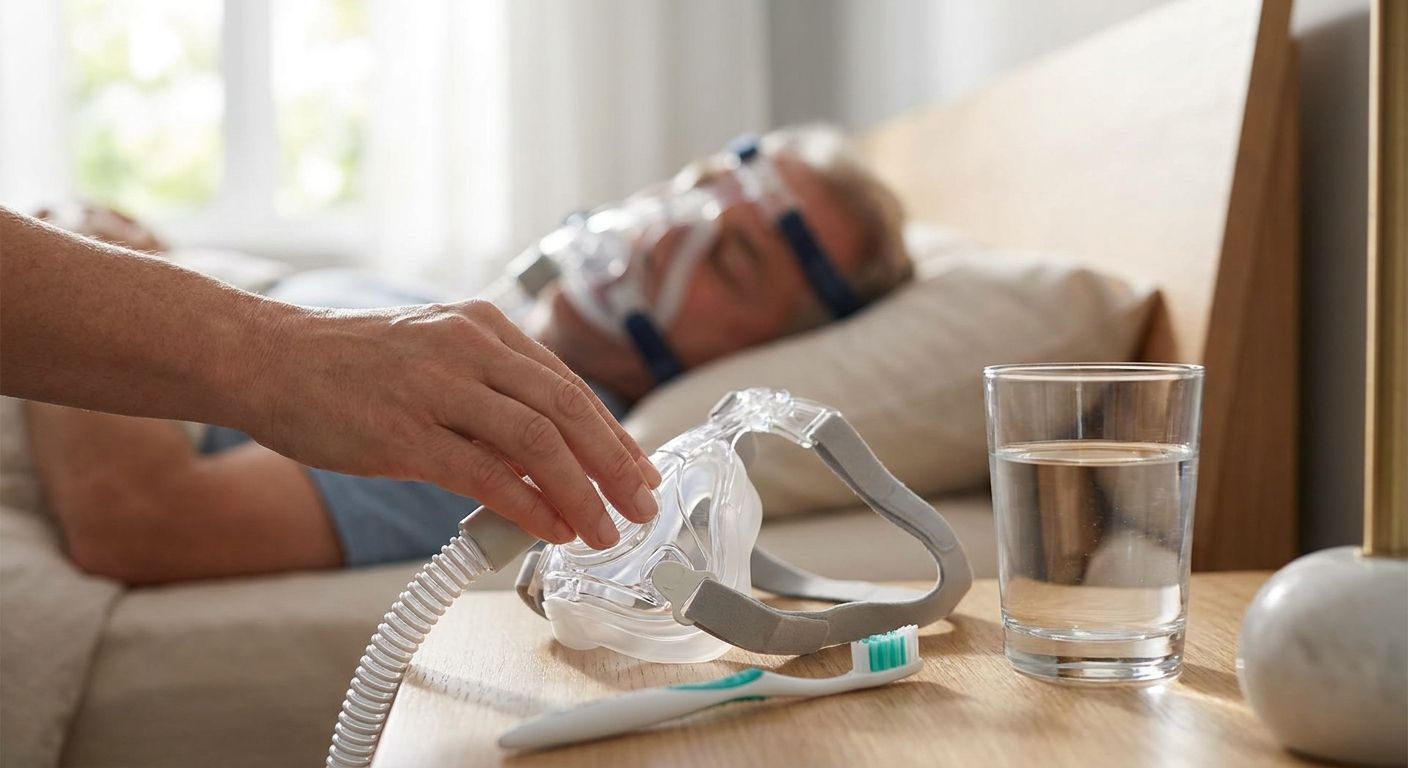
Wearing a CPAP mask keeps obstructive sleep apnea in check, but the constant airflow dries out your mouth and gums enough to raise cavity and gum disease risk if you don't adjust your routine. The fix is straightforward: brush right before the mask goes on, run the humidifier if you're a mouth breather, and treat any air leak around the seal as a dental problem, not just a comfort issue.
- CPAP-related mouth dryness raises cavity and gum disease risk unless you adjust your bedtime routine.
- Mask leaks near the mouth dry tissue faster than the machine’s humidifier can compensate for.
- Oral health with a CPAP mask means brushing before bed, staying hydrated, and cleaning the mask daily.
- Full face masks carry a different oral risk profile than nasal pillow or nasal masks in 2026 setups.
- CPAP-intolerant patients have a dentist-fitted alternative worth raising at your next visit.
Why This Matters
A CPAP machine doesn't dry out your mouth on its own. Mouth breathing during CPAP use does. If your lips separate while the mask pushes air through your nose, that air escapes past your teeth and gums all night instead of staying humidified inside the mask circuit. Chronic dry mouth from CPAP therapy isn't cosmetic. Saliva neutralizes acid and washes away the bacteria that cause decay and gum inflammation, so a mouth that stays dry for six to eight hours nightly loses that protection exactly when it needs it most.
The hardware matters too. Straps and cushions press against the same jaw and cheek tissue involved in TMJ function, and a poorly fitted mask can make jaw soreness worse over months of nightly use. None of this makes CPAP therapy a bad trade, because untreated sleep apnea carries far bigger risks. It just means oral health with a CPAP mask needs a deliberate routine.
How to Maintain Oral Health While Wearing a CPAP Mask
The routine breaks into five habits, done consistently rather than perfectly:
- Brush and floss immediately before the mask goes on, not earlier in the evening. Whatever bacteria is present at lights-out sits undisturbed for the full sleep session.
- Run the humidifier setting on your CPAP machine if you sleep with your mouth open at all. Heated humidification reduces how much moisture the airflow strips from oral tissue.
- Check for air leaks at the seal every few weeks. A whistling sound or a cold-air sensation on the lips usually means air is escaping into the mouth instead of staying routed through the nose.
- Keep water at the bedside and take a few sips if you wake with a dry, tacky mouth mid-night.
- Clean the mask, tubing, and humidifier chamber daily. Buildup inside CPAP equipment transfers to oral tissue and can contribute to gum irritation.
If dryness persists after all five, look at managing dry mouth from medication. Many CPAP users also take prescriptions that compound the problem independent of the mask.
Nasal Pillow Masks and Oral Health
Nasal pillow masks sit only at the nostrils, leaving the mouth uncovered. That's an advantage if you keep your mouth closed overnight, since no cushion presses on jaw tissue. The downside: if you're a mouth breather, a nasal pillow does nothing to stop air escaping through your lips, so dryness can be worse than with a full face mask. Best for: side sleepers who breathe through the nose. Skip if: you already know you sleep with your mouth open.
Nasal Masks and Oral Health
A standard nasal mask covers the nose only, with a wider seal and more contact on the cheeks than a nasal pillow. Oral dryness risk tracks the same way. It depends almost entirely on whether your mouth stays closed during sleep, not on the mask design. Best for: most first-time CPAP users in 2026. Skip if: chronic nasal congestion forces you to breathe through your mouth.
Full Face Masks and Oral Health
Full face masks cover the nose and mouth, which solves the mouth-breathing leak directly but adds pressure points along the jaw and cheekbones. Nightly pressure in the same spot can contribute to jaw discomfort and, in patients who already grind their teeth, aggravate TMJ symptoms. Best for: confirmed mouth breathers and patients with chronic congestion. Skip if: you have TMJ pain or wear a bite splint, since mask straps compete for the same jaw space.
| Mask Type | Oral Dryness Risk | Jaw Pressure | Best For |
|---|---|---|---|
| Nasal pillow | High if mouth opens | Low | Nose breathers, side sleepers |
| Nasal mask | High if mouth opens | Low to moderate | Most first-time users |
| Full face mask | Low, mouth sealed | Moderate to high | Confirmed mouth breathers |
Why CPAP-Related Dry Mouth Varies From Person to Person
Not every CPAP user deals with the same level of dryness. The difference comes down to a handful of factors:
- Sleep position. Back sleepers open their mouths more often than side sleepers.
- Mask fit and age. Cushions degrade over months and start leaking even when machine settings haven't changed.
- Humidifier settings. Set too low, heated humidification doesn't offset the airflow.
- Nasal congestion or allergies. A blocked nose forces mouth breathing regardless of mask type.
- Medications. Antihistamines, blood pressure drugs, and antidepressants are common dry-mouth contributors that stack on top of CPAP effects.
- Room humidity. Air-conditioned bedrooms, standard across Palm Beach County year-round, pull more moisture from oral tissue overnight.
If teeth grinding is part of your nightly pattern alongside CPAP use, a custom night guard can be fitted to work with most mask types without blocking the seal. It's a routine combination request in 2026 sleep dentistry visits.
“If your mask leaks air into your mouth every night, treat it as a dental appointment trigger, not just a machine adjustment.”
Does CPAP Cause Cavities?
CPAP itself doesn't cause cavities, but the dry mouth it can produce strips away saliva's protection and lets acid-producing bacteria multiply faster. Patients who mouth-breathe through a leaking mask see the biggest jump in cavity risk, which is why fit checks matter as much as brushing habits.
Can I Wear a Retainer or Night Guard With a CPAP Mask?
Yes. Most retainers and night guards fit under a CPAP mask without interfering with the seal, though full face masks need more careful sizing around the jawline. Tell the dentist fitting the guard that you use CPAP so the appliance sits clear of the mask cushion.
What If I Can't Tolerate a CPAP Mask at All?
Patients who can't adjust to any mask type have another route: a dentist-fitted oral appliance for CPAP-intolerant patients that repositions the jaw to help keep the airway open, with no mask or hose. It isn't right for every case of sleep apnea, but for the patients it suits, it removes the mouth-drying problem entirely.
Talk to a CPAP-aware dentist
Have mask-related dryness, decay risk, and jaw pressure checked at your next visit.
FAQ
How does CPAP affect oral health?
CPAP dries the mouth when air leaks past the lips or when mouth breathing continues under the mask, reducing saliva’s protection against cavities and gum disease. The hardware can also press on jaw tissue and worsen TMJ symptoms over months of nightly use.
What is the best CPAP mask for avoiding dry mouth?
A full face mask that seals over both nose and mouth avoids the mouth-breathing leak, making it the better choice for confirmed mouth breathers even though it puts more pressure on the jaw than a nasal mask.
Can CPAP cause TMJ pain?
CPAP straps and cushions press on the same jaw area involved in TMJ function, so patients with existing TMJ issues can see symptoms worsen with nightly mask pressure, especially with full face masks.
Should I tell my dentist I use a CPAP machine?
Yes, mention CPAP at every checkup in 2026 so your dentist can check for dryness-related decay, gum changes, and pressure points from the mask straps.
Is it normal to wake up with a dry mouth from CPAP?
Occasional dryness is common, but waking with a consistently dry, tacky mouth every night usually means the mask is leaking or the humidifier setting is too low. Both are fixable rather than something to live with.
Can I use mouthwash before putting on my CPAP mask?
An alcohol-free mouthwash is fine before bed. Alcohol-based rinses dry oral tissue further right before hours of CPAP airflow, so alcohol-free formulas are the better nightly choice.
Does a CPAP mask make snoring worse?
No, CPAP treats snoring rather than causing it. Snoring that continues despite consistent CPAP use usually points to a mask fit issue or a pressure setting that needs adjusting.
One Last Thing
Most patients focus on machine settings and forget the mouth is doing the work of tolerating a dry airstream for six to eight hours a night. The highest-value habit is checking mask fit for leaks every few weeks. A leak that pushes air straight at the lips undoes nearly every other step in this routine, no matter how carefully you brush or hydrate. Bring it up at your 2026 checkup rather than waiting for the sensitivity to start.
Related Guides