
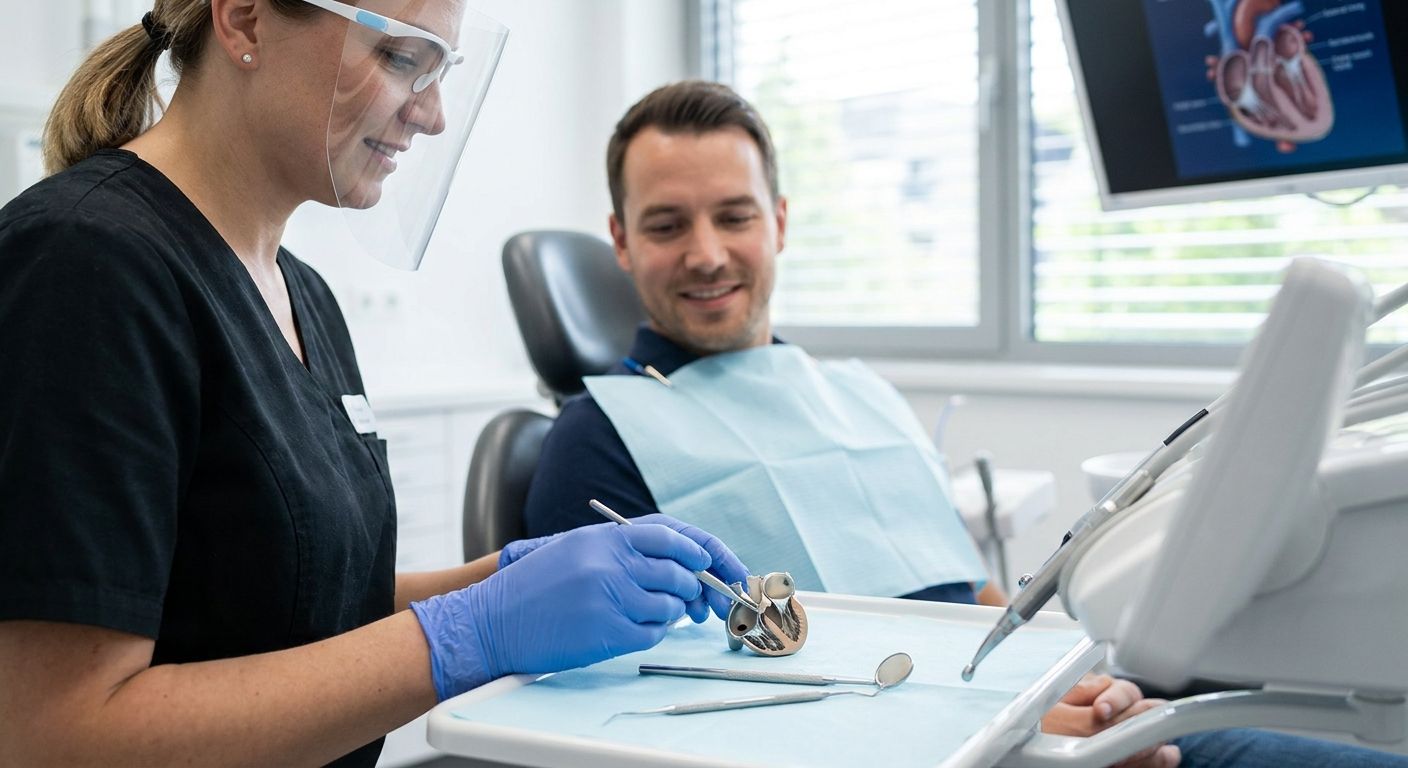
Heart valve replacement dental care means treating every cleaning, filling, and extraction as a coordinated medical event, not a routine appointment, because bacteria from your mouth can reach a replaced valve through the bloodstream. Patients with a mechanical or bioprosthetic valve face a different risk calculation than the general population, and the plan has to account for infection prevention, bleeding control if you're on anticoagulants, and communication between your cardiologist and your dentist.
- Dental care heart valve replacement protocols require antibiotic premedication before procedures that touch gum tissue or the root area of a tooth.
- Dental Arts of Atlantis coordinates with cardiologists on premedication timing and bleeding risk for valve replacement patients in 2026.
- Gum disease raises endocarditis risk for valve patients — treating it early is not optional maintenance.
- Blood thinner management and antibiotic prophylaxis both need confirmation before any cleaning, filling, or extraction.
- Skipping a prescribed antibiotic dose because symptoms feel mild is the most common and most dangerous mistake this group makes.
Why dental care matters for heart valve replacement patients
A replaced heart valve, mechanical or tissue-based, gives bacteria a surface to colonize if they enter the bloodstream during a dental procedure. That colonization is called infective endocarditis, and it's the reason the American Heart Association places prosthetic heart valves in the highest-risk category for endocarditis prevention. Routine brushing and flossing carry some bacteremia risk too, which is exactly why ongoing gum health matters more for this group than for a patient with a healthy valve.
The current AHA guidance, still in effect in 2026, limits antibiotic premedication to a narrower list of high-risk patients than older protocols did — but prosthetic valves remain on that list. If your dentist doesn't ask about your cardiac history at your first visit, that's a gap worth flagging before treatment starts. Reviewing a dental visit needing antibiotic premedication checklist before you book is a faster way to confirm what your specific procedure requires than guessing.
Update your cardiologist-dentist communication
Your cardiologist and your dentist need to be working from the same information, not relaying it through you from memory.
- Bring a written list of your valve type, surgery date, and any anticoagulant medication
- Ask your cardiologist for a letter confirming premedication requirements, not a verbal note
- Share your INR range (if you're on warfarin) at every dental visit, not just the first one
- Confirm your dentist has your cardiologist's contact information on file
- Request that any antibiotic prescription be sent electronically to avoid a same-day pharmacy scramble
Time your antibiotic dose correctly
Premedication only works if it's in your system before bacteria enter your bloodstream, which means timing is not flexible.
- Take the prescribed antibiotic dose in the window your cardiologist specifies before the appointment, typically before treatment begins
- Never substitute a different antibiotic without checking for cross-reactivity with your other medications
- Reschedule rather than skip premedication if you forget the dose — don't proceed without it
- Keep a backup prescription on hand if you travel frequently, since a missed refill shouldn't cancel emergency care
- Confirm with your pharmacist that the antibiotic doesn't interact with warfarin or other anticoagulants you take
Manage blood thinners and bleeding risk together
A large share of valve replacement patients, especially those with mechanical valves, stay on lifelong anticoagulants like warfarin or a direct oral anticoagulant. That changes how a dentist plans even a simple cleaning.
- Never stop or reduce a blood thinner dose before a dental appointment without your cardiologist's sign-off
- Ask for a same-day INR check before extractions or deep cleanings if your levels fluctuate
- Request local hemostatic measures (like sutures or gauze packing) be planned in advance for higher-bleed procedures
- Flag any bruising or prolonged bleeding after a cleaning to both your dentist and cardiologist
- Review the specifics with a dental care guide for patients on blood thinners before your appointment, since anticoagulant type changes the plan
The manual, no-cost version of this step is simple: call your cardiologist's office a week before any dental procedure and ask directly whether your current anticoagulant dose needs adjustment. Most valve patients don't need a dose change for routine cleanings — but extractions and gum surgery are a different conversation.
Prioritize gum disease treatment over cosmetic fixes
Inflamed gums bleed more easily during normal chewing and brushing, which means untreated gum disease creates daily low-grade bacteremia exposure, not just a risk during dental visits.
- Schedule a periodontal evaluation if you haven't had one since your valve surgery
- Treat bleeding gums as a priority appointment, not something to mention at your next routine cleaning
- Ask about a tighter cleaning interval — every three to four months instead of six — if you show any gum inflammation
- Use an antimicrobial mouth rinse if your dentist recommends one between visits
- Read how treating gum disease protects heart health if you want the full connection between periodontal status and cardiac risk
Gum disease left untreated is not a cosmetic problem for a valve replacement patient — it's an ongoing infection risk sitting next to your heart's blood supply.
Watch for endocarditis symptoms after dental work
Infective endocarditis doesn't always show up immediately, and symptoms can be mistaken for the flu.
- Fever that develops days to weeks after a dental procedure
- Unexplained fatigue or night sweats
- New or worsening shortness of breath
- Joint pain without an obvious cause
- Any combination of these symptoms should prompt a call to your cardiologist, not a wait-and-see approach
Plan sedation carefully if anxiety is a factor
Dental anxiety is common, and it's not automatically off the table for valve patients — but the sedation method matters more here than for a healthy patient.
- Confirm with your cardiologist which sedation types are cleared for your specific valve and any other heart conditions
- Nitrous oxide is generally well tolerated but still needs a green light for patients on certain cardiac medications
- IV sedation for more involved procedures requires medical clearance in advance, not a same-day decision
- Monitor blood pressure and heart rate throughout sedation, and make sure your dental team has that capability
- Compare sedation options for dental anxiety if fear of treatment has kept you from scheduling needed work
Coordinate your dental care with your cardiologist
Dental Arts of Atlantis documents cardiac history and premedication needs before every valve patient’s visit.
Comparing care approaches for heart valve patients
| Approach | Best for | Key limitation |
|---|---|---|
| Antibiotic premedication | Patients with mechanical or bioprosthetic valves before invasive procedures | Requires exact timing and prescription coordination with a cardiologist |
| Tightened cleaning interval (3-4 months) | Valve patients with any gum inflammation | More frequent visits than a standard six-month schedule |
| In-office periodontal scaling | Existing gum disease in a valve patient | May need staged antibiotic coverage across multiple visits |
| Nitrous oxide sedation | Mild-to-moderate dental anxiety with cardiac clearance | Not automatically approved — depends on medication interactions |
| IV sedation | Longer or more invasive procedures like extractions | Needs cardiologist sign-off well before the appointment date |
Verdict: for most valve replacement patients, the combination of antibiotic premedication plus a tighter cleaning schedule does more to prevent complications than any single in-office treatment. Skipping either one to save time is the wrong trade.
Common mistakes heart valve replacement patients make
- Assuming every dental procedure needs antibiotics. Current AHA guidance limits premedication to specific procedures involving gum tissue manipulation, not every cleaning or filling — ask which category your appointment falls into.
- Stopping a blood thinner on their own before a cleaning. This raises stroke and clot risk without meaningfully reducing dental bleeding for routine care.
- Treating bleeding gums as normal. For this group, bleeding gums mean an active bacteremia source, not a sign to brush harder.
- Not disclosing valve history to a new dentist. Switching practices or seeing an out-of-town dentist without sharing surgery history and premedication needs skips a critical safety step.
- Delaying care out of fear of complications. Untreated infection risk from a bad tooth is generally a greater cardiac threat than a well-managed dental visit.
FAQ
Do all heart valve replacement patients need antibiotics before dental work?
Most patients with a prosthetic heart valve need antibiotic premedication before procedures that involve gum tissue manipulation or the root area of a tooth, per current American Heart Association guidance in 2026. Not every dental visit qualifies — a simple exam without tissue manipulation often does not require it, so confirm the specific procedure with your dentist and cardiologist.
Can I get a regular teeth cleaning with a mechanical heart valve?
Yes, but most valve patients need antibiotic premedication before a cleaning because scaling manipulates gum tissue. A tighter cleaning schedule, often every three to four months, also lowers ongoing bacteremia risk from inflamed gums.
Is it safe to stop blood thinners before a dental appointment?
No — stopping warfarin or another anticoagulant without your cardiologist’s approval raises stroke and clot risk and is rarely necessary for routine dental work. Bleeding from most dental procedures can be managed locally without adjusting your medication.
What are the symptoms of endocarditis after a dental procedure?
Fever, unexplained fatigue, night sweats, joint pain, and new shortness of breath in the days or weeks after dental treatment are warning signs of infective endocarditis. Any of these symptoms after a dental visit warrants a call to your cardiologist promptly.
Is sedation dentistry safe for someone with a heart valve replacement?
Nitrous oxide and IV sedation can both be used for valve patients, but each requires cardiologist clearance based on your specific medications and heart condition. Blood pressure and heart rate monitoring during sedation is standard for this group.
How often should heart valve patients see the dentist?
Many valve patients benefit from cleanings every three to four months instead of the standard six-month interval, especially with any history of gum inflammation. Your dentist should adjust the schedule based on your periodontal exam, not a fixed calendar.
Does gum disease actually affect heart valve health?
Yes — chronic gum inflammation creates repeated low-level bacteremia that raises infective endocarditis risk for anyone with a prosthetic valve. Treating gum disease early is a cardiac protection measure, not just an oral health one.
One last thing
The biggest gap for valve replacement patients isn't the dentist's chair — it's the phone call that never happens between the cardiologist's office and the dental office before a procedure gets scheduled. Make that call yourself if your providers don't do it automatically; a five-minute confirmation of premedication and anticoagulant status prevents the vast majority of complications this group faces in 2026.
Related guides
- How to manage dental anxiety before a procedure
- How to prepare for a dental visit needing antibiotic premedication
- Dental care for patients on blood thinners
- How to protect your heart health by treating gum disease
- Best sedation option for dental anxiety