
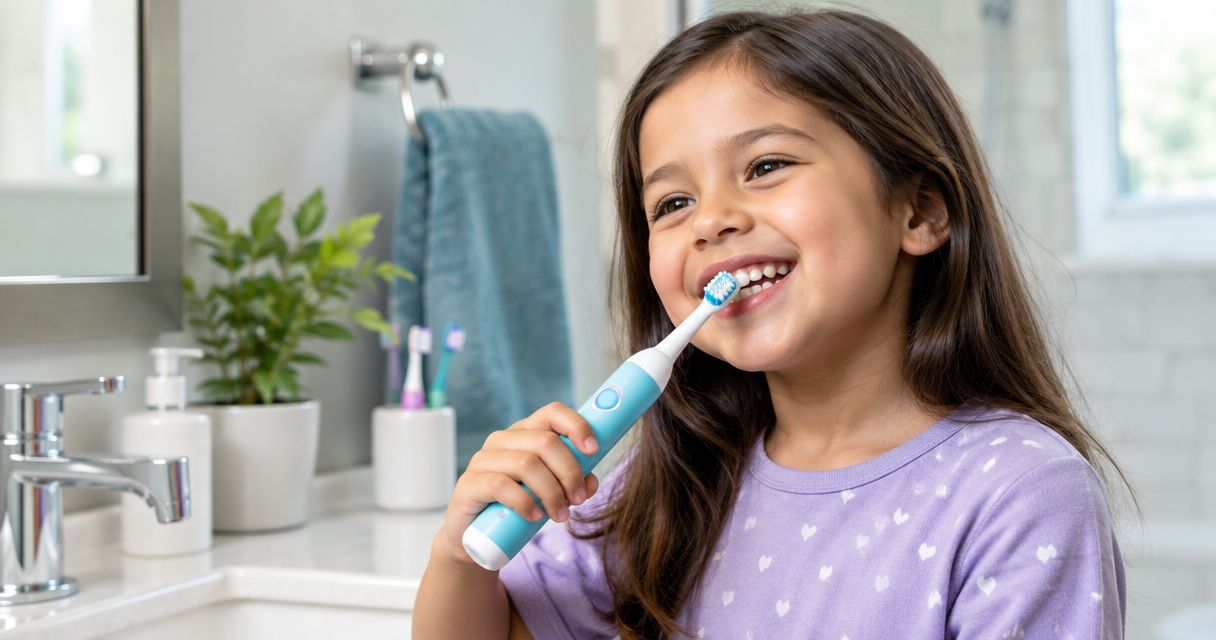
Best overall shortlist pick: Oral-B Kids rechargeable. Best for children who enjoy guided brushing: Philips Sonicare for Kids. Best for families who prefer replaceable batteries: Oral-B Kids battery-powered; this 2026 guide explains how to choose without confusing brush features with cavity protection.
- Best electric toothbrush for kids cavities: shortlist Oral-B Kids rechargeable, then check head size and comfort.
- Philips Sonicare for Kids suits children who respond to guided brushing; adult supervision still matters.
- Fluoride toothpaste, thorough brushing, and cleaning between touching teeth matter more than a favorite character.
- Dental Arts of Atlantis offers pediatric dentistry for Palm Beach County families seeking help with cavity prevention.
A brush helps remove plaque; it cannot guarantee that your child stays cavity-free. Dental Arts of Atlantis offers pediatric and family dental care in Lake Worth, Florida, where families can discuss their child's individual prevention needs.
Why this matters
An electric toothbrush is a cleaning tool, not a treatment for tooth decay. A child can use a powered brush and still miss the back molars, brush without fluoride toothpaste, or leave plaque between touching teeth.
The American Dental Association recommends brushing for 2 minutes, twice daily, with fluoride toothpaste. Children also need help until they can clean thoroughly themselves; willingness to hold a brush does not establish that skill.
For a cavity-prone child, your 2026 shopping decision should solve a specific problem: missed surfaces, rushed brushing, uncomfortable equipment, or difficulty accepting help. A different handle alone does not address all those problems.
What makes the best electric toothbrush for cavity-prone kids?
Use these criteria before choosing a character, color, or connected feature:
- Head fit: The head should reach behind the last molars without forcing your child to open uncomfortably wide.
- Soft bristles: Choose soft bristles rather than trying to scrub harder. Excess pressure is not a substitute for careful coverage.
- Comfort: Your child needs to tolerate the sound, vibration, and feeling against the teeth.
- Routine support: A timer or guided routine helps with pacing, but neither confirms that every surface was cleaned.
- Caregiver control: You should be able to hold the handle comfortably and finish missed areas.
- Ongoing care: Check the exact replacement head, cleaning instructions, and charging or battery requirements before choosing.
Features differ within product families. In 2026, read the exact package rather than assuming that every brush carrying the same character or family name has identical settings, accessories, or age guidance.
Kids' electric toothbrushes at a glance
These are practical use-case recommendations, not a ranking of proven cavity-prevention results. No product-specific clinical results are used to claim that one listed brush prevents more cavities than another.
| Option | Best for | Standout distinction | Key limitation |
|---|---|---|---|
| Oral-B Kids rechargeable | A straightforward rechargeable routine | Small round brush-head format | A round head still needs careful placement on every tooth |
| Philips Sonicare for Kids | Children who enjoy guided brushing | Sonic brushing with interactive guidance | Digital engagement does not confirm complete cleaning |
| Oral-B Kids battery-powered | Families who prefer replaceable batteries | Battery-powered operation without a charging routine | Battery changes add another maintenance task |
Choose by the barrier your family actually faces. If your child already brushes willingly but repeatedly develops cavities, ask for a review of technique, fluoride exposure, diet, and between-teeth cleaning before changing equipment.
1. Oral-B Kids rechargeable: best for a simple daily routine
Oral-B Kids rechargeable is the default shortlist pick for families who want a rechargeable children's brush with a small round head. Its head format lets you focus on individual teeth rather than treating brushing as a quick sweep across the mouth.
The benefit depends on placement. You still need to guide the head along the outside, inside, and chewing surfaces, including the far side of the last molars.
Oral-B Kids rechargeable pros:
- The small round format supports a tooth-by-tooth approach.
- Rechargeable operation avoids routine disposable-battery changes.
- A caregiver can use the same method when finishing missed surfaces.
Oral-B Kids rechargeable cons:
- Charging becomes part of your household routine.
- Vibration and sound are not comfortable for every child.
- The powered head cannot replace cleaning between touching teeth.
Best for: Families seeking a straightforward powered-brushing routine with adult help.
Before choosing, check the exact model's age labeling, head compatibility, and included features. Do not assume that a character-themed package includes a pressure warning or a particular brushing mode.
Verdict: Buy if the head fits comfortably and your child accepts the sensation. Skip it if vibration consistently prevents a complete brushing session.
2. Philips Sonicare for Kids: best for guided brushing
Philips Sonicare for Kids combines a sonic toothbrush with interactive brushing guidance. It is a useful shortlist option when your child responds to prompts and enjoys following a routine.
The distinction is participation, not a promise of fewer cavities. A completed guided session does not show whether the bristles reached the inside surfaces or newly erupting back teeth.
Philips Sonicare for Kids pros:
- Interactive guidance gives children a structure to follow.
- A rechargeable handle supports regular home use.
- The elongated head offers a different shape for children who dislike round heads.
Philips Sonicare for Kids cons:
- App-based guidance introduces a device into the brushing routine.
- Sonic vibration is not comfortable for every child.
- Following prompts still requires a caregiver's check for missed areas.
Best for: Children who enjoy guided activities and need encouragement to stay engaged.
For your 2026 comparison, separate enjoyment from cleaning quality. Watch an actual session: does your child move the head to the back teeth, or watch the activity while brushing only the front?
Verdict: Buy if guided brushing improves cooperation without distracting from technique. Skip the connected routine if it turns brushing into a screen-time negotiation.
3. Oral-B Kids battery-powered: best for replaceable-battery routines
Oral-B Kids battery-powered is an alternative for families who prefer changing batteries to maintaining a charging routine. It provides powered brushing in a children's format without making a charging base part of the bathroom setup.
Battery-powered does not mean less adult involvement. You still need to check the brush's condition, follow its battery instructions, and supervise how the head reaches each surface.
Oral-B Kids battery-powered pros:
- Replaceable-battery operation avoids a charging-base routine.
- It offers a powered option for families who prefer that maintenance approach.
- A children's handle and head provide an alternative to adult-sized equipment.
Oral-B Kids battery-powered cons:
- Battery replacement requires ongoing attention.
- Head replacement arrangements vary; check the exact product instructions.
- Powered movement does not establish that your child can brush independently.
Best for: Families whose main preference is replaceable batteries rather than recharging.
Do not treat this option as interchangeable with every rechargeable brush in the same brand family. Compare the exact head design, maintenance instructions, and age labeling.
Verdict: Buy if replaceable batteries suit your routine and the brush fits your child. Skip it if its maintenance requirements make consistent brushing harder.
How these options are ranked
The ranking prioritizes head fit, comfort, caregiver control, routine support, and maintenance. Oral-B Kids rechargeable is the default shortlist pick; Philips Sonicare for Kids addresses engagement; Oral-B Kids battery-powered addresses a preference for replaceable batteries.
No hands-on testing or product-specific cavity-reduction comparison is claimed. A feature-based recommendation is not evidence that one brush will prevent your child's next cavity.
Dental Arts of Atlantis is a fit for Palm Beach County families seeking pediatric dental care alongside everyday cavity-prevention guidance. Bring the brush to an appointment so you can ask about fit and technique rather than relying on packaging alone.
Make the brush part of a cavity-prevention routine
A useful 2026 brushing routine combines the right tool with fluoride, complete coverage, and caregiver help. Keep the sequence predictable rather than adding more gadgets when brushing becomes difficult.
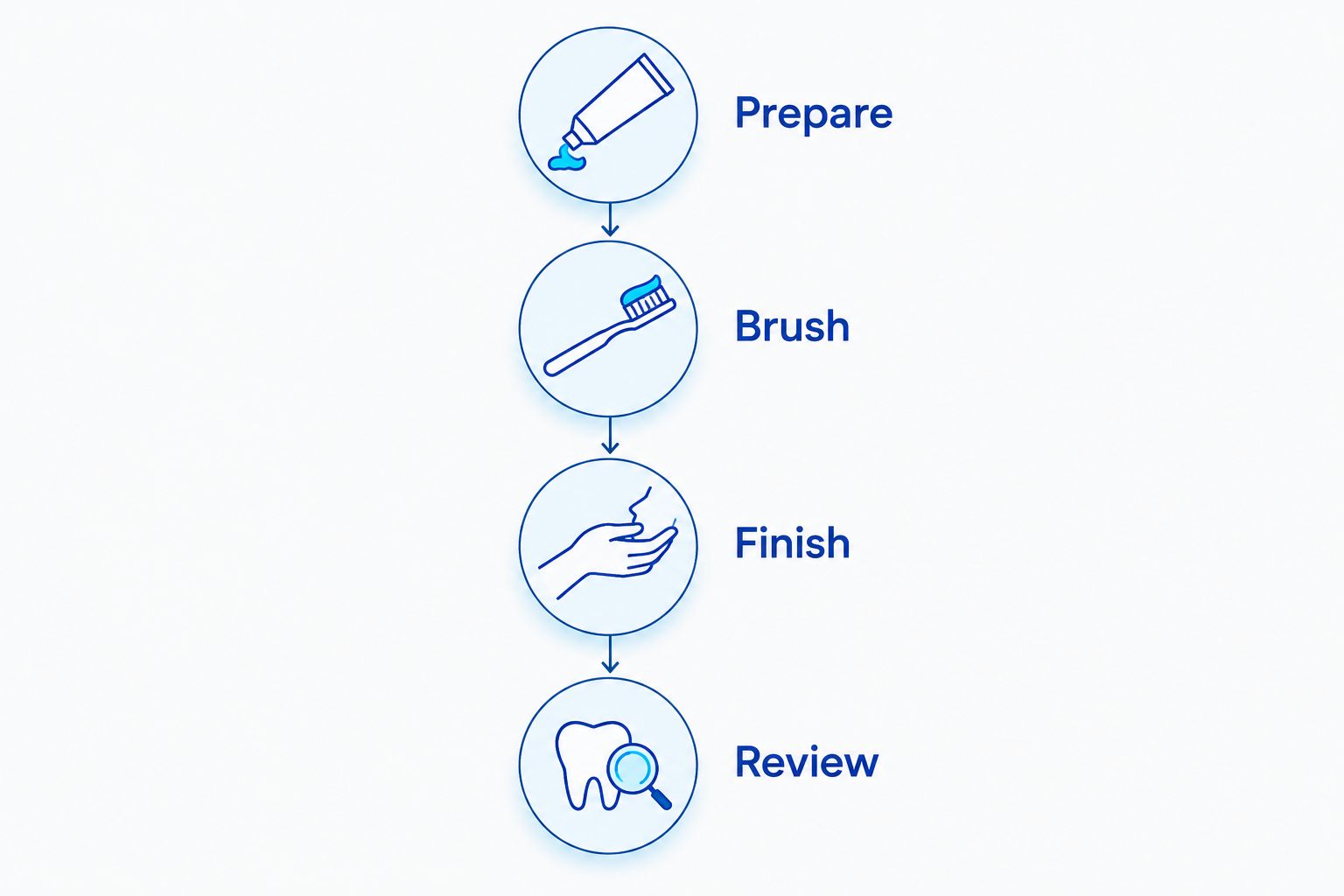
Prepare
Choose fluoride toothpaste and use an age-appropriate amount. ADA guidance recommends a rice-grain-sized smear for children younger than 3 years and a pea-sized amount for children 3–6 years; supervise to limit swallowing.
Check the toothbrush manufacturer's age instructions separately. A toothpaste recommendation does not establish that a particular powered brush suits a toddler.
Brush
Brush for 2 minutes and cover the outside, inside, and chewing surfaces. Follow the brush's technique instructions rather than pressing harder to make it feel more effective.
A timer measures elapsed time, not coverage. Pay particular attention to back teeth that sit partly hidden behind the cheek.
Finish
Let your child practice, then help with areas they cannot clean thoroughly. Keep the handoff calm and predictable rather than presenting adult help as a punishment.
Clean between teeth that touch. An electric toothbrush does not replace floss or another dentist-recommended method for those spaces.
Review
Tell the dentist about new cavities, brushing discomfort, frequent snacking, or trouble using fluoride toothpaste. Ask whether professional fluoride treatment or sealants belong in your child's prevention plan.
For children with repeated decay, fluoride treatments for cavity-prone kids are a separate discussion from toothbrush selection. The right prevention plan depends on your child's teeth and risk factors, not the number of features on the handle.
Which electric toothbrush should you choose?
Start with Oral-B Kids rechargeable if you want a straightforward default to evaluate. Choose Philips Sonicare for Kids when guided participation solves a real cooperation problem; choose Oral-B Kids battery-powered when replaceable batteries better suit your routine.
If your child rejects every powered brush, do not sacrifice thorough brushing to insist on electricity. A soft manual toothbrush with fluoride toothpaste and adult help remains a valid alternative.
Your best 2026 purchase is the brush that fits, feels comfortable, and supports complete cleaning. If cavities continue, the next step is a dental assessment—not automatically a more elaborate toothbrush.
FAQ
What’s the best electric toothbrush for a child who keeps getting cavities?
Oral-B Kids rechargeable is a practical default shortlist pick when its head fits comfortably and your child accepts the vibration. Repeated cavities still require a review of fluoride, technique, diet, and cleaning between teeth; changing brushes alone is not a complete prevention plan.
Is Oral-B Kids better than Philips Sonicare for Kids?
Neither is established here as better at preventing cavities. Oral-B Kids rechargeable suits a straightforward round-head routine, while Philips Sonicare for Kids suits children who enjoy interactive guidance.
Can an electric toothbrush get rid of a cavity?
An electric toothbrush cannot repair a hole caused by decay. Early enamel mineral loss sometimes responds to professional prevention measures, but a dentist must assess the lesion and recommend appropriate care.
How long should my child brush with an electric toothbrush?
Children should brush for 2 minutes, twice daily, with fluoride toothpaste. A caregiver should also check coverage because reaching the timer’s endpoint does not confirm that every surface was cleaned.
Does my child still need floss with an electric toothbrush?
Yes, your child needs cleaning between teeth that touch. Electric toothbrush bristles do not replace floss or another dentist-recommended method for those spaces.
What if my child hates the toothbrush vibration?
Use a soft manual toothbrush if powered brushing prevents comfortable, thorough cleaning. Introduce unfamiliar sensations gradually and ask the dentist for help if brushing remains difficult or painful.
How often should I replace my child’s toothbrush head?
ADA guidance recommends replacing a toothbrush or head about every 3–4 months, or sooner when bristles become frayed. Follow the manufacturer’s instructions and check for damage, especially if your child chews the bristles.
One last thing
Bring your child's actual toothbrush to the next dental visit. A favorite handle tells the dentist less than watching how your child holds it and reaches the back teeth.
Dental Arts of Atlantis offers pediatric dentistry for Lake Worth and Palm Beach County families. Ask for a demonstration focused on your child's missed surfaces, then repeat that same approach at home.
Related guides
- Best teeth-friendly diet for kids prone to cavities
- Dental care for kids with sensory sensitivities
- Dental sealants for school-age kids