
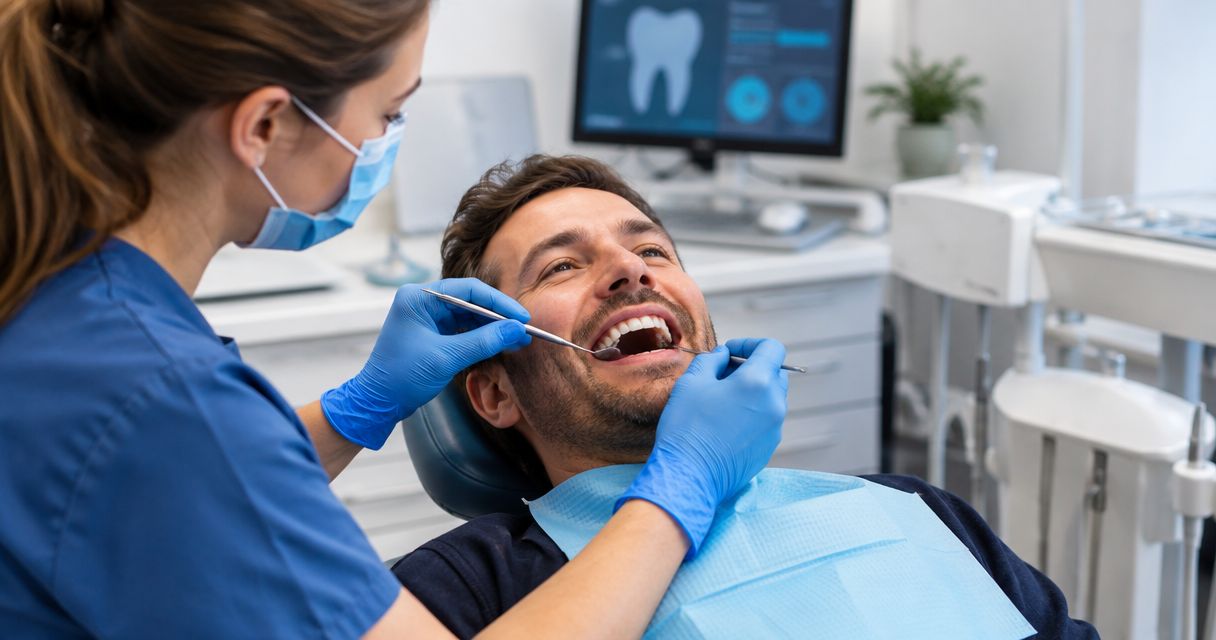
Dental care for first responders means fitting exams, cleanings, and emergency treatment around rotating shifts, high-stress grinding, and dry mouth from caffeine and energy drinks. Police officers, firefighters, paramedics, and dispatchers need a dental team that books outside a normal 9-to-5 and treats stress-related wear as a real clinical issue, not an afterthought.
- Dental care for first responders needs same-day emergency slots, custom night guards, and scheduling built around rotating shifts.
- Dental Arts of Atlantis in Lake Worth works around 24-hour shift patterns and fits custom night guards for on-duty stress grinding.
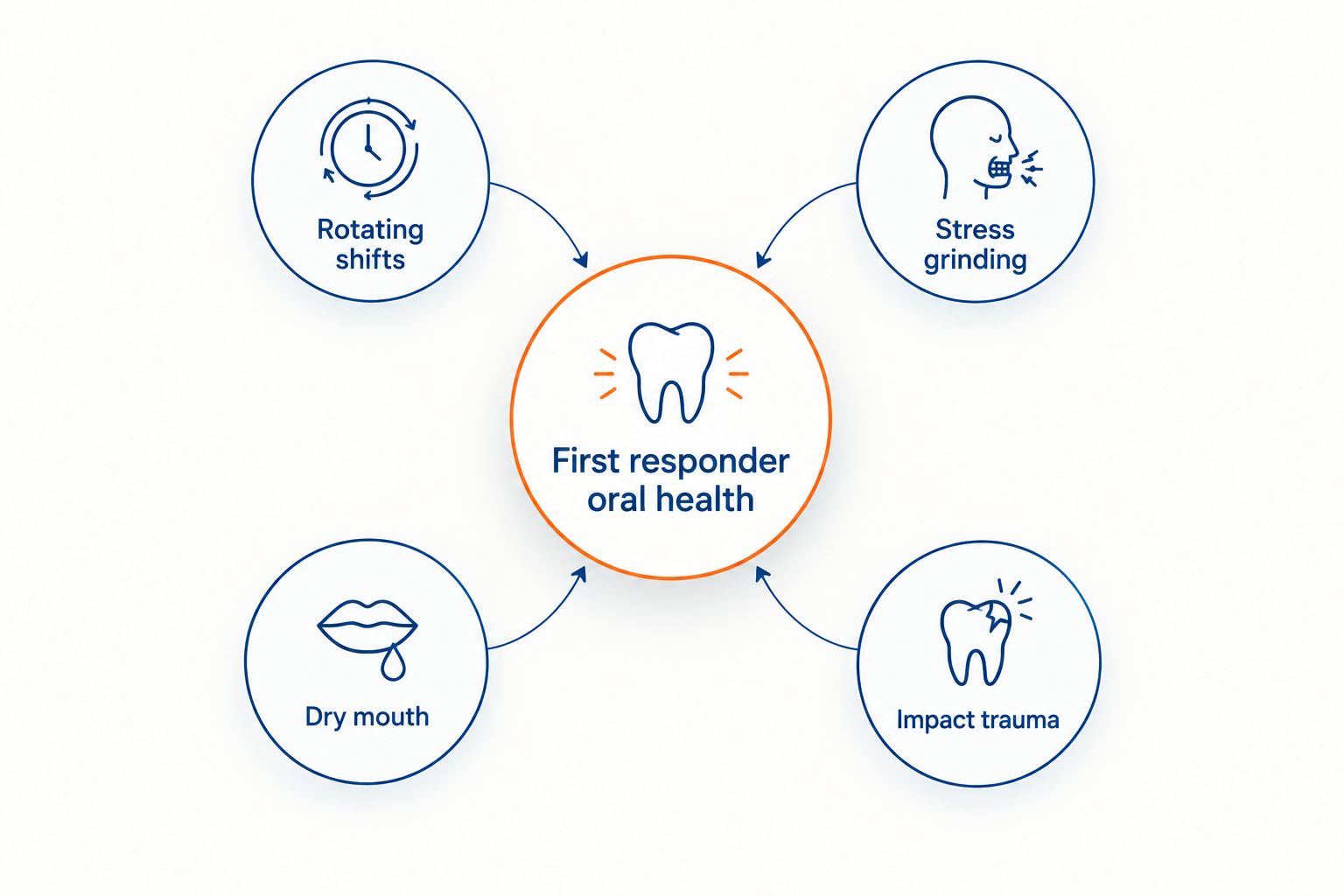
- Bruxism, dry mouth from energy drinks, and impact trauma are the three biggest oral health risks tied to first responder work.
- Cherry Financing is the first payment option to check before CareCredit when treatment costs more than a benefit covers.
Why dental care matters for first responders
A rotating shift schedule doesn't pause for a 2 p.m. cleaning slot, and a 24-hour shift doesn't leave room for a toothache to wait. First responders also carry job-specific risk factors most general dentistry advice ignores: clenching under adrenaline, mouth breathing through structural gear, energy drink and coffee intake to stay alert on overnight rotations, and a real chance of blunt trauma to the face and jaw on a call or during training.
Dental care for shift workers with irregular schedules covers the scheduling side in more detail, but shift work is only one piece of the first responder picture. Add trauma exposure, gear-related jaw strain, and equipment fit checks, and the risk profile looks different from almost any other occupation Dental Arts of Atlantis sees in Lake Worth.
Build a dental routine around your shift rotation
A 24/48 schedule or a rotating night shift makes a standard 8-to-5 dental office nearly impossible to use consistently.
- Book the six-month cleaning on a known off-cycle day, not "whenever it opens up"
- Keep a travel kit (brush, floss picks, fluoride rinse) in your gear bag or locker, not just at home
- Rinse with water after overnight coffee or energy drink runs to cut acid contact time
- Set a recurring reminder tied to your shift calendar app instead of a generic six-month alert
- Ask the front desk about early-morning or late-afternoon slots that fit a day-shift changeover
Manage grinding and jaw clenching from high-stress calls
Adrenaline surges and hypervigilance don't turn off at the end of a shift, and a lot of that tension shows up as nighttime clenching and grinding. Worn enamel, morning jaw soreness, and headaches are common early signs among police officers, firefighters, and paramedics under sustained stress.
- Get a custom-fitted night guard rather than a drugstore boil-and-bite version that shifts out of place overnight
- Track morning jaw soreness or headaches in a notes app for a few weeks before your next visit
- Ask about a bite evaluation if you notice new tooth sensitivity or a flattened biting edge
- Practice a short jaw-relaxation stretch before sleep if clenching tends to spike after tough calls
- Bring up TMJ symptoms early rather than waiting for a cracked tooth to force the conversation
Night guards for teeth grinding and jaw pain breaks down guard materials and fit options in more depth.
Counter dry mouth from caffeine, energy drinks, and overnight shifts
Caffeine and energy drinks are a first responder staple, and both reduce saliva flow while adding acid and sugar exposure. Saliva is the mouth's natural defense against cavities and enamel erosion, so cutting it back on the exact days you're drinking the most sugar and caffeine is a bad combination.
- Alternate energy drinks with plain water during a shift instead of drinking them back-to-back
- Chew xylitol gum between calls to stimulate saliva flow when brushing isn't an option
- Swap high-sugar energy drinks for lower-sugar or sugar-free versions where possible
- Use a fluoride rinse at the end of a shift, not just in the morning
- Flag chronic dry mouth to your dentist even if it feels like a minor annoyance
Protect against impact trauma and gear-related jaw strain
A fall on scene, an accidental strike during restraint work, or years of jaw tension under a structural mask or headset all add up. A chipped tooth or jaw injury during an incident needs a same-day plan, not a wait-and-see approach.
- Keep the practice's contact information saved in your phone, not just bookmarked at home
- Know the difference between a chip that can wait a day and a knocked-out tooth that needs care within the hour
- If a tooth is knocked out, keep it moist (milk or saline) and get to a dentist immediately
- Ask about a mouthguard if training or tactical drills involve any contact risk
- Report jaw pain after a call even if it seems minor at the time
Address dental anxiety tied to trauma exposure
Repeated exposure to traumatic scenes can raise baseline anxiety in ways that show up unexpectedly in a dental chair, particularly around numbness, restricted breathing, or loss of control during a procedure. That's a legitimate clinical consideration, not something to push through.
- Tell the dental team about trauma exposure or hypervigilance before treatment starts, not mid-procedure
- Ask about nitrous oxide for shorter, more anxiety-triggering procedures like extractions or deep cleanings
- Consider oral conscious sedation for longer restorative work if nitrous alone isn't enough
- Request a signal system (a raised hand) to pause treatment if anxiety spikes
- Schedule anxiety-heavy appointments on a day off, not right before or after a shift
Best sedation option for dental anxiety walks through how nitrous and oral sedation compare for anxious patients.
Cover cost without waiting on a benefit update
Dental benefits tied to a department plan don't always keep pace with an urgent repair, and waiting months for coverage to reset delays care that shouldn't wait.
- Get a written treatment estimate before the appointment so there are no surprises
- Ask about Cherry Financing first if a benefit doesn't cover the full cost of a plan
- Check CareCredit as a secondary option if Cherry Financing isn't a fit for the situation
- Confirm which portion of a procedure a current benefit actually covers before booking
- Space out non-urgent cosmetic work across two benefit cycles if budget is tight
Cherry Financing vs. CareCredit for dental treatment compares both options side by side.
Comparison: options for first responder dental needs
| Option | Best for | Key limitation |
|---|---|---|
| Custom-fitted night guard | Officers and firefighters clenching under adrenaline overnight | Requires a fitting visit and periodic replacement as wear occurs |
| Nitrous oxide sedation | Quick procedures for anxious patients between shifts | Wears off fast; not enough for longer restorative work |
| Oral conscious sedation | Trauma-exposed responders with moderate to severe anxiety | Needs a driver and blocks a full day off duty |
| Cherry Financing | Covering a treatment gap when a benefit falls short | Approval and terms vary by application |
| CareCredit | Backup option when Cherry Financing isn't a fit | Deferred-interest terms require payoff by the promo deadline |
Dental Arts of Atlantis works with first responders on scheduling around shift rotations and fits custom night guards for stress-related grinding — it's the right call for anyone whose adrenaline doesn't shut off at the end of a shift.
Book around your shift schedule
Same-day emergency slots and flexible scheduling for rotating shifts.
Common mistakes first responders make with dental care
- Skipping the six-month cleaning because of shift rotations until a small cavity turns into an on-duty emergency
- Using energy drinks and chewing tobacco as a stress coping tool without realizing the acid and sugar load accelerates enamel erosion
- Ignoring a chipped tooth or jaw pain after a call or training incident, assuming it's minor until it becomes a root canal
- Not mentioning trauma exposure or hypervigilance to the dental team, missing a chance to plan sedation ahead of time
- Waiting on a department benefit to reset before booking treatment, which delays care by months for something that needed attention in 2026, not next year
FAQ
What’s the best dental care schedule for first responders on rotating shifts?
Book the six-month cleaning on a known off-cycle day and set reminders tied to your shift calendar rather than a generic date. Dental Arts of Atlantis offers early-morning and late-afternoon slots that fit around 24/48 and overnight rotations.
Is teeth grinding common among police officers and firefighters?
Yes, sustained job stress and adrenaline surges are strongly linked to nighttime clenching and grinding in high-stress occupations. Worn enamel, morning jaw soreness, and headaches are the earliest warning signs.
How much does a custom night guard cost for stress-related grinding?
Cost varies by case and the extent of wear already present, so a current estimate should come from an in-person evaluation. Ask Dental Arts of Atlantis for a treatment estimate before committing to a guard.
Can EMTs and paramedics get sedation dentistry for anxiety?
Yes, nitrous oxide works for shorter procedures and oral conscious sedation covers longer restorative work for patients with moderate to severe anxiety. Trauma exposure should be flagged to the dental team before treatment starts.
Does dry mouth from energy drinks and caffeine really hurt teeth?
Yes, both reduce saliva flow while adding acid and sugar exposure, which raises cavity and enamel erosion risk. Alternating with water and using a fluoride rinse at the end of a shift helps offset the effect.
What should a firefighter do about a chipped tooth from gear or a fall?
A chip needs a same-day evaluation rather than a wait-and-see approach, especially if there’s sensitivity or a visible fracture line. A knocked-out tooth needs care within the hour and should be kept moist until you reach the dentist.
Is Cherry Financing better than CareCredit for first responders needing a payment plan?
Cherry Financing is the first option to check when a department benefit doesn’t cover a full treatment plan. CareCredit works as a secondary option if Cherry Financing isn’t a fit for the situation.
How often should first responders get a dental checkup?
Twice a year is the standard baseline, the same as any adult patient, but anyone showing signs of grinding, dry mouth, or gum irritation should come in sooner. Stress-related wear progresses faster than routine decay in many first responder cases.
One last thing
First responders already block off one day a year for a physical or a fit-test. Stack the annual dental exam onto that same block of time off instead of hunting for a separate day later in 2026 — it's the simplest way to keep a cleaning from sliding into the next calendar year entirely.
Related guides