

Singer's dental care protects the vocal instrument by keeping jaw muscles, bite alignment, and saliva flow working together so tone stays consistent through a full set or a three-hour session. Vocalists put unusual demand on the jaw, the soft palate, and the mouth's moisture balance every time they perform, which means dental care for singers and vocalists has to go beyond a twice-a-year cleaning.
- Dental care for singers and vocalists in 2026 centers on jaw tension, dry mouth, and bite alignment, not just cavities.
- TMJ dysfunction from clenching or over-opening the jaw during high notes is the most common performance-limiting issue Dental Arts of Atlantis sees in vocalists.
- Custom night guards address grinding without dulling resonance the way over-the-counter guards can.
- Dry mouth from stage lights, nerves, and long rehearsals raises cavity risk fast and needs a daily routine, not just water bottles.
- Botox for jaw clenching and TMJ tension is a documented option for singers whose muscle tension does not resolve with a night guard alone.
Why dental care matters for singers and vocalists
A singer's mouth is a resonating chamber, not just a place to chew. Jaw position changes vowel shape, tongue placement affects consonants, and any pain or restriction in that system shows up as strain in the voice before it shows up as a toothache.
Vocalists tend to open the jaw wider and hold it in fixed positions longer than the general population, which puts sustained load on the temporomandibular joint. Add stage lighting, nerves, and mouth-breathing during long sets, and dry mouth becomes a daily condition rather than an occasional annoyance — dry mouth strips away the saliva that normally buffers acid and rebuilds enamel between meals.
Singers who play a wind instrument on the side or double as voice teachers face an overlapping set of jaw demands; the guide for musicians who play wind instruments covers the embouchure-specific version of this same problem.
Release jaw tension before it changes your tone
Most singers clench without noticing it, especially in the hours before a performance when adrenaline is running high. Left alone, that clenching tightens the muscles that control jaw opening and can flatten resonance or introduce a wobble on sustained notes.
- Do a 60-second jaw-drop stretch before warming up: let the jaw hang open, then close slowly without clenching.
- Massage the masseter muscle (the bulge at the back of the jaw) in small circles for two minutes before rehearsal.
- Track when jaw soreness shows up during the day — morning soreness usually means nighttime grinding, not performance strain.
- Avoid gum and hard candy on performance days; both keep the jaw muscles firing when they should be resting.
- If soreness or clicking lasts more than a few days, get it evaluated rather than pushing through a run of shows.

Manage dry mouth during rehearsals and shows
Dry mouth is the single fastest way a singer's oral health declines, because saliva is the mouth's natural defense against the acid that erodes enamel. Long rehearsals under hot lights, nervous mouth-breathing, and reliance on caffeine before a show all cut saliva flow at the exact moment teeth need it most.
- Sip room-temperature water throughout rehearsal instead of only between songs.
- Skip acidic sports drinks and citrus lozenges before singing — both drop mouth pH right when saliva is already low.
- Use a xylitol-based rinse or lozenge instead of sugar-based throat drops.
- Breathe through the nose during warmups when possible to preserve moisture.
- If dryness is a daily problem rather than a performance-night problem, a dedicated dry-mouth rinse built for chronic cases works faster than store-brand mouthwash.
Protect enamel from reflux and vocal strain habits
Singers who push their range or perform on an empty stomach are prone to acid reflux, and reflux acid is more corrosive to enamel than almost anything in a normal diet. The damage is silent until it shows up as sensitivity to hot and cold or visible thinning on the back of the front teeth.
- Wait at least two hours after eating before a demanding vocal session.
- Avoid lying flat right after a late show if reflux is a known issue.
- Rinse with plain water after any reflux episode instead of brushing immediately — brushing right after an acid event scrubs softened enamel.
- Note recurring throat clearing or a sour taste after singing; both are reflux signs worth mentioning at your next checkup.
Fix a bite problem that's affecting resonance
An uneven bite changes how the jaw sits at rest, which changes tongue posture and can subtly shift vowel sounds a trained ear will notice before an untrained one does. Singers sometimes chase a tone problem for months before realizing the root cause is structural, not technical.
- Ask a voice teacher whether tone changes correlate with jaw fatigue, not just breath support.
- Get a bite evaluation if headaches, jaw popping, or ear fullness accompany the tone issue — this is the same pattern behind headaches caused by bite misalignment.
- Rule out TMJ dysfunction before assuming a purely vocal-technique cause.
Treat nighttime grinding without dulling your tone
Grinding at night tires the same muscles used for singing, and singers often show up to morning rehearsal with a stiff jaw they blame on sleep position instead of bruxism. Left untreated, grinding wears down enamel and can trigger the exact TMJ tension that flattens resonance.
- Watch for morning jaw soreness, flattened tooth edges, or a partner reporting grinding sounds at night.
- Try a soft over-the-counter guard first if the grinding is mild and recent.
- Move to a custom night guard fitted for teeth grinding and jaw pain if the over-the-counter version feels bulky or changes your bite when you wake up — a properly fitted guard should not interfere with morning warmups.
- Track whether stress correlates with grinding episodes; touring and recording deadlines are common triggers.
Address TMJ pain that isn't resolving on its own
When jaw tension turns into clicking, locking, or pain that radiates to the ear, home stretches and a night guard sometimes aren't enough. Persistent TMJ dysfunction in performing vocalists deserves a direct evaluation rather than months of working around it.
- Note whether pain is worse after long rehearsals or after sleep — this tells a dentist whether the driver is daytime clenching or nighttime bruxism.
- Try over-the-counter anti-inflammatories short-term while watching for improvement, not as a long-term fix.
- Review the at-home relief techniques for TMJ pain before your appointment so you can describe what has and hasn't helped.
- Ask about a full TMJ treatment plan if pain has lasted more than a few weeks or is affecting your range.
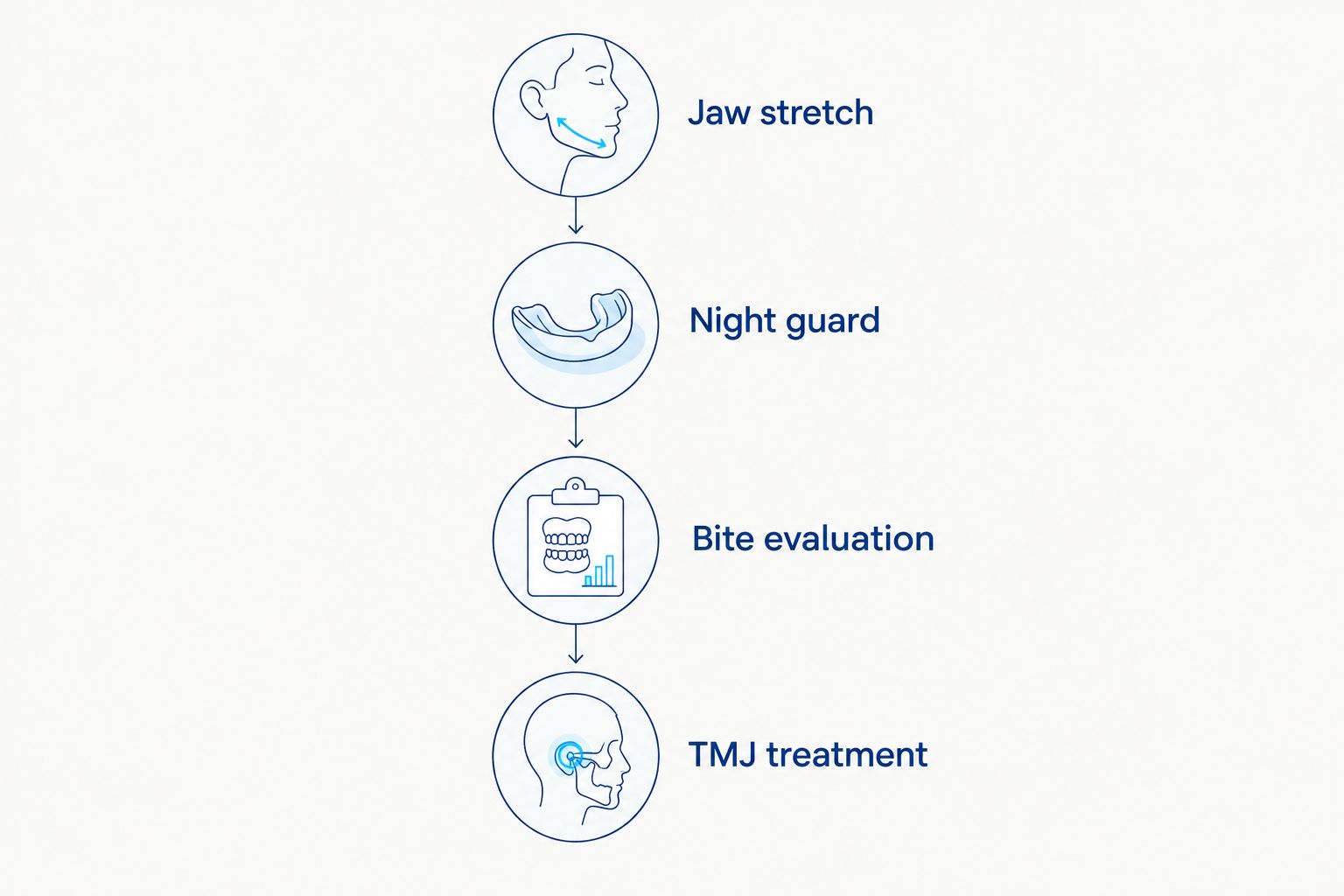
The verdict for most working vocalists: a custom night guard plus daily jaw-tension habits resolves the majority of performance-limiting jaw problems before Botox or a full TMJ treatment plan is ever needed.
Comparing jaw and TMJ options for singers
| Option | Best for | Key limitation |
|---|---|---|
| Jaw stretches and massage | Mild daily tension, pre-show routine | Doesn't fix structural bite issues or stop grinding |
| Over-the-counter night guard | Occasional mild grinding | Bulky, can shift bite, often abandoned within weeks |
| Custom night guard | Regular nighttime grinding, singers who need a precise fit | Requires a dental visit and a short adjustment period |
| Botox for jaw clenching | Chronic muscle tension not resolved by a guard | Temporary effect, needs repeat sessions |
| Full TMJ treatment plan | Persistent pain, clicking, or locking | Longer process; not a quick fix before a show |
Botox for jaw clenching and TMJ tension is worth discussing when muscle tension keeps returning even with a night guard in place.
Get your jaw and bite checked
A jaw and bite evaluation before your next tour or recording block.
Common mistakes singers make with jaw and dental care
- Treating jaw soreness as a vocal-technique problem. Chasing a breath-support fix for weeks when the real cause is TMJ tension delays the right treatment.
- Skipping dental checkups during touring seasons. Grinding and reflux both spike under travel stress, which is exactly when checkups get skipped.
- Using a one-size night guard bought online. A guard that shifts overnight can change bite alignment enough to affect morning resonance.
- Ignoring dry mouth as "just nerves." Chronic dry mouth from performance stress raises cavity risk the same way medication-induced dry mouth does — see the guide to managing dry mouth from medication for the same daily habits.
- Waiting until a tour ends to get pain evaluated. TMJ pain rarely resolves on its own and tends to worsen the longer a heavy performance schedule continues.
FAQ
What is the best dental care routine for singers and vocalists in 2026?
The best routine combines daily jaw-tension release, hydration to counter dry mouth, and a bite evaluation if tone or resonance changes. Singers who grind at night should add a custom night guard rather than an over-the-counter one.
Can TMJ problems actually affect singing voice?
Yes. TMJ dysfunction changes jaw position and tongue posture, both of which affect vowel shape and resonance. Persistent clicking, locking, or radiating ear pain should be evaluated rather than worked around.
Is a custom night guard better than a store-bought one for singers?
A custom night guard fits precisely and is far less likely to shift the bite overnight than an over-the-counter guard. For vocalists, an overnight bite shift can carry into morning warmups and affect tone.
Does dry mouth from performing really increase cavity risk?
Yes. Saliva buffers acid and helps remineralize enamel, so reduced saliva flow during long rehearsals or shows leaves teeth exposed to acid for longer stretches than normal.
When should a singer consider Botox for jaw clenching?
Botox for jaw clenching is worth discussing when chronic muscle tension keeps returning despite a properly fitted night guard and daily stretching. It’s a temporary option, not a one-time fix.
Can acid reflux from singing on an empty stomach damage teeth?
Yes. Reflux acid is more corrosive to enamel than most dietary acid, and singers who perform on an empty stomach or push their range are more prone to reflux episodes.
How often should a working vocalist get a dental checkup?
Vocalists under heavy touring or recording schedules benefit from checkups more frequently than the standard twice-yearly cadence, since grinding and reflux both spike under travel stress.
Should singers be nervous about dental visits affecting their voice?
No procedure related to jaw or bite evaluation should permanently affect vocal quality when done correctly, and options like sedation are available for singers with dental anxiety before a procedure.
One last thing
The jaw problem most singers dismiss as "just tension" is often the earliest sign of TMJ dysfunction, and it's cheaper and faster to address at the stretch-and-guard stage than after months of touring make it chronic. If a night guard already feels off or a jaw click has shown up in the last few weeks, that's the window to get it looked at — not after the next tour.
Related guides
- Dental care for musicians who play wind instruments
- How to relieve TMJ pain at home before your dentist visit