
TMJ treatment for jaw pain ranges from a five-minute stretching routine to a custom-fitted splint, and picking the right one depends on whether your pain starts in the muscle, the joint, or a bite that fights itself every time you chew. This guide breaks down what actually works for chronic jaw pain and the headaches that come with it, and what wastes your time and money in 2026.
- TMJ treatment for jaw pain starts with a custom-fit night guard, not a drugstore one — Buy.
- Botox calms overactive jaw muscles for 3 to 4 months per round — Consider for muscle-only pain.
- Sedation dentistry helps patients whose clenching is driven by dental anxiety — Buy if that’s you.
- Bite correction with clear aligners addresses structural TMJ causes over 6 to 18 months — Consider, not quick.
- Skip boil-and-bite guards under $30 — they flatten out in weeks and can worsen jaw alignment.
Why This Matters
TMJ disorders get blamed on stress, migraines, sinus trouble, and bad posture before anyone checks the jaw joint itself. That delay costs people months of ibuprofen and heating pads while the real cause \u2014 a joint under strain or muscles locked in a clench cycle \u2014 keeps grinding away at enamel and nerve endings.
The headaches that come with TMJ dysfunction usually sit at the temples or behind the eyes, not at the back of the skull like tension headaches from posture. If your headache pattern lines up with jaw soreness in the morning, treating the jaw is the faster path to relief than another round of headache medication.
Who This Guide Is For
This is written for adults who wake up with a sore jaw, hit a headache wall by mid-morning, or hear a click or pop every time they open wide \u2014 and who've already tried over-the-counter pain relief and heat without lasting change. If you're grinding your teeth at night without knowing it, or you tense your jaw through stressful workdays, the treatment ladder below applies to you. Families across Palm Beach County dealing with this exact pattern can start with a full evaluation at Dental Arts of Atlantis before committing to any single fix.
What to Look For in TMJ Treatment for Chronic Jaw Pain and Headaches
Diagnostic Imaging Before Anything Gets Fitted
A treatment plan built without imaging is a guess. 3-D imaging shows whether the joint disc has shifted, whether there's bone wear, or whether the pain is purely muscular \u2014 and that distinction changes everything about what comes next.
A Custom-Fit Splint, Not a Boil-and-Bite
Off-the-shelf night guards are built for one average mouth, not yours. A custom splint holds your bite in a position that takes pressure off the joint instead of just cushioning the grinding, which is why dentist-fitted guards outperform drugstore versions on relief that actually lasts.
A Bite Evaluation, Not Just a Pain Evaluation
TMJ pain often traces back to a bite that's slightly off \u2014 one tooth hitting early, a jaw that shifts to compensate. Treatment that only numbs pain without checking bite alignment tends to relapse within months.
A Non-Surgical-First Treatment Ladder
Most TMJ cases respond to splints, physical therapy, and muscle-relaxing injections before surgery ever enters the conversation. A provider who jumps to invasive options without trying conservative treatment first is skipping steps that resolve most cases.
A Follow-Up and Adjustment Schedule
Splints need adjusting as muscles relax and the bite settles \u2014 typically at the 4-to-6-week mark and again around 3 months. A one-and-done fitting with no follow-up plan is a red flag.
Get your jaw pain evaluated
A full bite and joint exam before you commit to any treatment.
Top Picks: TMJ Treatment Options
Custom Night Guard / Occlusal Splint \u2014 the first-line fix. Most patients feel noticeably less morning jaw soreness within 4 to 6 weeks of consistent nightly wear, once the splint is adjusted to the settled bite. It's non-invasive, reversible, and the standard starting point for muscle-and-joint TMJ pain in 2026. Buy.
Botox for Jaw Tension \u2014 the fast-acting option for pure muscle overactivity. Injections into the masseter typically ease clenching-driven pain within days and hold for 3 to 4 months per round, which makes it a strong bridge treatment while a splint takes effect. Details on how this works at a dental practice are on the facial cosmetics page. Consider if imaging shows muscle strain without joint damage.
Sedation Dentistry for Anxious Clenchers \u2014 for the patient whose jaw tenses up before treatment even starts. If dental anxiety is part of what's driving your grinding, getting through diagnostic visits and splint fittings under sedation dentistry breaks the cycle instead of adding to it. Buy if anxiety is a documented trigger for your clenching.
Bite Correction with Clear Aligners \u2014 the long game. When a misaligned bite is the root cause, orthodontic correction resolves the mechanical problem instead of managing around it, but it runs 6 to 18 months depending on how far the bite has drifted. Consider this only after imaging confirms a structural bite issue, not as a first response to pain.
Emergency Repair for Grinding Damage \u2014 damage control. If years of undiagnosed clenching have already cracked a molar or worn through an old filling, that has to get fixed before any TMJ splint will sit correctly. Buy if you have visible tooth damage; Skip this step if your teeth are intact and the pain is purely muscular.
“If your jaw clicks every time you yawn, that’s not normal — that’s a joint asking for attention.”
What to Avoid
- Drugstore boil-and-bite guards under $30. They flatten within weeks, don't hold a corrected bite position, and can actually worsen alignment if worn long-term.
- Jumping straight to joint surgery. Most TMJ cases respond to splints, Botox, or physical therapy first. Surgery should follow, not replace, a conservative trial in 2026's standard treatment protocols.
- Treating the headache and ignoring the jaw. Migraine medication won't fix a joint problem, and repeated prescriptions without a jaw exam just delay the actual fix.
Quick Comparison
| Treatment | Best For | Timeline | Verdict |
|---|---|---|---|
| Custom night guard | Muscle and joint pain, grinding | 4-6 weeks to relief | Buy |
| Botox injections | Pure muscle overactivity | 3-4 months per round | Consider |
| Sedation dentistry | Anxiety-driven clenching | Per visit | Buy if anxiety-linked |
| Clear aligner bite correction | Structural bite misalignment | 6-18 months | Consider |
| Emergency tooth repair | Grinding damage already present | 1-2 visits | Buy if damage exists, else Skip |
FAQ
What is the best TMJ treatment for jaw pain in 2026?
A custom-fit night guard is the standard first-line TMJ treatment for jaw pain in 2026, with most patients noticing less morning soreness within 4 to 6 weeks. Botox and bite correction come next depending on whether imaging shows muscle or structural causes.
Can TMJ really cause headaches?
Yes, TMJ dysfunction commonly causes headaches at the temples or behind the eyes, distinct from tension headaches at the back of the skull. Treating the jaw joint or muscle often resolves the headache pattern faster than headache medication alone.
Is Botox better than a night guard for TMJ?
Botox works faster for pure muscle tension, easing pain within days and lasting 3 to 4 months, while a night guard treats both muscle and joint strain and lasts longer once fitted. Many patients use Botox as a bridge while a custom splint takes full effect.
How much does TMJ treatment cost?
Cost varies by which treatment path you need — a splint, Botox rounds, or bite correction all price differently. Check current pricing directly with a dental provider once imaging identifies your specific cause.
Do over-the-counter night guards work for TMJ?
Boil-and-bite guards cushion grinding short-term but don’t hold a corrected bite position and flatten out within weeks. A custom-fit splint from a dentist outperforms them for lasting TMJ relief.
How long does TMJ treatment take to work?
A custom night guard typically shows noticeable relief within 4 to 6 weeks of consistent wear. Bite correction with clear aligners takes 6 to 18 months since it addresses the structural cause rather than just symptoms.
Can stress and anxiety make TMJ worse?
Yes, clenching driven by stress or dental anxiety is a common TMJ trigger, and sedation dentistry can help patients get through diagnosis and fitting without adding to the tension cycle. Addressing the anxiety component often improves treatment outcomes.
When does TMJ require surgery?
Surgery is reserved for cases where conservative treatments — splints, Botox, physical therapy — fail to resolve joint damage confirmed on imaging. Most TMJ cases in 2026 respond to non-surgical treatment before surgery is ever discussed.
One Last Thing
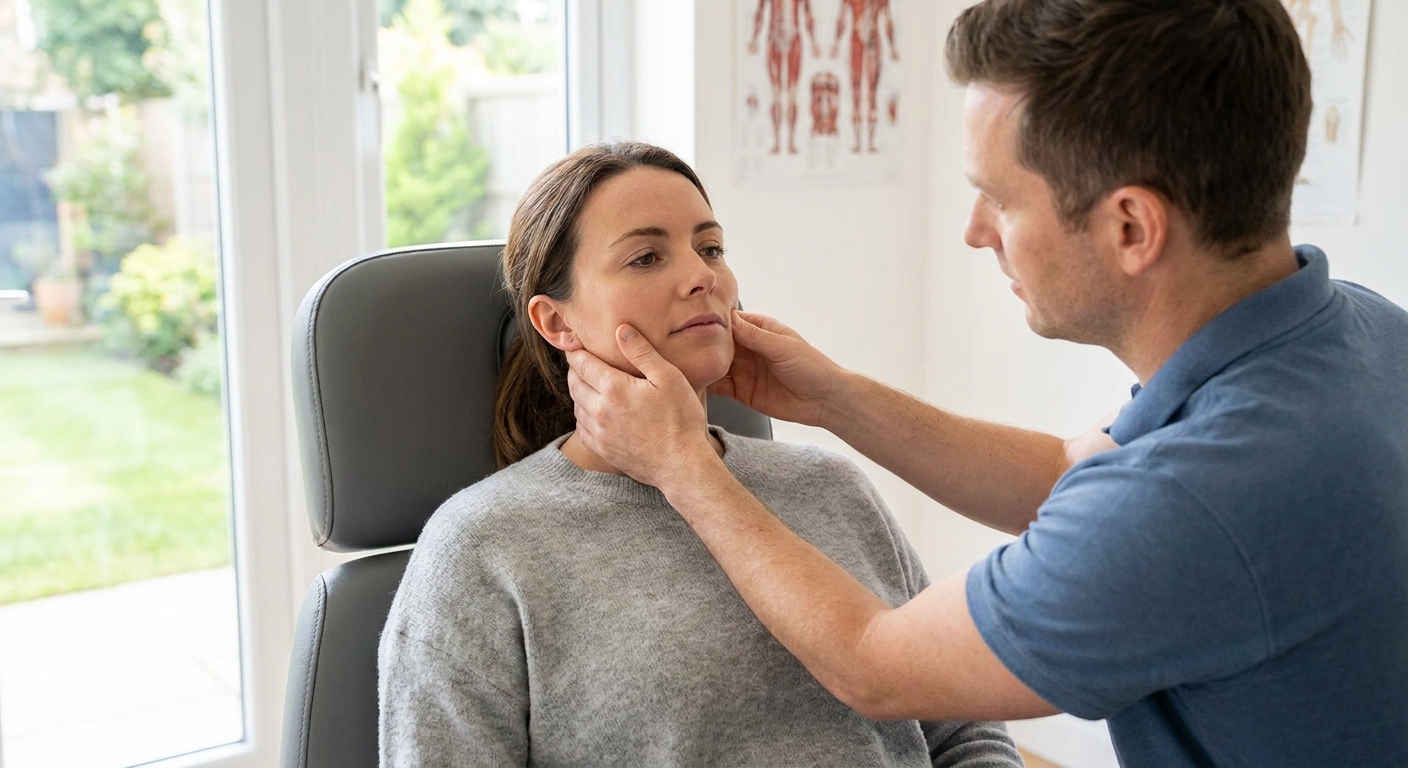
A lot of chronic headache sufferers never get asked whether their jaw hurts. A five-minute palpation exam during a routine cleaning catches referred TMJ pain that years of migraine prescriptions never touch \u2014 if your headaches have a morning pattern and your jaw feels tight when you wake up, mention it at your next visit before reaching for another prescription.
Related Guides
- Invisalign for adults: how it works and what to expect
- Emergency dentistry for a cracked or broken tooth