
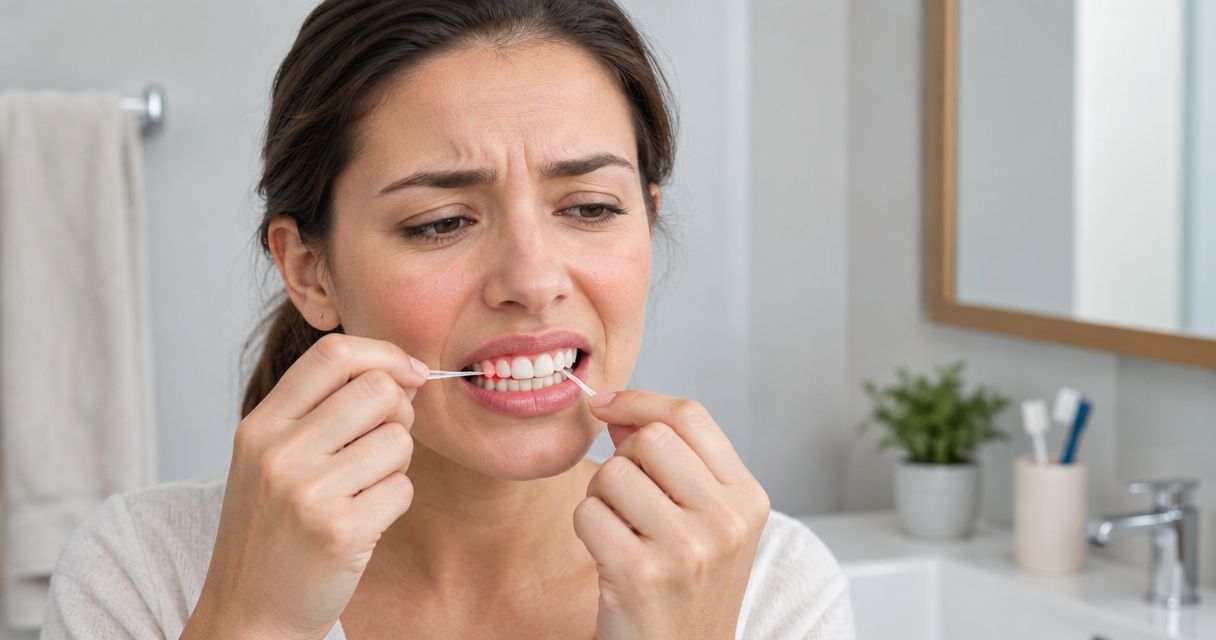
Bleeding after flossing is common, but it is not a sign of healthy gums; plaque-related inflammation or floss snapping into the tissue can cause it. Keep cleaning gently rather than abandoning your routine, and arrange a dental exam if bleeding keeps returning, worsens, or happens without cleaning. This 2026 guide explains what to change at home and which symptoms need prompt attention.
- If your gums bleed after flossing, use gentle technique and have recurring bleeding checked rather than accepting it as normal.
- The American Dental Association recommends brushing twice daily and cleaning between teeth daily to help control plaque.
- Dental Arts of Atlantis offers general and pediatric dental care for Lake Worth families.
- Heavy bleeding, facial swelling, or trouble swallowing needs urgent attention, not another attempt at flossing.
Why this matters
Bleeding gives you a reason to check both your technique and your gum health. A small streak after forceful flossing is different from bleeding across several areas every time you clean, but neither pattern diagnoses the cause by itself.
Dental Arts of Atlantis is a fit for Lake Worth families seeking general and pediatric dental care. If you also notice swelling, persistent bad breath, or a changing gumline, review these early signs of gum disease and describe them when you book.
Is it normal for gums to bleed after flossing?
Healthy gums generally do not bleed during gentle flossing. Bleeding can appear when you restart cleaning between your teeth because plaque has irritated the gumline, or when you push floss into the tissue too sharply. The useful question is not simply whether bleeding happens, but whether it recurs and what other symptoms accompany it.
Use this comparison to decide your next step. These patterns are clues, not a substitute for an examination.
| What you notice | Possible explanation | What to do |
|---|---|---|
| A small spot after floss snaps down | Local tissue injury | Ease pressure and guide floss carefully; seek care if bleeding recurs |
| Bleeding in several areas with puffy gums | Plaque-related inflammation | Continue gentle cleaning and arrange a dental exam |
| The same area bleeds and catches or shreds floss | A local cleaning problem or rough dental surface | Have the area checked; do not force floss through it |
| Bleeding with recession, loose teeth, or persistent bad breath | Possible periodontal disease | Arrange a prompt dental evaluation |
| Heavy bleeding or bleeding without cleaning | A problem needing dental or medical assessment | Seek prompt advice; get urgent help if bleeding will not stop |
Gingivitis is gum inflammation without the attachment and bone loss associated with periodontitis. Gingivitis can improve with effective plaque removal and professional care. Periodontitis needs professional treatment; flossing alone cannot restore lost supporting tissue.
Why bleeding after flossing varies
The amount of blood does not reliably tell you how serious a gum problem is. For your 2026 dental visit, focus on the pattern, your cleaning routine, and changes in your health rather than trying to grade the problem by color alone.
- Plaque and tartar: Plaque at the gumline irritates tissue. Once deposits harden into tartar, brushing and flossing cannot remove them.
- Flossing pressure: Snapping floss through a tight contact or sawing against the gum can injure tissue.
- Hard-to-clean areas: Crowding, fixed dental work, and awkward access can make consistent plaque removal difficult.
- Hormonal changes: Pregnancy-related hormonal changes can increase the gums' response to plaque. Bleeding still deserves attention.
- Medicines and health conditions: Blood-thinning medicines can increase bleeding, while conditions such as diabetes affect gum health. Tell your dentist about your medical history.
- Tobacco use: Smoking increases periodontal risk and can mask bleeding. An absence of blood does not prove your gums are healthy.
Do not stop a prescribed medicine because your gums bleed. Your dentist and prescribing clinician can decide whether medication or a health condition needs further review.
How do you floss without injuring your gums?
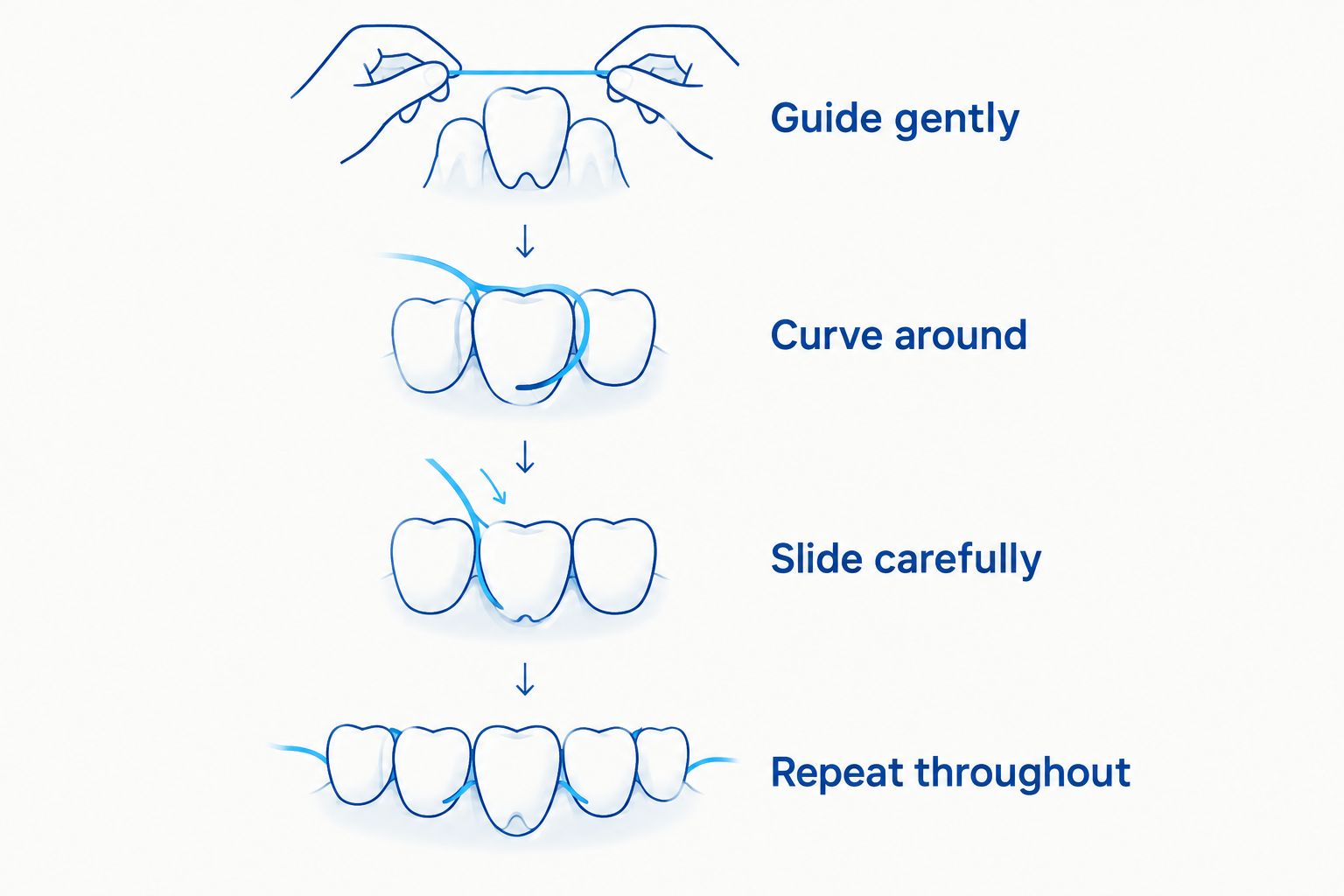
Clean the tooth surface rather than pressing floss into the gum. A gentle technique removes plaque while reducing unnecessary tissue trauma. Ask your dental team to watch your technique if you cannot tell whether your pressure is too strong.
- Guide gently. Ease floss through the contact with a controlled movement. Do not let it snap down into the pointed gum tissue between teeth.
- Curve around. Wrap the floss into a C shape against the side of a tooth. Keep contact with the tooth rather than stretching the floss straight across the gap.
- Slide carefully. Move along the tooth surface and gently beneath the gum edge without forcing the floss deeper. Repeat against the neighboring tooth.
- Repeat throughout. Clean between all accessible teeth and along the back surface of the last teeth. Use a clean section of floss as you move.
A tight contact is not a reason to pull harder. If floss repeatedly catches, breaks, or causes sharp pain, stop forcing that spot and have it examined. The problem could involve the contact, a filling edge, decay, or another local issue.
Gentle technique does not mean leaving plaque behind. If your hands cannot comfortably reach a space, ask about a different cleaning aid instead of repeatedly scraping the same sore area.
Which cleaning tool should you use if flossing hurts?
The right tool fits the space and lets you clean consistently without force. The American Dental Association recommends daily cleaning between teeth; it does not mean every person must use the same device.
| Cleaning option | Best for | Main benefit | Limitation |
|---|---|---|---|
| String floss | Tight contacts you can reach comfortably | Wraps against the sides of neighboring teeth | Takes hand control and can injure gums if snapped down |
| Interdental brush | Spaces large enough for a correctly sized brush | Cleans accessible spaces without wrapping string floss | An oversized brush can injure tissue; do not force it |
| Water flosser | People who find string floss difficult to handle | Offers another way to clean between teeth and around some dental work | Requires correct positioning and does not remove hardened tartar |
Choose a tool you can use gently every day, not the one that feels most aggressive. Ask your hygienist to check the fit of an interdental brush and demonstrate any device around crowns, bridges, braces, or implants.
A water flosser is an option, not a diagnosis or a cure for gum disease. Switching tools does not remove the need to investigate recurring bleeding.
What should your daily routine include in 2026?
Keep the routine simple: brush for 2 minutes, 2 times a day, and clean between your teeth 1 time a day. These recommendations follow the American Dental Association's patient guidance on brushing and interdental cleaning, rather than a special bleeding-gum schedule.
Use fluoride toothpaste and a soft-bristled toothbrush. Direct gentle cleaning toward the gumline without scrubbing harder to make your teeth feel cleaner. Replace force with careful coverage.
Mouthwash does not replace brushing, interdental cleaning, or tartar removal. Your dentist can advise whether a particular rinse belongs in your treatment plan; choosing a stronger-tasting rinse is not a reliable way to solve bleeding.
For your 2026 routine, track where bleeding occurs, whether it happens with brushing too, and whether it also happens spontaneously. Share those observations at your visit instead of repeatedly flossing a spot to test whether it still bleeds.
When should you call a dentist about bleeding gums?
Call when bleeding keeps returning despite gentle cleaning, appears without an obvious injury, or comes with persistent swelling, tenderness, bad breath, recession, or tooth mobility. You do not need severe pain before asking for an examination.
Seek urgent dental or medical assessment for heavy bleeding that will not stop, rapidly increasing swelling, fever with facial swelling, or feeling seriously unwell. Trouble breathing or swallowing requires emergency care. Do not delay these symptoms while trying a different toothpaste or floss.
If you have a known bleeding disorder, take medicines that affect clotting, or are receiving treatment that affects blood counts, follow your clinician's instructions and report new bleeding promptly. Do not change prescribed treatment on your own.
You can contact the practice to describe recurring bleeding and request an evaluation. Explain whether it affects a single area or your whole mouth, and mention medicines and recent health changes.
What happens at an appointment for bleeding gums?
A dental evaluation looks for the reason behind the bleeding rather than treating blood as a stand-alone diagnosis. Expect questions about your cleaning habits, symptom pattern, medicines, smoking, and relevant medical conditions.
The dentist or hygienist can examine plaque and tartar, assess gum inflammation, and measure the spaces between gums and teeth. Dental X-rays are used when clinically indicated to evaluate supporting bone or other concerns; bleeding alone does not determine which images you need.
Dental Arts of Atlantis provides general dental care for Lake Worth families. Bring your questions and medication list so the discussion addresses both your home routine and any treatment needs.
Professional care can remove deposits you cannot reach at home and identify problems that need treatment. Its limitation is straightforward: a cleaning cannot replace daily plaque control, and established periodontal disease can require care beyond a routine cleaning.
Should you stop flossing if your gums bleed?
Do not abandon gentle daily cleaning because of a small amount of bleeding. Leaving plaque between teeth can maintain inflammation. Correct your technique and arrange an exam if bleeding persists or recurs.
If flossing causes a sharp injury or significant bleeding, stop working that spot and seek advice. Recent surgery or an extraction also changes the instructions: follow the treating dentist's directions rather than applying a standard routine to a healing site.
Does bleeding after flossing mean you have gum disease?
Bleeding after flossing can signal gum disease, but it does not confirm a diagnosis. Technique-related injury and other factors can also cause bleeding.
Gum disease can be painless. A dental examination distinguishes inflammation from attachment or bone loss and identifies whether a local tooth or restoration is contributing.
Can bleeding gums improve with home care alone?
Plaque-related gingivitis can improve with effective home care, but hardened tartar and periodontitis need professional attention. A quieter gumline is encouraging; it is not proof that every underlying problem has resolved.
The National Institute of Dental and Craniofacial Research identifies bleeding gums as a symptom of periodontal disease. Keep that distinction in mind in 2026: symptom improvement helps you track progress, but an examination establishes the diagnosis.
FAQ
Why do my gums bleed after flossing even when I am gentle?
Gentle flossing can still trigger bleeding when gums are inflamed by plaque. Recurring bleeding needs a dental examination because technique is not the only possible cause.
Is it normal for gums to bleed when I start flossing again?
Bleeding can happen when you restart flossing, but it is not a sign of healthy gums. Continue gentle daily cleaning and have persistent or recurring bleeding checked.
How long should I wait before getting bleeding gums checked?
Arrange a dental visit when bleeding keeps returning rather than relying on a fixed waiting period. Heavy bleeding, spontaneous bleeding, or bleeding with significant swelling needs more prompt assessment.
Can flossing too hard make my gums bleed?
Yes, snapping floss into the gums or sawing against the tissue can cause bleeding. Guide floss gently through the contact and curve it against each tooth.
Should I use a water flosser instead of string floss?
A water flosser is an option if string floss is difficult to use comfortably. Ask your dental team which method fits your teeth and dental work; switching tools does not treat an undiagnosed gum problem.
Can blood thinners make my gums bleed after flossing?
Medicines that affect clotting can increase gum bleeding. Tell your dentist and prescribing clinician about new or increased bleeding, and do not stop prescribed medicine on your own.
Can I get bleeding gums checked in Lake Worth?
Dental Arts of Atlantis offers general dental care in Lake Worth for families in Palm Beach County. Request an examination and describe when the bleeding occurs and any accompanying symptoms.
One last thing
Do not judge gum health by pain alone. Gum disease can develop without much discomfort, and smoking can make bleeding less obvious. For your 2026 dental visit, bring a clear description of what has changed instead of waiting for the problem to hurt.
The next move is gentle daily cleaning plus an examination for recurring bleeding—not harder flossing.
Related guides
- Best floss type for tight contacts between teeth
- Is a water flosser worth it?
- Can gum disease be reversed at home?