

Drink coffee after teeth whitening only when your whitening product’s instructions or treating dentist’s aftercare plan allows it; there is no single waiting time that applies to every treatment in 2026. Staining and temporary tooth sensitivity are separate concerns, so finishing the recommended waiting period does not make coffee stain-free or guarantee that hot or iced drinks will feel comfortable.
- Coffee after teeth whitening requires treatment-specific instructions, not a universal countdown.
- Coffee can contribute to surface stains; hot and cold drinks can trigger temporary whitening sensitivity.
- Never drink coffee while wearing whitening trays or strips.
- Dental Arts of Atlantis provides general and cosmetic dental care for Lake Worth families.
Why this matters
You want to protect your result without giving up your morning routine unnecessarily. The useful question is not just how many hours have passed, but what your treatment instructions say and how your teeth feel.
A waiting period is an aftercare instruction, not a promise against future stains. For your 2026 whitening plan, start with how to whiten teeth safely without damaging enamel, then confirm the directions for the product you actually used.
Coffee stains, sensitivity, and gum irritation need different responses. More bleaching is not the answer to all three, and a painful tooth should not be treated as a cosmetic inconvenience.
How long after teeth whitening can you drink coffee?
Follow the waiting period specified for your treatment rather than choosing a generic deadline online. A dentist-supervised treatment, a take-home tray system, and whitening strips do not automatically share the same directions. If your instructions are unclear, ask the treating office or product manufacturer before resuming coffee.
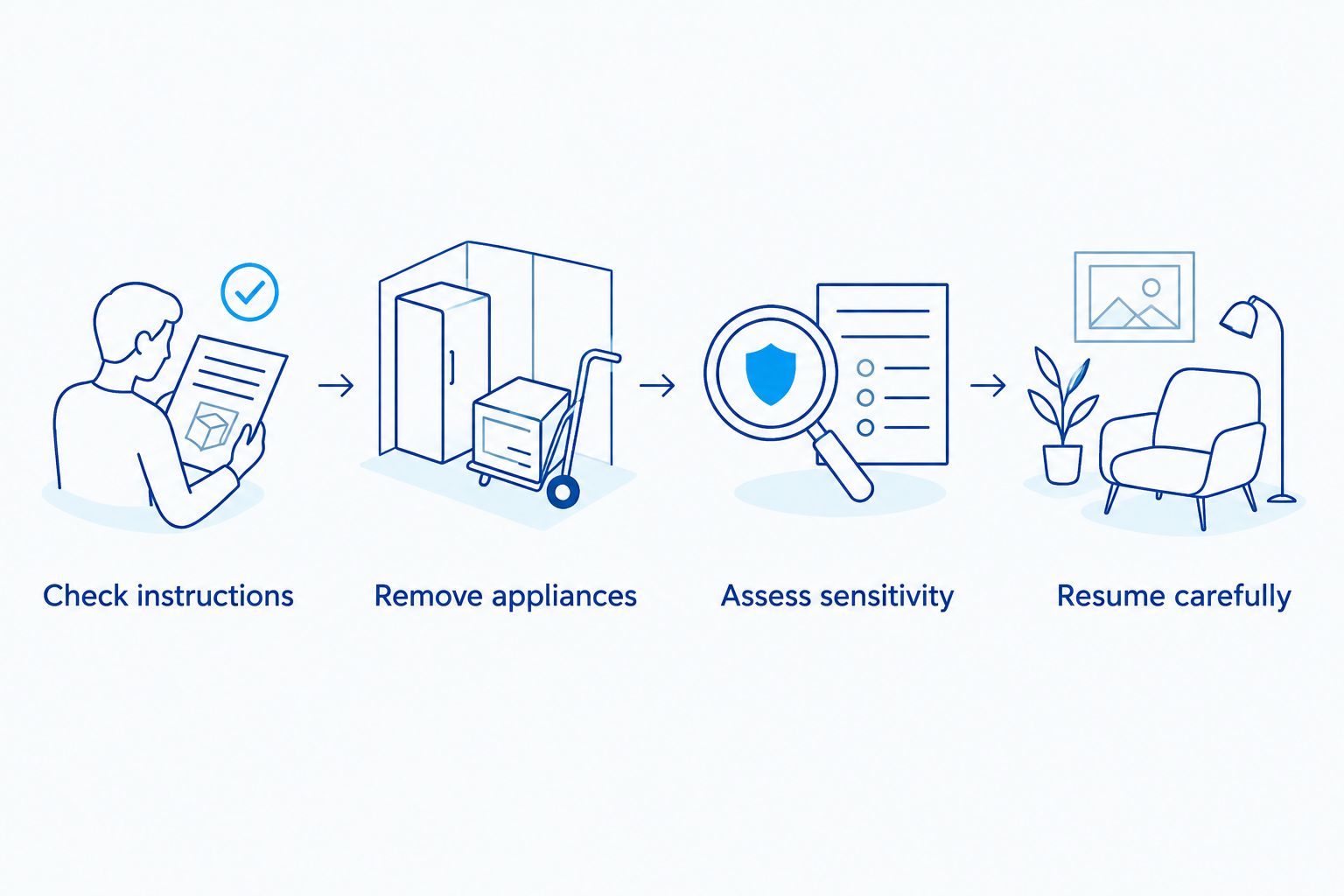
Use this sequence to decide what to do:
- Check instructions. Read the aftercare sheet or package directions for restrictions on eating and drinking. Use the instructions for your exact treatment, not another product’s advice.
- Remove appliances. Do not drink coffee with whitening trays or strips in place. Finish the application and remove or clean the material as directed.
- Assess sensitivity. If hot or cold drinks trigger pain, choose room-temperature water while you clarify your next step. Do not test sensitive teeth repeatedly with coffee.
- Resume carefully. Once your instructions permit coffee, avoid prolonged sipping and rinse with plain water afterward. Keep following your normal oral hygiene routine.
This approach separates a treatment restriction from a comfort issue. You can finish an instructed waiting period and still have sensitivity that needs attention.
How different whitening approaches affect the decision
The comparison below explains which instructions matter. It does not assign an unsupported waiting time to a treatment category.
| Approach | Best for | Useful feature | Limitation | Coffee decision |
|---|---|---|---|---|
| Dentist-supervised treatment | People seeking professional assessment | Allows discussion of oral health and sensitivity | Still requires individual aftercare | Follow the treating dentist’s directions |
| Dentist-directed take-home trays | People who can follow a prescribed home routine | Uses a planned application schedule | Requires correct wear and cleaning | Keep coffee out of trays and follow the prescribed restrictions |
| Over-the-counter whitening strips | People considering a labeled home treatment | Provides package directions for application | Does not replace a dental examination | Follow the exact label; do not drink while strips are on |
Choose instructions that match the treatment, not the most convenient answer. If your dentist has modified the directions because of sensitivity or another dental concern, ask before substituting general package advice.
Why advice about coffee after teeth whitening varies
Different recommendations do not prove that one exact countdown fits everyone. These factors change what you need to consider:
- Product formulation. Whitening products differ in their ingredients, strength, and application directions. Advice for one product does not establish the aftercare for another.
- Application schedule. A completed treatment and an ongoing home course are different situations. Repeated applications require attention to the directions throughout the course.
- Tooth sensitivity. Whitening can cause temporary sensitivity. Coffee temperature can matter even when a treatment’s dietary restriction has ended.
- Gum irritation. Whitening material can irritate soft tissues. Burning or sore gums warrant stopping the application and checking the instructions or contacting a dentist.
- Existing dental conditions. Decay, cracks, exposed roots, and gum problems can affect comfort and treatment suitability. A clock cannot rule out these concerns.
Do not treat a longer restriction as proof of a better treatment. The goal is to follow appropriate directions and protect your oral health, not to endure unnecessary discomfort.
Does hot coffee or iced coffee make a difference?
Hot coffee and iced coffee can both trigger discomfort in sensitive teeth after whitening. Neither temperature removes coffee’s potential to contribute to surface staining.
Best for comfort: avoid temperature extremes when your teeth are sensitive. Letting a drink approach a comfortable temperature addresses the temperature trigger, but it does not override your treatment’s instructions about coffee.
Iced coffee is not an automatic workaround. A straw does not guarantee that coffee avoids your teeth, and adding milk does not turn coffee into a stain-proof drink.
For your 2026 aftercare routine, distinguish the reason you are avoiding a drink. If the concern is temperature sensitivity, changing the temperature addresses that trigger; if your instructions restrict coffee, changing the temperature does not cancel the restriction.
What should you do if you already drank coffee?
Drinking coffee once after whitening does not, by itself, establish that your result is ruined. Rinse with plain water, review your instructions, and return to the recommended routine rather than trying to correct the situation with extra bleaching.
Do not scrub harder or extend the next whitening application. Excessive brushing pressure can damage teeth and gums, and exceeding whitening directions can increase irritation and sensitivity.
If you notice a color difference, avoid diagnosing it from a single bathroom photo. Lighting and tooth hydration can affect how shade appears; follow your dentist’s timing for assessing the result.
Contact a dentist if you develop significant pain, persistent sensitivity, or visible gum injury. Describe the product, when you used it, and what symptoms you have rather than assuming coffee caused every change.
How can you reduce coffee staining after whitening?
Best for long-term maintenance: consistent oral hygiene and less prolonged contact with staining drinks. A one-time waiting period cannot replace daily care.
Once coffee is allowed under your instructions, use these habits:
- Drink coffee during a defined break rather than keeping it beside you for repeated sipping throughout the day.
- Rinse with plain water afterward to help clear the drink from your mouth.
- Brush for 2 minutes per session, 2 times per day, using fluoride toothpaste and gentle pressure.
- Clean between your teeth 1 time per day with floss or another suitable interdental cleaner.
- Keep dental visits on the schedule recommended for your oral health.
These brushing and interdental-cleaning habits reflect standard American Dental Association home-care recommendations. They support oral health; they do not guarantee that coffee will never stain your teeth.
Avoid aggressive stain-removal experiments with lemon juice, household chemicals, or abrasive scrubbing. A whiter appearance is not a good trade for damaged tooth structure or irritated gums.
Should you brush immediately after coffee?
Rinsing with water is a practical immediate step after coffee. Do not respond by brushing harder, and follow your dental professional’s advice about brushing timing, particularly if you have erosion or sensitivity.
Whitening toothpaste is not a substitute for following bleaching instructions. Its role in removing surface stains differs from the action of peroxide-based whitening treatments, and a more abrasive routine is not automatically a better one.
What if your teeth hurt when you drink coffee?
Temporary sensitivity is a recognized side effect of teeth whitening, but not every painful tooth is experiencing a routine whitening reaction. A sharp pain in one tooth, pain when biting, or discomfort that continues after the drink is gone deserves dental assessment.
Pause further whitening if sensitivity develops, and check the product’s directions or contact your dentist before restarting. Do not increase the application time to finish the course sooner.
Seek prompt dental care for severe or worsening pain. Facial swelling, fever, or difficulty swallowing or breathing requires urgent assessment; do not wait for a whitening restriction to expire.
Best for an unexplained painful tooth: an examination, not another whitening session. Tell the dentist whether the pain affects one tooth or several and whether heat, cold, or biting brings it on.
What should you ask before your next whitening treatment?
For a 2026 appointment, bring the name or packaging of any whitening product you already use. Also mention previous sensitivity and any front-tooth fillings, crowns, or veneers, because restorations do not whiten like natural teeth.
Ask these questions before starting:
- What exact eating and drinking restrictions apply to this treatment?
- When can I resume coffee, and does that advice apply between home applications?
- What should I do if my teeth or gums become sore?
- When should I assess the final shade rather than judging it immediately?
- How should I maintain the result without overusing whitening products?
Dental Arts of Atlantis is a fit for Lake Worth families seeking general and cosmetic dental care. That broad scope is relevant when cosmetic goals overlap with tooth discomfort, but a service description cannot determine whether whitening is suitable for your teeth; an examination is still necessary.
For general or cosmetic dental questions, contact Dental Arts of Atlantis and describe your treatment history and symptoms. Do not assume a particular whitening system or aftercare schedule before discussing your needs.
Can I drink coffee during an at-home whitening course?
An at-home whitening course requires following the product’s directions throughout the course, not just after the last application. Never drink coffee while whitening trays or strips are in place.
Ask how coffee fits between applications if the directions are unclear. Do not shorten an application, skip cleaning instructions, or add extra gel to make room for your usual coffee schedule.
Will coffee undo whitening immediately?
Coffee exposure is not proof that whitening has been immediately reversed. Coffee can contribute to surface staining over time, but you cannot calculate an individual shade change from one drink.
Keep your maintenance routine consistent and follow the recommended timing for evaluating results. If your teeth look uneven or a restoration no longer matches, ask a dentist to assess the cause instead of repeatedly bleaching.
FAQ
Is there one waiting time for coffee after teeth whitening?
There is no single waiting time for coffee after teeth whitening that applies to every product and treatment. Follow your exact product instructions or treating dentist’s aftercare plan, and ask for clarification if coffee is not addressed.
Can I have coffee with milk after whitening?
Coffee with milk is still coffee and does not bypass your whitening aftercare instructions. Adding milk does not guarantee protection from staining or temperature sensitivity.
Does drinking coffee through a straw protect whitened teeth?
A straw does not guarantee that coffee avoids your teeth. Do not use a straw as a substitute for following treatment restrictions or maintaining oral hygiene.
Is decaf coffee better after teeth whitening?
Decaf coffee is not a stain-free alternative to regular coffee. Removing caffeine does not remove the need to follow your whitening instructions.
Should I whiten my teeth again if I drank coffee too soon?
Do not add an extra whitening session because you drank coffee. Rinse with water, follow the original directions, and contact your dentist if you have pain, irritation, or concerns about the result.
Can coffee stain crowns or veneers after whitening?
Crowns and veneers do not bleach like natural teeth, and surface staining depends on the restoration and its condition. Ask your dentist about cleaning and shade matching rather than applying more whitening material.
Can Dental Arts of Atlantis help with general and cosmetic dental concerns?
Dental Arts of Atlantis provides general and cosmetic dental care for families in Lake Worth and the Palm Beach County area. Discuss your goals and any sensitivity so treatment suitability can be assessed.
One last thing
The first look in the mirror is not always the right moment to judge whitening. Tooth dehydration can temporarily affect appearance, so use your dentist’s recommended assessment timing before deciding that you need more treatment.
For your 2026 plan, write down the coffee instructions before you leave the appointment or begin the home course. A clear, treatment-specific answer is more useful than repeatedly searching for a universal deadline.
Related guides
- Best teeth whitening method for coffee and wine stains
- How long does professional teeth whitening last?
- How to stop tooth sensitivity to hot and cold