
Laser teeth cleaning is not automatically better than traditional scaling: scaling removes hardened deposits, while certain lasers serve as an additional tool during gum treatment. This 2026 guide explains the differences in comfort, purpose, and follow-up so you can discuss a recommendation without assuming that newer equipment means better results.
- Laser teeth cleaning vs scaling is not an either-or choice: laser treatment can accompany mechanical cleaning.
- Scaling and root planing address deposits below the gumline; laser treatment does not automatically replace them.
- Choose treatment around your gum diagnosis, not promises of painless care or permanent results.
- Dental Arts of Atlantis serves Palm Beach County families seeking general and family dental care in Lake Worth.
Is laser teeth cleaning better than traditional scaling?
Traditional scaling remains a foundation of nonsurgical gum treatment; adding a laser does not establish that treatment is better for every patient. The useful comparison is whether a particular laser procedure adds a meaningful benefit to the cleaning your gums need.
The National Institute of Dental and Craniofacial Research describes scaling and root planing as a deep-cleaning approach for periodontal disease. If you have been diagnosed with periodontitis, understanding gum disease treatment for early-stage periodontitis is more useful than choosing equipment first.
| Approach | Best for | Main role | Main limitation |
|---|---|---|---|
| Hand scaling | Targeted removal of hardened deposits | Uses handheld instruments to remove plaque and tartar from tooth surfaces | Pressure and scraping sensations can bother sensitive patients |
| Ultrasonic scaling | Mechanical cleaning with a powered instrument | Uses a vibrating tip and water to disrupt and remove deposits | Vibration, sound, and water can feel uncomfortable |
| Laser-assisted treatment | Selected gum-treatment situations with a defined clinical purpose | Uses laser energy for specific tissue or bacterial targets, depending on the device and procedure | Benefits depend on the procedure; it is not a universal replacement for deposit removal |
Hand instruments and ultrasonic instruments often work together. A treatment plan that includes both is still mechanical scaling, not a separate category of experimental care.
Why this matters
Choosing between laser teeth cleaning and scaling starts with identifying what needs treatment. A routine preventive cleaning, treatment for inflamed gums, and scaling and root planing for periodontitis are not interchangeable appointments.
For your 2026 treatment decision, ask for the diagnosis before discussing the device. Otherwise, you risk comparing a basic cleaning with a more involved periodontal procedure and attributing every difference to the laser.
Gum disease also does not always hurt. Bleeding, persistent bad breath, recession, or loose teeth deserve an examination even when chewing feels normal; facial swelling, fever, or difficulty swallowing calls for prompt assessment, not a routine cleaning comparison.
Traditional scaling: best for removing hardened deposits
Scaling physically removes plaque and calculus, the hardened material commonly called tartar. Brushing helps control soft plaque, but you cannot reliably brush away established tartar at home.
For periodontitis, scaling and root planing cleans affected root surfaces below the gumline. Your clinician uses examination findings, gum measurements, and appropriate imaging to decide which areas need treatment.
The advantage of scaling is its direct role in removing deposits. Its limitation is that inflamed tissues and exposed roots can make treatment uncomfortable, and access becomes more challenging around complex roots or deep pockets.
Local anesthetic helps manage discomfort during deeper treatment. Temporary tenderness or sensitivity afterward does not, by itself, mean that the instruments damaged your teeth; persistent or worsening symptoms still need a review.
Ultrasonic scaling: best for powered mechanical cleaning
An ultrasonic scaler is not a laser. It uses a vibrating tip with water, and the clinician guides that tip over the areas requiring cleaning.
The practical benefit is another way to remove deposits. Your clinician can combine ultrasonic scaling with hand instruments rather than asking you to choose one method for your entire mouth.
The trade-off is sensory: water, vibration, and sound can be difficult if you have sensitive teeth or dental anxiety. Tell your clinician what bothers you so the comfort plan addresses that specific concern instead of assuming a different device will solve it.
Laser-assisted treatment: best for a defined additional purpose
Laser-assisted periodontal treatment uses laser energy as part of a treatment plan. Different devices interact with tissues differently, so the phrase laser cleaning does not describe one standardized procedure.
The potential advantage is a specific additional treatment function, such as addressing selected soft-tissue targets. The limitation is equally important: a laser label alone does not tell you whether deposits are removed more thoroughly or whether your long-term gum health will improve.
For a laser proposal in 2026, ask which device is involved, what it treats, and whether scaling is still included. Do not assume that a laser procedure means no anesthetic, no discomfort, or no recovery instructions.
Laser treatment also requires appropriate training and protective measures, including eye protection. Equipment is only one part of care; diagnosis, technique, and follow-up remain essential.
Why results and comfort vary
Your experience depends on more than whether a laser appears in the treatment plan. These factors explain why two patients can receive different recommendations:
- Gum diagnosis: Gingivitis involves inflammation without the attachment and bone loss that define periodontitis. Treatment needs differ.
- Deposit location: Material below the gumline requires access that a surface polish does not provide.
- Pocket depth and anatomy: Deeper spaces, root contours, and areas between roots affect how easily instruments reach deposits.
- Existing sensitivity: Recession and exposed roots influence comfort during cleaning and afterward.
- Procedure details: The laser type, intended tissue target, and accompanying mechanical cleaning determine what the appointment includes.
- Home care and maintenance: Plaque returns after treatment. Daily cleaning and individualized follow-up help protect the result.
A person with little buildup and healthy supporting tissues should not expect the same appointment as someone with advanced periodontal disease. Compare recommendations against your own findings, not another patient's experience.
How do you decide which treatment you need?
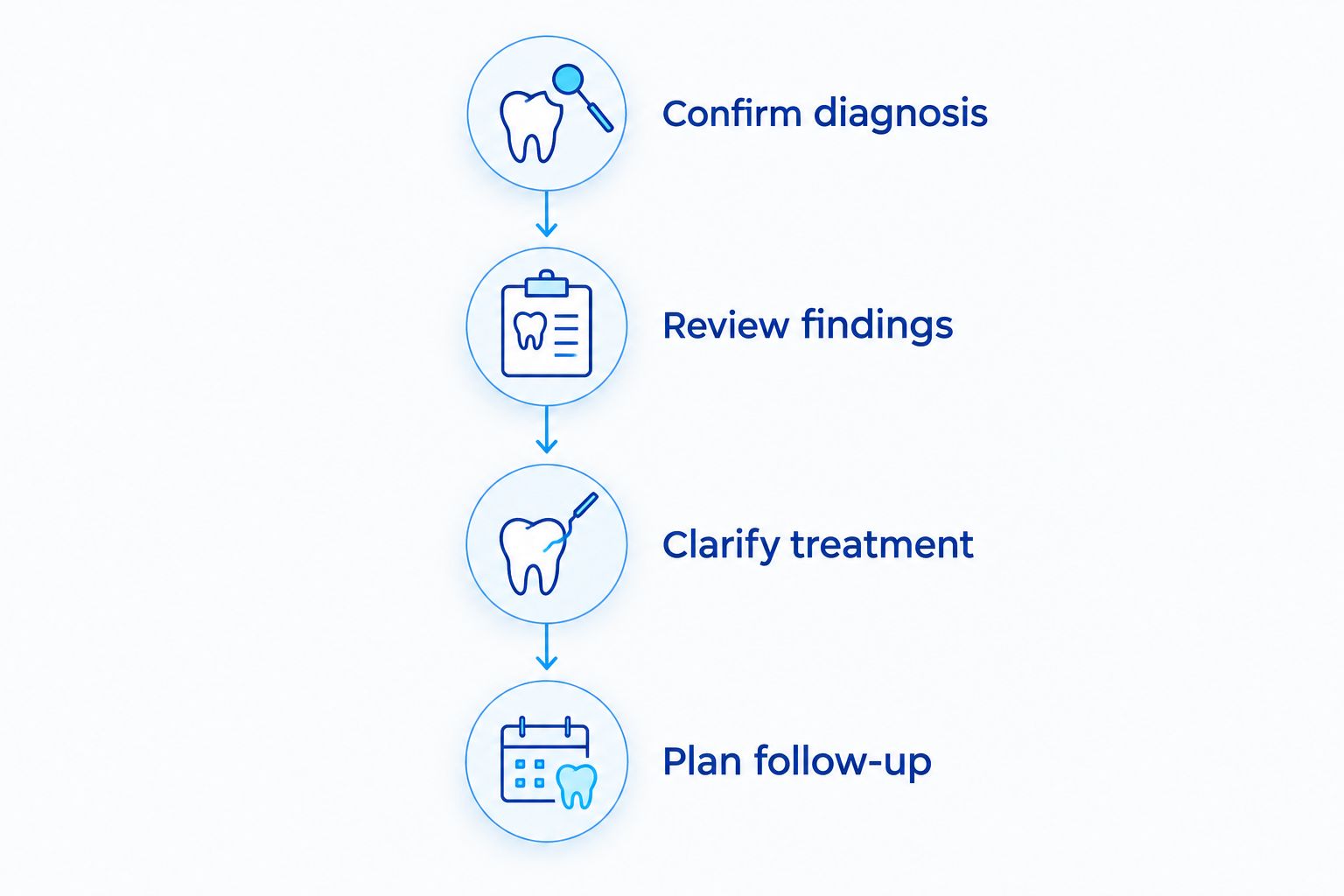
Start with an examination, then connect each proposed procedure to a finding. Use this sequence when reviewing a gum-treatment recommendation in 2026.
- Confirm diagnosis. Ask whether you have healthy gums, gingivitis, or periodontitis, and which areas are affected.
- Review findings. Request an explanation of gum measurements, bleeding, recession, and any bone changes visible on appropriate imaging.
- Clarify treatment. Ask how hardened deposits will be removed and what an additional laser procedure is intended to accomplish.
- Plan follow-up. Confirm how healing will be reassessed and how your future maintenance schedule will be chosen.
Healthy gum pockets are generally 1 to 3 millimeters deep, according to federal oral-health guidance. A measurement outside that range is not a complete diagnosis on its own; your clinician interprets it alongside bleeding, attachment levels, and other findings.
Bring a medication list and describe previous reactions to dental treatment. If you take blood-thinning medicine, do not stop it on your own; the dental team needs that information when planning care.
Is laser teeth cleaning less painful than scaling?
Laser treatment does not guarantee painless cleaning. Your comfort depends on inflammation, sensitivity, the tissues being treated, and the anesthetic plan—not simply the equipment name.
Ask what sensations to expect and how you can signal for a pause. For many anxious patients, an agreed stop signal and a clear explanation address concerns that a promise of advanced technology leaves unanswered.
If your main worry is the scraping sound, say that directly. If your concern is injections or soreness afterward, those need a different conversation.
Can a laser replace deep scaling and root planing?
A laser is not a universal replacement for scaling and root planing. Hardened deposits still require effective removal, and a laser-assisted plan can include hand or ultrasonic instruments.
Ask the clinician to distinguish treatment of tooth deposits from treatment of surrounding soft tissues. A proposal should explain both jobs rather than presenting laser cleaning as one procedure that automatically accomplishes everything.
Will laser cleaning cure gum disease permanently?
Neither laser treatment nor scaling provides a permanent cure that eliminates future care. Periodontitis requires ongoing management, and successful initial treatment does not make daily plaque control optional.
Your clinician should reassess healing and identify any areas that remain difficult to maintain. Persistent deep pockets or continuing disease can require further periodontal treatment or specialist assessment rather than repeated promises that another cleaning will solve everything.
What should you ask before agreeing to treatment?
A useful discussion ends with a plan you understand. Ask these questions before choosing a proposed procedure:
- What diagnosis makes this treatment necessary?
- Which teeth or areas need treatment below the gumline?
- Will hand or ultrasonic scaling still be performed?
- What specific benefit is the laser intended to add in my case?
- What are the risks, alternatives, and comfort measures?
- How will you determine whether treatment worked?
A clear explanation matters more than a technology label. Be cautious about guarantees of permanent bacterial elimination, automatic bone regrowth, or completely pain-free care.
If you are comparing recommendations, request your examination findings and written treatment plan. Comparing the same diagnosis and treatment areas makes a second opinion more useful than comparing procedure names alone.
Discussing family dental care in Lake Worth
Dental Arts of Atlantis is best for Palm Beach County families seeking general and family dental care in Lake Worth. The practice's dental services also include cosmetic, pediatric, and implant dentistry.
When discussing gum concerns with Dental Arts of Atlantis, explain whether your priority is bleeding, sensitivity, anxiety, or understanding a previous recommendation. General dental services do not, by themselves, establish that a particular laser procedure is offered or appropriate; confirm the proposed treatment directly.
Discuss your gum concerns
Ask about an evaluation for bleeding gums, sensitivity, or a recommended deep cleaning.
What should you do after either type of cleaning?
Follow the instructions for your actual procedure. Routine cleaning and treatment involving deeper tissues do not necessarily have identical aftercare.
For everyday prevention, the American Dental Association recommends brushing for 2 minutes, 2 times per day, with fluoride toothpaste and cleaning between teeth daily. After periodontal treatment, ask whether any areas need temporary changes to that routine.
Keep the reassessment appointment even if your gums feel better. Reduced soreness is encouraging, but your clinician also needs to evaluate bleeding, pocket measurements, and how well you can clean treated areas.
For your 2026 maintenance plan, avoid assuming that everyone needs the same interval. Your gum condition, response to treatment, and ability to control plaque should guide the schedule.
FAQ
What’s better for gum disease, laser teeth cleaning or scaling?
Scaling remains a foundation of nonsurgical periodontal treatment, and adding a laser is not automatically better. Choose a plan based on your diagnosis, deposit removal needs, and the specific purpose of any additional procedure.
Is ultrasonic teeth cleaning the same as laser cleaning?
Ultrasonic teeth cleaning is not laser cleaning. An ultrasonic scaler uses a vibrating tip and water, while a laser uses light energy for specific treatment targets.
Can I ask for numbing during a deep cleaning?
Yes, ask your clinician about local anesthetic for scaling and root planing. The comfort plan should reflect the treatment areas, inflammation, and your sensitivity.
Will laser cleaning stop my gums from bleeding forever?
Laser cleaning does not guarantee that bleeding will stop permanently. Persistent or returning bleeding needs evaluation, and daily plaque control remains necessary after treatment.
How do I know whether I need a regular cleaning or deep cleaning?
A dental examination determines whether you need preventive cleaning or periodontal treatment. Gum measurements, bleeding, attachment changes, and appropriate imaging help distinguish those needs.
Can I remove tartar myself instead of getting scaling?
You cannot reliably remove established tartar with brushing or flossing. Avoid scraping your teeth with home instruments, which can injure your gums and tooth surfaces.
Does Dental Arts of Atlantis offer the laser procedure I was recommended?
Confirm the exact procedure directly with Dental Arts of Atlantis. A recommendation for laser-assisted treatment should identify the procedure, its purpose, and whether mechanical scaling is included.
One last thing
The most useful question is not whether a laser was used, but how healing will be checked. Before your 2026 appointment ends, make sure you understand the follow-up plan and which findings will show whether your gums are improving.
Related guides
- How to spot early signs of gum disease at home
- How to manage dental anxiety before a procedure
- How often adults should get a dental checkup and cleaning