

A tooth extraction should not cause sharp pain once local anesthesia has fully numbed the area, although you can still feel pressure, movement, and pulling. Soreness usually starts as the numbness wears off; surgical removal generally causes more recovery discomfort than a straightforward extraction. If you are preparing for an extraction in 2026, the most useful distinction is pressure during treatment versus pain afterward.
- How painful is a tooth extraction? Expect pressure with effective local anesthesia, followed by soreness during recovery.
- Sharp pain during extraction means you should signal the dentist immediately, not try to tolerate it.
- Worsening pain after initial improvement needs a dental assessment, especially with fever, swelling, or a bad taste.
- Dental Arts of Atlantis is a family dental care option for Lake Worth and Palm Beach County households.
How painful is a tooth extraction?
With effective local anesthesia, tooth removal should feel like pressure rather than sharp pain. The injection itself can cause a brief pinch or stinging sensation, and keeping your mouth open can leave your jaw tired afterward.
| Extraction type | When it is used | What you can feel during removal | Recovery trade-off |
|---|---|---|---|
| Simple extraction | A tooth is accessible above the gumline | Pressure, rocking, and movement once numb | Generally less tissue disturbance, but soreness still occurs |
| Surgical extraction | A tooth is impacted, broken below the gumline, or otherwise difficult to access | Pressure and vibration once numb | An incision, tooth sectioning, or bone removal can mean more swelling and soreness |
If fear is your main concern, start with how to manage dental anxiety before a procedure. Anxiety deserves a plan, just as pain control does.
Why this matters
Knowing which sensations to expect helps you communicate clearly. Pressure does not automatically mean the anesthetic has failed, but sharp, burning, or electric pain is a reason to stop and reassess.
Recovery also needs a different standard from the procedure itself. Some soreness is expected after tissue has been treated; severe pain that escalates or returns after improvement should not be dismissed as something you must endure.
What does the numbing injection feel like?
The injection can produce a short sting, pinch, or feeling of fullness as the anesthetic enters the tissue. Surface numbing gel can reduce the needle sensation, but it does not eliminate every sensation from the injection.
Tell your dentist about previous difficulty getting numb before treatment starts. A numb lip or cheek does not, by itself, confirm that the tooth and surrounding tissues are ready for extraction; the dentist needs to check the treatment area.
Agree on a stop signal, such as raising your hand. You do not need to stay silent because the procedure has already started. If you feel sharp pain, the dentist should pause, reassess the anesthesia, and adjust the plan before continuing.
Simple extraction: pressure during removal, soreness afterward
A simple extraction removes an accessible tooth without the surgical access needed for an impacted or deeply broken tooth. You can feel rocking and firm pressure as the dentist loosens it; those sensations are different from a sharp pain response.
The recovery advantage is generally less disruption to the surrounding tissues. The limitation is that “simple” describes access and technique, not a guarantee of a painless evening or immediate return to normal eating.
Your gum and jaw can feel tender once the anesthetic wears off. Follow the written instructions for medication, food, cleaning, and activity rather than judging your recovery against another person's experience.
Surgical extraction: more tissue healing afterward
Surgical extraction creates access to a tooth that cannot be removed straightforwardly. The procedure can involve an incision, dividing the tooth into sections, or removing surrounding bone; local anesthesia still has the job of preventing sharp procedural pain.
Surgical access allows a difficult tooth to be removed, but it also creates more tissue that needs to heal. Swelling, jaw stiffness, and soreness can therefore be more noticeable than after a simple extraction.
Surgical extraction does not mean you should feel cutting or sharp pain while the dentist works. Ask what the planned procedure involves and which recovery symptoms should prompt a call.
Why tooth extraction pain varies
The main drivers of discomfort are the tooth's condition, the work needed to remove it, and how the socket heals. A useful explanation focuses on those factors rather than assigning everyone the same pain score.
- Tooth position: An impacted or difficult-to-reach tooth can require more extensive access.
- Root shape: Curved or complicated roots can make removal more involved.
- Existing inflammation: Inflamed tissues can make achieving effective local anesthesia more challenging.
- Surgical work: Incisions, bone removal, and tooth sectioning increase the amount of healing tissue.
- Clot protection: Disturbing or losing the protective blood clot can lead to a painful dry socket.
- Jaw strain and anxiety: Prolonged opening can leave muscles sore, while fear can make sensations harder to tolerate.
An examination and appropriate imaging help your dentist explain which factors apply to your tooth. They cannot produce an exact personal pain score in advance.
How long does soreness last after an extraction?
The first 24 hours often include tenderness, mild oozing, and discomfort as numbness fades. Protecting the socket and following your dentist's instructions matter more than repeatedly inspecting the extraction site.
Swelling after oral surgery often reaches its greatest extent around 48–72 hours, then begins to settle. Pain should become more manageable as recovery progresses, although a surgical extraction can take longer to feel comfortable than a straightforward removal.
The NHS tooth-removal guidance, available in 2026, describes increasing pain with dry socket around 3–5 days after extraction. A worsening pain pattern matters more than meeting a particular recovery deadline. Contact your dentist if pain intensifies, returns after improvement, or is not controlled by the recommended medication.
These time windows describe common recovery patterns, not a promise. Your procedure, health history, and examination determine the instructions you should follow.
Plan for comfort before your 2026 appointment
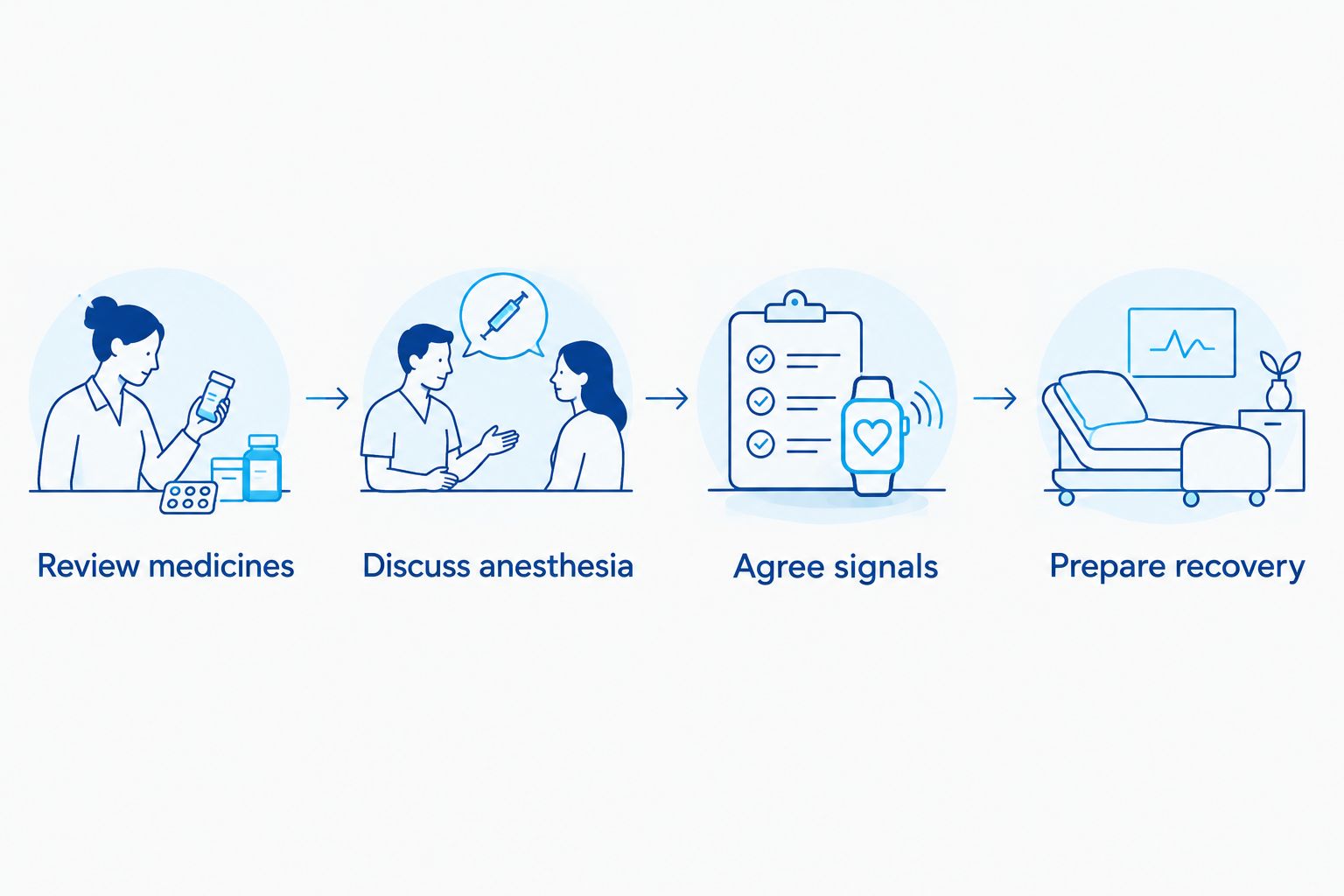
A useful preparation plan separates what happens before treatment from what you need at home. Ask questions while you can comfortably talk, rather than waiting until the procedure is underway.
- Review medicines. Give the dental team your medication list, allergies, health conditions, and history of problems with anesthesia. Do not stop prescribed blood thinners on your own.
- Discuss anesthesia. Ask how the dentist will check numbness and what happens if you still feel pain. If sedation is being considered, confirm preparation and escort requirements.
- Agree signals. Choose a clear hand signal for pain or a needed pause. Explain whether injections, sounds, or loss of control are your main concern.
- Prepare recovery. Have suitable soft foods and your written instructions ready. Confirm which symptoms require a call and how to get help after the appointment.
Do not assume you must fast for every extraction. Eating, drinking, transportation, and medication instructions depend on the anesthesia plan; follow the directions your treating clinician gives you.
What helps with pain after extraction in 2026?
Use the medication plan your dentist recommends for your medical history. Nonopioid medicines, including anti-inflammatory medicines with or without acetaminophen, are established options for acute dental pain, but they are not appropriate for everyone.
Ask before using an anti-inflammatory medicine if you have kidney disease, a history of stomach bleeding, take blood thinners, are pregnant, or have been told to avoid these medicines. Acetaminophen also needs care with liver disease and products containing the same ingredient; do not combine medicines without checking the labels and instructions.
Avoid adding leftover antibiotics or prescription pain medicine from an earlier procedure. Antibiotics are not routine pain relievers, and pain alone does not establish that you have an infection.
Protecting the socket is part of comfort care:
- Use gauze as directed to apply pressure and control bleeding.
- Avoid vigorous rinsing, forceful spitting, and drinking through a straw during early healing.
- Do not smoke or vape during recovery; ask your dentist for specific guidance.
- Choose soft foods and avoid chewing directly over the socket.
- Clean your mouth according to the written instructions without probing the wound.
For most routine extraction instructions, rinsing begins after the first 24 hours, not immediately. Your surgeon's directions take priority, especially when another procedure was performed at the same visit.
Does sedation mean I will not feel anything?
Sedation and local anesthesia do different jobs. Sedation reduces anxiety or awareness to a degree that depends on the method; local anesthesia blocks pain in the treatment area.
Sedation can help an anxious patient tolerate treatment, but it adds medical screening and preparation requirements. Some methods require an escort and restrictions on driving afterward, and sedation does not guarantee that you will be completely asleep or remember nothing.
Ask which method is being proposed and why it fits your health history. Do not assume a particular sedation service is available or appropriate without discussing it with the treating office.
When should I call about pain after an extraction?
Call your dentist promptly for severe or increasing pain, especially when it follows an initial improvement. Dry socket can cause intense pain that spreads toward the ear or temple and sometimes comes with an unpleasant taste or odor; it needs dental treatment, not simply more waiting.
Also seek prompt dental advice for fever, pus, swelling that worsens rather than settles, persistent numbness beyond the expected anesthetic period, or bleeding that does not stop with the instructed pressure. A clinician needs to distinguish normal healing from a complication.
Trouble breathing or swallowing, or rapidly spreading swelling, requires emergency medical care. Do not wait for a routine dental appointment when your airway or ability to swallow is affected.
Discuss your dental concerns in Lake Worth in 2026
Dental Arts of Atlantis is a family dental care option for Lake Worth households seeking general, cosmetic, pediatric, and implant dentistry. If you are worried about a tooth, explain whether the concern is current pain, fear of treatment, or recovery responsibilities at home.
Dental Arts of Atlantis serves families in the Palm Beach County area. An examination is needed to determine whether a tooth can be restored, whether removal is appropriate, and whether referral is needed; general information cannot make that decision for you.
Discuss your tooth concerns
Ask about an evaluation, pain-control questions, and the next step for your tooth.
FAQ
How painful is a tooth extraction while you are awake?
An awake tooth extraction should not cause sharp pain once local anesthesia is effective. You can still notice pressure, movement, and sounds; signal immediately if you feel pain.
Does getting a tooth pulled hurt more than a root canal?
Neither treatment should cause sharp pain when the tooth is adequately anesthetized. Recovery differs because an extraction leaves a healing socket, while root canal treatment aims to retain the tooth.
Is it normal for extraction pain to get worse after a few days?
Increasing pain after a few days needs a dental assessment, particularly if it follows initial improvement. Dry socket is one possible cause, but an examination is needed to identify the problem.
Can I go to work the day after a tooth extraction?
Returning to work the next day depends on the extraction, your symptoms, your job, and any sedation restrictions. Ask your dentist for an activity plan, especially if your work involves lifting, driving, or physical exertion.
Should I take antibiotics for pain after a tooth extraction?
Do not take antibiotics for extraction pain unless your clinician prescribes them for a specific reason. Antibiotics do not replace local treatment for dry socket or a suitable pain-management plan.
What should I ask before a tooth extraction in 2026?
Ask how numbness will be checked, what sensations to expect, which medicines are appropriate, and whom to contact if symptoms worsen. Also confirm food, transportation, and activity instructions for your anesthesia plan.
Can Dental Arts of Atlantis help me discuss a painful tooth?
Dental Arts of Atlantis provides general and family dental care in Lake Worth, Florida. Contact the office about an evaluation so a dentist can assess the tooth and explain appropriate next steps.
One last thing
A numb lip is not the same as a confirmed numb tooth. Before removal starts, ask the dentist to check the area and confirm your stop signal; that short conversation gives you a clear way to speak up throughout treatment.
Related guides
- How to save a tooth instead of getting it extracted
- Pain relievers after tooth extraction
- How to prepare for wisdom teeth removal