

Teeth stain prevention for bartenders and servers means building a rinse-and-routine system that blocks red wine, espresso, cola, and dark spirits from settling into enamel before a toothbrush ever gets involved. Bartenders and servers taste dozens of staining drinks in a single shift, so the fix has to happen between pours, not just before bed.
- Teeth stain prevention for bartenders and servers works best when rinsing happens between tastings, not just at the end of a shift.
- Dental Arts of Atlantis treats bartender-level staining with in-office whitening resets every few months plus daily habit changes.
- Sensitive-formula whitening toothpaste beats whitening strips for people who brush around irregular restaurant and bar hours.
- Wait about 30 minutes after wine, coffee, or cola before brushing since enamel is temporarily softened by acid right after tasting.
Why this matters for bartenders and servers
Wine flights, espresso shots, dark beer, and cola all carry chromogens, the pigment compounds that stick to the thin protein layer coating enamel. Bartenders and servers taste these drinks dozens of times per shift, often back to back, which means far more contact time than a customer having one glass with dinner.
Irregular shift schedules make it worse. A server working 4 p.m. to 1 a.m. doesn't get a normal after-dinner brushing window, and hours of talking under dry bar air add dehydration on top of the staining exposure. The fastest way to catch up on nightly tasting damage is a teeth whitening method built for coffee and wine stains, paired with daily habit changes that stop new stains from forming in the first place.
Bartenders and servers who taste wine, coffee, and dark liquor nightly need a stain routine built around their shift, not around a standard morning-and-night brushing schedule.
Rinse or chew between every tasting
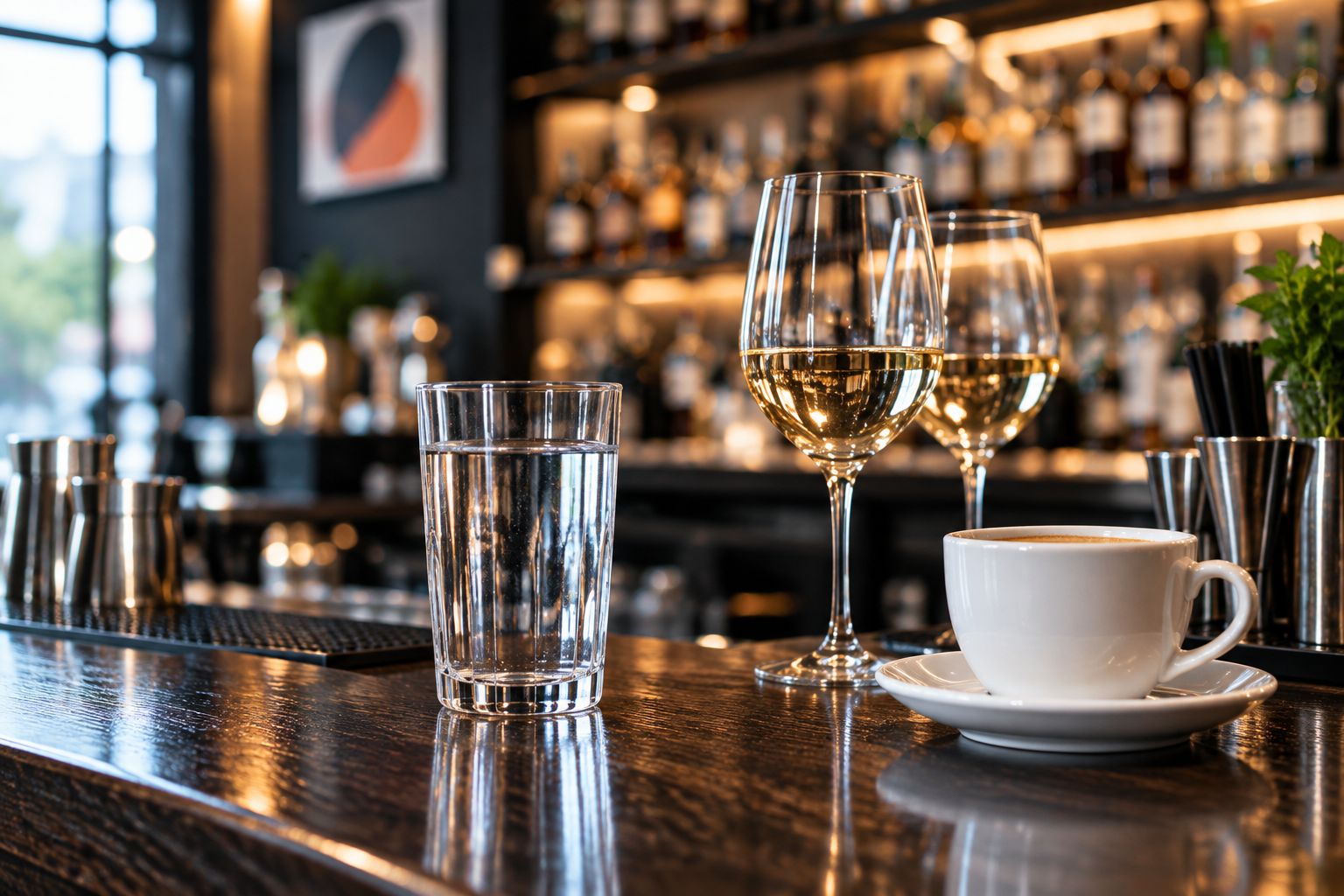
- Keep a water glass at your station and rinse after every wine, coffee, or cola taste, not just at the end of the shift.
- Chew sugar-free gum with xylitol between courses to boost saliva flow and rinse the palate.
- Use a plain cracker or a sip of water before moving from red wine to a second pour.
- Avoid swishing wine around your mouth to "taste" it longer; the extra contact time drives pigment into enamel.
Time your brushing around your shift, not the clock
- Brush before your shift starts, when enamel hasn't been touched by anything you'll taste that night.
- Wait roughly 30 minutes after tasting acidic drinks like wine, cola, or coffee before brushing, since the acid briefly softens enamel and brushing too soon wears it down faster than the stain itself.
- Pack a travel toothbrush for the drive home instead of waiting until morning.
- If your schedule rotates constantly, dental care for shift workers with irregular schedules covers building hygiene habits around unpredictable hours instead of a fixed clock.
Swap stain-heavy habits for stain-resistant ones
- Order tastings light to dark: white wine before red, coffee before dark liquor, so pigment doesn't compound.
- Use a straw for iced coffee, cola, and dark cocktails when sampling for quality control.
- Skip chewing ice between pours; it doesn't remove stains and can chip enamel already softened by acidic drinks.
- Keep tobacco breaks separate from tasting breaks. Nicotine and tar bind to the same pellicle layer that wine and coffee stain.
Upgrade your daily hygiene products
- Switch to a whitening toothpaste built for sensitive teeth so twice-daily brushing does quiet, gradual surface polishing without the sting some whitening formulas cause.
- Best toothpaste for sensitive teeth breaks down which formulas handle stain removal and sensitivity from constant tasting at the same time.
- Add a stain-fighting mouth rinse to your after-shift routine instead of skipping it because you're tired.
- Replace your toothbrush every three months. Bristles worn down by nightly brushing polish less effectively.
Reset stains safely instead of guessing with home kits
- Professional whitening lifts stains toothpaste and rinsing can't touch, especially after years of nightly wine and espresso exposure.
- How to whiten teeth safely without damaging enamel explains the difference between a supervised reset and store-bought strips used without guidance.
- Space professional resets a few months apart rather than repeating strips weekly, which raises sensitivity without adding whitening benefit.
- Tell your dentist about your tasting schedule so sensitivity gets factored into the whitening plan before treatment starts.
Maintain results between visits
- Stick to the rinsing and timing habits above between whitening appointments. They do more long-term work than any single treatment.
- Track how fast stains return. Nightly bartenders often see faster rebound than servers who taste occasionally, which tells you how often to schedule a reset.
- Keep an at-home touch-up routine going for the weeks between professional visits so one wine-heavy week doesn't undo a reset.
Reset your smile before your next shift review
Book a whitening consult built around a server or bartender’s irregular hours.
Stain prevention and removal options for bartenders and servers
| Option | Best for | Key limitation |
|---|---|---|
| Daily rinsing and habit changes | Preventing new stain buildup during shifts | Doesn't reverse stains already set into enamel |
| Sensitive-formula whitening toothpaste | Servers who brush twice daily and want gradual polish | Takes weeks to show change; ineffective on deep stains |
| At-home touch-up kits | Holding results between professional visits | Needs consistent use; nightly tasters can see stains creep back within weeks |
| In-office professional whitening | A full stain reset before an event or every few months | Doesn't prevent new staining if daily habits don't change |
Daily rinsing costs nothing and stops new staining from forming. In-office whitening is the only option on this list that reverses years of nightly tasting exposure.
Common mistakes bartenders and servers make
- Brushing immediately after a wine or coffee tasting. Acid has already softened enamel, so brushing right away wears it down instead of protecting it.
- Relying on gum and mints alone. They boost saliva but don't remove pigment already stuck to enamel.
- Ignoring jaw clenching during rushes. Grinding wears enamel down and makes it more porous to staining, on top of the tasting exposure itself.
- Treating whitening strips as a substitute for a professional cleaning. Strips lighten surface color but don't remove the tartar buildup that traps stains along the gumline.
- Ignoring dry mouth from hours on their feet talking constantly. Less saliva means pigment sits on enamel longer before it's naturally rinsed away.
FAQ
What’s the best way to prevent stains from red wine as a bartender?
Rinse with water immediately after every taste rather than swishing wine around your mouth, and wait about 30 minutes before brushing since the acid softens enamel temporarily. Pairing that habit with a sensitive-formula whitening toothpaste covers most day-to-day prevention.
Is brushing right after a coffee or wine tasting bad for your teeth?
Yes, brushing right after an acidic drink can wear down enamel that’s temporarily softened by the acid. Waiting roughly 30 minutes lets enamel re-harden before a toothbrush touches it.
How often should servers get a professional dental cleaning?
Most adults do well with a cleaning every six months, and servers or bartenders with heavy nightly tasting exposure may see more benefit from scheduling around their actual shift pattern rather than a fixed calendar date.
Can whitening toothpaste really work for bartenders who taste wine every shift?
A sensitive-formula whitening toothpaste polishes surface stains gradually over weeks of consistent use, but it won’t lift stains that have set in over years. It works best as daily maintenance alongside a professional reset.
Does chewing gum help prevent stains between pours?
Sugar-free gum with xylitol boosts saliva flow, which helps rinse pigment off enamel between tastings. It’s a helpful habit, but it doesn’t remove stains that have already set.
Is in-office whitening safe for people with sensitive teeth?
In-office whitening can be adjusted for sensitivity when the dentist knows about it beforehand, including gel strength and timing. Telling your dentist about a nightly tasting schedule helps them plan around it.
How long do touch-up whitening kits keep stains away for someone tasting drinks nightly?
Results fade faster for nightly tasters than for occasional drinkers, which is why touch-up kits work best as maintenance between professional resets rather than a standalone fix.
Should servers worry about enamel erosion from acidic drinks, not just staining?
Yes, wine, coffee, and cola are acidic enough to soften enamel temporarily on contact, separate from the staining itself. Rinsing with water and delaying brushing protects enamel while also limiting stain absorption.
One last thing
The habit that moves the needle most in 2026 isn't a whitening product at all: it's keeping a water glass at your station and using it after every tasting, not just at the end of the night. Bartenders who build that single habit into muscle memory show up for their whitening reset with a lighter workload for the dentist, because the enamel hasn't spent an entire shift marinating in pigment between rinses.
Related guides