
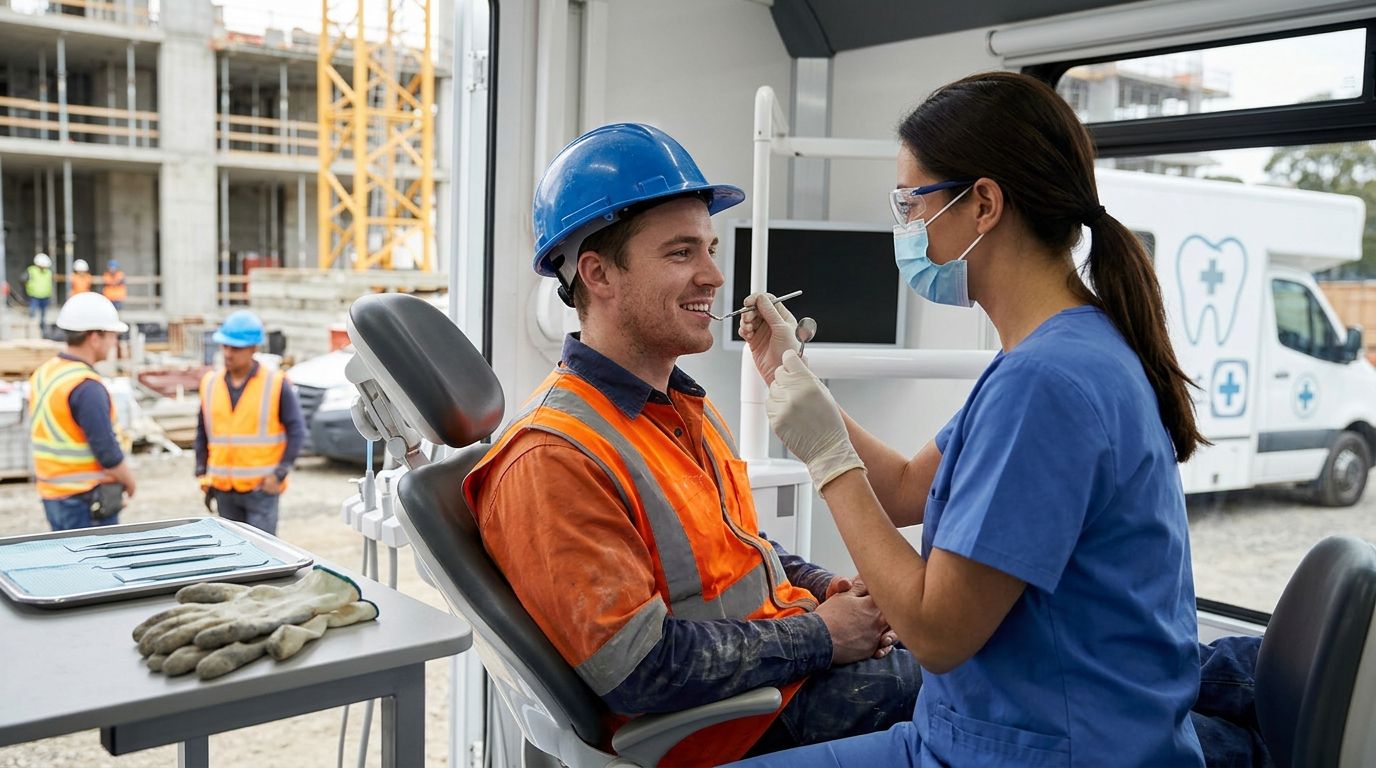
Dental care for construction workers is a practical routine for protecting teeth and gums when jobsite hours, breaks, and access to a sink vary. In 2026, the essentials are still simple: brush with fluoride toothpaste, clean between your teeth, drink water, and get pain or damage assessed before it interrupts your work.
- Dental care for construction workers starts with twice-daily fluoride brushing, daily cleaning between teeth, and water during shifts.
- A broken tooth or swelling needs dental assessment; a knocked-out permanent tooth needs immediate attention.
- Dental Arts of Atlantis is best for Palm Beach County trades workers seeking family dental care near Lake Worth.
- Choose a routine you can follow on both jobsite days and days off.
Why dental care matters for construction workers
A changing start time can make a fixed morning routine difficult. A break area might have water but no private sink, and a long drive home can turn a small toothache into something you keep putting off. Your plan has to work around the shift you actually have, not an ideal workday.
Dental care for construction workers also needs to distinguish prevention from urgent care. Water and a toothbrush help with daily care; neither fixes a cracked tooth, spreading swelling, or an injury to the mouth. If you work around tools and materials, know what to do when an accident affects your teeth, and follow your site's required protective-equipment rules.
Dental Arts of Atlantis is best for Palm Beach County construction and trades workers who want general and family dental care near Lake Worth. Its scope includes general, cosmetic, pediatric, and implant dentistry. That gives you a place to discuss routine needs alongside a longer-term treatment plan, without assuming every dental problem has the same fix. Start with the Dental Arts of Atlantis practice information when you are ready to arrange care.
In 2026, the most useful goal is consistency. Build a routine that still happens after an early start, an outdoor shift, or an unexpected change in the day's schedule.
Build a dental routine that fits a jobsite schedule
Use the steps below to separate what you can do yourself from what needs an examination. Start with the free, repeatable habits. Add products or treatment only when they solve a specific problem.
Brush around your actual shift
Brush twice a day for 2 minutes with fluoride toothpaste, including before bed. The American Dental Association recommends this routine for adults. If your start time changes, attach brushing to getting up and going to sleep rather than to particular clock times.
A rushed pass across the front teeth leaves other surfaces untouched. Angle a soft-bristled brush toward the gumline and move across the outer, inner, and chewing surfaces. Brush gently: harder scrubbing is not a substitute for reaching every surface.
Make the routine easier to keep in 2026:
- Put your brush and fluoride toothpaste where you prepare for work, not buried in a tool bag.
- Set aside the full 2 minutes before leaving, even on early starts.
- Brush again before bed after your last food or drink other than water.
- Replace a worn or frayed brush rather than pressing harder with it.
Clean between teeth without relying on a work break
A toothbrush does not reach every space between teeth. Clean between them once a day with floss or another interdental cleaner that you can use correctly and regularly. If you work with your hands all day, choose a time when they are clean and you are not rushing back to a task.
The best choice is the one that reaches the contact without injuring your gums. Floss can be useful for tight spaces; an interdental brush needs a size that fits without force. Ask your dental team to show you the technique if floss catches, shreds, or feels difficult to control.
Keep this step manageable:
- Clean between teeth at home rather than depending on a jobsite sink.
- Use a fresh section of floss as you move between spaces.
- Avoid snapping floss against the gums.
- Tell your dentist if one spot consistently catches or bleeds.
Plan drinks and snacks before the shift
Carry drinking water when your worksite permits it. Water is a practical default during a shift because it does not repeatedly expose teeth to sugar or acid. Coffee, sweetened drinks, and acidic beverages are different decisions: how often you sip them matters as well as what you choose.
You do not need to brush on scaffolding or after every drink. Instead, reduce repeated sipping, drink water between other beverages, and keep your usual brushing routine. If your mouth feels persistently dry, mention it at a dental visit; dry mouth can affect oral health, and the right response depends on its cause.
Set yourself up before leaving home:
- Fill a water bottle if the site allows one.
- Pack a snack you can eat during a break instead of grazing throughout the shift.
- Keep sweetened or acidic drinks to a defined break rather than sipping them for hours.
- Report ongoing dry mouth, especially if it continues away from work.
Protect your mouth without improvising safety gear
Follow your employer's and site's protective-equipment requirements first. Dental advice does not replace a safety assessment, and a sports mouthguard is not a substitute for required jobsite protection. If a task has caused a facial injury, report it under workplace procedures and seek medical or dental care as appropriate.
Teeth are not tools. Holding nails, opening packaging, or pulling material with your teeth creates an avoidable chance of chipping or injury. If you also play contact sports outside work, ask a dentist about mouthguard choices for that activity rather than treating sports equipment as universal jobsite gear.
Keep the rule simple:
- Use the designated tool, not your teeth, to hold or open materials.
- Follow site-specific protective-equipment instructions.
- Tell a clinician about any blow to the jaw, even if a tooth looks intact.
- Keep a sports mouthguard decision separate from workplace safety requirements.
Respond quickly to tooth damage or swelling
Stop and assess the symptom instead of trying to finish the week with it. A chip, crack, or toothache needs a dental evaluation because the visible damage does not show everything happening beneath it. Persistent pain when biting is another reason to call.
If an adult permanent tooth is knocked out, hold it by the crown rather than the root. If it is dirty, gently rinse it with milk or saline; do not scrub it. Place it back in its socket only if you can do so safely, or keep it in milk while you seek immediate dental care. Do not reinsert a knocked-out baby tooth. For a cracked tooth, the next treatment depends on the examination; the guide to emergency dentistry for a cracked or broken tooth explains that distinction.
Use this response checklist:
- Call a dentist promptly for a broken tooth, new biting pain, or persistent toothache.
- Seek immediate help for a knocked-out permanent tooth.
- Seek emergency medical care for trouble breathing or swallowing, or rapidly spreading facial swelling.
- Tell the dental team when the injury happened and what caused it.
Book care before a small problem dictates your schedule
A routine examination gives a dentist a chance to assess your teeth and gums and discuss symptoms you have been working around. It also lets you plan treatment with the demands of your job in mind. Tell the practice about shifts, travel between sites, and whether a proposed procedure affects your ability to return to physical work; follow the treating clinician's instructions for your specific care.
There is no single visit schedule that fits every adult. Your dentist can recommend a checkup interval based on your oral health and risk factors. If you have not been in for some time, you do not need to solve every concern before making the first appointment.
Before a 2026 visit:
- Write down where a tooth hurts and what triggers the pain.
- List medications and relevant medical conditions for the dental team.
- Ask which concerns need attention first and which can be planned.
- Discuss your work demands before scheduling treatment and recovery time.
Plan your dental visit
Discuss symptoms, your work schedule, and a care plan with a Lake Worth dental practice.
Compare your options for care
Your home routine, a routine visit, and urgent assessment do different jobs. Choose by the problem in front of you, not by which option is easiest to fit into a break. No home-care product can determine whether a painful tooth is cracked or infected.
| Option | Best for | Key limitation |
|---|---|---|
| Fluoride brushing and cleaning between teeth | Daily plaque control when your hours change | Cannot diagnose or repair a damaged tooth |
| Water and planned drink breaks | Cutting down repeated exposure to sweetened or acidic drinks | Does not replace brushing or a dental examination |
| Routine dental visit | Assessing teeth, gums, symptoms, and a care plan | Is not a substitute for immediate attention after a serious injury |
| Urgent dental assessment | A broken tooth, persistent pain, or a knocked-out permanent tooth | The right treatment cannot be chosen without examining the injury |
For most jobsite days, the home routine is the foundation. A routine visit helps you check whether that routine is enough; urgent assessment takes priority when an injury or significant symptom appears. In 2026, keep those routes separate so a calendar conflict does not turn urgent care into a postponed checkup.
Common mistakes construction and trades workers make
Waiting for pain to become constant. Pain that comes and goes still deserves attention. Note whether cold, heat, or biting triggers it, and arrange an examination instead of deciding that a quiet day means the problem is gone.
Treating a water bottle as a complete dental routine. Water is a useful choice during a shift, but it does not remove plaque from between teeth or replace brushing with fluoride toothpaste. Keep water at work and cleaning at home.
Brushing harder after a dusty day. Your teeth do not need aggressive scrubbing. Wash your hands before handling your brush, then use gentle brushing to cover each tooth surface.
Assuming a mouthguard solves every kind of risk. Sports mouthguards have a role in sports. They do not replace jobsite protective equipment, safe tool use, or an evaluation after a blow to the face.
Scheduling treatment without discussing the job. A physically demanding shift matters when you are planning an appointment or following aftercare instructions. Describe your tasks so the treating clinician can give instructions that fit the procedure and your work.
FAQ
What is the best dental care for construction workers in 2026?
Brush twice daily for 2 minutes with fluoride toothpaste, clean between teeth daily, drink water during shifts, and arrange dental visits based on your needs. Seek prompt assessment for pain or damage rather than trying to manage it with home care alone.
Can I brush only after work if my shift starts early?
No; aim to brush twice a day, including before bed. Link the other brushing session to waking up so changing start times do not remove it from your routine.
What should I do if I chip a tooth at work?
Contact a dentist for an assessment and explain how the injury happened. Seek emergency medical care if the injury also causes trouble breathing or swallowing, or rapidly spreading swelling.
What should I do if a permanent tooth is knocked out?
Seek immediate dental care, hold the tooth by its crown, and avoid scrubbing the root. If you cannot safely put it back in its socket, keep it in milk while you get help; do not reinsert a baby tooth.
Does drinking water replace brushing on a jobsite?
No; water does not replace brushing with fluoride toothpaste or cleaning between teeth. It is a useful drink choice during work when brushing is not practical.
How often should a trades worker get a dental checkup?
Follow the interval your dentist recommends for your oral health and risk factors. Your occupation alone does not set one checkup schedule for everyone.
Should I wear a sports mouthguard at work?
Follow your site’s protective-equipment requirements rather than substituting a sports mouthguard. Ask a dentist about a mouthguard for contact sports outside work.
One last thing
The easiest dental routine to keep in 2026 does not depend on a clean sink at the jobsite. Brush and clean between teeth at home, carry water when permitted, and know whom to contact if a tooth is injured. That division keeps daily prevention realistic without asking you to treat an emergency yourself.
Related guides
- Dental care for shift workers with irregular schedules
- How to manage dry mouth caused by medication
- How often adults should get a dental checkup and cleaning