
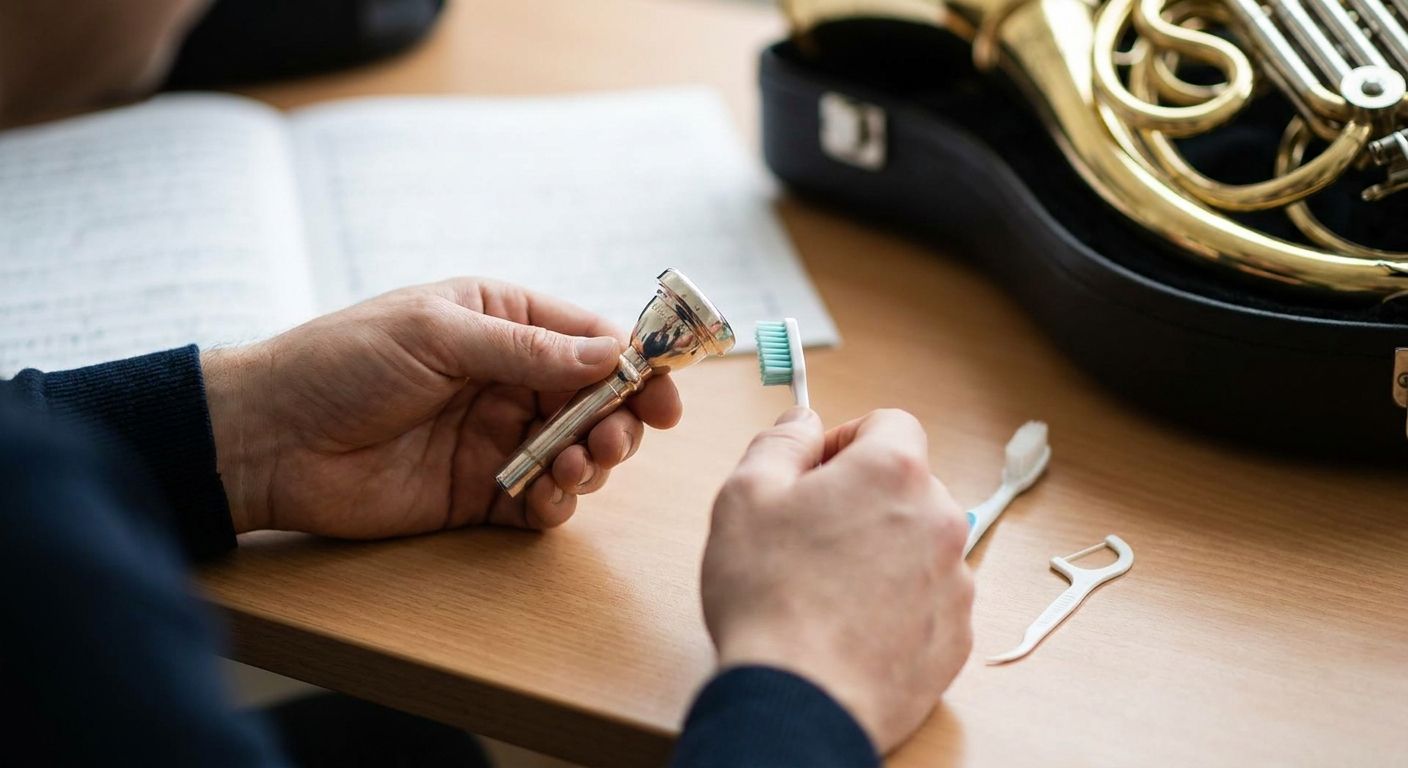
Dental care for wind instrument musicians means treatment planning that accounts for embouchure pressure, sustained air pressure, and repetitive jaw positioning that a routine six-month checkup rarely screens for. A trumpet player braces sustained force against the upper front teeth for hours a week; a clarinet or saxophone player clenches the jaw against a single-reed mouthpiece; a flute player holds an open, forward jaw position that dries the mouth out fast. Same broad category of problem, different failure point depending on the instrument.
- Dental care for wind instrument musicians should target embouchure-driven TMJ strain, front tooth wear, and dry mouth from constant airflow.
- Brass players who brace against a mouthpiece for years often chip or wear the upper central incisors first.
- A custom night guard fitted around your bite protects your teeth without changing how a reed or mouthpiece feels in rehearsal.
- Dental Arts of Atlantis evaluates jaw clicking and front-tooth wear from playing before it turns into chronic TMJ pain in 2026.
Why dental care matters for wind instrument musicians
Wind players put repetitive, sustained force through the same few teeth and the same jaw joint for years, and a generic cleaning appointment isn't built to catch it. A masseter that clenches around a clarinet reed for two hours of rehearsal works the same joint that TMJ treatment for chronic jaw pain and headaches is built to address in non-musicians, except the musician's version is triggered by practice time, not stress alone.
Brass players brace the mouthpiece against the upper front teeth at a fairly constant angle for every rehearsal, lesson, and gig. Over years, that pressure shows up as small chips, flattened edges, or teeth that have shifted slightly out of alignment. None of that reads as urgent on a routine exam unless the dentist knows what instrument the patient plays and asks about playing hours.
Dry mouth is the quieter risk. Constant airflow through an open embouchure reduces saliva's ability to buffer acid and clear debris, which raises cavity risk in exactly the same way it does for endurance athletes who breathe through the mouth for hours at a time.
Build a dental routine that matches how you actually play
The steps below start with what you can do without buying anything, then move to the appliance and treatment options a dentist adds once wear or pain shows up.
Map your instrument's stress points before symptoms start
Different instruments load the jaw and teeth differently, and knowing your pattern helps you and your dentist catch problems early instead of after months of unexplained soreness.
- Brass (trumpet, trombone, French horn): pressure concentrates on the upper central incisors and the joint on the side you angle the instrument toward.
- Single-reed (clarinet, saxophone): the lower jaw clenches against the reed, loading the jaw joint asymmetrically on the side you favor.
- Double-reed (oboe, bassoon): the lips and jaw work harder to control reed vibration, which raises fatigue-related clenching over a long rehearsal.
- Flute and piccolo: the jaw sits in a forward, slightly open position for hours, drying the mouth faster than reed or brass playing.
- Note which side of your face feels tighter after a long session. Asymmetric wear is common in wind players and usually goes unnoticed until it's advanced.
Screen for jaw tension every practice season, not just when it hurts
Most wind players wait until pain interrupts playing before mentioning jaw symptoms to a dentist. By then the joint has usually been compensating for months.
- Track whether clicking, popping, or soreness shows up after rehearsal specifically, not just generally.
- Ask for a jaw evaluation framed around your instrument and weekly playing hours, not a generic stress questionnaire.
- Watch for morning headaches or a jaw that feels tight before you've even picked up your instrument.
- Flag any new difficulty opening your mouth wide, which can signal joint strain building up.
- Mention practice load changes (competition prep, audition season, marching band camp) since spikes in playing time often line up with new symptoms.
Protect your front teeth from mouthpiece pressure
Brass and reed players both put repeated force on the front teeth, and small chips rarely stay small once the edge starts catching against the mouthpiece.
- Get a repair the same week you notice a chip. Waiting lets the rough edge catch under pressure and chip further with the next rehearsal.
- If a front tooth chips or breaks, ask about the best replacement for a chipped or broken front tooth rather than a temporary patch that won't hold up under mouthpiece pressure.
- Get a baseline photo or shade reference of your front teeth now, before wear develops, so any future repair matches the original.
- Avoid biting down harder to compensate for a chip. That shifts pressure onto the neighboring tooth and creates a second problem.
- Ask your dentist whether your bite alignment is putting uneven pressure on one side, since that's common in players who always angle their instrument the same direction.
Manage dry mouth from constant airflow
A dry mouth loses its natural buffering and rinsing action, and that raises cavity and gum irritation risk the same way it does for anyone who breathes through the mouth for extended stretches, including athletes covered in the guide on dental care for triathletes and endurance athletes with dry mouth.
- Sip water between pieces during rehearsal instead of only at breaks.
- Ask about fluoride varnish or a prescription-strength fluoride rinse if you rehearse more than a few hours a week.
- Avoid sugary throat lozenges before or during practice; dry mouth plus sugar is a worse combination than either alone.
- Note any medications (antihistamines, some antidepressants, decongestants during allergy season) that add to mouth dryness on top of playing.
- Bring dry mouth up at your regular cleaning even if it feels minor. It compounds slowly and usually shows up as new cavities near the gumline first.
Guard against nighttime grinding that compounds embouchure fatigue
Jaw muscles that clench all day around a reed or mouthpiece are more likely to keep clenching at night, and that combination wears teeth down faster than either habit alone.
- Ask whether your jaw soreness pattern looks like daytime playing fatigue, nighttime grinding, or both — the fix is different for each.
- A custom-fitted night guard protects enamel without altering your daytime embouchure feel, since it's worn only while you sleep.
- If clenching is severe and a night guard isn't enough, ask about Botox for the muscles that overwork from repetitive playing tension.
- Rule out caffeine and pre-performance anxiety as grinding triggers before assuming it's purely instrument-related.
Time restorative and cosmetic work around your performance calendar
A crown, filling, or whitening treatment done the week before a recital or audition is a bad idea. Sensitivity and adjustment time need a buffer.
- Schedule non-urgent restorative work during off-season stretches, not audition or concert weeks.
- Ask how long post-treatment sensitivity typically lasts for the specific procedure before you book it close to a performance.
- If a repair is urgent, ask what temporary option gets you through a performance safely until the permanent fix can be scheduled properly.
- Build in at least a few practice sessions after any dental work before a performance, so you can adjust to any change in bite feel.
Comparison: dental options for wind instrument musicians
| Option | Best for | Key limitation |
|---|---|---|
| Custom night guard | Players who grind at night on top of daytime embouchure clenching | Doesn't address daytime jaw tension during rehearsal itself |
| Bonded front tooth repair | Brass and reed players with a chip from mouthpiece pressure | Needs monitoring since repeated pressure can wear a bonded repair faster than natural enamel |
| Botox for jaw clenching and TMJ tension | Severe daytime clenching that a night guard alone doesn't resolve | Effects are temporary and require repeat treatment |
| Dry mouth management protocol | Flute, piccolo, and any player with heavy mouth-breathing during rehearsal | Requires consistent daily habit changes to see the cavity-risk benefit |
A custom night guard fitted around your bite is usually the first move for a wind player with jaw soreness, because it protects enamel without changing how the mouthpiece or reed feels during rehearsal.
“If your jaw feels tighter after rehearsal than before it, that’s not normal fatigue — that’s a joint asking for an evaluation.”
Get a jaw and bite evaluation
Bring your instrument and practice schedule to the visit.
Common mistakes wind instrument musicians make with dental care
- Not telling the dentist which instrument they play. A general exam misses embouchure-specific wear patterns unless the dentist knows to look for them.
- Ignoring early jaw clicking because "it's just part of playing brass." Clicking that starts mild rarely stays mild once it's been loading the joint for a few playing seasons.
- Skipping a night guard out of fear it will change embouchure feel. A properly fitted guard is worn only at night and has no effect on daytime playing.
- Waiting until a chip affects tone before getting it repaired. By the time a chip changes your sound, it's usually large enough to need more than a simple bonding.
- Treating dry mouth from playing as unavoidable. It's a manageable risk with fluoride and hydration habits, not something to just live with through a full season.
FAQ
What’s the best dental care for wind instrument musicians in 2026?
The best approach in 2026 combines a jaw and bite evaluation, a custom night guard if you clench or grind, and prompt repair of any front-tooth chip from mouthpiece pressure. Skipping any one of these lets a minor issue turn into a chronic problem.
Can playing a brass instrument damage your teeth?
Yes, sustained mouthpiece pressure against the upper front teeth over years can cause chips, flattened edges, or minor shifting. It’s a known risk for trumpet, trombone, and horn players, not a rare fluke.
Will a night guard change my embouchure?
No, a custom night guard is worn only while you sleep, so it has no effect on your daytime embouchure or how a mouthpiece or reed feels during rehearsal.
Does playing a wind instrument cause TMJ problems?
Repetitive jaw clenching and asymmetric pressure from certain instruments, especially single-reed and double-reed instruments, can strain the jaw joint over time. It’s not guaranteed, but it’s common enough to screen for if you play regularly.
How do wind instrument musicians deal with dry mouth from playing?
Sipping water between pieces, using fluoride rinses, and avoiding sugary lozenges during rehearsal are the core habits. Constant airflow through an open embouchure reduces saliva’s protective effect, so hydration matters more for wind players than for most patients.
Should I tell my dentist which instrument I play?
Yes, always mention it. Wear patterns, jaw tension, and dry mouth risk all differ by instrument, and a dentist who doesn’t know you play brass or reed may miss the cause of a symptom.
Can Invisalign or braces affect my ability to play a wind instrument?
Aligners and braces can temporarily change how a mouthpiece or reed feels against your teeth, especially early in treatment. Discuss your performance schedule with your dentist so timing doesn’t collide with an audition or concert.
What should I do if I chip a front tooth from my mouthpiece?
Get it evaluated and repaired the same week rather than waiting. A rough edge on a chipped front tooth tends to catch against a mouthpiece and chip further with continued playing.
One last thing
Asymmetric wear is the detail most wind players never think to mention, and it's the one that gives a dentist the clearest read on your specific instrument. If you always angle your clarinet or saxophone the same direction, one side of your jaw has been doing more work than the other for years. Bring that up at your next cleaning in 2026, even if nothing hurts yet.