
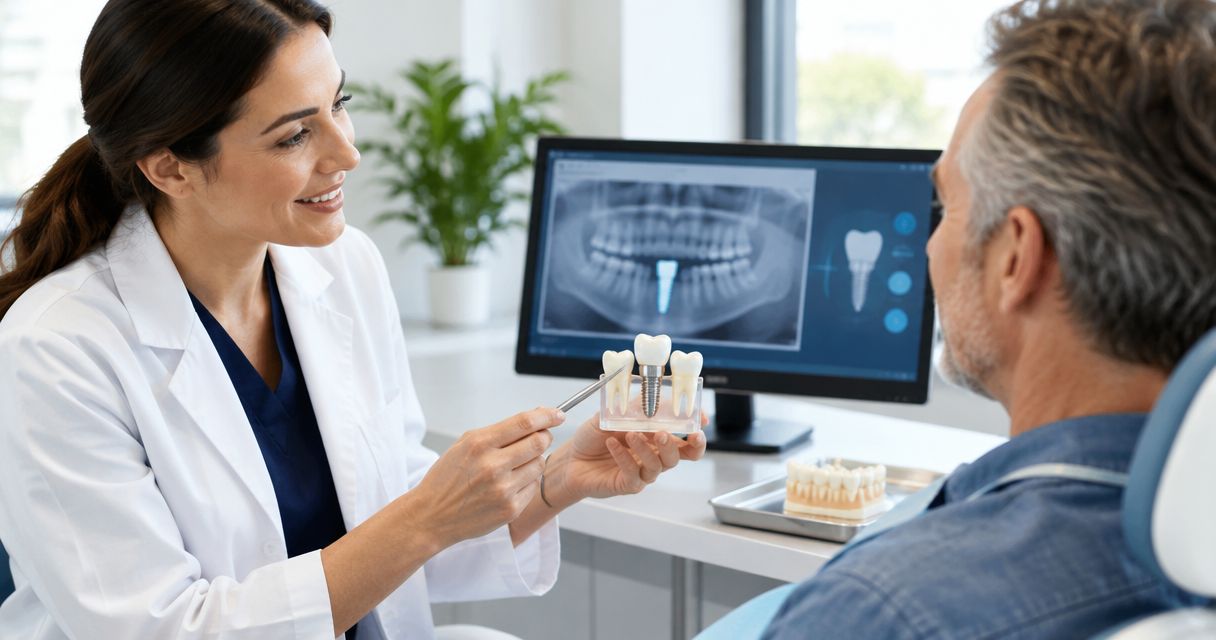
A dental implant is worth considering in 2026 if you need to replace a missing tooth, want a fixed replacement, and have the health and bone support needed for treatment. The trade-off is surgery, healing time, and ongoing maintenance; an implant is not automatically the best choice when your natural tooth can still be saved or another replacement better fits your needs.
- Is a dental implant worth it? Yes for suitable patients seeking a fixed tooth replacement, but surgery and maintenance matter.
- Dental Arts of Atlantis offers implant dentistry for Lake Worth and Palm Beach County families considering tooth replacement.
- A dental bridge avoids implant surgery but typically requires reshaping neighboring teeth.
- Save a restorable natural tooth before deciding to replace it with a dental implant.
Why this matters
A missing tooth affects more than the appearance of your smile. Depending on its location, the gap changes how you chew, where food collects, and how comfortable you feel speaking or smiling.
The decision starts with whether replacement is necessary and whether the tooth is truly beyond repair. If it is still present, review how to save a tooth instead of getting it extracted before committing to an irreversible extraction. Replacing a missing tooth and removing a treatable tooth are different decisions.
Is a dental implant worth it in 2026?
A dental implant offers clear value when it restores useful chewing function without relying on neighboring teeth for support. Its value is strongest when you accept the surgical process, can maintain the surrounding gums, and understand that the visible crown can need repair or replacement even if the implant remains stable.
For 1 missing tooth, compare the implant with a conventional dental bridge and a removable partial denture. These options solve the same gap differently, so the right comparison includes comfort, tooth preservation, cleaning, and treatment demands—not appearance alone.
| Option | Best for | Main advantage | Main limitation |
|---|---|---|---|
| Single-tooth dental implant | Suitable patients wanting a fixed replacement independent of neighboring teeth | Does not require neighboring teeth to support the replacement | Requires surgery, healing, and healthy supporting tissues |
| Conventional dental bridge | Patients wanting a fixed replacement when adjacent teeth also need crowns | Replaces the gap without implant placement surgery | Typically requires reshaping 2 adjacent teeth and cleaning beneath the replacement tooth |
| Removable partial denture | Patients needing a removable replacement or avoiding implant surgery | Can replace missing teeth without placing an implant | Must be removed for cleaning; fit, movement, and visible clasps can affect comfort |
| Preserve the natural tooth | Patients with a tooth that remains predictably restorable | Retains the natural tooth and its supporting structures | Requires treatment appropriate to the damage; not every tooth can be saved |
This comparison is a starting point, not a diagnosis. A bridge can make sense when neighboring teeth already need substantial restoration, while an implant can protect intact neighboring teeth from unnecessary preparation. A removable appliance also deserves consideration when surgery does not fit your medical needs or preferences.
Single-tooth implant: fixed support without reshaping neighbors
A typical single-tooth implant restoration has 3 components: the implant in the jawbone, the abutment that connects the parts, and the crown you see above the gum. Each component has a different role, which matters when you discuss treatment and future repairs.
The implant supports the crown without using adjacent teeth as anchors. That is a meaningful advantage when the teeth beside the gap are healthy and do not otherwise need crowns.
The limitations are equally important. Implant placement is surgery, the bone must heal around the implant, and the gum tissue still needs daily cleaning and professional monitoring. A crown that feels natural during chewing is not the same as a replacement that never needs attention.
Best for: A suitable patient who wants a fixed replacement for a missing tooth and can commit to treatment and maintenance. Ask your dentist what the proposed plan includes for the implant, connector, crown, and follow-up care.
Dental bridge: a fixed replacement with different trade-offs
A conventional bridge holds a replacement tooth between crowns on neighboring teeth. It avoids placing an implant into the jaw, but it transfers the support requirement to those teeth.
For a typical bridge replacing a single gap, preparing 2 adjacent teeth is a central trade-off. When those teeth already need crowns, that preparation serves an additional purpose; when they are healthy, removing tooth structure deserves closer consideration.
A bridge also needs deliberate cleaning beneath the replacement tooth. The supporting teeth remain vulnerable to decay and gum problems, so a fixed restoration does not remove the need for careful home care.
Best for: A patient whose neighboring teeth are appropriate supports, particularly when those teeth already need crowns. Ask what happens to the whole bridge if a supporting tooth develops a problem.
Removable partial denture: replacement without implant placement
A removable partial denture replaces missing teeth with an appliance you take out for cleaning. It offers a different path when you do not want implant surgery or when your treatment needs favor a removable design.
Its main compromise is that it does not function exactly like a fixed tooth. Depending on the design, clasps, movement, and the appliance's coverage affect how it feels during meals and conversation.
Fit also needs attention as your mouth changes. Ask your dentist how to clean the appliance, protect the remaining teeth, and recognize when an adjustment is needed rather than trying to alter it yourself.
Best for: A patient who prefers a removable replacement or needs an alternative to implant surgery. Discuss the expected stability and appearance of the actual design before deciding.
Why the value of a dental implant varies
The value of an implant depends on your starting point, not just the replacement itself. These factors determine whether its benefits justify the treatment involved:
- The natural tooth's condition. A tooth that can be restored deserves a preservation assessment before extraction. An implant is a replacement, not an automatic upgrade over a healthy natural tooth.
- Bone and gum support. Implant placement requires an appropriate site. Bone loss or gum disease changes the treatment plan and sometimes requires preparatory care.
- Neighboring teeth. An implant avoids using adjacent teeth as bridge supports. That benefit matters more when neighboring teeth are intact than when they already need crowns.
- Medical history and smoking. Health conditions, medications, and tobacco use affect surgical planning and healing. Share your full history rather than assuming a condition automatically rules treatment in or out.
- Bite forces and grinding. Heavy clenching or grinding adds stress to restorations. Your dentist needs to assess the bite and discuss protection when appropriate.
- Your maintenance routine. Implants need daily cleaning and continuing dental visits. Difficulty keeping the area clean changes the practical value of a fixed replacement.
For your 2026 treatment decision, ask which of these factors applies to you and how it changes the recommendation. A useful explanation connects the examination findings to the plan rather than presenting an implant as the answer for every gap.
How do you decide whether an implant is right for you?
Use a consultation to work through the decision in a clear order. You should leave understanding why treatment is recommended, what the alternatives are, and what responsibilities continue after the crown is attached.
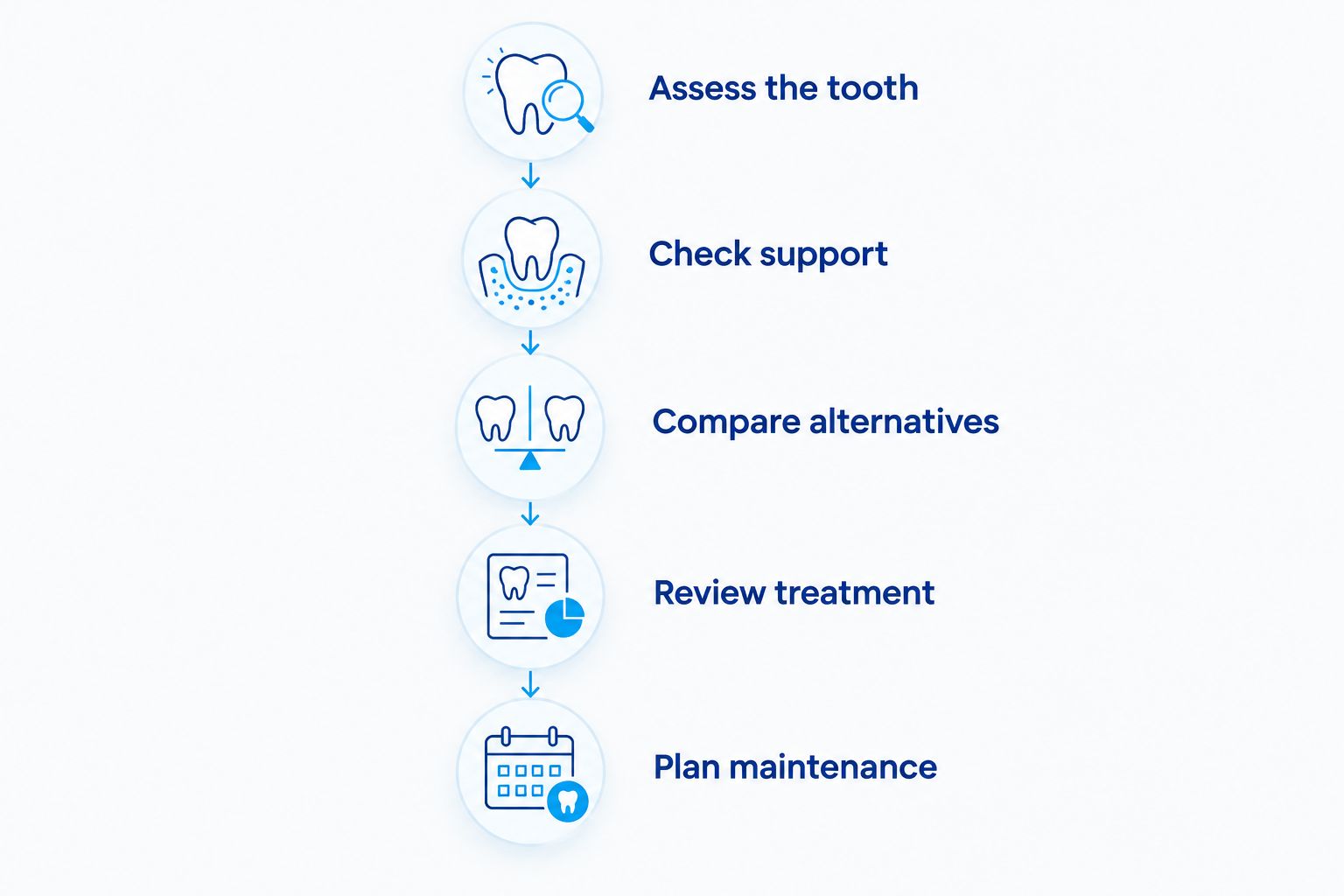
- Assess the tooth. If the tooth remains in place, ask whether it is restorable and what affects its outlook. If it is already missing, ask how the gap affects your bite and replacement needs.
- Check support. Have the dentist assess the gums, available bone, neighboring teeth, and relevant anatomy. Imaging helps answer placement questions that a surface examination cannot resolve.
- Compare alternatives. Discuss an implant, bridge, or removable replacement in terms of your actual mouth. Ask why the recommended option fits better than the alternatives.
- Review treatment. Clarify whether extraction or preparatory procedures are needed, what you will use during healing, and when the final restoration is planned. Do not assume that implant placement and final tooth placement happen together.
- Plan maintenance. Ask how to clean the finished restoration, how follow-up will work, and which changes should prompt a call. Include the possibility of crown or connector repairs in the discussion.
Bring your medication list and relevant medical history to the consultation. Also describe what bothers you most: chewing discomfort, the visible gap, a loose appliance, or concern about surgery. Those priorities help your dentist explain the trade-offs in terms that matter to you.
What does an implant treatment plan need to explain?
A useful 2026 implant treatment plan separates the surgical work from the restoration and maintenance. It should identify any preparatory care, the temporary replacement if one is planned, the final crown, and the follow-up responsibilities.
Ask which services are included and which are separate. Imaging, extraction, grafting when needed, temporary restorations, and later repairs are different parts of care; do not assume that a single line labelled dental implant includes every step.
Request a written sequence and an individualized estimate before consenting. Choose a plan you understand, not a treatment description that leaves the healing period or final tooth unexplained. If the recommendation remains unclear, a second opinion is a reasonable next step.
Is a dental implant better than saving your tooth?
A dental implant is not automatically better than preserving a restorable natural tooth. The first question is whether treatment can leave the tooth comfortable, functional, and maintainable—not whether an implant is available.
Root canal treatment, a crown, or gum treatment addresses different problems. Your dentist should explain the source of the damage and why preservation is or is not a reasonable option before recommending extraction.
How long does a dental implant last?
A dental implant has no guaranteed expiration date, and no responsible treatment plan promises that every component will last for life. The implant, connector, and crown have different maintenance and repair needs.
Ask your dentist to distinguish implant stability from crown wear or damage. Good cleaning and follow-up support long-term care, but they do not eliminate the possibility of complications.
Is implant surgery worth it if you are nervous?
Dental anxiety does not decide whether an implant is clinically appropriate, but it belongs in the treatment discussion. Tell your dentist whether you are concerned about injections, sounds, discomfort, or losing control during the appointment.
Ask about the pain-control approach, recovery instructions, and comfort options appropriate to your health. Do not assume that every office offers every sedation method or that sedation removes surgical risks.
Considering implant dentistry in Lake Worth
Dental Arts of Atlantis is a local option for Palm Beach County families seeking implant dentistry alongside general and family dental care. The practice offers general, cosmetic, pediatric, and implant dentistry in Lake Worth, Florida.
An implant evaluation at Dental Arts of Atlantis is relevant when you need help comparing tooth replacement with the rest of your dental needs. The practical limitation remains the same: the practice's range of services does not establish your implant candidacy without an examination.
For a 2026 consultation, bring specific questions rather than asking only whether implants are good. Ask why the proposed replacement suits your mouth, what alternatives remain reasonable, and what happens if you decide not to proceed yet.
FAQ
Is a dental implant worth it for one missing tooth?
A dental implant is worth considering for one missing tooth when you want a fixed replacement and are a suitable surgical candidate. It avoids using neighboring teeth as bridge supports, but requires healing and ongoing care.
Is a dental implant better than a bridge?
A dental implant is not better than a bridge in every case. An implant avoids reshaping neighboring teeth, while a bridge can make sense when those teeth already need crowns or implant surgery does not fit your needs.
Can I save my tooth instead of getting an implant?
You can save some damaged teeth with appropriate restorative, root canal, or gum treatment. Ask for an assessment of whether the tooth is predictably restorable before agreeing to extraction.
Will a dental implant last for the rest of my life?
A dental implant is not guaranteed to last for the rest of your life. The surrounding tissues need care, and the crown or connecting parts can require repairs or replacement.
Can I get a dental implant if I have gum disease?
Gum disease needs assessment and treatment as part of implant planning. Active disease and your ability to maintain healthy tissues affect whether and when an implant is appropriate.
What should I ask before agreeing to an implant in 2026?
Ask why an implant fits your mouth, whether your tooth can be saved, and how the alternatives compare. Request a written plan covering preparation, healing, the final restoration, and maintenance.
Does Dental Arts of Atlantis offer implant dentistry?
Dental Arts of Atlantis offers implant dentistry in Lake Worth, Florida, serving families in the Palm Beach County area. An examination is needed to determine whether an implant fits your dental and medical needs.
One last thing
An implant cannot develop a tooth cavity, but the tissues around it can still develop disease. That distinction explains why a replacement tooth still needs careful cleaning and professional monitoring.
Before choosing an implant, ask your dentist to demonstrate how you will clean the finished restoration. A replacement you can maintain comfortably is a better decision than one you judge only by its appearance.
Related guides
- How to prepare for your first dental implant consultation
- How to use 3D imaging to plan a dental implant
- How to care for dental implants after surgery