
All-on-4 recovery takes place over weeks for early surgical healing and several months for the implants to bond with your jawbone. Feeling comfortable, returning to work, and receiving your final teeth are separate milestones—not a single finish date. For treatment planned in 2026, your surgeon’s instructions and healing checks determine when you can advance your diet and activity.
- How long does All-on-4 recovery take? Early healing takes weeks; implant integration continues over several months.
- Same-day temporary teeth do not mean your implants have finished healing.
- Dental Arts of Atlantis provides implant dentistry for patients in Lake Worth and the Palm Beach County area.
- Follow your surgeon’s diet restrictions, and report worsening pain, persistent bleeding, or a moving bridge promptly.
How long does All-on-4 recovery take?
Plan around separate recovery milestones rather than one promised completion date. The gums, jawbone, and replacement teeth each need attention at different stages. Your surgeon assesses healing before clearing the next step.
| Recovery milestone | General timing | What it means for you |
|---|---|---|
| Immediate surgical recovery | First several days | Rest, manage symptoms, and follow bleeding-control instructions |
| Early gum healing | Following weeks | Tenderness and swelling settle while you continue prescribed care |
| Implant integration | Several months | Bone heals around the implants; chewing restrictions still matter |
| Final restoration | After clinical clearance | Your team assesses healing, bite, and tissue shape before completing the teeth |
These are general clinical stages, not a personal treatment schedule. Extractions, grafting, implant stability, and medical conditions affect the sequence. The American Academy of Periodontology’s patient guidance on dental implant procedures describes bone healing over several months; it does not establish an individual All-on-4 completion date.
For local implant care, Dental Arts of Atlantis serves Lake Worth and the surrounding Palm Beach County area. Ask for a written recovery plan that separates time away from work, dietary restrictions, and the expected restoration sequence.
Why this matters
A temporary bridge can make your smile look restored before the underlying bone has healed. That difference matters when you decide what to eat, whether to exercise, or when to schedule travel.
A comfortable mouth is not proof that an implant is ready for unrestricted chewing. Pain relief reflects how you feel; your surgeon’s examination evaluates whether healing supports the next stage.
If you are arranging All-on-4 treatment in 2026, leave room in your calendar for follow-up visits and adjustments. A work deadline or family event should not determine when healing restrictions end.
Immediate recovery: the first several days
Expect the initial period to focus on rest, bleeding control, swelling, and taking medicines exactly as directed. Your discharge instructions should explain what bleeding is expected, how to use any prescribed rinse, and whom to contact after hours.
Some swelling, bruising, and tenderness are common after implant surgery. The pattern matters: symptoms should move toward improvement rather than become increasingly severe after they have started settling.
Before leaving the surgical appointment, make sure you understand:
- How to manage bleeding and when to call about it.
- Which medicines to take and which combinations to avoid.
- Whether and how to use cold compresses.
- How to clean your mouth without disturbing the surgical sites.
- What you can eat and drink immediately afterward.
- Whether sedation requires an escort and restrictions on driving.
Do not add a pain reliever, supplement, or leftover antibiotic without checking with your treating team. Prescription medicines and medical conditions affect what is safe for you.
Arrange help with meals, transportation, and household responsibilities before surgery. Rest is easier when you are not trying to shop, cook, or manage a demanding schedule while uncomfortable.
Early healing: the following weeks
During early healing, your gums become less tender and everyday activities feel easier. You also begin adapting to the shape of the replacement teeth, including how they affect speech, swallowing, and cleaning.
Returning to desk work is a different decision from returning to lifting, outdoor labor, or strenuous exercise. Your surgeon should match activity clearance to your procedure, symptoms, medicines, and job duties—not simply whether you can tolerate discomfort.
For your 2026 recovery calendar, identify the actual demands of your work. Long conversations, public-facing duties, heat exposure, and physical effort create different challenges. Ask about those tasks directly rather than asking only, "When can I go back?"
Keep scheduled reviews even if you feel well. Your team needs to check the soft tissues, bite, and temporary restoration, and decide whether your cleaning routine needs adjustment.
Do not test recovery by biting something hard. A temporary bridge and healing implants need protection even when the gums look healthy.
Implant integration: several months
The longer healing phase is osseointegration: bone forming a stable connection with the implant surface. You cannot judge that process by looking in the mirror or pressing on the teeth.
A fixed temporary bridge offers the benefit of teeth that stay in place, but it does not remove the need for dietary limits or clinical monitoring. Your surgeon decides how the implants can be loaded during healing.
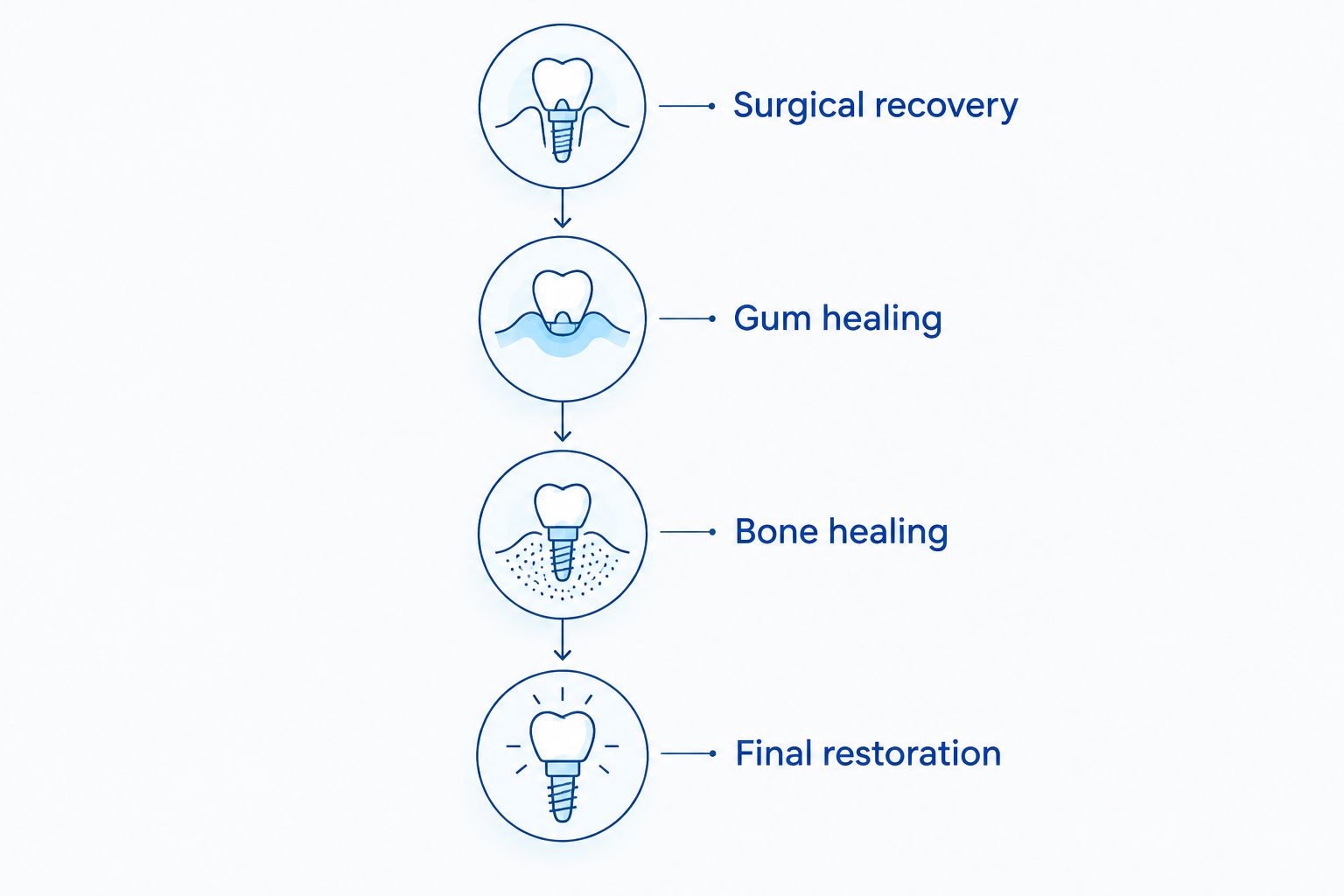
The progression is straightforward:
- Surgical recovery: Manage symptoms and protect the surgical sites.
- Gum healing: Maintain the prescribed cleaning routine and attend reviews.
- Bone healing: Protect the implants while your clinician monitors integration.
- Final restoration: Complete the teeth after the treating team confirms readiness.
If your bridge feels loose, clicks, breaks, or suddenly meets differently when you close your mouth, stop testing it and contact your treating team. A mechanical problem needs assessment; waiting for pain is not a safe way to decide whether it matters.
Final teeth: after your team confirms healing
Receiving the final bridge is a restorative milestone, not simply the day swelling disappears. Your team evaluates implant healing, gum contours, bite, speech, and the planned restoration before proceeding.
The benefit of waiting for the appropriate stage is a restoration planned around healed tissues and a checked bite. The trade-off is that temporary teeth and follow-up appointments remain part of treatment until you receive clearance.
Ask whether your written plan distinguishes between the surgical appointment, temporary teeth, healing reviews, and final restoration visits. Those appointments serve different purposes, even when some steps happen close together.
A treatment date in 2026 does not establish a guaranteed finish date. If healing requires a change, ask what finding prompted it and what the next review will assess.
Why All-on-4 recovery varies
Your recovery schedule reflects the condition of your mouth and the work performed. These factors explain why another patient’s experience is not a reliable countdown for yours:
- Extractions and grafting. Removing teeth or adding bone creates additional healing needs. Ask whether any grafting changes the planned sequence.
- Implant stability. The firmness of implants at placement affects decisions about attaching and loading temporary teeth.
- Smoking and tobacco exposure. Smoking increases implant complications and impairs healing. Ask your surgeon for a cessation plan before treatment.
- Medical conditions and medicines. Diabetes control, immune suppression, and medicines that affect bone or bleeding require individualized planning. Do not stop prescribed medication yourself.
- Bite forces and grinding. Clenching, grinding, or an uneven bite can place extra stress on the restoration and implants.
- Home care and follow-up. Cleaning as instructed, protecting the bridge, and attending reviews help your team identify problems early.
These factors do not produce a reliable home calculation. Ask what applies to your case and what would change the plan. That gives you more useful information than a generic promise of fast recovery.
What can you eat while All-on-4 implants heal?
Eat foods that meet your surgeon’s texture restrictions, even after tenderness improves. Early meals often need to be soft and easy to manage without forceful chewing; the precise progression belongs in your discharge plan.
Examples include smooth yogurt, soft eggs, mashed vegetables, and other foods your treating team approves. Choose enough variety to support nutrition rather than relying only on sweet drinks or desserts. Follow any separate dietary guidance for diabetes or other medical conditions.
Hard, crunchy, sticky, or chewy foods can stress the temporary restoration. Cutting a tough food into smaller pieces does not automatically make it suitable for healing implants.
For instructions beyond meals, review how to care for dental implants after surgery. Your own surgical instructions take priority over general guidance, particularly when extractions or grafting are involved.
How should you clean around temporary teeth?
Clean around temporary teeth using the tools and technique your treating team demonstrates. The space beneath a full-arch bridge needs attention, but fresh surgical sites require a different approach from healed tissues.
Do not assume your usual brushing, flossing, or water-flosser routine is appropriate immediately after surgery. Ask where to brush, whether to rinse, and when additional cleaning tools can be introduced.
Before you leave a follow-up appointment, demonstrate the technique back to the team. This makes it easier to catch a missed area or an approach that puts pressure on healing tissue.
Long-term maintenance continues after the final bridge is fitted. Fixed teeth still need daily cleaning and professional monitoring; they are not a maintenance-free replacement for natural teeth.
When should you call about recovery symptoms?
Contact your surgical team promptly for worsening pain, persistent bleeding despite the prescribed measures, pus, fever, increasing swelling, or a loose restoration. New or persistent numbness also deserves a call.
Seek emergency medical care for trouble breathing or swallowing, rapidly spreading swelling, or uncontrolled bleeding. Do not wait for a routine dental review when symptoms threaten your airway or immediate safety.
A symptom diary can help you describe what changed: where the discomfort is, whether swelling is increasing, and whether medicines provide relief. Do not use photographs or online comparisons as a substitute for an examination.
Keep the treating team’s contact instructions accessible to whoever is helping you recover. That is more useful during an urgent concern than searching for general recovery advice.
Can you get teeth immediately and still need months of recovery?
Several months of bone healing can still be necessary after receiving immediate temporary teeth. Attaching a bridge and completing implant integration are different events.
Immediate teeth depend on clinical suitability and implant stability. They are not a guarantee for every patient, and they do not mean unrestricted eating begins immediately.
When can you return to work after All-on-4?
The first several days should be protected for recovery, but your return-to-work date requires individual clearance. Physical work, sedation, pain medicines, swelling, and the extent of surgery affect that decision.
Describe your actual duties to the surgeon. Ask separately about driving, lifting, speaking for long periods, and exercise so that one general clearance does not get mistaken for permission to do everything.
Does feeling better mean you can eat normally?
Several months of implant healing can continue after you feel comfortable. Continue the prescribed diet until your treating team clears a change.
Pain is not a dependable measure of the forces a healing implant can tolerate. Ask what food textures are permitted now and what finding will allow the next step.
Planning implant care in Lake Worth
Dental Arts of Atlantis implant dentistry is a local option for Lake Worth adults seeking care close to home. The practice provides implant, general, and cosmetic dental care for patients in the Palm Beach County area.
Before committing to treatment, request an individualized assessment and discuss the benefits and limitations of full-arch implant treatment. Fixed teeth offer stability, but surgery, healing restrictions, cleaning, and ongoing maintenance remain part of the decision.
For a 2026 consultation, bring your medication list and questions about extractions, temporary teeth, follow-up visits, and who handles urgent concerns. Ask which parts of the proposed timeline are estimates and which depend on examination findings.
FAQ
How long does All-on-4 recovery take from surgery to final teeth?
Early surgical healing takes weeks, while implant integration continues over several months. Final teeth follow clinical confirmation that the implants and surrounding tissues are ready.
Can I eat normally right after getting All-on-4 teeth?
No. Immediate temporary teeth still require the diet prescribed by your surgeon. Feeling comfortable does not establish that the implants are ready for unrestricted chewing.
Is All-on-4 recovery painful?
Tenderness, swelling, and bruising are common after implant surgery. Follow your prescribed symptom-control plan and contact the surgical team if pain worsens or fails to improve as expected.
Do same-day teeth mean the implants are fully healed?
No. Same-day temporary teeth and completed bone healing are separate milestones. Your clinician decides when the implants can support changes in chewing and the final restoration.
Will bone grafting change my recovery plan?
Bone grafting can change the healing sequence and restoration schedule. Ask your surgeon whether grafting is part of your treatment and how it affects the next clinical checkpoint.
Should I stop blood thinners before implant surgery?
Do not stop blood thinners on your own. Your dental surgeon and prescribing clinician need to coordinate any medication changes based on your procedure and medical risks.
Can Dental Arts of Atlantis help me discuss dental implants?
Dental Arts of Atlantis provides implant dentistry in Lake Worth for patients in the Palm Beach County area. An individual assessment is needed to discuss suitability, treatment stages, and recovery expectations.
One last thing
Ask what must heal, not just how long you must wait. A useful recovery plan connects each restriction to a clinical checkpoint: healthier tissues, stable implants, an acceptable bite, or readiness for the final restoration.
Before surgery, ask your treating team to explain those checkpoints in plain language. You should leave knowing what to do, what to avoid, and which changes require a call—not just holding a target date.
Related guides
- How long does a dental implant take from start to finish?
- How to know if you’re a candidate for same-day implant teeth
- How to prepare for your first dental implant consultation