
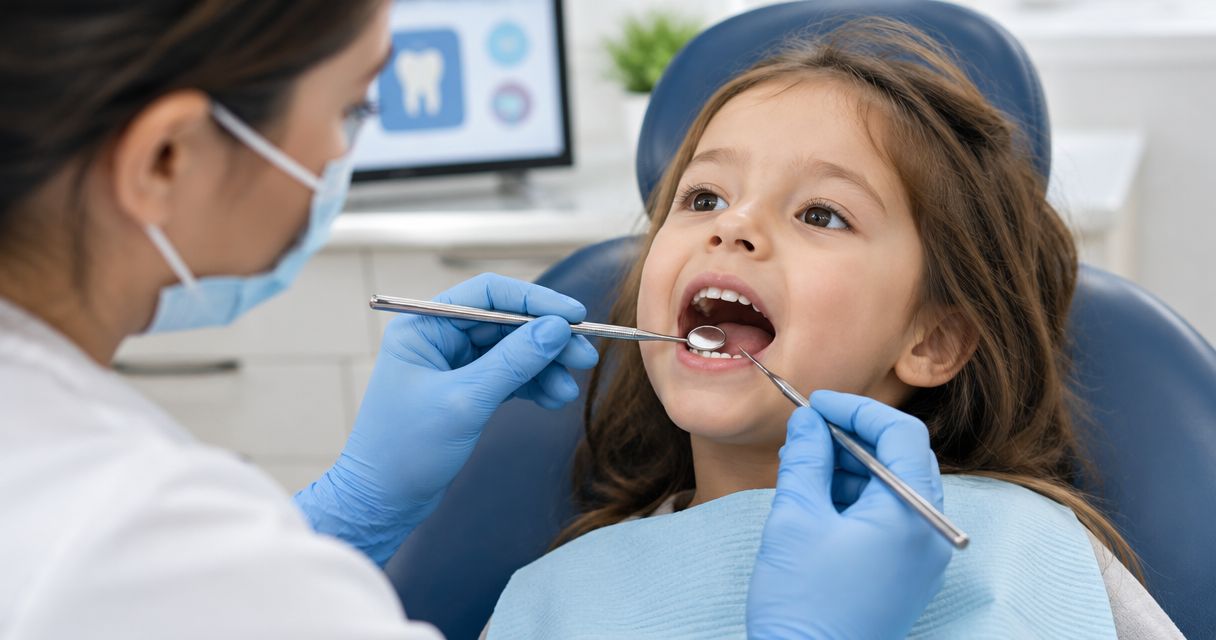
No—baby teeth cavities should not be ignored simply because those teeth will fall out; untreated decay can cause pain, infection, and early tooth loss. A dentist can sometimes manage early decay without drilling, but a visible hole, swelling, or toothache needs evaluation rather than a wait-and-see approach at home.
- Can baby teeth cavities be left untreated? No—decay needs a dental assessment, even without pain.
- Early enamel decay sometimes responds to fluoride; an established hole does not grow back.
- Facial swelling or fever with a toothache needs urgent attention; breathing or swallowing difficulty is an emergency.
- Dental Arts of Atlantis offers pediatric dentistry for families in Lake Worth and Palm Beach County.
Can baby teeth cavities be left untreated?
Baby teeth cavities need a treatment or monitoring plan—not neglect. The right approach depends on whether decay has broken the tooth surface, reached the nerve, or caused infection. A tooth close to falling out naturally still needs an examination before you decide to leave it alone.
The distinction between early mineral loss and an actual hole explains whether a cavity can be reversed without a filling. You cannot reliably tell the depth of decay from a photograph or your child's symptoms.
| Approach | Best for | Main benefit | Limitation or trade-off |
|---|---|---|---|
| Fluoride and active monitoring | Early decay with an intact surface | Supports remineralization without removing tooth structure | Does not rebuild a hole; needs reassessment |
| Silver diamine fluoride | Selected cavities a dentist considers suitable for arresting decay | Can stop decay without conventional drilling | Permanently darkens treated decay and does not restore tooth shape |
| Filling | A repairable cavity with enough healthy tooth remaining | Restores the damaged area and helps protect function | Needs a suitable tooth and the child's cooperation |
| Crown | Extensive decay in a tooth worth preserving | Covers and protects more of the tooth | Requires assessment of the tooth and underlying nerve |
| Extraction | A tooth that cannot be predictably saved | Removes the affected tooth | Early loss sometimes requires space management |
These are general pediatric treatment options, not a statement that every option suits your child or is offered at a particular appointment. For your child's 2026 treatment plan, ask the dentist to identify the stage of decay before discussing the procedure.
Why this matters
Baby teeth help your child chew, speak, and hold space for permanent teeth. Losing a baby molar too early can let neighboring teeth shift, complicating the arrival of the permanent tooth beneath it.
Untreated decay also affects everyday comfort. Children sometimes chew on one side, avoid certain foods, or wake at night instead of clearly reporting a toothache. No complaint does not mean no problem.
This is not a reason to blame yourself. Cavities reflect several factors, and the useful next step is understanding what the tooth needs now.
Early decay: when treatment does not mean a filling
Early decay can appear as a chalky white area before the enamel surface breaks down. Fluoride, effective brushing, and changes to eating and drinking habits can help remineralize an intact surface. Not every white mark is decay, so an examination matters.
A dentist-directed monitoring plan includes specific home care and a follow-up interval. It is active care, not permission to forget the tooth until it hurts.
For a 2026 checkup, ask: Is the surface intact? Is the area active or arrested? What finding would mean my child needs a different treatment? Those answers make observation a defined plan rather than an open-ended delay.
A visible hole: why brushing alone is not enough
Once decay creates a hole, toothpaste cannot replace the missing tooth structure. Better brushing still matters, but it does not restore the tooth's shape or remove food traps inside a cavity.
A filling repairs a suitable damaged area. More extensive damage sometimes calls for a crown, and decay involving the nerve requires a separate assessment of whether the tooth can be preserved.
Silver diamine fluoride is another option for selected cavities. It can arrest decay, but the dark staining is permanent in the treated decayed area, and the tooth sometimes still needs a restoration. Ask the dentist to explain both the benefit and the appearance before consenting.
An infected baby tooth: why waiting is different
An infected tooth needs prompt dental care. Antibiotics alone do not remove the source inside the tooth, and a gum bump that drains does not mean the infection has resolved.
Depending on the findings, treatment can involve care of the tooth's pulp—the soft tissue inside—or extraction. The dentist must consider the roots, remaining tooth structure, symptoms, and developing permanent tooth.
Pain that stops is not proof that decay has healed. A damaged nerve can stop sending the same pain signals while infection remains. Keep the dental appointment even if your child seems more comfortable.
Why treatment varies between children
There is no safe universal deadline for leaving a baby tooth cavity untreated. These findings drive the decision:
- Depth of decay: Enamel-only changes differ from decay reaching the inner tooth or nerve.
- Symptoms and infection: Spontaneous pain, swelling, or drainage changes the urgency.
- Remaining tooth structure: A small repair and a badly broken tooth need different approaches.
- Expected tooth loss: The dentist considers how close the tooth is to natural shedding, not age alone.
- Cavity risk: Frequent sugar exposure, plaque, and previous decay affect the prevention plan.
- Your child's needs: Age, cooperation, medical history, and anxiety influence how treatment is delivered.
For a 2026 treatment decision, ask which findings make waiting reasonable or unsafe. A child's birthday or a tooth's appearance alone cannot answer that question.
What should you do after spotting a possible cavity?
You do not need to diagnose the tooth yourself. Give the dental team a clear description and let the examination guide the next step.
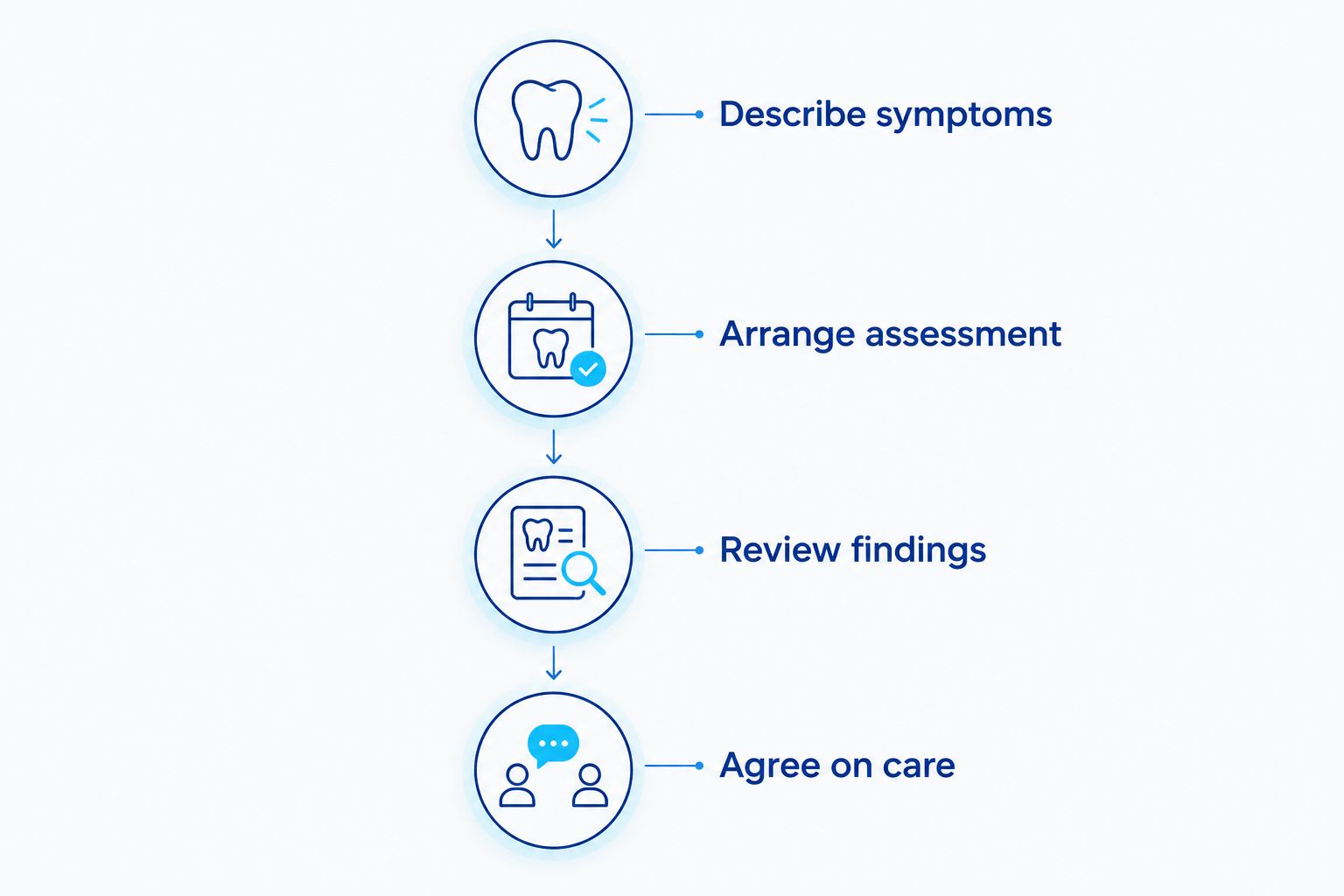
- Describe symptoms. Mention pain, food avoidance, disrupted sleep, swelling, or a gum bump. Explain whether discomfort happens only with eating or starts on its own.
- Arrange assessment. Contact a dentist for an examination. The dentist decides whether X-rays are needed to assess hidden decay or infection.
- Review findings. Ask which tooth is affected, how deep the decay is, and whether the tooth can be saved.
- Agree on care. Clarify the recommended treatment, alternatives, home care, and reassessment plan.
Tell the team if your child has sensory sensitivities or is frightened of dental visits. Discussing these needs beforehand helps the dentist plan an appropriate approach; it does not mean sedation is automatically necessary.
Which symptoms need urgent help?
Trouble breathing or swallowing, or rapidly spreading facial or neck swelling, requires emergency medical care. Do not wait for a routine dental appointment.
Contact a dentist urgently for facial swelling, fever with tooth symptoms, pus, a gum bump, or persistent pain. A child who seems unwell or cannot drink also needs prompt professional assessment. Describe the symptoms directly when calling rather than asking only for a routine checkup.
While arranging care, keep the area gently clean and offer foods your child can comfortably eat. If pain medicine is needed, ask a clinician or pharmacist about an age- and weight-appropriate option. Never place aspirin directly on a tooth or gum, and do not use leftover antibiotics.
What should you ask before agreeing to treatment?
Ask the dentist to show you the affected area and explain the goal of each proposed step. A repair, a decay-arresting treatment, and an extraction solve different problems; they are not interchangeable choices.
Useful questions include:
- What makes this treatment preferable for this tooth?
- Is there evidence of nerve involvement or infection?
- What happens if treatment is postponed?
- If the tooth is removed, does my child need a space maintainer?
- How will comfort and anxiety be managed?
- When will the tooth or treated area be checked again?
Include payment questions in the planning conversation, without letting paperwork replace clinical triage. For eligible expenses, using HSA funds for dental care means keeping records that identify the patient, dental service, and amount paid; confirm eligibility with your account administrator. If your child has urgent symptoms, tell the clinical team before waiting for account or coverage answers.
Bring your child's current medicines and relevant medical history to the appointment. A complete history helps the dentist assess treatment safely.
How can you protect the other baby teeth?
Home care cannot rebuild an established cavity, but it helps protect teeth while treatment is arranged and reduces the conditions that allow new decay. The American Dental Association's children's brushing guidance supports the following routine:
- Brush for 2 minutes, twice daily. Help your child clean every surface rather than relying on independent brushing before they have the necessary skill.
- Under age 3 years, use a rice-grain-sized smear of fluoride toothpaste. An adult should dispense the toothpaste and supervise brushing.
- From ages 3–6 years, use a pea-sized amount. Encourage spitting out the toothpaste rather than swallowing it.
- Clean between teeth that touch. A toothbrush cannot reliably reach the contact between neighboring teeth.
- Limit repeated sugar exposure. Frequent sipping or grazing keeps exposing teeth to the acids produced when bacteria use sugars.
- Use water between meals. Avoid putting a child to bed with a bottle containing milk, formula, juice, or another sugary drink.
At your child's 2026 visit, ask whether professional fluoride or sealants fit the child's needs. Neither replaces daily cleaning, and sealants are not a substitute for treating an established cavity.
Where can Lake Worth families start?
Dental Arts of Atlantis is a local pediatric dentistry option for families in Lake Worth and Palm Beach County. The practice also offers general dentistry, making it relevant to households seeking care for children and adults.
You can start with Dental Arts of Atlantis and describe your child's symptoms when arranging an assessment. General information cannot determine which treatment your child needs, and a website inquiry should not replace emergency care for breathing difficulty or spreading swelling.
Plan your child’s dental assessment
Describe symptoms and discuss the next step for a suspected baby tooth cavity.
FAQ
Can I wait until a baby tooth falls out instead of treating a cavity?
Do not decide to wait without a dental examination. A dentist sometimes monitors a tooth close to natural shedding, but pain, infection, and the condition of the tooth determine whether that is appropriate.
Does a baby tooth cavity need treatment if it does not hurt?
A painless baby tooth cavity still needs assessment. Decay can progress before a child reports pain, and an examination helps distinguish early mineral loss from a hole or deeper damage.
Can fluoride toothpaste heal a hole in a baby tooth?
Fluoride toothpaste cannot rebuild a hole in a baby tooth. It supports remineralization of early decay with an intact surface and remains important for protecting other teeth.
Can an infected baby tooth affect the permanent tooth underneath?
An infection around a baby tooth can affect the developing permanent tooth nearby. Prompt dental assessment helps address the infection and protect the surrounding tissues.
Will my child definitely need a filling for a cavity?
Not every area of decay needs a filling. The dentist considers whether the surface is intact, whether decay can be arrested, and whether a filling, crown, pulp treatment, or extraction is appropriate.
Are antibiotics enough to treat an abscessed baby tooth?
Antibiotics alone do not remove the source of an abscessed baby tooth. A dentist must assess the tooth and arrange definitive treatment; antibiotics are used when clinically indicated.
Does Dental Arts of Atlantis offer dental care for children?
Dental Arts of Atlantis offers pediatric dentistry alongside general dental care in Lake Worth, Florida. Families should describe pain, swelling, or other symptoms when requesting an assessment.
One last thing
Ask when the affected tooth is expected to fall out—not when children generally start losing teeth. Baby molars usually remain longer than the front teeth, so a gap-toothed smile does not mean every baby tooth is nearly finished working.
For your family's 2026 dental plan, leave with a clear answer to one question: Are we repairing this tooth, actively arresting and monitoring decay, or removing it—and why? That explanation matters more than assuming a temporary tooth needs only temporary attention.
Related guides
- Best filling material for a child's cavity
- How to keep your child's teeth cavity-free between visits
- Space maintainers for kids who lose baby teeth early