
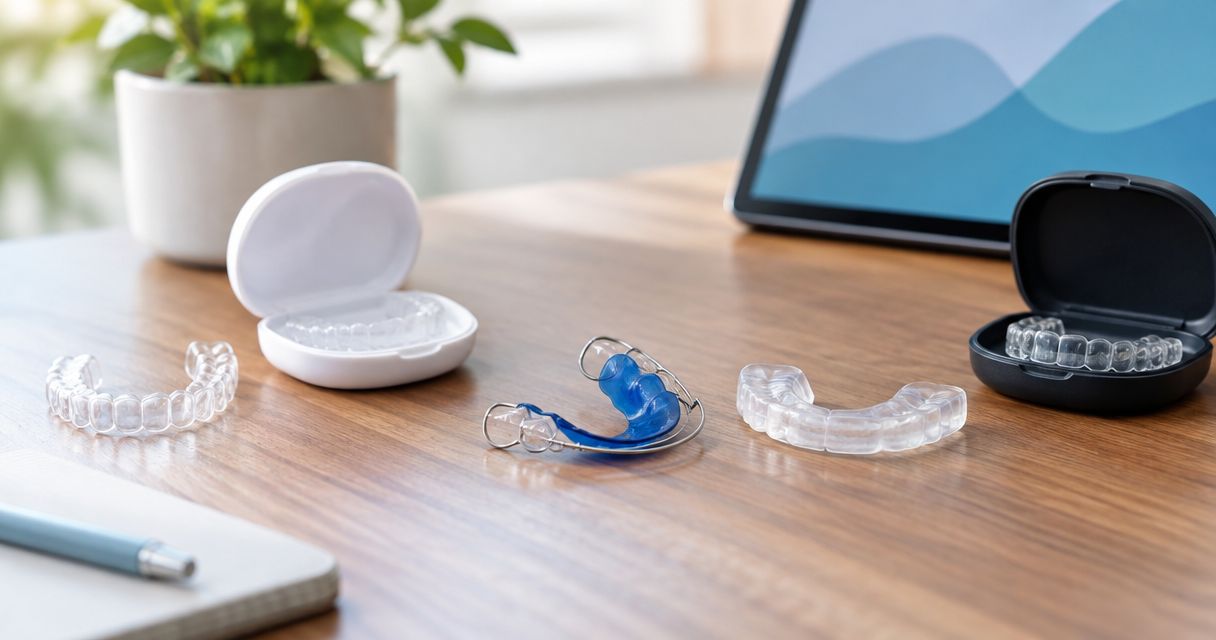
Best overall for discreet removable wear: clear retainers. Best for repairability: Hawley retainers; best for continuous front-tooth support: fixed retainers. This 2026 guide compares durability, comfort, and cleaning so you can discuss the right fit with your dentist.
- Best retainer types compared for 2026: clear for discreet wear, Hawley for repairability, fixed for continuous front-tooth support.
- Clear retainers cover the teeth but need protection from heat, cracks, and grinding damage.
- Hawley retainers allow professional adjustment, but the visible wire and acrylic affect comfort.
- Fixed retainers avoid daily insertion but require careful cleaning and checks for loose bonding.
Why this matters
Retainers hold teeth after orthodontic treatment; they do not replace the treatment that moved your teeth. Teeth can shift after braces or Invisalign, so keeping your result depends on a retainer that fits and a wear schedule you can follow.
Dental Arts of Atlantis provides general, cosmetic, pediatric, and implant dental care for families in Lake Worth and the Palm Beach County area. If you are comparing retainers after orthodontic treatment, bring your current appliance and treatment instructions to your dental visit.
The best retainer is the prescribed design you can wear consistently and keep clean—not simply the hardest material. Comfort matters because an appliance left in its case cannot hold your teeth.
What makes the best retainer in 2026?
Use these criteria before choosing between clear, Hawley, and fixed retainers:
- Tooth coverage: Does the appliance retain the whole arch or only the teeth attached to a wire?
- Everyday comfort: Consider tooth coverage, tongue contact, speech, and pressure—not appearance alone.
- Damage resistance: Look at how the design handles bending, heat, accidental drops, and your bite.
- Repairability: Ask whether a problem needs professional adjustment, repair, or a new appliance.
- Cleaning access: Choose a routine you can manage around both the retainer and your gums.
- Wear consistency: Be honest about remembering removable appliances and attending follow-up checks.
A fixed retainer and a removable retainer are not always alternatives. Your orthodontic clinician can prescribe both because they serve different parts of the retention plan.
Retainer types at a glance
This 2026 comparison ranks clear retainers as the starting discussion for discreet removable wear, not as a universal clinical winner. Your bite, original tooth movements, gum health, and ability to clean can change the order.
| Retainer type | Best for | Standout feature | Durability consideration | Key limitation |
|---|---|---|---|---|
| Clear removable | Discreet removable wear | Transparent shell closely follows tooth shape | Heat can distort the shell; cracks and wear need assessment | Requires consistent wear and removal for meals |
| Hawley removable | Repairability and professional adjustment | Acrylic base with a wire across the front teeth | Some wire or acrylic problems allow professional repair | Visible wire and acrylic bulk affect comfort |
| Fixed bonded | Continuous front-tooth support | Wire attached behind selected teeth | Bonding can loosen and wire can bend or break | Does not necessarily retain the entire arch |
1. Clear retainers: best for discreet removable wear
Clear retainers are custom-shaped transparent shells that fit over your teeth. Unlike active aligners, retainers are intended to hold the prescribed tooth position rather than move teeth through a treatment sequence.
Best for: Someone who wants an unobtrusive removable appliance and can follow a wear-and-cleaning routine.
Clear retainer comfort and durability
A clear retainer avoids the acrylic plate across the roof of the mouth used in a traditional upper Hawley retainer. That makes it a useful option to discuss if palatal bulk bothers you, although the shell still changes how your teeth and tongue feel together.
The trade-off is material wear. Clear plastic can crack, develop holes, or distort with heat; a retainer that looks intact can still stop fitting properly. Do not use hot water to reshape it or bite down hard to force it into place.
Clear retainer pros:
- Transparent material makes the appliance less noticeable during wear.
- The shell covers the teeth throughout the prescribed arch.
- Removal gives you direct access for brushing and flossing.
- The design avoids a visible wire across the front teeth.
Clear retainer cons:
- You must remember to wear it and store it safely when removed.
- Heat, chewing forces, and rough handling can damage the shell.
- A crack or distorted fit often requires replacement rather than home repair.
For Dental Arts of Atlantis patients comparing retainer comfort, clear retainers are a useful discussion point when visibility is the main concern. Material choice still needs a clinical fit assessment.
Verdict: Buy only the professionally prescribed clear retainer when discreet removable wear is your priority. Do not choose a generic appliance as a substitute for a fitted retainer.
2. Hawley retainers: best for repairability and adjustment
A Hawley retainer combines an acrylic base with metal wire that helps hold the teeth. The traditional upper design rests against the palate, while the lower design sits along the inside of the lower teeth.
Best for: Someone who values professional adjustability and accepts a visible front wire.
Hawley retainer comfort and durability
The acrylic-and-wire construction gives a dentist or orthodontist adjustment options that a clear shell does not offer in the same way. Some damage can be repaired, but a broken appliance still needs an examination before you resume wearing it.
The main comfort compromise is bulk. Your tongue contacts the acrylic, and speech can feel different while you adapt; persistent rubbing or sores need attention rather than simply more tolerance.
Hawley retainer pros:
- A clinician can adjust the wire when appropriate.
- Some acrylic or wire damage allows professional repair.
- Removal makes cleaning your teeth straightforward.
- The design does not cover all chewing surfaces with a plastic shell.
Hawley retainer cons:
- The front wire is visible when you smile or speak.
- Acrylic changes tongue space and can affect speech initially.
- Wire can bend if you remove the appliance incorrectly or attempt adjustments yourself.
Hawley earns its repairability ranking because of its construction, not because every Hawley appliance outlasts every clear retainer. Handling, fit, and use still determine whether an individual appliance remains serviceable.
Verdict: Buy a prescribed Hawley retainer when professional adjustment and repairability matter more to you than invisibility. Never bend the wire yourself to tighten the fit.
3. Fixed retainers: best for continuous front-tooth support
A fixed retainer is a wire bonded behind selected teeth. It stays in place between professional visits, so you do not insert or remove it as part of your daily routine.
Best for: Someone whose treatment plan calls for continuous support of selected front teeth and who can clean around the wire.
Fixed retainer comfort and durability
Fixed retainers avoid a removable plate or full-arch shell. Your tongue still touches the wire and bonding material, and a rough or loose area needs a professional check.
Continuous attachment is not the same as maintenance-free retention. Bonding can separate from a tooth, sometimes without an obvious break in the wire; the affected tooth then loses that point of support.
Fixed retainer pros:
- No daily insertion or removal is required.
- The wire sits behind the teeth rather than across the front.
- Selected teeth receive continuous support while bonding remains intact.
Fixed retainer cons:
- Cleaning between bonded teeth requires extra attention and suitable tools.
- Loose bonding or bent wire needs professional assessment.
- Teeth outside the bonded section can still require a removable retainer.
Ask your clinician to demonstrate how to clean around the wire before you leave. If threading floss feels difficult, have the technique checked rather than abandoning cleaning between those teeth.
Verdict: Buy into a fixed-retainer plan only when your clinician recommends it and you can maintain cleaning and follow-up. Skip the assumption that a bonded wire replaces every removable retainer.
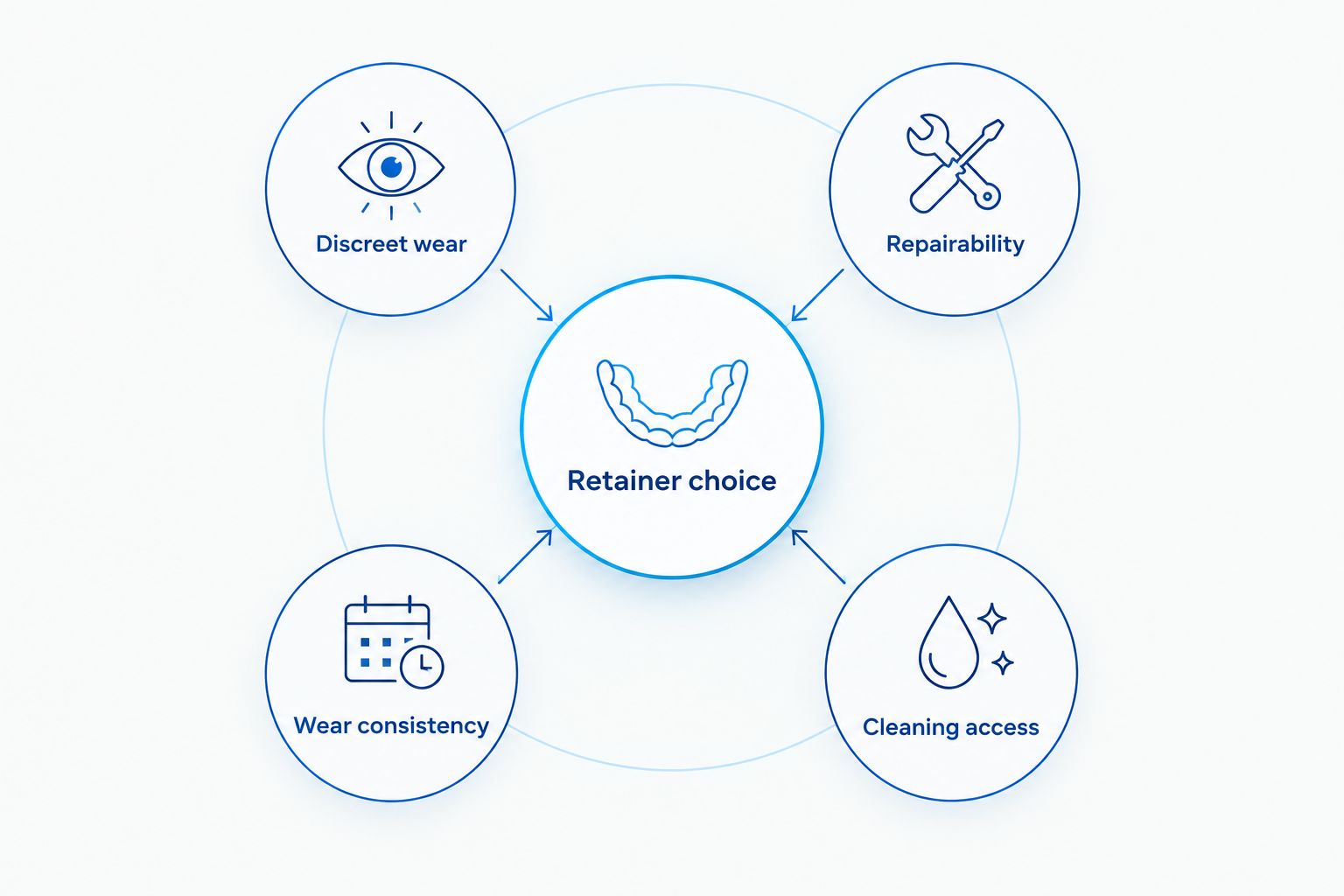
Choose by your biggest daily obstacle
For a 2026 retention decision, start with the problem most likely to interrupt your routine. Then confirm that the preferred design suits your teeth and bite.
- Discreet wear: Discuss a clear retainer if you want a removable appliance without a front wire.
- Repairability: Discuss a Hawley retainer if professional adjustment options matter most.
- Wear consistency: Ask whether fixed retention is appropriate if remembering a removable appliance is difficult.
- Cleaning access: Compare removable designs if cleaning beneath a bonded wire would be hard for you.
Tell your clinician about grinding, gagging, hand-mobility difficulties, or previous problems keeping appliances clean. These details are more useful than choosing solely from a photograph.
Protect comfort without shortening retainer life
Retainer care in 2026 starts with the instructions for your specific appliance. A cleaning method suitable for one material is not automatically suitable for another.
Keep the routine simple:
- Brush your teeth for 2 minutes per session, twice a day, using fluoride toothpaste.
- Clean between your teeth at least once daily, adapting your technique around fixed wires.
- Remove removable retainers for meals unless your treating clinician specifically instructs otherwise.
- Clean removable retainers with the method recommended for their material; avoid hot water.
- Put removable appliances in their protective case rather than a napkin or pocket.
- Check for cracks, sharp edges, changes in fit, or loose bonding.
Do not confuse a retainer with a grinding guard. A retainer holds tooth position; a grinding guard serves a different purpose, and your clinician needs to coordinate the appliances if you need both.
Never force a retainer that no longer seats fully. If it is lost, cracked, or suddenly painful, contact your treating dental team promptly. The guide to replacing a lost or broken retainer explains the next decision to discuss.
How the ranking works
This ranking compares appliance construction, tooth coverage, repair options, visibility, and daily maintenance. It does not assign a guaranteed lifespan or claim that one material prevents every type of tooth movement.
Clear retainers lead for discreet removable wear. Hawley retainers lead for repairability, while fixed retainers have a distinct role in continuous support of selected teeth. No option wins every category.
Which retainer should you choose?
Start by discussing a clear retainer if you want discreet removable wear and can follow your prescribed schedule. Choose Hawley when adjustment and repairability are stronger priorities, or fixed retention when your clinician recommends continuous front-tooth support.
Dental Arts of Atlantis is a local starting point for Lake Worth families discussing retainer care within their ongoing dental care. Keep the clinician responsible for your orthodontic retention involved when changing an appliance or wear schedule.
For your 2026 appointment, bring your current retainer and ask: Which teeth need retention, what wear schedule should I follow, and what changes mean I should call? Leave with instructions specific to your mouth.
FAQ
What’s the best retainer type for comfort?
A clear retainer is a useful starting option for discreet removable wear without a palatal acrylic plate. Comfort depends on fit, bite, and personal tolerance; persistent pain or rubbing needs a professional check.
Is a Hawley retainer more durable than a clear retainer?
A Hawley retainer offers professional adjustment and some repair options that a clear shell does not. That does not guarantee a longer lifespan: handling, fit, damage, and wear all matter.
Is a fixed retainer better if I forget to wear my removable one?
A fixed retainer removes the need to insert an appliance for the teeth attached to its wire. It still needs cleaning and bonding checks, and your clinician can prescribe a removable retainer as well.
Can I stop wearing a removable retainer if I have a bonded wire?
Do not stop your prescribed removable retainer without checking with your orthodontic clinician. A bonded wire supports selected teeth and does not necessarily retain the entire arch.
Should I wear a retainer that feels tight?
Do not force a retainer that will not seat fully, causes significant pain, or has changed shape. Contact your treating clinician for instructions rather than trying to move the teeth back yourself.
Can I use my retainer as a night guard?
Do not assume a retainer can replace a prescribed grinding guard. Retention and grinding protection serve different purposes, so your clinician needs to plan how both needs will be addressed.
How often should I replace my retainer?
Replace a retainer when your clinician finds that damage, wear, or loss of fit prevents it from working properly. There is no single replacement interval that applies to every material and every patient.
One last thing
A retainer can look fine and still need attention. A clear shell that rocks, a Hawley wire that feels different, or a fixed wire with loose bonding deserves a fit check—not a home adjustment. Protecting your smile means noticing changes before you settle into an appliance that no longer holds correctly.
Related guides
- How to care for your retainer after Invisalign treatment
- Night guards for teeth grinding and jaw pain
- Best oral hygiene products for Invisalign wearers