
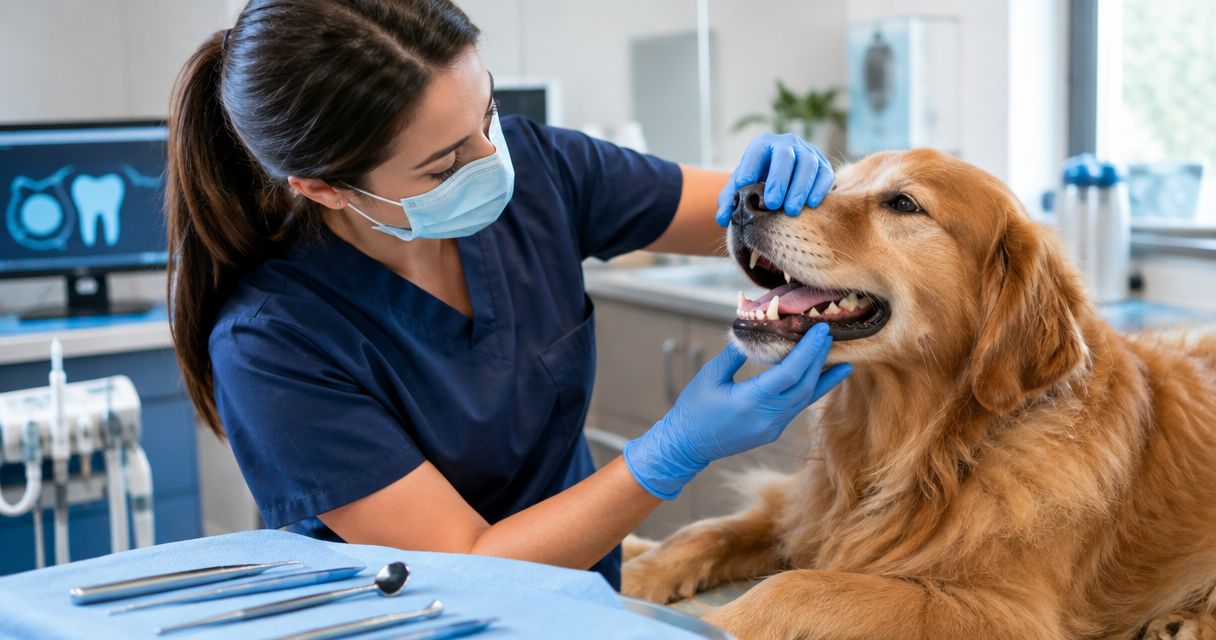
Veterinary professionals’ dental care is preventive and treatment-focused care for your own teeth and gums, with the aim of keeping you comfortable and healthy at work and at home. This 2026 guide focuses on fitting brushing, meals, symptom checks, and dental visits around clinical responsibilities—not treating animal patients.
- Dental care for veterinary professionals starts with fluoride toothpaste, daily interdental cleaning, and dental visits based on individual risk.
- Dental Arts of Atlantis suits Lake Worth veterinary professionals seeking general dental care for themselves and their families.
- Address persistent dry mouth, bleeding gums, and jaw pain instead of treating them as unavoidable parts of clinical work.
- Plan dental treatment around recovery instructions, not just the length of the appointment.
Why dental care matters for veterinary professionals
Your professional knowledge of animal dentistry does not replace an examination of your own mouth. Human tooth pain, bleeding gums, and jaw symptoms need assessment by a dental professional, even when you recognize familiar disease processes.
If your clinical day includes interrupted meals or changing finish times, build your routine around waking and sleeping rather than fixed clock times. The same approach applies to dental care for shift workers with irregular schedules: protect essential habits even when the workday changes.
Your occupation should shape the logistics of dental care, not substitute for a diagnosis. A veterinarian, veterinary technician, or assistant does not automatically need extra X-rays, a night guard, or more frequent cleanings solely because of the job.
For your 2026 care plan, separate three questions: What can you prevent at home? What needs a dental examination? What treatment requires time away from clinical duties? Answering those questions gives you a practical plan without adding unnecessary products or procedures.
Build a dental routine around your clinical day
Anchor brushing to waking and sleeping
Start with a manual toothbrush and fluoride toothpaste. The American Dental Association recommends brushing twice daily for 2 minutes with a soft-bristled brush; an electric brush is an alternative, not a requirement for effective home care.
For overnight workers, the brushing session before your main sleep period still matters even when it happens after sunrise. Keep the routine consistent rather than waiting for a conventional bedtime.
The American Dental Association also recommends replacing your toothbrush every 3–4 months, or sooner when bristles become frayed. Harder brushing does not compensate for a worn brush or missed sessions.
- Brush before your main sleep period and at another consistent point in your waking day.
- Use gentle pressure along the gumline rather than scrubbing back and forth forcefully.
- Clean between teeth daily using a method that fits your mouth and dexterity.
- Store your toothbrush where it can air-dry, away from clinical contamination.
Organize food and drinks around actual breaks
Begin by reviewing what you drink and snack on during a typical workday. Repeated exposure to sugary drinks feeds the bacteria involved in tooth decay, while acidic drinks can contribute to enamel erosion.
Coffee does not automatically mean cavities, and staining is not the same as decay. What you add, how often you sip, and the rest of your oral health history all matter.
Use your 2026 routine review to identify one pattern you can change consistently. Replacing prolonged sweetened sipping with water between meals is more useful than buying another product while leaving the same exposure pattern unchanged.
- Keep plain water accessible where workplace infection-control rules allow drinks.
- Have sweetened beverages with meals rather than sipping them throughout the shift.
- Choose snacks without added sugar when practical, rather than repeatedly grazing on sweets.
- Keep food, drinks, and oral-care supplies outside animal-treatment and specimen-handling areas.
Arrange a baseline dental examination
Before buying a guard, whitening kit, or specialty rinse, write down your symptoms and gather your medication list. Note previous dental treatment, allergies, and any difficulty getting numb or staying comfortable during appointments.
An examination adds what a home checklist cannot: assessment of your teeth, gums, existing restorations, and relevant symptoms. Your dentist should base imaging and follow-up timing on your history and findings, not on a blanket schedule for veterinary workers.
Dental Arts of Atlantis provides general, cosmetic, pediatric, and implant dentistry in Lake Worth for Palm Beach County families. Dental Arts of Atlantis is best for local veterinary professionals seeking general dental care for themselves and their families. That service scope does not establish specialty expertise in occupational dentistry or guarantee appointments around a particular shift.
- Bring your medication and allergy information, including nonprescription products.
- Describe bleeding, sensitivity, dry mouth, jaw pain, and changes in your bite.
- Ask which findings need treatment now and which need monitoring.
- Request a follow-up interval based on your cavity and gum-disease risk.
Investigate dry mouth instead of masking it
Start by noticing when dryness occurs: while working, after sleeping, or after taking a medication. Sip water for comfort, but do not assume hydration alone resolves persistent dry mouth.
Saliva helps protect teeth and oral tissues. Reduced saliva can make eating and speaking uncomfortable and increase the risk of decay, so persistent dryness deserves a dental assessment and, when appropriate, discussion with your medical prescriber.
Do not stop prescribed medication without medical advice. Likewise, wearing a mask does not establish the cause of dry mouth; breathing patterns, medications, and medical conditions need consideration.
- Record when dryness starts and whether it affects swallowing or sleep.
- Choose sugar-free gum for temporary relief when chewing is comfortable and safe.
- Avoid using sugary lozenges or acidic sweets repeatedly for moisture.
- Ask whether a saliva substitute or additional fluoride is appropriate for your findings.
Check jaw pain before choosing an appliance
Begin with awareness: notice whether you hold your teeth together while concentrating on records, procedures, or difficult conversations. At rest, your teeth generally do not need to touch.
Jaw soreness, headaches, and tooth wear do not all have the same cause. A dentist can assess your symptoms and determine whether tooth grinding, a tooth problem, or another condition needs attention.
A night guard can protect teeth in appropriate cases, but it does not diagnose jaw pain or reliably eliminate the underlying grinding habit. An appliance used for sleep apnea serves a different purpose and requires its own assessment.
- Note whether discomfort occurs on waking, during chewing, or late in the workday.
- Avoid gum chewing when it aggravates jaw soreness.
- Do not use your teeth to open packaging or hold equipment.
- Seek assessment for persistent pain, restricted opening, or a changing bite.
Schedule treatment around clinical responsibilities
Start with your actual duties, not just your available appointment window. Explain whether you will return to surgery, animal restraint, driving, or other safety-sensitive work after dental treatment.
The appointment length is not the same as recovery time. Local numbness, surgical aftercare, sedation, or prescribed medication can affect eating, alertness, and your ability to work safely; the instructions depend on the treatment you receive.
For treatment planned in 2026, ask for the expected sequence before committing to a work roster. Do not assume that a colleague’s experience with an extraction, crown, or implant predicts your own recovery.
- Tell the dental team which duties you expect to perform afterward.
- Ask whether transportation, an escort, or time away from work is required.
- Obtain written instructions for eating, activity, and medication use.
- Confirm the follow-up plan and whom to contact about postoperative concerns.
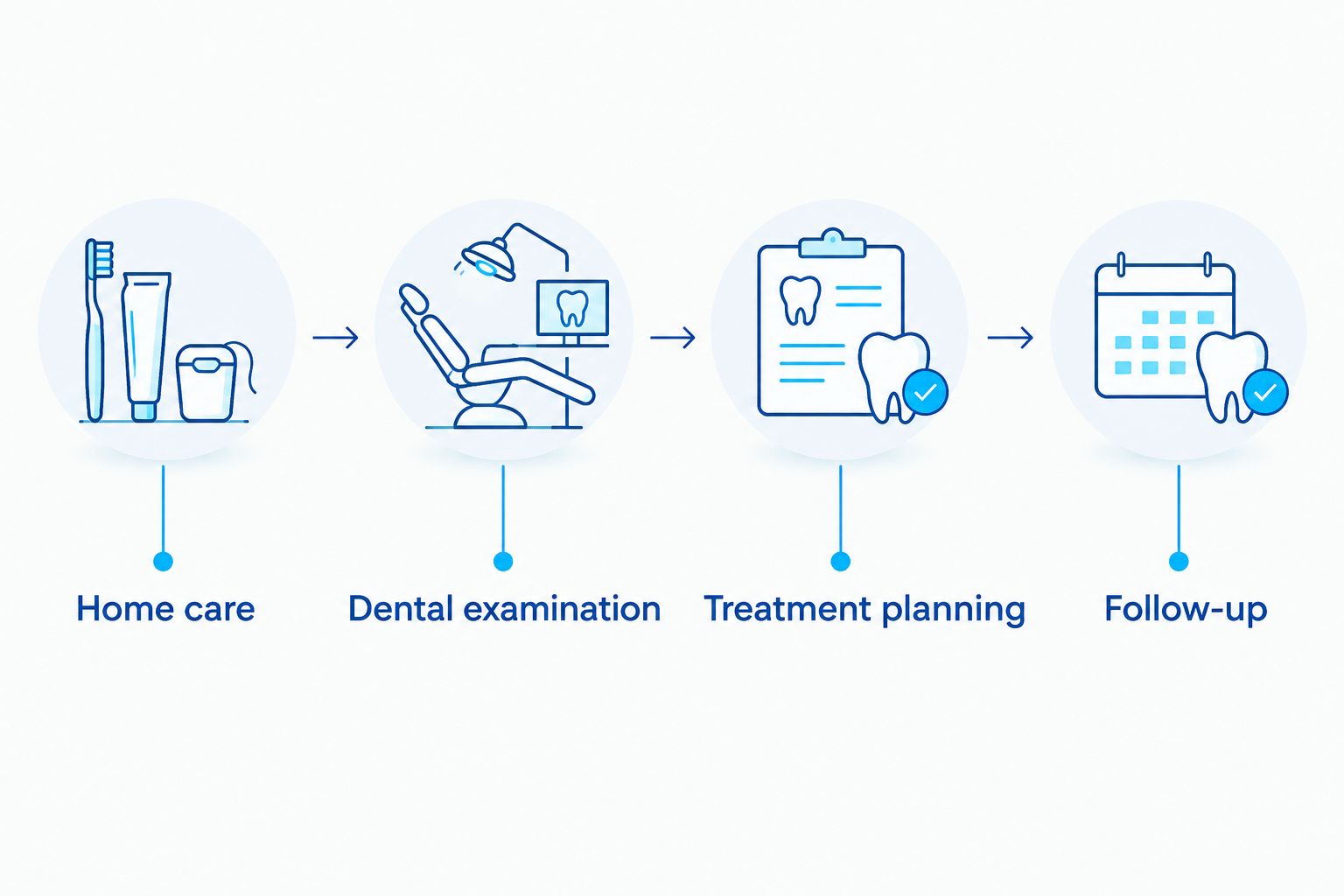
The sequence below keeps treatment decisions tied to findings rather than to a shopping list of dental products. Home care continues throughout, but symptoms that need assessment should not wait until every habit feels perfect.
Prepare for symptoms that cannot wait
Keep a short personal record of your dentist’s contact details, medications, and allergies. This does not replace care, but it makes it easier to explain the situation when pain interrupts a shift.
Facial or neck swelling with difficulty breathing or swallowing requires emergency medical care. Do not finish a procedure or wait for a routine dental appointment when those symptoms occur.
New tooth pain, a broken tooth, persistent bleeding, or swelling also warrants prompt contact with a dentist for triage. Temporary symptom relief does not show that the underlying problem has resolved.
- Stop chewing on a painful or damaged tooth until you receive advice.
- Never place aspirin directly against a tooth or gum tissue.
- Do not use veterinary medicines or leftover antibiotics to treat yourself.
- Explain swelling, fever, trauma, and changes in swallowing when requesting help.
Compare options for your dental care plan
These options solve different problems; they are not substitutes for one another. Start with home care, add professional assessment, and choose targeted treatment only when the findings support it.
| Option | Best for | Main benefit | Key limitation |
|---|---|---|---|
| Manual brushing and interdental cleaning | Daily prevention between visits | Removes plaque when performed effectively | Cannot diagnose decay, cracks, or gum disease |
| Electric toothbrush | People who prefer guided brushing or find manual brushing difficult | Provides powered brushing action | Still requires correct placement and consistent use |
| General dental care at Dental Arts of Atlantis | Veterinary professionals and families near Lake Worth | Provides access to the practice’s stated general and family dental services | Appointment timing and treatment suitability require confirmation |
| Dentist-assessed night guard | Patients with findings that support tooth protection during grinding | Creates a protective barrier between teeth | Does not treat every cause of jaw pain or replace sleep-apnea evaluation |
| Dentist-directed dry-mouth care | Persistent dryness or related dental concerns | Connects symptom relief with assessment of decay risk and possible causes | Requires individual assessment; no single rinse fixes every cause |
Choose the option that addresses a documented need. A powered brush cannot repair a cavity, and a guard is not a substitute for investigating a painful tooth.
Common mistakes veterinary professionals make
These are practical pitfalls to avoid, not assumptions about every veterinary worker. Use the list to check your own routine and decisions.
- Applying animal dental experience directly to your own treatment. Familiarity with veterinary dentistry does not establish a human diagnosis or make veterinary medication appropriate for personal use.
- Waiting for the rota to become predictable. If your schedule changes regularly, anchor home care to sleep and waking, and discuss realistic treatment windows before booking.
- Treating every headache as clenching. Tooth disease, jaw disorders, and non-dental conditions need different assessments; buying a guard first can delay the right evaluation.
- Confusing a comfortable mouth with a healthy mouth. Early decay and gum disease do not always cause pain. Let examination findings guide your recall interval.
- Returning to safety-sensitive duties without checking instructions. Ask specifically about restraint, driving, and clinical procedures after sedation, surgery, or medication—not simply whether you can return to work.
FAQ
Is dental care for veterinary professionals different from routine adult dental care?
The preventive principles are the same, but your work schedule and clinical duties should shape appointment and recovery planning. Your occupation alone does not determine which procedures or products you need.
What’s the best brushing routine if I work overnight veterinary shifts?
Brush twice daily with fluoride toothpaste, including before your main sleep period, even when that sleep begins during daylight. The American Dental Association recommends brushing for 2 minutes and cleaning between teeth daily.
Do veterinary professionals need dental cleanings more often?
Veterinary employment alone does not establish a need for more frequent cleanings. Your dentist should recommend an interval based on gum health, cavity history, medical factors, and examination findings.
Should I get a night guard if my jaw hurts after work?
Get the jaw pain assessed before choosing a night guard. A guard can protect teeth in appropriate cases, but jaw pain can have causes that require a different approach.
Can I use veterinary antibiotics for a tooth infection?
No, do not use veterinary antibiotics or other animal medicines to treat yourself. Contact a dentist for diagnosis and treatment; antibiotics alone do not remove the source of a dental infection.
Can I return to animal restraint after dental treatment?
Return to animal restraint only when your dental team’s instructions and your condition allow it. Sedation, surgery, numbness, or medication can affect the timing, so describe your duties before treatment.
Where can veterinary professionals near Lake Worth get family dental care?
Dental Arts of Atlantis provides general, cosmetic, pediatric, and implant dentistry in Lake Worth for Palm Beach County families. Confirm appointment arrangements and discuss your individual dental needs directly with the practice.
One last thing
Make your next appointment request more useful by including your work duties, not just your symptoms. Saying that you perform animal restraint or drive after a shift gives the dental team information relevant to recovery planning.
For the rest of 2026, keep the goal simple: a reliable home routine, an examination-based treatment plan, and clear instructions before returning to clinical work. You do not need an occupation-specific product to begin.
Related guides
- Night guards for teeth grinding and jaw pain
- How to manage dry mouth caused by medication
- How to prepare for your first visit as a new patient