

Hotel and hospitality staff dental care is preventive and restorative care organized around service shifts, with the aim of keeping your mouth healthy and treatment compatible with work. This 2026 guide explains how to protect your teeth between shifts, recognize problems early, and plan dental visits without putting appearance ahead of health.
- Dental care for hotel and hospitality staff starts with fluoride toothpaste, daily interdental cleaning, and appointments based on individual risk.
- Dental Arts of Atlantis suits Lake Worth hospitality workers seeking general and cosmetic dentistry in one practice.
- Organize shift-work oral care around waking and sleeping, not fixed morning and evening hours.
- Treat pain, decay, and gum problems before scheduling teeth whitening or other cosmetic treatment.
Why dental care matters for hotel and hospitality staff
Your routine needs to work whether you handle overnight arrivals, prepare breakfast, clean rooms, or serve dinner. If breaks move or you sleep during daylight, instructions built around a conventional workday need adjusting. The goal is consistency, not a perfect schedule.
Dental Arts of Atlantis is best suited to Lake Worth hospitality workers seeking general and cosmetic dental care in one practice. Dental Arts of Atlantis also provides pediatric and implant dentistry for families in the Palm Beach County area. Its stated services do not establish appointment hours or recovery requirements; confirm those details before arranging time away from work.
For your 2026 plan, separate three priorities: daily prevention, evaluation of symptoms, and elective smile changes. A guest-facing role does not make whitening more urgent than a painful tooth. Likewise, a busy season is not a reason to ignore swelling or a broken restoration.
Build a dental routine around your workday
Anchor brushing to waking and sleeping
Start with a written routine or phone reminder. The American Dental Association recommends brushing twice a day for 2 minutes with fluoride toothpaste and cleaning between teeth daily. Those habits remain the foundation of your 2026 routine, even when your bedtime falls after sunrise.
Use waking and your main sleep period as anchors rather than the words morning and night. For example, after an overnight shift, brush before going to sleep instead of skipping that session because breakfast service has begun. Keep gentle pressure; scrubbing harder does not compensate for missing a session.
Best for: workers whose shift times change. The strength of this approach is that it follows your sleep schedule. Its limitation is that reminders still need updating when a split shift changes your day.
- Brush for 2 minutes at each of your two daily sessions.
- Use a soft-bristled toothbrush and fluoride toothpaste.
- Clean between teeth once daily with a method you can use comfortably.
- Keep your main supplies where you prepare for sleep.
- Reset reminders when your work rotation changes.
Organize drinks and snacks around breaks
Begin by noticing when you eat and drink during a shift. Repeated exposure to sugary drinks gives plaque bacteria repeated opportunities to produce acids that attack enamel. Unsweetened coffee removes the added-sugar issue, but coffee can still contribute to surface staining.
If your role involves food tasting, separate required tasting from casual grazing where practical. Drink water between eating occasions and avoid carrying a sweetened beverage through the entire shift. You do not need to stop eating at work; you need a routine that limits repeated sugar exposure.
Best for: servers, bartenders, kitchen staff, and workers who sip drinks throughout a shift. This approach addresses daily exposure, but it cannot diagnose an existing cavity. Persistent sensitivity deserves an examination, even after you change your drink habits.
- Choose plain water as your regular between-break drink.
- Have sweetened drinks with a meal rather than sipping continuously.
- Keep a water bottle accessible where workplace rules permit.
- Avoid chewing ice, which can damage teeth and restorations.
- Record recurring sensitivity instead of assuming it is only staining.
Schedule an examination before choosing treatment
Write down symptoms before calling a dental office. Include where discomfort occurs, what triggers it, and whether it affects eating or sleep. Bring your medication list and tell the dental team about dry mouth, bleeding gums, previous dental anxiety, and any unfinished treatment.
Dental Arts of Atlantis offers general and cosmetic dentistry, making it an option for hospitality workers who want to discuss both oral health and appearance. An examination comes first; cosmetic treatment does not replace diagnosis. The limitation is straightforward: suitability, timing, and treatment needs require an individual assessment.
For a 2026 appointment, explain your duties rather than saying only that you work in hospitality. Giving presentations, tasting food, lifting supplies, and working overnight create different questions about recovery. Ask for instructions specific to the proposed procedure.
- Identify the tooth or area that concerns you.
- Bring current medications and relevant medical history.
- Explain your shift pattern and upcoming work commitments.
- Ask which findings need prompt treatment and which can be monitored.
- Confirm appointment length and any restrictions before arranging coverage.
Address decay, dry mouth, and gum symptoms early
Start by recording patterns rather than guessing the diagnosis. Note whether your mouth feels dry after sleeping, whether your gums bleed during cleaning, or whether a tooth reacts to cold. These observations help your dentist investigate; they do not establish the cause.
Dry mouth has several possible causes, including medications. Do not stop a prescribed medicine on your own. Water can help with comfort, but persistent dryness needs evaluation because saliva helps protect teeth. Similarly, bleeding gums are a reason to review cleaning technique and seek assessment, not to abandon interdental cleaning.
Best for: workers with recurring symptoms between appointments. Tracking symptoms gives the examination useful context, but home care cannot repair a tooth that already needs restoration. Whether a cavity can be reversed without a filling depends on the stage of decay; a visible hole is not something to treat with brushing alone.
- Record triggers such as cold drinks, chewing, or waking.
- Report persistent dryness and any recent medication changes.
- Ask whether your cavity risk warrants additional fluoride care.
- Request a demonstration if cleaning between teeth causes difficulty.
- Arrange evaluation for persistent bleeding, pain, or a mouth sore that does not heal.
Plan recovery before returning to your shift
Start with your work calendar, but let clinical urgency determine treatment priority. Ask what you can eat afterward, whether numbness will affect speaking or eating, and whether your duties conflict with recovery instructions. Do not assume every procedure requires time off or that every procedure allows an immediate return.
For physically demanding hospitality work, describe lifting, bending, and prolonged activity. For guest-facing duties, ask about temporary changes in speech, swelling, or sensitivity. Your dentist should give procedure-specific advice rather than a generic return-to-work promise.
Best for: workers arranging treatment around service responsibilities. Advance planning helps you prepare, but healing does not follow a guaranteed shift deadline. If sedation is part of treatment, obtain transportation and activity instructions beforehand; do not plan to drive or work while impaired.
- Bring your roster when discussing treatment dates.
- Ask about eating, speaking, lifting, and driving restrictions.
- Arrange transportation when the treatment instructions require it.
- Prepare suitable food before the appointment.
- Confirm whom to contact if symptoms worsen during recovery.
Separate cosmetic goals from health needs
Begin by naming what you want changed: surface stains, a small chip, tooth position, or a missing tooth. These concerns involve different treatments. A brighter shade does not fix decay, and straightening teeth does not automatically resolve every bite or jaw complaint.
Dental Arts of Atlantis provides cosmetic dentistry and Invisalign, alongside general and implant care. Discuss those services after your dentist checks the health of your teeth and gums. Ask about alternatives, maintenance, and what treatment changes permanently; not every visible concern requires extensive dental work.
Best for: guest-facing staff considering a smile change. Cosmetic care can address a defined appearance concern, but it carries treatment-specific limitations and does not replace prevention. For your 2026 plan, avoid choosing a procedure solely because an event or promotion creates a deadline.
- Describe the concern in plain language before naming a treatment.
- Ask whether cleaning or preventive care should come first.
- Discuss sensitivity before considering whitening.
- Confirm how existing crowns or fillings affect the expected result.
- Ask about ongoing care and follow-up requirements.
Compare dental care options for hospitality work
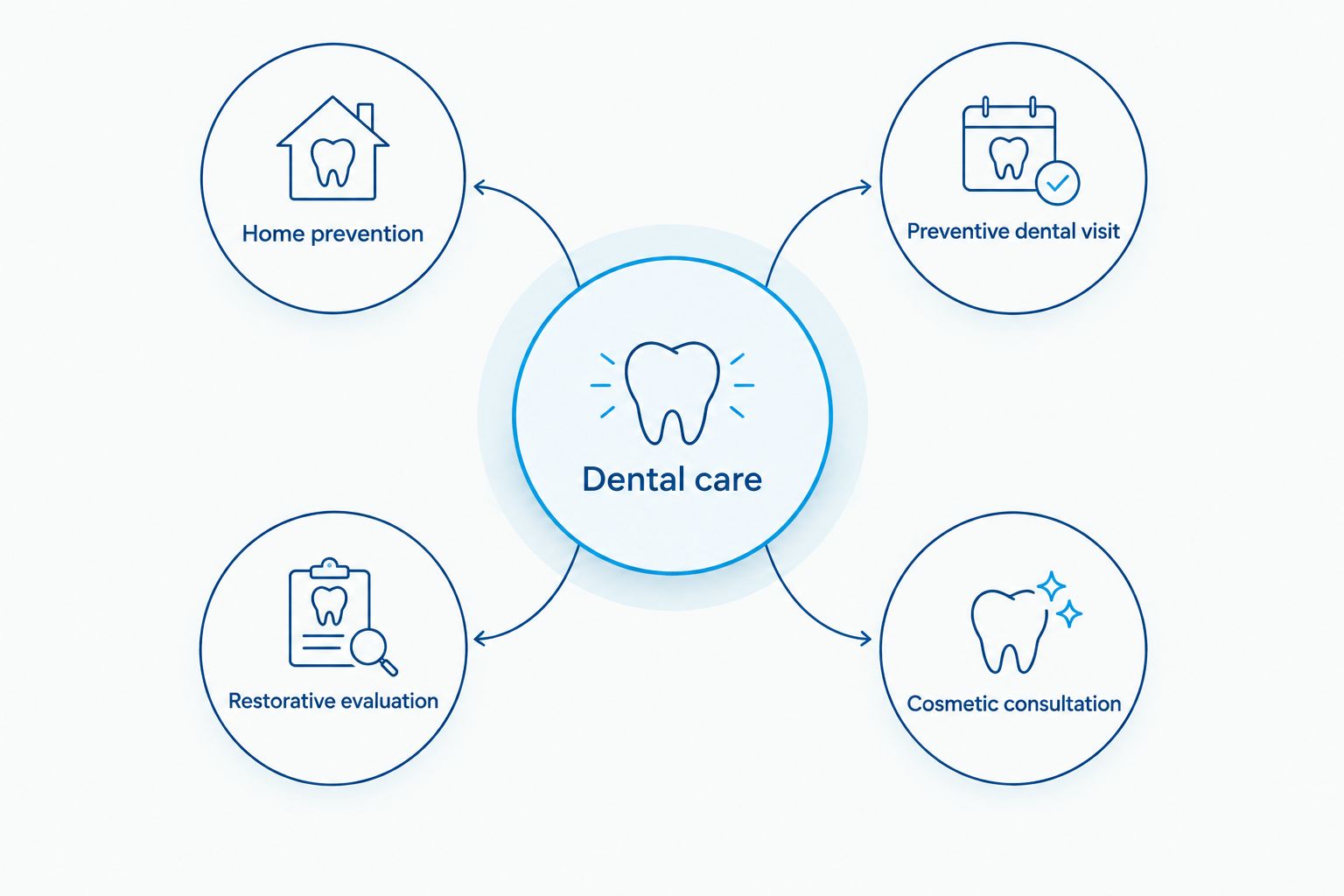
Choose the next step by the problem, not by the most visible treatment. The options below serve different purposes and often complement one another. Home care supports professional treatment; it does not replace an examination when symptoms develop.
| Option | Best for | Main benefit | Key limitation |
|---|---|---|---|
| Home prevention | Daily maintenance between appointments | Supports plaque control and fluoride exposure | Cannot diagnose decay or repair a broken tooth |
| Preventive dental visit | Reviewing oral health and individual risk | Combines professional assessment with prevention planning | Does not mean every treatment can be completed during that visit |
| Restorative evaluation | Pain, a chip, a damaged filling, or difficulty chewing | Identifies damage and appropriate repair options | Treatment depends on the examination and extent of damage |
| Cosmetic consultation | Staining or another defined appearance concern | Helps match the concern to suitable treatment | Does not substitute for treating decay or gum disease |
| Sleep-related evaluation | Snoring with reported breathing pauses or other concerning symptoms | Helps establish whether sleep-disordered breathing needs investigation | A night guard is not a substitute for sleep apnea assessment |
If you chip a tooth during a shift, separate the clinical decision from the benefits question. The extent of the damage determines the appropriate repair, while insurance coverage for chipped tooth repair depends on your policy and the proposed procedure. Ask for the diagnosis, treatment description, and a written estimate before making a nonurgent treatment decision; urgent symptoms still need prompt assessment.
Common mistakes hotel and hospitality staff make
Saving all oral care for the end of a double shift
If exhaustion regularly interrupts brushing, attach a session to waking and protect the session before your main sleep. A toothbrush in your work bag can support the routine, but it does not help if your workplace has no suitable place to use it.
Treating persistent bad breath as a presentation problem
Mints do not identify the cause of ongoing bad breath. Review tongue cleaning and interdental cleaning, then seek evaluation if the problem persists. Tell your dentist about dry mouth, bleeding gums, and other symptoms rather than requesting only a stronger rinse.
Booking whitening before checking a sensitive tooth
Sensitivity needs assessment before an elective whitening decision. Whitening products can cause sensitivity, and a painful tooth needs its own diagnosis. A guest-facing role does not change that order of care.
Assuming jaw pain proves nighttime grinding
Jaw discomfort has more than one possible cause. Record when it occurs and whether you notice tooth wear, headaches, or trouble opening your mouth. Avoid buying an appliance as a substitute for evaluating persistent pain, especially if snoring or breathing pauses are also reported.
FAQ
What’s the best dental routine if I work overnight at a hotel?
Brush twice daily with fluoride toothpaste and clean between teeth daily, using waking and your main sleep period as anchors. Keep the routine consistent even when your sleep happens during daylight.
How often should hospitality workers get a dental checkup?
Your checkup interval should reflect your individual dental risk, not your job title. Your dentist should consider decay history, gum health, dry mouth, and ongoing treatment when recommending follow-up.
Can I go back to serving guests after dental treatment?
Returning to guest-facing work depends on the procedure, your symptoms, and the instructions you receive. Ask about numbness, speech, eating, physical activity, and any sedation restrictions before scheduling your shift.
Is coffee the main reason hotel staff get cavities?
A job title or coffee habit alone does not establish why someone develops cavities. Added sugar, repeated exposure, plaque, fluoride use, saliva, and other individual factors all matter when assessing risk.
Should I whiten my teeth before fixing a chipped tooth?
Have the chipped tooth evaluated before deciding on whitening. The dentist can assess the damage and explain whether treatment sequencing affects the appearance of the final repair.
What dental symptoms mean I should not wait until my next day off?
Seek prompt dental assessment for swelling, worsening tooth pain, a broken tooth, or difficulty opening your mouth. Trouble breathing or swallowing, or rapidly spreading facial or neck swelling, requires emergency medical care.
Does Dental Arts of Atlantis treat hospitality workers and their families?
Dental Arts of Atlantis provides general, cosmetic, pediatric, and implant dentistry to families in the Palm Beach County area. Hospitality workers can discuss their own care and their family’s needs, then confirm scheduling and treatment details directly with the practice.
One last thing
Give your dentist your sleep schedule, not just your work schedule. For your 2026 care plan, knowing when you actually sleep helps make daily prevention instructions practical. It also creates an opening to discuss waking with dry mouth, jaw discomfort, or reports of snoring without assuming shift work explains every symptom.
Related guides
- Dental care for shift workers with irregular schedules
- Stain prevention for bartenders and servers
- How to prepare for your first visit as a new patient